












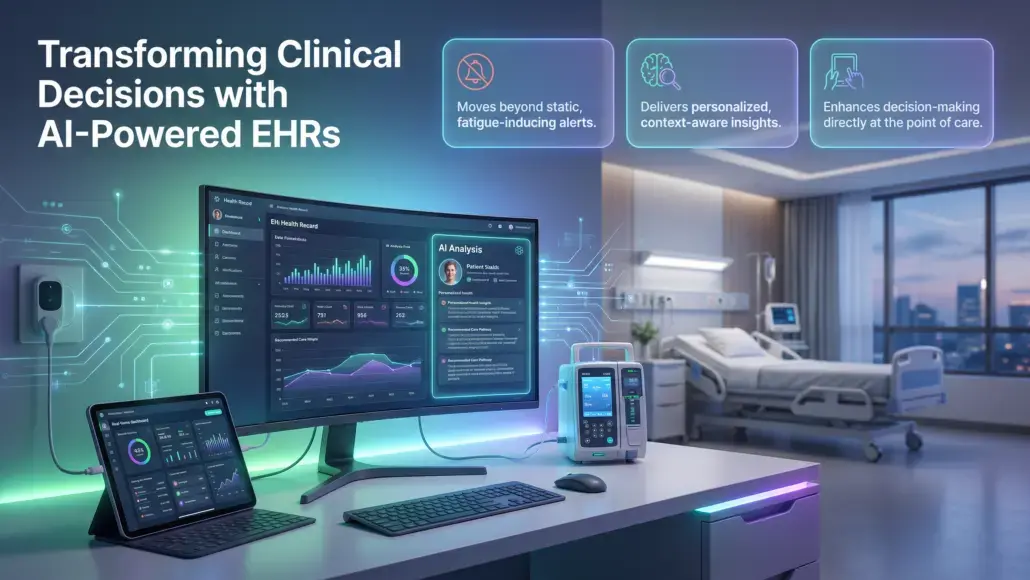

The traditional model of clinical decision support within electronic health records has long been characterized by static, rule based alerts that frequently lead to information overload and alert fatigue among clinicians. These systems often provide generic warnings that lack the specific context of the individual patient, causing physicians to ignore them in a significant percentage of cases. The introduction of ehr-integrated ai improving clinical decision support at the point of care represents a fundamental evolution toward dynamic, context aware guidance. By utilizing machine learning algorithms that analyze a patient’s entire medical record in real time, these systems can provide highly specific and actionable recommendations that reflect the most current clinical evidence and the unique needs of the patient at the bedside.
Dynamic guidance is possible because AI models can process vast quantities of disparate data points, from laboratory results and imaging reports to physiological monitoring and genomic data. By synthesizing this information, the AI can identify subtle clinical patterns that may not be immediately obvious to even the most experienced clinician. For example, a system could identify a patient at high risk for sepsis hours before traditional clinical signs become evident, allowing for early intervention that can save lives. This proactive approach to decision support is a significant departure from the reactive nature of static alerts, shifting the focus from simply identifying problems to providing a path toward resolution. By integrating these insights directly into the clinical workflow, healthcare organizations can ensure that the right information reaches the right person at the right time.
The effectiveness of these systems also depends on their ability to learn and adapt over time. As more data is collected and clinical outcomes are observed, the AI models can be refined to improve their accuracy and relevance. This continuous improvement process ensures that the decision support remains aligned with the latest clinical research and the evolving needs of the patient population. Additionally, the integration of AI into the EHR allows for the collection of valuable feedback from clinicians, who can validate or challenge the AI recommendations. This human in the loop approach is essential for building the trust and acceptance necessary for these technologies to be widely adopted. The transition from static alerts to dynamic guidance is a key step in creating a truly intelligent clinical environment.
Enhancing Precision Medicine through Real Time Data Synthesis
Precision medicine aims to tailor healthcare to the individual characteristics of each patient, moving away from a one size fits all approach to treatment. Achieving this goal requires the ability to synthesize and analyze complex data sets at the point of care, a task that is perfectly suited for artificial intelligence. The deployment of ehr-integrated ai improving clinical decision support at the point of care enables clinicians to access personalized recommendations based on the patient’s genetic profile, lifestyle factors, and environmental exposures. By integrating genomic data directly into the clinical workflow, AI systems can help physicians identify the most effective medications and the most appropriate dosages for each individual patient, reducing the risk of adverse drug reactions and improving treatment efficacy.
Real time data synthesis is particularly valuable in oncology, where treatment decisions are increasingly based on the specific molecular characteristics of the patient’s tumor. AI models can analyze the results of genomic sequencing and identify targeted therapies that are most likely to be effective against a particular mutation. They can also search through the latest clinical trials and identify opportunities for patients who have not responded to standard treatments. This level of personalized guidance is impossible to achieve manually, given the rapid pace at which new genomic discoveries are being made. By providing oncologists with the most current and relevant information, AI driven decision support can lead to significant improvements in patient outcomes and survival rates.
Beyond genomics, AI systems can also incorporate data from wearable devices and other remote monitoring tools to provide a more comprehensive view of the patient’s health. This continuous stream of information allows for the early detection of clinical changes and the adjustment of treatment plans in real time. For example, an AI system could monitor a patient with heart failure and automatically alert their physician to a subtle increase in weight or a change in their activity level, indicating a potential worsening of their condition. This proactive approach to disease management is a core component of precision medicine, ensuring that every patient receives the care they need when they need it. The synthesis of disparate data points into a cohesive clinical picture is the hallmark of modern, intelligence driven medicine.
Improving Patient Safety with Predictive Risk Stratification
Patient safety remains a top priority for healthcare organizations, yet medical errors and preventable complications continue to occur at alarming rates. The implementation of ehr-integrated ai improving clinical decision support at the point of care provides a powerful way to enhance safety by identifying patients at high risk for specific adverse events. Predictive risk stratification models can analyze historical data and identify the clinical factors that are most strongly associated with outcomes such as hospital acquired infections, falls, or readmissions. By applying these models to current patient data, AI systems can flag high risk individuals and recommend specific interventions to mitigate those risks.
For instance, an AI system could identify a patient with a high probability of developing a pressure ulcer and automatically trigger a series of actions, such as scheduling regular repositioning or ordering specialized equipment. It could also monitor medication orders and identify potential errors, such as incorrect dosages or dangerous drug interactions, before the medication is administered. This proactive identification of risks allows clinical teams to take preventive action, significantly reducing the likelihood of patient harm. By embedding these safety checks directly into the clinical workflow, organizations can create a culture of safety that is supported by objective, data driven insights. This is a critical requirement for maintaining high standards of care in a complex and high pressure clinical environment.
In addition, predictive analytics can help organizations manage their resources more effectively by identifying patients who require the highest level of care. By stratifying the patient population based on risk, healthcare providers can allocate their staff and equipment to those who need them most, improving the efficiency of the entire system. This is particularly important in the context of value based care, where organizations are financially responsible for the outcomes and costs of the care they provide. By reducing the number of preventable complications and hospital readmissions, AI driven safety initiatives can lead to significant cost savings while improving the quality of life for patients. The ability to predict and prevent adverse events is one of the most significant benefits of integrating AI into clinical decision support.
Optimizing Therapeutic Selection and Medication Management
Selecting the most appropriate therapy for a patient is a complex decision that involves weighing the benefits and risks of various treatment options. This challenge is further complicated by the increasing number of available medications and the growing complexity of clinical guidelines. The deployment of ehr-integrated ai improving clinical decision support at the point of care can simplify this process by providing evidence based recommendations that are tailored to the specific needs of the patient. AI models can analyze the patient’s clinical history, their current symptoms, and the results of diagnostic tests to identify the most effective therapeutic options. They can also take into account the patient’s preferences and their socio economic situation, ensuring that the chosen treatment is both effective and sustainable.
Medication management is another area where AI can have a profound impact. Inappropriate prescribing and medication errors are a major cause of patient harm and increased healthcare costs. AI systems can improve the safety and efficacy of medication use by providing real time alerts for potential drug interactions, allergies, and contraindications. They can also help clinicians optimize medication dosages based on the patient’s age, weight, and renal function. Additionally, AI models can monitor the patient’s response to a particular medication and identify signs of toxicity or lack of efficacy, allowing for early adjustment of the treatment plan. This level of continuous monitoring is essential for ensuring that medication use is both safe and effective.
Additionally, AI can help to reduce the cost of medications by identifying lower cost alternatives, such as generic drugs or more cost effective therapeutic classes. By providing clinicians with the information they need to make more informed prescribing decisions, AI driven decision support can lead to significant reductions in pharmaceutical expenditures for both patients and healthcare organizations. This is particularly important in an era of rising drug costs and increasing pressure to reduce healthcare spending. The optimization of therapeutic selection and medication management is a core component of high quality, cost effective healthcare, and the integration of AI into these processes is a key driver of clinical excellence. By ensuring that every patient receives the most appropriate treatment, healthcare organizations can improve outcomes and enhance the overall value of the care they provide.
Balancing Algorithmic Transparency with Clinical Autonomy
As artificial intelligence becomes more integrated into clinical decision making, it is essential to maintain a balance between the power of the algorithms and the autonomy of the clinician. While AI can provide valuable insights and recommendations, the final decision must always rest with the physician, who is ultimately responsible for the patient’s care. To support this relationship, ehr-integrated ai improving clinical decision support at the point of care must be designed with transparency in mind. This means that the AI models should not be black boxes; instead, they should provide clear explanations for their recommendations, allowing clinicians to understand the reasoning behind a particular insight. This explainability is essential for building the trust and confidence necessary for clinicians to rely on AI driven guidance.
Clinical autonomy also requires that AI systems be used as a tool to support, rather than replace, clinical judgment. The recommendations provided by the AI should be seen as one piece of information among many that the clinician considers when making a decision. Systems should allow for clinician feedback, enabling them to override a recommendation if they believe it is incorrect or inappropriate for a particular patient. This feedback loop is not only important for clinical autonomy but also for the continuous improvement of the AI models, as it provides valuable data on how the systems are performing in the real world. By creating a collaborative environment where humans and machines work together, healthcare organizations can achieve the best possible outcomes for their patients.
In addition, the ethical implications of using AI in clinical decision support must be carefully considered. This includes ensuring that the algorithms are fair and unbiased, and that they do not exacerbate existing health disparities. Organizations must establish clear governance frameworks to oversee the development and deployment of AI models, ensuring that they are used in a way that is consistent with medical ethics and the values of the organization. This includes regular auditing of the models to identify and correct any potential biases. By prioritizing transparency, autonomy, and ethics, the healthcare industry can ensure that the integration of AI leads to a more just and effective healthcare system. The journey toward this future requires a thoughtful and responsible approach to technology integration, but the potential rewards for patients and society are truly profound. The ongoing evolution of clinical decision support is a testament to the power of human ingenuity and the promise of a more intelligent future for medicine.