







Close
Digital Health & Ai Innovation summit 2026
Medical Taiwan 2026

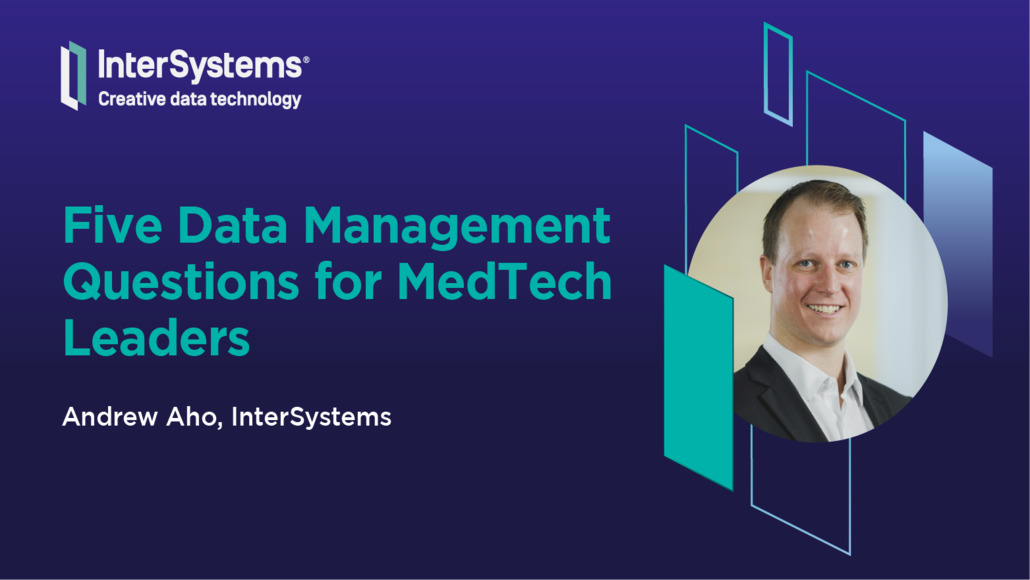
Five Data Management Questions for MedTech Leaders

Note* - All images used are for editorial and illustrative purposes only and may not originate from the original news provider or associated company.

Subscribe

- Never miss a story with notifications

- Gain full access to our premium content

- Browse free from any location or device.

Media Packs

Expand Your Reach With Our Customized Solutions Empowering Your Campaigns To Maximize Your Reach & Drive Real Results!

– Access the Media PackNow

– Book a Conference Call

Leave Message for Us to Get Back

Related stories

Telemedicine Platforms Expanding Access to Remote...

Modern healthcare systems are undergoing a radical transformation as digital infrastructure bridges the gap between urban specialists and rural patients. Through virtual consultations and digital triage, providers are overcoming geographical barriers, ensuring that high-quality medical expertise is no longer restricted by physical location. This evolution in care delivery prioritizes accessibility and efficiency, reshaping the patient experience across the globe.

Point of Care Devices Accelerating Clinical...

Clinical environments are undergoing a significant transformation as the shift from centralized laboratory testing to immediate bedside diagnostics gains momentum. By bringing sophisticated analysis directly to the patient, healthcare providers can drastically reduce wait times for critical results, enabling faster intervention and more personalized care pathways. This evolution not only optimizes hospital workflows but also improves outcomes in emergency and remote settings where time is of the essence.

Medical Imaging Innovations Enhancing Diagnostic Precision

Modern radiology is undergoing a profound evolution driven by the integration of artificial intelligence and high-resolution imaging modalities. These advancements allow clinicians to visualize internal structures with unprecedented clarity, leading to earlier detection of diseases and more tailored treatment strategies. By bridging the gap between raw data and clinical insight, new imaging technologies are setting a higher standard for diagnostic accuracy across the global healthcare landscape.

Healthcare is awash in data – medical device data, electronic patient records, public-health surveillance data, clinical data, wearable data and more. By transforming it into meaningful and actionable information, MedTech companies can move up the value chain and gain a competitive advantage in a global digital health market projected to reach $US1 trillion by 2032.

However, digital health poses data management challenges. Interoperability barriers, scalability constraints and data privacy concerns can slow development and revenue growth.

Is your organisation prepared? Do you have the right development platforms, frameworks and tools in place? A new InterSystems White Paper poses five key data management questions to help assess your readiness and explains how a digital health development platform can help streamline development and accelerate returns.

Generate Additional Revenue Streams from Your Data

Digital health development platforms make it easy to collect and manage data and derive business value. This can open up new opportunities and improve business performance by introducing subscription-based, data-driven services that generate recurring revenue streams. For example, a lab management software provider found they could monetise operational data by offering a benchmark data subscription.

Another leading medical device manufacturer uses InterSystems IRIS for Health™ to gather and analyse device data at speed and scale. The solution transforms device performance data, patient-reported outcomes and other data into a common FHIR format for analysis. The solution’s built-in analytics repository helps the manufacturer eliminate expense and complexity, and accelerate time-to-market.

The solution provides evidence of device compliance to regulators, improves visibility into population health data, and helps patients better manage diseases and detect early warning signs. Unlike other approaches, the solution does not copy the data; it projects FHIR into SQL tables, which greatly reduces the cost of the solution and makes data available in real time.

Five Key Data Management Questions for MedTech

1. Does your strategy include interoperability, data governance and analytics?

Digital health solutions access, manage, and analyse confidential healthcare data from disparate systems. Does your digital health strategy address interoperability, data governance, and analytics? How will you support diverse healthcare systems, safeguard protected health information (PHI) and analyse large datasets?

Digital health development platforms can connect to disparate systems and break down interoperability barriers. They also help you improve governance and compliance with privacy regulations by controlling access to PHI and encrypting data-at-rest and data-in-transit. Some platforms also include frameworks to efficiently analyse data so you can increase differentiation with value-added solutions that transform raw data into valuable insights.

2. Can you connect device and clinical data from healthcare systems?

Integration issues can delay products, hamper customer deployments and impair business results. Do you have a strategy for interconnecting divergent systems and interworking dissimilar healthcare protocols and data formats?

Digital health development platforms support different data formats and standards, such as HL7® FHIR®, HL7® v2, C-CDA and IHE. Leading platforms provide built-in data transformations for common healthcare data standards and graphical user interfaces to simplify integration and free up technical resources.

Some include enterprise-class FHIR servers and other utilities that efficiently manage data and help develop applications based on the FHIR interoperability standard. Unlike previous standards, FHIR lets you easily build innovative applications incorporating diverse healthcare data from different sources.

3. Can you easily consume and aggregate data in any format in real time, at scale?

Digital health solutions typically gather and process high volumes of real-time data from multiple sources. Data management platform capacity and scalability limitations can degrade application performance and impact functionality. Can your solutions meet stringent digital health price-performance and scalability requirements? Can you easily aggregate and act upon large, diverse datasets in real time?

Digital health development platforms efficiently and cost-effectively consume and aggregate diverse, real-time data at scale. Many are delivered as cloud-hosted services. This can accelerate time to market and improve margins by avoiding up-front capital equipment expenses, reducing infrastructure operations cost and complexity, and aligning recurring expenses with business demands and capacity requirements.

4. Do you have one information system that can supply unified data from all sources?

Digital health application data is often scattered across systems and stored in different formats. Is a fragmented data architecture holding you back? Do you have a single information store that can supply unified data from all sources?

Digital health development platforms make collecting, harmonising and storing diverse data easy. You can create unified data records that improve data quality and consistency and provide a consolidated, holistic view of digital health information. This enhances efficiency, accuracy and effectiveness and lays the foundation for advanced analytics, artificial intelligence (AI) and machine learning (ML).

5. Is your data AI-ready?

Many MedTech companies are looking to AI and ML to fuel the next wave of business growth. While AI can potentially transform healthcare, data management and integration challenges can impede development.

Many AI applications leverage data from diverse sources such as EMR systems, smart medical devices, hospital scheduling and billing systems, and public health databases. Data redundancies, inconsistencies and gaps can impact data quality and integrity and impair AI initiatives.

When building or deploying an AI-powered healthcare application, accessible, reliable and accurate data is critical. A digital health development platform can efficiently gather, unify and clean vast amounts of disparate healthcare data from diverse sources to prepare it for analysis or machine learning.

Finally, choosing the right vendor is as important as selecting the right platform. InterSystems has the knowledge, experience and tools to overcome the most complex data integration challenges and help you develop and deliver digital health applications quickly, easily and cost-effectively.

Whether you work for a medical device manufacturer, a life sciences company, a health IT vendor, a healthcare analytics company or other MedTech company, we can help you expand the market for your products, grow your customer base and increase sales by connecting to more systems and deriving business value from digital health data.

To learn more about InterSystems solutions for MedTech, please visit InterSystems.com/MedTech.

Author: Andrew Aho

Author Img

Andrew Aho is Regional Director of Data Platforms in Australia and New Zealand for InterSystems, the leading provider of next-generation solutions for enterprise digital transformations in the healthcare, finance, manufacturing and supply chain sectors.

Aho has more than 20 years’ executive and sales leadership experience in the enterprise technology industry. At InterSystems he works across digital healthcare, commercial and government organisations to develop innovative solutions which leverage data, interoperability, analytics, AI and automation technologies to drive competitive advantage, performance and improve service delivery. In previous roles, Aho has been responsible for the success of customers deploying healthcare information systems, and for business across Asia Pacific.

Company: InterSystems


InterSystems is the information engine that powers some of the world’s most important applications. In healthcare, finance, government, and other sectors where lives and livelihoods are at stake, InterSystems has been a strategic technology provider since 1978. InterSystems is a privately held company headquartered in Cambridge, Massachusetts (USA), with offices worldwide, and its software products are used daily by millions of people in more than 80 countries. For more information, visit InterSystems.com

Send Enquiry for this story

By submitting this form you agree to allow www.hhmglobal.com to contact you regarding your enquiry.
See our Privacy Policy to learn more.

Hospital & Healthcare Management brings together the global healthcare industry — from hospital administrators and clinical directors to health technology innovators and policy leaders — through trusted editorial, market intelligence, and digital engagement.

Our 2026 Media Pack offers integrated solutions to reach your audience:

  • Magazine & Digital Editions Showcase your brand within premium healthcare industry coverage read by executives and decision - makers worldwide.
  • Industry Insights & Reports Align with data - driven analysis, trend reports, and regional roundups across the global hospital and healthcare management value chain.
  • Brand Authority & Credibility Position your company as a thought leader through expert commentary, interviews, and special features.
MEDICAL FAIR ASIA 2026
MEDICAL FAIR CHINA

Latest stories

Related stories

Telemedicine Platforms Expanding Access to Remote Care

Modern healthcare systems are undergoing a radical transformation as digital infrastructure bridges the gap between urban specialists and rural patients. Through virtual consultations and digital triage, providers are overcoming geographical barriers, ensuring that high-quality medical expertise is no longer restricted by physical location. This evolution in care delivery prioritizes accessibility and efficiency, reshaping the patient experience across the globe.

Point of Care Devices Accelerating Clinical Decisions

Clinical environments are undergoing a significant transformation as the shift from centralized laboratory testing to immediate bedside diagnostics gains momentum. By bringing sophisticated analysis directly to the patient, healthcare providers can drastically reduce wait times for critical results, enabling faster intervention and more personalized care pathways. This evolution not only optimizes hospital workflows but also improves outcomes in emergency and remote settings where time is of the essence.

Medical Imaging Innovations Enhancing Diagnostic Precision

Modern radiology is undergoing a profound evolution driven by the integration of artificial intelligence and high-resolution imaging modalities. These advancements allow clinicians to visualize internal structures with unprecedented clarity, leading to earlier detection of diseases and more tailored treatment strategies. By bridging the gap between raw data and clinical insight, new imaging technologies are setting a higher standard for diagnostic accuracy across the global healthcare landscape.

Sustainable Healthcare Solutions Shaping Future Facilities

Environmental stewardship is becoming an essential priority for the medical sector as the link between planetary health and human health becomes clearer. Modern hospital design is evolving to incorporate renewable energy, waste reduction strategies, and non-toxic materials to create healing spaces that are as kind to the earth as they are to patients. These forward-thinking approaches ensure that the clinical infrastructure of tomorrow is resilient, efficient, and capable of supporting long-term community wellness.

Subscribe

- Never miss a story with notifications

- Gain full access to our premium content

- Browse free from any location or device.

Media Packs

Expand Your Reach With Our Customized Solutions Empowering Your Campaigns To Maximize Your Reach & Drive Real Results!

– Access the Media Pack Now

– Book a Conference Call

Leave Message for Us to Get Back

Translate »