








Close
Digital Health & Ai Innovation summit 2026
Medica Compamed 2026

Build new muscle memory with IT to transform healthcare

Note* - All images used are for editorial and illustrative purposes only and may not originate from the original news provider or associated company.

Related stories

Healthcare Data Consolidation Improving Patient Context...

The effectiveness of any intelligent clinical system depends on...

Smart Lighting Controls Optimizing Hospital Environmental...

The transition from manual switches to sophisticated digital interfaces...

Multi-Omics Integration Advancing Predictive Healthcare

The clinical shift toward comprehensive biological modeling is accelerating...

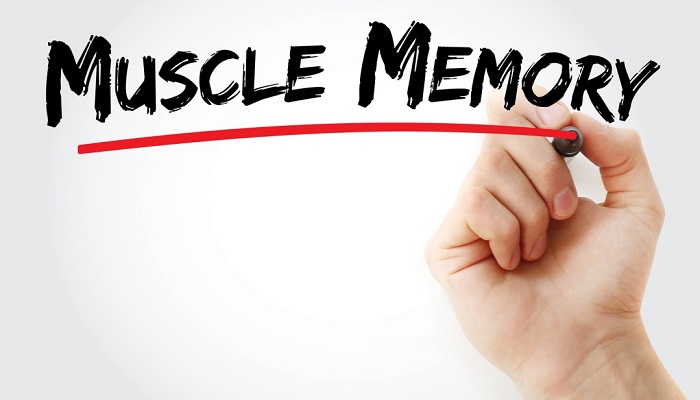
Is muscle memory a good thing? Or a bad thing? And how does it hinder digital transformation, particularly in the healthcare industry?

Most of us have heard of muscle memory โ€“ itโ€™s the embedded learning that comes from repeated practice or exposure to a situation. Itโ€™s what allows us to perform a task smoothly, efficiently and almost unconsciously, for example driving, riding a bike or playing an instrument.

That seems like a good thing โ€“ right? But what if your muscle memory has codified bad behaviour? What if you have an inefficient golf swing, or you learned to finger guitar chords the wrong way? In that case, muscle memory can be a trap that holds you back from achieving excellence.

Change requires unlearning, and relearning. Itโ€™s a process that can be so frustrating you may give up. If youโ€™re really motivated, youโ€™ll make the investment, but you have to be convinced the benefit outweighs the effort.

The concept of muscle memory can be extended to organisations as well. Businesses tend to create processes and culture that reinforce a particular way of operating, making decisions or working with customers. As with physical actions, organisational muscle memory makes for smooth operations โ€“ except when thereโ€™s a need for radical change.

Healthcare delivery incorporates both physical muscle memory โ€“ inserting an IV, performing a surgical procedure, positioning an imaging device โ€“ and organisational muscle memory โ€“ shift transitions, pre-procedure checklists, patient authorisation processes, etc. Muscle memory of both sorts complicates the introduction of health information technology (IT) whether an electronic health record (EHR), a new device or new analytics, because it disrupts an entrenched process in ways that can slow down performance and lead to intense frustration. For example, studies have shown that EHRs can contribute to physician and nursing burnout.

The incredible challenges facing healthcare providers right now make it imperative that we find better, more efficient ways to manage and deliver care. Staffing shortages are prompting the widespread adoption of virtual-first care models. The effective treatment of chronic disease requires a shift from solo to team-based care. These are theoretically good things, but require substantive changes in the organisation and the individuals that comprise that organisation.

In other words, we need to make changes that go against our collective muscle memory.

If we are going to build the new muscle memory that will move healthcare forward, leaders need to do four things:

  1. Establish a genuine sense of urgency by articulating a compelling vision for why change is necessary, including both the consequences of the status quo, and the benefits of the investment.
  2. Understand the stakeholders and what matters to each of them. What is worthwhile to the organisation may be very different than what matters to the individual โ€“ there need to be significant benefits for all to create lasting change.
  3. โ€œWork with the Willingโ€ and build momentum through incremental quick wins.
  4. Leverage IT as both a change enabler and a reinforcer. This of course, implies that your technology is designed, configured and deployed in ways that support desired new behaviours.

Digital transformation occurs when IT empowers and reinforces change to the collective muscle memory as one element of an inspiring vision โ€“ perhaps safer care, more time for patients, or better work-life balance. Once you build the muscle memory for the next step in your transformation, it will make it easy to perform moving forward. Change is never easy, but excellence is always worth the investment.

Author: Don Woodlock

Author Img

Don Woodlockย is Vice President, Healthcare for InterSystems, a creative data technology provider dedicated to helping customers solve the most critical scalability, interoperability, and speed problems. He joined InterSystems in 2017 to oversee the companyโ€™s HealthShare and TrakCare family of products created to empower the transformation of health and care through comprehensive, shared health information.

Company: InterSystems


InterSystems is the information engine that powers some of the worldโ€™s most important applications. In healthcare, finance, government, and other sectors where lives and livelihoods are at stake, InterSystems has been a strategic technology provider since 1978. InterSystems is a privately held company headquartered in Cambridge, Massachusetts (USA), with offices worldwide, and its software products are used daily by millions of people in more than 80 countries. For more information, visitย InterSystems.com

Send Enquiry for this story

By submitting this form you agree to allow www.hhmglobal.com to contact you regarding your enquiry.
See our Privacy Policy to learn more.

Hospital & Healthcare Management brings together the global healthcare industry โ€” from hospital administrators and clinical directors to health technology innovators and policy leaders โ€” through trusted editorial, market intelligence, and digital engagement.

Our 2026 Media Pack offers integrated solutions to reach your audience:

  • Magazine & Digital Editions Showcase your brand within premium healthcare industry coverage read by executives and decision - makers worldwide.
  • Industry Insights & Reports Align with data - driven analysis, trend reports, and regional roundups across the global hospital and healthcare management value chain.
  • Brand Authority & Credibility Position your company as a thought leader through expert commentary, interviews, and special features.

Subscribe

- Never miss a story with notifications

- Gain full access to our premium content

- Browse free from any location or device.

Media Packs

Expand Your Reach With Our Customized Solutions Empowering Your Campaigns To Maximize Your Reach & Drive Real Results!

โ€“ Access the Media PackNow

โ€“ Book a Conference Call

โ€“ Leave Message for Us to Get Back

MEDICAL FAIR ASIA 2026
MEDICAL FAIR CHINA

Latest stories

Related stories

Healthcare Data Consolidation Improving Patient Context for AI

The effectiveness of any intelligent clinical system depends on...

Smart Lighting Controls Optimizing Hospital Environmental Conditions

The transition from manual switches to sophisticated digital interfaces...

Multi-Omics Integration Advancing Predictive Healthcare

The clinical shift toward comprehensive biological modeling is accelerating...

Enhancing Clinical Knowledge Access with Retrieval-Augmented Generation

The explosion of medical literature and the increasing complexity...

Subscribe

- Never miss a story with notifications

- Gain full access to our premium content

- Browse free from any location or device.

Media Packs

Expand Your Reach With Our Customized Solutions Empowering Your Campaigns To Maximize Your Reach & Drive Real Results!

โ€“ Access the Media Pack Now

โ€“ Book a Conference Call

โ€“ Leave Message for Us to Get Back

Translate ยป