

















The modernization of clinical laboratories through the implementation of high-throughput robotics and intelligent digital management represents a critical evolution in the diagnostic journey. As the global demand for rapid and accurate testing continues to rise, the traditional, manual processes of the past are being replaced by automated systems that ensure a level of precision and speed previously unattainable. This transition is not merely a matter of convenience; it is a fundamental shift in how medical data is generated and utilized to inform clinical decisions. By streamlining every stage of the testing process, clinical laboratory automation improving testing efficiency is becoming the backbone of a responsive and effective healthcare system, directly contributing to better patient outcomes and optimized resource management.
The Transformation of the Diagnostic Landscape
For decades, the clinical laboratory was a place of meticulous, hands-on labor, where every sample was physically handled, labeled, and processed by skilled technologists. While this approach served the needs of the time, the increasing volume and complexity of modern diagnostics have necessitated a more industrialized and efficient approach. Today, clinical laboratory automation improving testing efficiency is the standard for high-performance facilities, where total laboratory automation (TLA) systems manage the entire lifecycle of a sample. These systems use sophisticated conveyor networks and robotic interfaces to transport biological materials from the point of entry to the appropriate analyzer without human intervention. This seamless flow eliminates the bottlenecks that often plague manual labs, ensuring that results are delivered to the clinical team in a fraction of the time.
The impact of this transformation is most visible in the reduction of turnaround time (TAT). In acute care and emergency medicine, every minute saved in the laboratory can be critical for patient outcomes. Automated systems can process thousands of samples per hour, operating 24 hours a day with a level of consistency that a human workforce simply cannot match. This high-capacity output is essential for managing the growing needs of an aging population and for responding to large-scale health crises where testing volume can skyrocket overnight. By providing a scalable and reliable infrastructure, automation ensures that the laboratory remains a powerful ally in the fight against disease, rather than a point of delay in the patient care pathway.
Robotic Sample Processing and the Eradication of Error
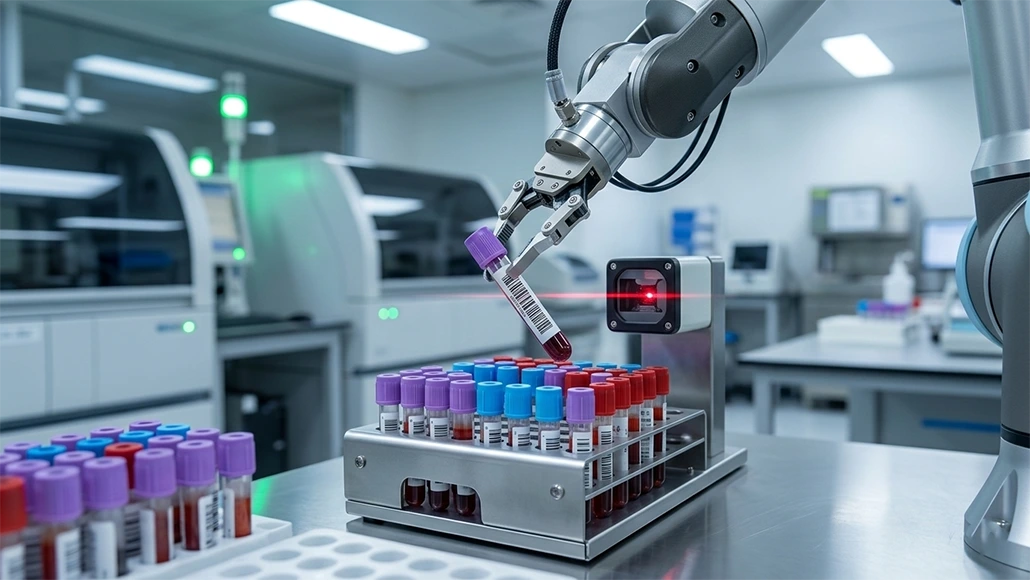
One of the most significant advantages of automation is the dramatic reduction in pre-analytical and analytical errors. Studies have shown that the vast majority of laboratory errors occur during the manual handling of samples such as mislabeling, improper pipetting, or contamination. Robotic sample processing addresses these issues by using high-precision mechanics and integrated barcoding to ensure that every sample is correctly identified and handled according to its specific testing protocol. This robotic precision is a core component of clinical laboratory automation improving testing efficiency, as it guarantees the integrity of the sample and the accuracy of the final result. When a clinician receives a lab report from an automated system, they can have a higher level of confidence that the data is a true reflection of the patient’s status.
Furthermore, automation allows for the standardization of laboratory techniques across different shifts and locations. In a manual lab, subtle variations in how individual technologists perform a task can lead to slight differences in results. Robotic systems, however, perform every action with identical precision, every time. This standardization is vital for longitudinal studies and for managing patients with chronic conditions where subtle trends in lab values are important for tracking disease progression. By providing a stable and reproducible testing environment, diagnostic laboratory technology ensures that the data generated is of the highest possible quality, fostering a more precise and evidence-based approach to clinical medicine.
Digital Connectivity and Laboratory Information Systems
The physical automation of the laboratory is complemented by a robust digital architecture that manages the flow of information. Digital lab management systems, also known as Laboratory Information Systems (LIS), act as the central nervous system of the automated lab. These systems track the status of every sample in real-time, from the moment it is logged in to the moment the result is verified and uploaded to the patient’s electronic health record (EHR). This digital oversight is a critical part of clinical laboratory automation improving testing efficiency, as it eliminates the need for manual data entry and reduces the risk of transcription errors. It also allows for the automated triaging of abnormal results, ensuring that critical findings are immediately brought to the attention of the attending physician.
Advanced LIS platforms also incorporate sophisticated “middleware” that can perform automated reflex testing. For example, if an initial screen for a thyroid disorder returns an abnormal result, the system can automatically trigger a more specific follow-up test without waiting for a new order from the doctor. This proactive approach speeds up the diagnostic process and ensures that the clinical team has all the information they need to make a decision in a single visit. The integration of digital connectivity into the lab workflow is a prime example of how lab efficiency solutions are moving beyond simple robotics toward an intelligent and responsive model of care that anticipates the needs of the patient and the clinician alike.
Expanding Capabilities: Molecular and Genetic Diagnostics
As the field of medicine moves toward a more personalized approach, the laboratory must be able to handle increasingly complex molecular and genetic tests. Historically, these tests were labor-intensive and required highly specialized skills, making them slow and expensive to perform. However, modern clinical laboratory automation improving testing efficiency is now bringing the benefits of robotics to these high-end diagnostics. Automated workstations can now handle the delicate tasks of DNA extraction, amplification, and sequencing with a level of precision and speed that was previously only possible in dedicated research centers. This “democratization” of molecular testing allows smaller hospitals to provide the same level of sophisticated care as large academic institutions.
The ability to perform rapid molecular diagnostics is particularly important in infectious disease management and oncology. In cases of sepsis, for example, identifying the specific pathogen and its antibiotic resistance profile in hours rather than days can be the difference between life and death. In cancer care, automated genetic profiling allows for the identification of specific mutations that can be targeted with precision therapies, improving the effectiveness of treatment while reducing side effects. By making these advanced tests more accessible and efficient, clinical lab systems are playing a vital role in the realization of precision medicine. The integration of high-level science with industrial-scale automation is the defining characteristic of the modern diagnostic laboratory.
Operational Impact and Human Resource Optimization
One of the most profound impacts of clinical laboratory automation improving testing efficiency is on the laboratory workforce itself. By automating the routine and repetitive tasks that consume much of a technologist’s day, laboratories can free up their highly skilled staff to focus on more complex, interpretive, and consultative work. Instead of decapping tubes and loading carousels, medical technologists can spend their time troubleshooting difficult cases, correlating results with clinical findings, and working alongside doctors to optimize testing protocols. This shift not only improves the overall quality of the lab’s output but also leads to higher levels of professional fulfillment and retention among laboratory staff.
From an administrative perspective, automation provides a high level of operational predictability and cost control. While the initial investment in automated systems can be significant, the long-term gains in efficiency and throughput lead to a lower cost per test. Automation also reduces the need for constant supervision and allows the lab to handle significant fluctuations in demand without a proportional increase in staffing costs. This financial sustainability is essential for the long-term health of the diagnostic sector, ensuring that laboratories can continue to invest in the latest technologies and attract the best talent. The efficiency realized through automation is not just a clinical benefit; it is an economic necessity in a healthcare landscape that is increasingly focused on value and performance.
The Future: AI-Driven Diagnostics and Predictive Analytics
As we look toward the future, the next stage of clinical laboratory automation improving testing efficiency will involve the integration of artificial intelligence and machine learning. These technologies can analyze the massive datasets generated by automated laboratories to identify subtle patterns that are invisible to the human eye. For example, AI algorithms can look at a patient’s historical lab results and predict the likelihood of a future medical event, such as a cardiovascular incident or the onset of diabetes. This shift from reactive diagnostics to predictive analytics represents the ultimate evolution of the clinical laboratory, where data is used not just to identify disease but to prevent it.
AI can also be used to optimize the laboratory’s internal operations. Intelligent systems can predict when a particular analyzer is likely to fail, allowing for proactive maintenance that prevents downtime. They can also optimize the flow of samples through the lab to minimize bottlenecks and ensure that resources are used as efficiently as possible. This “smart lab” model is the future of diagnostics, where every piece of equipment and every bit of data is working in harmony to provide the best possible service. By continuing to embrace the power of technology, the clinical laboratory will remain the most influential and essential part of the modern medical team, dedicated to the pursuit of health through precision and efficiency.
Conclusion: The Foundation of Modern Medicine
The ongoing journey of clinical laboratory automation improving testing efficiency is a testament to the power of innovation in the service of patient care. We have moved from a manual and fragmented past to a future that is defined by integration, precision, and speed. The modern laboratory is a testament to the partnership between human expertise and technological excellence, providing the clear and actionable data that is the basis for all modern medicine. As we continue to push the boundaries of what is possible in diagnostics, the laboratory will remain at the forefront of medical progress, ensuring that every patient receives the benefit of the most accurate and timely information available.
Ultimately, the success of any healthcare system depends on the quality of its diagnostic capabilities. By investing in the highest levels of automation and digital connectivity, we are ensuring that our healthcare systems are resilient, responsive, and ready for whatever challenges the future may hold. The clinical laboratory is no longer a hidden part of the hospital; it is the engine that drives clinical excellence and the primary source of the knowledge that allows us to heal. This is the true impact of automation, and it is a commitment to health that we will continue to uphold with every sample we process and every result we deliver.