













The pursuit of operational excellence within the healthcare sector has led to a significant shift in how institutional resources are managed and deployed. As the demands on global health systems continue to grow, the need for scalable, intelligent, and responsive infrastructure has never been more urgent. At the forefront of this evolution are AI enabled EHR solutions healthcare efficiency strategies, which are designed to optimize every facet of the clinical and administrative lifecycle. By integrating artificial intelligence into the core of electronic health records, organizations are able to unlock new levels of productivity, reduce wasteful spending, and ensure that every patient receives the highest possible standard of care in a timely and cost-effective manner.
The impact of AI enabled EHR solutions healthcare efficiency is multifaceted, touching everything from patient scheduling and resource allocation to complex clinical diagnosis and long-term population health management. These solutions are not merely tools for recording data they are sophisticated engines of optimization that can analyze historical patterns and predict future needs. This capability allows hospital administrators and clinical leaders to make data-driven decisions that were previously based on intuition or incomplete information. In a high-stakes environment where efficiency can quite literally be a matter of life and death, the transition to AI-enabled systems represents the most significant advancement in healthcare management in the digital age.
Redefining Operational Productivity through Intelligent Automation
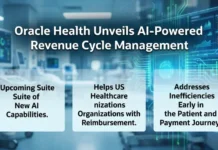
A primary driver of AI enabled EHR solutions healthcare efficiency is the automation of the complex “back-office” functions that sustain a clinical institution. Billing, coding, and insurance verification are traditionally labor-intensive processes prone to human error and significant delays. Intelligent EHRs use machine learning to automatically assign the correct clinical codes to a patient encounter, ensuring that claims are submitted accurately and processed more quickly. This not only improves the hospital’s cash flow but also reduces the administrative friction that can lead to burnout among non-clinical staff. When the system handles the complexities of reimbursement in the background, the institution can operate with a leaner and more focused administrative team.
Furthermore, AI-enabled solutions are transforming the way patients move through the healthcare system. Predictive scheduling algorithms can analyze patient data to identify those most likely to miss appointments and proactively offer reminders or alternative times. This reduces the costly “no-show” rate and ensures that clinical resources are utilized to their full capacity. Similarly, within the hospital walls, AI can predict discharge dates with high accuracy, allowing the bed management team to coordinate more effectively with the emergency department and surgical suites. This improved “throughput” is essential for maximizing the number of patients a facility can serve without compromising the quality or safety of care.
Enhancing Clinical Accuracy and Reducing Wasteful Interventions
Efficiency in healthcare is not just about moving faster it is about moving smarter. AI enabled EHR solutions healthcare efficiency improves clinical outcomes by reducing the incidence of “defensive medicine” and the ordering of unnecessary tests. By providing clinicians with real-time, evidence-based recommendations at the point of care, these systems help ensure that every diagnostic procedure and treatment is clinically justified. This not only saves the patient from potentially invasive or uncomfortable procedures but also reduces the overall cost of care for the healthcare system.
The integration of AI also allows for more precise diagnostic support. By cross-referencing a patient’s symptoms and history with a global database of medical knowledge, an intelligent EHR can suggest potential diagnoses that a clinician might not have immediately considered. This is particularly valuable in the case of rare or complex diseases, where an early and accurate diagnosis can significantly reduce the long-term cost of treatment and improve the patient’s quality of life. In this way, AI-enabled systems act as a “multiplier” for clinical expertise, allowing healthcare organizations to provide a level of care that was previously only available at the most specialized academic medical centers.
Coordinating Care Teams for Seamless Resource Management
One of the greatest challenges in modern healthcare is the fragmentation of care across different providers and departments. AI enabled EHR solutions healthcare efficiency addresses this by acting as a central coordination hub. The system can monitor the status of all active care plans across the institution, identifying bottlenecks or gaps in communication before they impact the patient. For example, if a patient is waiting for a consultation that has not yet been scheduled, the AI can alert the department head to the delay, ensuring that the patient’s journey remains on track.
This coordination is also essential for managing physical resources such as operating rooms, ventilators, and specialized imaging equipment. AI algorithms can analyze real-time demand and suggest the most efficient way to allocate these limited assets. This prevents situations where expensive equipment sits idle while patients wait for care, or where procedures are delayed due to a lack of available space. By optimizing the use of both human and physical capital, AI-enabled EHRs help hospitals operate at a level of efficiency that is sustainable in the face of rising costs and increasing patient volumes.
The Strategic Value of Population Health Management
True healthcare efficiency extends beyond the walls of the hospital and into the community at large. AI enabled EHR solutions healthcare efficiency enables organizations to manage the health of entire populations more effectively. By analyzing data across thousands of records, these systems can identify high-risk groups and suggest preventative interventions that can keep people out of the hospital entirely. For instance, the AI might identify a cluster of diabetic patients who are at risk of developing complications and flag them for a proactive wellness check or educational program.
This shift toward “value-based care” is at the heart of the modern efficiency movement. By focusing on keeping people healthy rather than just treating them when they are sick, healthcare organizations can achieve a more sustainable and impactful business model. Intelligent EHRs provide the data foundation necessary to measure and improve these population health outcomes, allowing institutions to demonstrate their value to insurers, government bodies, and the communities they serve. In the long run, this proactive approach is the only way to address the growing burden of chronic disease and the escalating costs of global healthcare delivery.
Implementing AI-Enabled Solutions for Long-Term Success
The transition to a fully AI-enabled environment requires careful planning and a commitment to long-term institutional change. It is not enough to simply “turn on” the AI features they must be integrated into the existing workflows and culture of the organization. This involves training staff to work alongside intelligent systems and establishing clear governance frameworks to ensure that the AI is used ethically and effectively. When done correctly, the implementation of AI enabled EHR solutions healthcare efficiency can be the catalyst for a total transformation of the healthcare organization.
Leaders must also prioritize data quality and interoperability. An AI system is only as good as the data it is fed. Therefore, maintaining a clean and standardized clinical database is a prerequisite for success. By investing in robust data management practices, healthcare organizations can ensure that their AI-enabled solutions provide accurate and actionable insights for years to come. This commitment to data excellence is the bedrock upon which the high-efficiency healthcare system of the future will be built.
Conclusion: Efficiency as the Engine of Clinical Excellence
In the final analysis, the adoption of AI enabled EHR solutions healthcare efficiency is not just an IT project it is a fundamental shift in the philosophy of healthcare delivery. We are moving toward a world where technology and human expertise are so closely integrated that the distinction between them becomes secondary to the outcome of the patient. By leveraging the power of artificial intelligence to optimize every aspect of the healthcare environment, we can create a system that is more resilient, more responsive, and more compassionate. This is the promise of the AI-enabled era: a healthcare system that works better for everyone, from the clinician at the bedside to the administrator in the boardroom, and most importantly, for the patient who entrusted us with their care.