







Close
Digital Health & Ai Innovation summit 2026
Medical Taiwan 2026

InterSystems Helps Pria Improve Patient Outcomes and Streamline At-Home Care Delivery with Health Connect Cloud

InterSystems Helps Pria Improve Patient Outcomes and Streamline At-Home Care Delivery with Health Connect Cloud

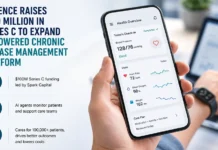
Pria, an innovative healthcare technology company that is transforming the way chronic care management is delivered at home, announced that Pria will be using InterSystems Health Connect Cloud to deliver the integration required to accelerate Pria’s efforts to revolutionise the operating system for health at home.

With Pria, providers, patients and family caregivers can access a suite of health management tools to help them monitor and manage all aspects of their prescribed care plans. Through cloud-based connectivity, Pria’s platform can be used to identify eligible patients, align their care plan with a Pria Wellness Plan, and integrate patient data with their electronic health records.

With guaranteed delivery, reliability and stability, InterSystems Health Connect Cloud delivers comprehensive healthcare interoperability via a platform-as-a-service (PaaS) offering. Health Connect Cloud streamlines data integration between clinical systems and applications, while managing the entire infrastructure and providing enhanced data automation and management capabilities to help providers and application developers rapidly leverage HL7 FHIR® and other healthcare standards to connect systems and solutions. As a PaaS model, it is ideal for digital health solution developers such as Pria because it reduces infrastructure and licensing costs and ensures compliance with standards, allowing developers to focus on building their unique product offering.

According to Pria’s CEO Ainar Abdrakhmanov, “We are thrilled with the continued support and collaboration from InterSystems to advance our operating system for health at home. With InterSystems’ cutting-edge technology and expertise, we will develop a platform that enables healthcare organisations to deliver health-at-home, value-based care for the Medicare population. Our innovative platform will simplify and improve the scalability of the health-at-home solutions market, thereby resolving current market pain points.”

“InterSystems is thrilled to collaborate with forward-thinking companies in pursuit of a shared goal: leveraging technology to deliver advanced data automation and intelligence solutions that improve patient outcomes,” said Paul Grabscheid, Vice President of Strategic Planning, InterSystems. “Through supporting innovative companies like Pria, we are excited to push the boundaries of what’s possible in healthcare and revolutionise traditional approaches to data management and analysis.”

Pria is building the standard for health-at-home solutions by delivering a platform that streamlines workflows, improves patient outcomes and reduces costs. The company’s innovative approach has earned it a reputation as a game-changer in the healthcare industry. Pria’s integration of health-at-home solutions on one platform supports healthcare organisations to lower costs while delivering a patient engagement experience through Pria’s Digital Nurse.

>>>
Mymedicalimages.com Partners with the AAOE for a Better Way to Get Medical Images from Patients

Mymedicalimages.com Partners with the AAOE for a Better Way to Get Medical Images from Patients

mymedicalimages.com announced today that it has partnered with the American Alliance of Orthopaedic Executives (AAOE) so that doctors never have to view medical images on CDs again. The campaign will launch at the AAOE Annual Conference in Orlando on April 20th.

Using the Upload on mymedicalimages button placed on orthopaedic practice websites, patients can easily share their medical images with a doctor prior to their appointment. Patients without access to a computer with a CD drive can visit one of more than 7,400 select CVS Pharmacy locations and easily upload and share their medical images from a photo kiosk for free. This helps improve and personalize healthcare while moving medical images away from CDs and into patients’ hands to view, share and manage from their mobile devices.

Having facilitated the sharing of millions of medical images between patients and physicians in 99 countries and territories on six continents, mymedicalimages.com is a leader in patient/family–centered medical image management and sharing. Its mission is to improve patient engagement, outcomes, and treatment options by providing greater access to care. Given that CDs are the primary means by which medical images are shared, mymedicalimages.com has solved the most significant problem — the obsolescence of CD drives.

There has never been an easier way for patients to manage and share mammograms, sonograms, x-rays, MRIs, PET, and CT scans with medical specialists like oncologists, orthopaedic surgeons, and neurosurgeons, for example. According to the American Medical Association (AMA), medical images provide a historical baseline for disease progression, the success of treatment, or monitoring for emerging differences over time. Now, managing and sharing medical images is as easy as sharing personal photos, and it’s safe, secure, and trusted by medical specialists and institutions worldwide.

From the joy of expecting parents sharing ultrasound images with family and friends to the pain of managing a child’s chronic disease diagnosis and treatment, mymedicalimages subscribers can upload and share their medical images in just minutes, improving access at a meaningful moment in their healthcare journey and eliminating the cost and hassle of mailing CDs. A mymedicalimages subscription puts patients in control of their medical images.

“Anyone who has ever tried to share medical images at a time of need understands how frustrating it can be. Too often, the result is delayed or even worse – unattainable care,” said mymedicalimages.com founder and CEO, Dan Hodgeman. “By giving patients more control over their medical images, they gain greater access to more specialists from around the world. Giving patients convenient access to our software on thousands of networked kiosks nationwide plays a strategic role in this campaign.”

“Most diagnoses and treatments start with medical images. We’re giving patients a more personal experience to manage and share them over their lifetime,” concluded Hodgeman.

BD Introduces Advanced Ultrasound Technology to Help Drive First-Stick Success for IV Insertions

BD Receives Order from Dutch Ministry of Health for More than Nine Million 15-minute COVID-19 Antigen Tests

BD, a leading global medical technology company,launched a new, easy-to-use advanced ultrasound device with a specialized probe designed to provide clinicians with optimal IV placement.

The BD Prevue™ II System addresses an unmet need in IV access through real-time needle depth markers. The system features the BD Cue™ Needle Tracking System, offering a high-quality ultrasound image of the needle trajectory, and is compatible with BD Cue™ Needle Tracking-enabled catheters. Simulated studies show that pairing a needle-tracking system with ultrasound guidance may help reduce the number of attempts and time to successful vessel access — which, according to the American Institute of Ultrasound in Medicine, may make vascular access procedures safer and easier for clinicians and patients.1

More than 90 percent of hospitalized patients receive IV therapy through a peripheral IV catheter2 — representing hundreds of millions of patients a year.3 However, nearly two-thirds4 of these patients have vessels that are difficult to visualize and access, often resulting in additional needlesticks, vessel damage and infiltration into the surrounding tissue.

“Difficult IV access remains far too common today, but the availability of the BD Prevue™ II System supports a future where every needlestick has a predefined pathway for successful placement,” said Eric Borin, worldwide president of Medication Delivery Solutions at BD. “BD is advancing the vision of a ‘One-Stick Hospital Stay,’ and first-stick success is the first requirement to fulfill that vision. First-stick success also reduces the pain and anxiety patients often experience while undergoing multiple IV access attempts and provides clinicians with IV workflow efficiencies and confidence.”

The system is designed with clinician-friendly features to help expand the use of ultrasound in IV placement. For example, the BD Prevue™ II System offers a specialized probe designed to help reduce the learning curve — ensuring that clinicians can use the technology without changing their current insertion technique or field of view.

“Patients living with chronic conditions like heart failure may suffer from poor circulation and large amounts of scar tissue from frequent venous access making their veins more difficult to locate and creating a challenge for placing a good, lasting peripheral IV line,” said Lisa Wilson, registered nurse and night shift lead for the progressive cardiac care unit at INTEGRIS Health Baptist Medical Center in Oklahoma City, Okla. “With the use of ultrasound guidance technology, we are able to quickly and successfully place IVs in our hard-to-stick patients, leading to quicker treatment and fewer sticks for our patients and a better experience for everyone involved.”

As the global leader in vascular access solutions, BD is committed to advancing the standard of care for IV therapy and blood draws for patients and health care providers. The availability of the BD Prevue™ II System further drives the BD “One-Stick Hospital Stay” vision to help reduce unnecessary needlesticks by choosing the right vascular access device and placing it successfully the first time. This is one of three pillars of the vision that also includes using one IV line as a single access point for required therapies and blood draws, and optimal maintenance of the IV line to help reduce the risk of complications so it does not have to be replaced and lasts throughout a patient’s hospital stay.

Myriad Genetics and SimonMed Imaging Collaborate to Advance Precision Medicine with New Genetic Risk Assessment Program

Myriad Genetics announced the planned launch of a new hereditary cancer assessment programme that combines diagnostic imaging, genetic risk assessment utilising MyRisk® with RiskScore® and patient education.

Using a customised Myriad tool developed in partnership with SimonMed, the programme is expected to provide affordable access to genetic testing and personalised knowledge to improve clinical decisions for millions of SimonMed patients and families.

The collaboration will bring together the strengths of Myriad’s risk assessment resources and hereditary cancer test, MyRisk with RiskScore, and SimonMed’s deep expertise in the medical imaging space.

Myriad and SimonMed will begin a phased rollout of the programme in early May 2023 to patients at select SimonMed women’s imaging sites. The programme is expected to be operational in all 86 of SimonMed’s women’s imaging sites by the end of this year, with the goal of supporting all SimonMed patients in their remaining 85 sites and service lines, thereafter.

This advanced technology platform is a collaboration between SimonMed and Myriad. It is personalised healthcare designed so that patients and providers will have a more accurate understanding of the cancer risk and can take precise action as needed from genetic screening to supplemental imaging like MRI and ultrasound.


The Hazelden Betty Ford Foundation Collaborates with TELUS Health

The Hazelden Betty Ford Foundation and TELUS Health announce a collaboration to expand access to substance use disorder treatment for people across the United States and Canada.

Partnering with Hazelden Betty Ford Foundation, demonstrates commitment to address the addiction crisis unfolding in Canada and the United States. Together, the Hazelden Betty Ford Foundation and TELUS Health will reach people where and when they need help with next-generation solutions.

The collaboration will introduce substance use disorder-specific programming to TELUS Health’s AbilitiCBT solution that is currently being used by corporations, health care institutions, and health insurance companies. This internet-based cognitive behavioural therapy programme will continue to provide accessible mental health support, and will provide an innovative “first-step” into early intervention for alcohol and other substance use disorders, ongoing recovery and family support.


SingHealth and A STAR establish S$8 million partnership to co-develop healthcare innovations

SingHealth and the Agency for Science, Technology and Research (A*STAR) entered a Healthcare Translation Partnership (HTP) to accelerate the translation, deployment and commercialisation of healthcare research and innovation projects for better patient care. The partnership, which will provide S$8 million in funding support for projects, focuses on three healthcare innovation areas.

(i) Medical Technology

(ii) Data Science, Artificial Intelligence (AI) and Digital Health

(iii) Health Services Innovation

Research and the use of advanced and emerging technologies are critical to meet increasing healthcare demands, and ensure that healthcare remains sustainable for the future. However, it can be challenging to translate upstream scientific discoveries and innovative ideas in the lab into downstream, practical solutions that can be applied in clinical settings. Often, the challenges lie in the processes for validation, productisation, and adoption of research and innovation initiatives, such as for new medical devices or diagnostic and treatment tools.

The HTP aims to address this by establishing a framework and consolidating resources and support systems to facilitate joint projects between the SingHealth Duke-NUS Academic Medical Centre (AMC) and A*STAR. For example, there will be a dedicated partnership office which will coordinate and address the translation challenges holistically. The HTP will also build important bridges between experts in the three healthcare innovation focus areas, enabling clinicians, healthcare innovators, researchers and industry partners to collaborate and accelerate the research translation process. In the longer term, the HTP will set the stage for a more vibrant healthcare innovation ecosystem and nurture a pipeline of innovators to address evolving challenges in care delivery.

Ocular surface disease (OSD) is a priority eye condition highlighted by the World Health Organization1 . However, currently there are no clinical devices to evaluate disease severity directly and objectively, or track disease progression and ocular surface dynamics.

To address this, a team of clinician innovators and healthcare researchers from SingHealth’s Singapore National Eye Centre (SNEC), Singapore Eye Research Institute (SERI) as well as A*STAR’s Institute of Materials Research and Engineering (IMRE) are studying the use of a Terahertz imaging system on the ocular surface to objectively and efficiently evaluate OSD. The project, THEA (Terahertz High Definition Eye Analysis), will receive support under the SingHealth-A*STAR HTP to refine the project prototype and catalyse the process of bringing the product and technology to market.

Boosting AI Collaborations to Improve Ophthalmological Care

Building upon the longstanding partnership between both parties in the digital health space, SERI and A*STAR’s Institute of High Performance Computing (IHPC) have partnered to establish the SERI-IHPC Joint Lab to drive AI research and adoption of digital technologies in eye care. It will also support the development of digital infrastructure that supports and promotes enterprise AI in healthcare, including a clinical and technical AI sandbox to enable AI model training and testing between SingHealth, A*STAR and other industry partners. This will advance the research and development of AI solutions that aim to improve ophthalmological care for patients.

Professor Ivy Ng, Group CEO, SingHealth, said, “Research and innovation not only enable us to push the boundaries of medicine, they drive improvements through the development of novel medical devices, digital solutions for diagnosis and treatment, and health services innovations that optimise clinical operations and enhance value-driven care. The SingHealth-A*STAR HTP synergises SingHealth’s strengths in clinical care and healthcare innovation and A*STAR’s expertise in science and technology to catalyse the development of new solutions through research and innovation, and empower healthcare researchers and innovators to better leverage emerging technologies that will bring about better care outcomes for our patients and the population.”

Frederick Chew, Chief Executive Officer, A*STAR said, “Technological developments are rapidly advancing, especially in areas such as AI, bioinformatics, high performance computing and medical technologies. SingHealth and A*STAR have complementary strengths. Through the SingHealth-A*STAR HTP, we aim to spur the translation of research and innovation initiatives into impactful medical solutions that improve healthcare delivery, benefit patients, better support healthcare workers and benefit the economy.”

Australia to deploy world-first sensor technology platform for aged care fall prevention

InteliCare announces collaboration to create predictive technology for aged care

HSC Technology Group and partners Whiddon, Anchor Excellence and Commonwealth Scientific and Industrial Research Organisation (CSIRO), Australia’s national science agency, have been awarded an Aged Care Research and Industry Innovation Australia (ARIIA) grant with a total value of nearly $400,000 to run a feasibility study using a data analytics platform that combines sensor technology to prevent falls in residential aged care.

Consulting Clinical Research Director for HSC Technology Group, Dr Maggie Haertsch, said the prevalence of falls is unacceptably high in residential aged care and more research is required to support quality and safer care.

“The ARIIA funding will be used to develop the BEST CARE Project, which will provide an excellent opportunity to be smarter in detecting functional changes early and help design care to enable older people to have timely support as their needs change,” she said.

The BEST CARE Project will test the feasibility of a world first sensor platform called Talius in residential aged care.

Talius platform incorporates an algorithm originally developed and tested in an in-home care setting by CSIRO as part of their Dementia and Aged Care Services trial using the Smarter Safer Homes platform.

It uses a combination of sensors placed around the residential aged care home with settings adjusted to individual risks to identify factors that can lead to a fall. The study will explore the acceptability of these autonomous sensors and the use of an individual’s ‘sensor story’ to inform residents, their families, and care staff of the older person’s wellbeing. The study will also identify any barriers to adoption and the impact of this technology on the organisation’s operations.

Healthcare Employment Trends: 3 Things Shaping 2023 and Beyond

The year is 2023, and technological breakthroughs and altering societal needs are having a significant impact on the healthcare environment. From tailored medication to virtual care, the healthcare industry is undergoing a transformation that is redefining how healthcare is offered and received. 

Last year, according to Lensa, the key healthcare employment trends included technological advancements such as precision medicine, telehealth, and wearable devices, demographic shifts that require a multi-pronged response, and changing staffing needs due to fluctuations in healthcare needs.

Let’s compare and take a look at the top healthcare trends projected to emerge in 2023 and how they will affect the sector as a whole.

Rising demand for healthcare

The aging population is one of the primary causes of this trend. People will require more healthcare services as they live longer, notably for chronic disease management and long-term care. Furthermore, breakthroughs in medical technology and treatments are allowing people to live with illnesses that were once fatal, demanding continual medical care.

The COVID-19 epidemic has significantly boosted the demand for healthcare services. The pandemic underlined the necessity of easily available and high-quality healthcare, and many people are seeking medical attention for COVID-related difficulties as well as other health concerns that may have been postponed as a result of the pandemic.

There is also an increasing desire for non-traditional healthcare settings, such as telehealth and home healthcare. Telehealth allows patients to obtain medical care from a distance, which is especially beneficial for people who reside in rural areas or have trouble accessing regular healthcare facilities. Home healthcare is becoming more popular as people seek to avoid hospitals and receive care in a more comfortable and familiar setting.

Recent policy changes in healthcare

Healthcare policy changes can have a considerable impact on the healthcare business, including employment trends. Here are some recent healthcare policy developments and their possible influence on healthcare employment:

The Affordable Care Act (ACA), popularly known as Obamacare, was passed in 2010 and has resulted in significant healthcare policy changes in the United States. The bill has increased access to healthcare for millions of Americans while also creating new job possibilities in the healthcare business.

Medicare for All is a proposed healthcare policy that would provide all Americans with universal healthcare coverage. While the proposal’s contents differ, it is anticipated to increase demand for healthcare services and job prospects.

The COVID-19 epidemic assistance packages, including money for healthcare services and job creation. For example, the American Rescue Plan Act of 2021 offers $8.5 billion for rural healthcare providers and $7.6 billion for community health clinics. This financing could result in a greater demand for healthcare workers in these situations.

Innovation and technology

Technology and innovation are reshaping the healthcare industry and influencing job trends. The demand for individuals with technology competence, data analytic abilities, and preventive care understanding is likely to expand as healthcare providers continue to implement new technologies and focus on preventive care.

Increased Demand for Technologically Skilled Individuals: With the constant innovation in healthcare technology, such as electronic health records (EHRs), telemedicine, and artificial intelligence (AI), the healthcare business is in desperate need of individuals with technological competence.

Data Analytics Expansion: The use of data analytics is becoming increasingly significant in healthcare since it allows healthcare practitioners to make better-educated decisions about patient care. This is increasing the demand for healthcare data analysts and informaticists.

Need for Cybersecurity Professionals: As the healthcare business relies more on technology to manage patient data, it becomes more exposed to cyber-attacks. As a result, healthcare organizations require cybersecurity experts who can protect patient data and prevent cyber threats.

Shift in Preventive Care Emphasis: There is an increasing emphasis on preventive care in the healthcare business, which includes promoting healthy lifestyles, early screenings, and disease management programs. This trend is increasing demand for healthcare professionals that specialize in preventative treatment, such as health coaches and wellness coordinators.

Other critical considerations

Healthcare employment is projected to grow by 15% from 2019 to 2029, adding over 2 million jobs, there are shortages in certain professions, such as nursing and primary care. It is noted that these shortages are expected to persist, creating opportunities for healthcare workers who specialize in these areas.

Furthermore, the healthcare industry is emphasizing diversity and inclusion, with a focus on hiring more women, people of color, and people from marginalized communities. According to Lensa’s report, healthcare firms are investing in diversity and inclusion programs and initiatives, which will likely result in more diverse employment practices.

In simple words

The healthcare industry is predicted to continue to grow significantly in 2023 and beyond. An aging population, advances in medical technology, and the ongoing COVID-19 pandemic will all fuel demand for healthcare services and experts. 

With a greater emphasis on telehealth and digital health in the aftermath of the pandemic, the healthcare industry may transition toward more distant and flexible work arrangements. 

The healthcare job landscape in 2023 is expected to be dynamic and ever-changing, posing both problems and possibilities for both healthcare workers and employers.

US Healthcare Websites Under Attack With Fake Requests – HC3

The Health Sector Cybersecurity Coordination Centre (HC3), which falls under the Department of Health and Human Services in the US, has gone on to issue a warning to healthcare organisations stating that a massive flood of distributed denial of service (DDoS) attacks can very well shut down their websites.

It is well to note that a third party has gone on to share this piece of information with HC3 concerning the DDoS attacks, which have been monitored since November 2022. These attacks happen to be flooding servers as well as networks with fake domain names and DNS requests for non-existent domains, as per the alert.

According to HC3, a DNS non-existent domain DDoS attack happens to be one of the numerous denial-of-service attacks that target the DNS. What it intends to do is overload the DNS server with high request volumes, that can either be invalid or even non-existent.

In this kind of DDoS, DNS server spends time gauging and locating something that does not exist at all instead of responding to a legitimate user request. Since the invalid request volume increases, the server begins slowing down, thereby preventing legitimate requests from getting some kind of response. In fact, legitimate clients who are looking to access the website end up increasing the load even further. In most cases, the DNS proxy server as well as the DNS authoritative server use all their time to take care of those bad requests, as per HC3.

When successful, result of these attacks can mean greater utilisation of resources on the server, with the cache getting filled with non-existent domain replies. This can result in the website slowing down or stopping an authorised user from accessing or using its services.

These attacks, like the other DDoS attacks, get carried out by large botnets, which have thousands of compromised devices that are located across the world, thereby making the detection as well as the blocking part very difficult. Due to this, the non-existent domain DDoS attacks could go on to negatively impact network providers, end-users, and, of course, the owners of the website.

If the network providers are not able to subside or control the attack, it would obviously lead to their customers being unable to access the website and therefore the services too.

HC3 thereby encourages organisations to be vigilant when it comes to blocking IPs, as this could result in a legitimate user being prevented from accessing public services. As per HC3, there are numerous recommended actions as well as mitigations that are available concerning DNS non-existent domain Flood DDoS attacks.

These recommendations include blackhole routing or filtering suspected domains and servers, DNS Response Rate Limiting implementation, request blockings from the client IP address, cache refresh assurance, and facilitating continuous services.

South Korea Working Towards Medical Device Export Dominance

The South Korean Ministry of Health and Welfare has gone on to announce the first ever comprehensive plan when it comes to the development and support of the medical device industry so as to make the market a worldwide medical device export powerhouse.

The plan is from 2023 through 2027, which is a follow-up of strategies to create novel bio-health markets that were discussed on February 28. The medical device sector is anticipated to implement a high and sustainable growth potential because of the global trends, which include economic growth, an ageing population, and, of course, growing interest when it comes to health.

According to Cho KyooHong, the Minister of Health and Welfare, their medical device sector took a leap forward during the course of COVID-19.

They now need to build long-term support strategies so as to ensure the sector’s sustainable growth and also maintain its momentum in exports.

In this regard, they have gone on to develop the first long-term comprehensive plan under the Nurturing Medical Devices Industry and Innovative Medical Devices Act in order to help the industry become competitive globally and also lead the much wider bio-health sector, and they shall work even more to make the cooperation robust within the sector and also secure the required budget, added the minister.

Translate »