Close
Digital Health & Ai Innovation summit 2026
Medical Taiwan 2026

6 Health Benefits Of Installing A Water Filter

6 Health Benefits Of Installing A Water Filter

Did you know that the water coming out of your taps may not be as clean as you think? It may contain harmful chemicals and pollutants that can negatively affect your health. Installing a water filter is a great way to improve your water quality and protect your health. This article will discuss six health benefits of installing a water filter in your home. Let’s get started.

Safe Drinking Water

One of the most important benefits of installing a water filter is that it provides safe drinking water. For instance, by installing an under sink water filter, you can be sure that the water you’re drinking is free of harmful chemicals and pollutants. This is especially important for families with young children or elderly members, as they are more susceptible to the negative effects of contaminated water.

So, if you live in areas where the water quality is not up to the mark, installing a water filter is a must. It would help if you considered various factors when choosing a water filter. The type of water filter, the size of the unit, and the price are all important factors to consider. But, with so many options available on the market, it is better to work with an expert to choose the best water filter for your home.

Cleaner and Better-Tasting Water

Another benefit of installing a water filter is making your water taste better. This is because most filters remove chlorine from the water, giving it a bad taste. In addition, by installing a water filter, you will also notice that your water smells better. This is because many filters remove contaminants that can cause your water to have a bad odor.

If you are not happy with the taste or smell of your tap water, then installing a filter is a great way to improve your water quality. It will taste and smell better, but you’ll also know that it is free of harmful contaminants. Ensure that the system is serviced regularly for the best results.

Protection from Lead

One of the most dangerous contaminants found in water is lead. Lead can enter your water supply through old pipes or fixtures. If you are using tap water for drinking, cooking, or bathing, you could be exposed to this harmful contaminant.

Lead exposure can have serious health effects, especially for young children and pregnant women. It can cause learning difficulties, behavioral problems, and even brain damage. So, if you want to protect yourself and your family from lead exposure, installing a filter is necessary. Various water filters can remove lead from your water supply, and it is important to choose the right one for your home.

Reduced Risk of Disease

Another great benefit of filtered water is that it can help to reduce your risk of contracting various diseases. For example, according to studies, drinking filtered water can help to reduce your risk of gastrointestinal diseases such as diarrhea and dysentery.

In addition, filtered water can also help reduce your risk of contracting respiratory diseases such as pneumonia. Many filters remove harmful bacteria and viruses from your water supply. So, if you want to stay healthy and reduce your risk of disease, it is important to install a water filter in your home.

Improved Skin and Hair Health

Do you mind your skin and hair quality? You’ll be happy to know that filtered water can also improve your skin and hair health. This is because filtered water is free of harmful chemicals and minerals that can damage your skin and hair.

For instance, if you have hard water, the minerals in the water can cause your skin to become dry and irritated. But, by using filtered water for bathing, you can help to improve your skin health. Filtered water can also help remove build-up from your hair and scalp, leaving your hair looking healthier and shinier. So if you mind how your skin and hair look, it is worth investing in a water filter.

Lower Risk of Cancer

One of the most serious health effects of drinking contaminated water is an increased cancer risk. This is because many contaminants can increase your risk of developing cancer. For example, according to studies, exposure to certain chemicals such as arsenic and chromium can increase your risk of developing bladder cancer.

So, if you want to protect yourself from this serious health threat, it is important to install a water filter in your home. Many different filters can remove these harmful contaminants from your water supply, and it is important to choose the right one for your needs.

There are many great benefits of filtered water. If you want to improve your health, protect yourself from disease, and enjoy better-tasting water, it is worth investing in a water filter. There are many different types of filters available on the market, and it is important to choose the right one for your home. Ensure that the system is serviced regularly to get the best results.

New Independent Market Research Says 84% Of US Healthcare Professionals Likely To Use Orviglance Imaging Agent In Target Population

American Hospital Dubai selects Oracle and Cerner to deliver healthcare

Ascelia Pharma announced and welcomed the results of independent market research showing that 84% of healthcare professionals will likely use Orviglanceยฎ for magnetic resonance imaging (MRI) in patients with cancer in the liver and reduced kidney function.

The independently conducted survey asked 270 healthcare professionals in the US (radiologists, oncologists and nephrologists) about their choices of imaging and contrast agents in patients with cancer. The primary driver of their MRI contrast agent decisions is patient safety, and in particular the need to minimize the risk of Nephrogenic Systemic Fibrosis (NSF), a side-effect associated with the currently available gadolinium agents in patients with reduced kidney function โ€“ the target population for Orviglance. They were also concerned about allergies and gadolinium toxicity.

For patients with cancer in the liver and severely impaired kidney function, respondents currently prefer not to use a contrast agent when performing an MRI (unenhanced), even though this reduces the ability to detect and visualize cancer lesions.

When presented the product profile of Orviglance, 84% of participants say they are likely to or definitely will use Orviglance for the target patient population. These results are consistent with quantitative research completed in 2018 and confirm strong user support as Ascelia Pharma prepares for the launch of Orviglance.

Julie Waras Brogren, Ascelia Pharmaโ€™s Chief Commercial Officer, commented: โ€œThe positive reactions to Orviglance from the research participants are incredibly encouraging. This convincing research confirms the clear unmet need for an effective alternative to unenhanced MRI and a safe alternative to GBCAs; and underlines that Orviglance has potential to improve outcomes for patients whose current diagnostic options are suboptimal.โ€

Orviglance is a novel manganese-based oral contrast agent for MR imaging developed to improve the detection and visualization of focal liver lesions (including liver metastases and primary tumors) in patients with severely reduced kidney function. It has been granted an Orphan Drug Designation by the US Food and Drug Administration (FDA) and is currently in Phase 3 development, following Phase 2 clinical trials in which it demonstrated high quality imaging compared to MRI without contrast agent.

NSF is serious and potentially life-threatening and a known side-effect of GBCAs in patients with severe kidney impairment. Several regulatory agencies (including the FDA and EMA) issued warnings about the use of gadolinium-based agents. More than 15% of respondents in the survey have experienced a case of GBCA induced NSF.

UN Environment Programme joins alliance to implement One Health approach

Spectrum Health and Beaumont Health to Launch New Health System

Work to tackle the challenges of human, animal and ecosystem health using a more integrated approach has seen significant progress in the past year, leaders of three international organizations cooperating across these sectors said, as they expanded their group to include a fourth body, the UN Environment Programme (UNEP).

At its annual executive meeting this week, the Tripartite partnership for One Health, bringing together the Food and Agriculture Organization of the United Nations (FAO), the World Health Organization (WHO) and the World Organization for Animal Health (OIE), formally became the Quadripartite as it signed a Memorandum of Understanding with UNEP.

The One Health approach aims to sustainably balance and optimize the health of people, animals, ecosystems and the wider environment. It mobilizes multiple sectors, disciplines and communities to work together to foster well-being and tackle threats to health and ecosystems. And it addresses the collective need for clean water, energy and air, safe and nutritious food, action on climate change, and contributing to sustainable development.

โ€œWe are stronger with UNEP joining the Tripartite, FAO Director-General QU Dongyu said, adding: โ€œUNEP is already active in relevant areas of Tripartite work.โ€ The Memorandum of Understanding notes that UNEP โ€œsets the environmental agenda and promotes the coherent implementation of the environmental dimension of sustainable development within the UN system, and serves as an authoritative advocate for the global environment.โ€

The work of the newly expanded alliance will be focused on a One Health Joint Plan of Action, which includes six main action tracks: enhancing countriesโ€™ capacity to strengthen health systems under a One Health approach; reducing the risks from emerging or resurfacing zoonotic epidemics and pandemics; controlling and eliminating endemic zoonotic, neglected tropical or vector-borne diseases; strengthening the assessment, management and communication of food safety risks; curbing the silent pandemic of antimicrobial resistance (AMR) and better integrating the environment into the One Health approach.

Plan implementation the key challenge

As FAO handed over the rotating chair of the secretariat to WHO, Director-General Qu noted the past yearโ€™s substantial progress in efforts to collectively develop the action plan and added: “Now the challenge is implementation: how do we translate our work on the ground to support our Members? And how do we mobilize funding and financing mechanisms to support the Joint Plan for Action?โ€

In his opening remarks, WHO Director-General Tedros Adhanom Ghebreyesus, said: โ€œWe need to build a more comprehensive and coordinated One Health governance structure at global level. We need a strong workforce, committed political will, and sustained financial investment. We need to develop a more proactive way of communicating and engaging across sectors, disciplines and communities to elicit the change we need.โ€

Monique Eloit, OIE Director General acknowledged the key milestone of the MoU with UNEP, saying: โ€œToday, I am particularly pleased that our Tripartite collaboration is expanded to include UNEP as an equal partner. Its mandate, expertise and networks will provide an important contribution to advance One Health. This new chapter in our partnership will make us stronger and more prepared to serve our members and address global health challengesโ€.

UNEPโ€™s Executive Director Inger Andersen said: โ€œWhat is apparent to everyone involved in One Health is that no one sector can solve the many problems we face alone. To secure human, animal and environmentย health โ€“ to secure the very future of this planet โ€“ we need more collaboration and partnerships. We need to stand together and work together if we are to thrive together. UNEP, as the newest full member of the Alliance, is ready to do its part as an equal partner.โ€

Increased awareness of One Health

As the world enters the third year of the COVID-19 pandemic, with an estimated cost of $8 to 16 trillion, there is increased awareness and broad recognition of the importance of One Health as a long-term, viable and sustainable approach. And it is also now firmly anchored on the global agenda, from the G7 and G20 to the UN Food Systems Summit.ย  To support a global One Health Coalition, a One Health Commitment was registered at the UN Food Systems Summit, aimed at building engagement across sectors, disciplines, and all levels of society. This commitment will help shape national agrifood systems transformation pathways as part of the Summit follow-up.

Last year saw the Tripartite also implement a number of other initiatives on One Health including on Anti-Microbial Resistance. The One Health High-Level Expert Panel had an important scientific advisory role. One Health Regional Platforms were strengthened and new ones initiated to share information and best practices. Important progress was also made in establishing a Joint Framework on AMR, a Global Leadersโ€™ Group on AMR, and in work towards an AMR Multi-stakeholder Partnership Platform, mobilizing resources and action to fight antimicrobial resistance that threatens the lives of millions. These achievements reflect the successful cooperation between the Tripartite and UNEP which has now reached an important new milestone with the signature of a formal collaboration agreement.

One Health is critical to addressing zoonotic public health threats and environmental issues

6 Tips For Healthcare Businesses To Outlive The Pandemic

The complex links between human, animal and environmental health require coordinated multidisciplinary and multipronged collaboration to address the threats from zoonotic diseases, and the global public health community needs to act decisively now.

This can be done through One Health – an integrated, unifying approach that aims to sustainably balance and optimize the health of people, animals and ecosystems โ€“ which is key to addressing zoonotic public health threats, environmental issues and neglected tropical diseases (NTDs).

This is one of the main messages that surfaced from a webinar hosted by the World Health Organization (WHO) last Wednesday, with more than 800 people following live the discussions on Zoom.

The webinar formally launched the One Health companion document to the NTD road map for 2021-2030. In their comments, both Bernadette Abela-Ridder, Veterinary epidemiologist, WHO Department of Control of Neglected Tropical Diseases, and Wendy Harrison, Chief Executive Officer, Schistosomiasis Control Initiative Foundation, commented on One Health and the objectives of the document.

Ending the neglect to attain the sustainable development goals. One health: approach for action against neglected tropical diseases 2021-2030 aims to support the health community to achieve the 2030 targets through transdisciplinary, cross-cutting approaches that include:

  • building networks and increasing communication within and among sectors;
  • finding common ground to coordinate and identifying opportunities to get started;
  • recognizing that integration can take place at different levels, and will not be appropriate for everything;
  • distributing resources equitably, and investing in prevention at the source; and
  • leading change, while recognizing and encouraging individual contributions.

Unlocking political will to drive progress

Onyeka Erobu, Senior Health Advisor to Yvonne Aki-Sawyerr OBE, Mayor of Freetown, Sierra Leone

Onyeka shared how Freetown prioritized NTDs and the challenges they encountered applying One Health to address endemic zoonotic diseases.

Almost every district in Sierra Leone is endemic for at least two NTDs and the burden is high. Considering the Ebola outbreak in Sierra Leone during 2014-2016, One Health is not a new concept and many lessons have been learnt in how it can be applied.

Political commitment led to the establishment of the National One Health Platform in 2019, followed by the development of the National Strategic Plan for One Health.

Freetown is now focusing on integrated approaches for action against NTDs, demonstrating their impact beyond the health sector, and emphasizing the links between human, animal and environmental sectors for development in accordance with the Sustainable Development Goals. For example, Freetownโ€™s newly established multisectoral rabies control strategy goes beyond rabies interventions to include deworming, treatment of skin diseases and other animal health issues in dogs.

One Health financing to support sustainable change

Franck Berthe, Senior Livestock Specialist, World Bank, Washington DC, USA

Franck emphasized that NTDs and affected, marginalized communities are at the heart of the World Bankโ€™s goals to end extreme poverty within a generation and boost shared prosperity.

He referred to the example of the Onchocerciasis Control Programme, funded by the World Bank in the early 1970s, which illustrated how financing a disease programme can benefit health and the environment.

He said that using a One Health approach can increase benefits tremendously compared to their costs, but sectors often compete for financing instead of having shared financing as a national investment. In addition, funding can be diverted by outbreaks and events, leaving NTDs in a cycle of panic and neglect as attention is directed to other issues.

Franck added that to support sustainable change, the World Bank has included One Health in the 20th replenishment process of the International Development Association.

Environmental interventions for One Health

Lee Ching Ng, Director, National Environment Agencyโ€™s Environmental Health Institute, Singapore

Lee Ching explained how environmental interventions are used to mitigate the risks of vector-borne diseases in Singapore, where improved living conditions, piped drinking-water and waste management have significantly reduced the incidence of dengue and malaria. However, environmental risk factors for dengue infections have persisted and are largely due to standing water sources such as containers (particularly in older buildings), while construction sites and vegetation, combined with a humid climate, offer perfect breeding grounds for mosquitoes.

In Singapore, these risks are being addressed through intersectoral collaboration to implement biological controls; and alert systems to detect changes in vector numbers.

Engaging the veterinary sector to strengthen surveillance

Harena Rasamoelina, Coordinator, SEGA One Health Network, Indian Ocean Commission, Mauritius

Harena discussed the ways in which the SEGA One Health Network supports disease surveillance in a network of countries of the Indian Ocean Commission comprising the Comoros, Madagascar, Mauritius, Reunion and the Seychelles.

This has enabled the establishment of a surveillance and response mechanism across sectors where health data are shared to strengthen capacity.

The network supports efforts to control and eliminate several NTDs, including rabies, taeniasis and cysticercosis, and arboviral diseases such as dengue and chikungunya. Other NTDs are included at the request of members forming part of the Indian Ocean Commission.

Harena highlighted the benefits of One Health approaches and the importance of involving communities.

Health experts call on India, South Africa to push for complete IP waiver for Covid-19 vaccine in WTO

Several health experts and campaigning groups have urged India and South Africa to reject the latest draft of the negotiated consensus document for Covid-19 vaccine patent waiver agreed between the US, the EU, India and South Africa.

The collective letter published by Peopleโ€™s Vaccine Alliance in India asked the government of Indiaโ€™s Ministry of Commerce and Industry to push the World Trade Organisation (WTO) towards waiving all forms of intellectual property on the Covid-19 vaccine ahead of WTOโ€™s General Council meeting. The call has been endorsed by representatives of health networks in six states.

The health experts welcomed the efforts by the respective national governments and WTO for Trade-Related Aspects of Intellectual Property Rights (TRIPS) waiver but highlighted several flaws in the proposed provisions which have been accessed by media and civil society groups. The proposed agreement largely reiterates existing flexibilities and narrows the scope of the agreement from a full IP waiver on all medical technologies for the course of the pandemic, to only access to vaccines.

Anjela Taneja, Member of Peopleโ€™s Vaccine Alliance in India said, โ€œOver 100 countries across the world have been looking to Indiaโ€™s leadership in the WTO to protect their aspirations to a full waiver on all IP on medical technologies for the duration of the pandemic. Instead, this deal only applies to patents and not copyrights, trademarks and diagnostics. Access to trade secrets is critical for the rapid production of vaccines at an affordable price. This is Indiaโ€™s moment to continue to show the leadership it has shown until now and deliver a true peoplesโ€™ vaccine for the world.โ€

The deal postpones a decision on IP for treatments and diagnostics which are equally important for saving lives. IP barriers are probably higher for treatment with only 427 of the 5293 Covid-19 patent filings being for vaccines; in effect, 92 per cent were not for vaccines. Removing intellectual property barriers for treatments, tests and other medical technologies (such as genomic surveillance) will have an even faster impact (via generics) compared to vaccines.

The vaccine waiver further limits โ€œeligible membersโ€ to developing countries that exported less than 10 per cent of world exports of Covid-19 vaccine doses in 2021. This means many countries with significant manufacturing capacity for Covid-19 vaccines, will be unable to avail of the waiver. Limiting the scope of the vaccine waiver even in the third year of the pandemic is ill-conceived.

The government of India needs to focus on four key aspects of the Covid-19 vaccine waiver to provide vaccines for the entire world. The framework of the agreement should include therapeutics and diagnostics. It should also ensure all forms of intellectual property are waived. There should be no geographic barriers to the IP waiver. The procedure for authorisation is simplified and does not require the listing of all patents or notification to the TRIPS council.

Since October 2020 governments of India and South Africa have been at the forefront of the efforts for Covid-19 vaccine patent waiver at WTO. India and South Africa had sought temporary relaxations for intellectual property, patents and other such provisions laid out under the TRIPS Agreement of the WTO to ramp up manufacturing. This was being supported by over 100 largely low- and middle-income nations, who are calling on the WTO for a waiver of IP protections on Covid-19 products during the pandemic, a move so far opposed by the pharmaceutical industry and many high-income countries (HICs).

NHS bookings open for Spring boosters

Booster Bookings For Vulnerable 12-15-Year Olds Are Now Open

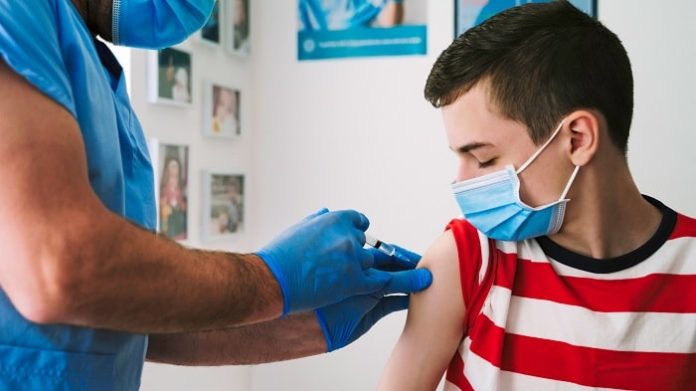
The NHS COVID vaccination programme will today start inviting eligible people to come forward for their life-saving Spring booster jabs.

People aged 75 and over and those who are immunosuppressed will be able to book from 7am as the biggest and most successful vaccination programme in health service history enters a new phase.

The Joint Committee on Vaccination and Immunisation has advised a spring jab should be offered to those most vulnerable to COVID-19 as a precautionary measure.

The NHS will invite people to arrange a jab through the national booking service when it is their turn. It can be accessed online at nhs.uk/covidvaccine or by calling 119.

Around five million people will be able to get a Spring booster during the campaign and this week, the NHS will be contacting over 600,000 people to invite them to book their jab.

Nikki Kanani, GP and Deputy SRO for the NHS COVID Vaccination Programme, said: โ€œSadly, we are still seeing large numbers of people seriously unwell in hospital with COVID so it remains vital that those most at risk come forward when they are invited to do so.

โ€œThe response so far from the public to the largest and most successful vaccination programme in NHS history has been incredible, with more than nine in 10 people aged 75 and over getting their initial booster. The NHS COVID vaccination programme is once again ready to get people protected, so when you are invited please do come forward for your spring doseโ€.

Recent research from the UK Health Security Agency has shown that the NHS booster programme has helped prevent around 157,000 hospitalisations since mid-December.

Despite this NHS hospitals have treated more than 100,000 patient with COVID since the start of the Omicron wave.

Meanwhile, a report from the National Audit Office (NAO) has said the NHS Vaccination Programme met โ€œstretching and unprecedented targetsโ€ as it helped save lives and reduce hospital admissions โ€“ all while making effective use of public money.

NHS health chiefs are expecting high uptake of spring boosters amongst people aged 75 and over after 4.5 million of them got their top up jab over autumn and winter, and have recruited additional call handlers for the 119 service to help people book their vaccine appointment.

Calls to 119 are free from mobiles and landlines. Lines are open every day from 8am to 8pm, and 119 can provide support in 200 languages.

Local NHS teams will be contacting care homes in their patch as they have done previously to arrange for spring boosters for people who are eligible and have been invited.

Hundreds of sites including community pharmacies, vaccination centres and hospital hubs are offering spring boosters to those most vulnerable to coronavirus following the updated guidance from the JCVI who advised on an extra spring dose as a precautionary measure.

Health and Social Care Secretary Sajid Javid said: โ€œSpring boosters will help top up the immunity of the elderly and the most vulnerable to ensure they are protected and will help us continue to live with this virus.

โ€œThanks to the NHS for rising to the challenge yet again to get people boosted. Please come forward as soon as you are contactedโ€.

Vaccines Minister Maggie Throup said: โ€œWe are absolutely determined to protect those most vulnerable to COVID.

โ€œPlease take up the offer of a spring booster as soon as you are contacted by the NHS โ€“ it will protect you and ensure we can continue to enjoy our freedomsโ€.

So far, the biggest and most successful vaccination drive in health history has delivered over 117 million vaccinations, including over 32 million boosters.

The NHS has made it easier than ever for immunosuppressed people to get their boosters โ€“ they can now show they are eligible by providing either a letter from a GP team or specialist inviting them for a vaccine, a hospital or GP letter about their medication or treatment, or a prescription or medication box with their name and date on it.

It is still important for severely immunosuppressed people who have been advised to have a 3rd primary dose, for example those undergoing cancer treatment, to get this before getting a booster, for maximum protection from COVID-19.

The NHS in England made history when it delivered the worldโ€™s first approved COVID-19 vaccination to Maggie Keenan aged 91 in December 2020.


Prescription Sunglasses: Why Do You Need Them?

Prescription Sunglasses: Why Do You Need Them?

Sunglasses are a fashion statement and an iconic symbol of warmer months. They rescue you from the torture of squinting on hot, bright days. Moreover, they shield the eyes from UV radiation, preventing sight-threatening eye disorders, including cataracts and macular degeneration. Hence, wearing this style accessory whenever you go out in the summer is a must.

If you wear glasses, you may not own a pair of sunglasses and miss out on all benefits. But what if I tell you there’s a way out that doesn’t need you to pick between a number glass for clear vision and fancy sunglasses that protect your eyes from sun damage? Yes, by using prescription sunglasses, which is why these are purchases worth. Here are a few reasons why.

To Protect Eyes

UV rays are always present, whether the sun is up or cloudy. The reason for this is their ability to cut through clouds. When you expose your eyes to these damaging rays, you attract risks to your vision. And you already wear spectacles, indicating that you have either far or near-sightedness, or both. Fortunately, you may customize your sunglasses with your eyesight prescription and use them.

Prescription sunglasses will help block destructive UV rays, lessening the chances of acquiring cataracts. They will also help keep dust and debris at bay. They also block HEV/blue light, which the device emits, lowering the possibilities of macular degeneration. However, make sure your sunglasses are 100 percent UV-blocking for the best results.

Your Current Spectacles Are Outdated and Ineffective

The fashion world keeps changing, and you may be sporting obsolete eyeglasses. Aside from that, your prescription may be out of date. You may notice changes in your vision and/or strain. As a result, check your eyesight and get sunglasses made with your current prescription.

To Avoid Wearing Two Glasses

Wearing sunglasses over ordinary ones is so uncomfortable, bothersome, and awkward. Fortunately, you may avoid this miss by wearing only one pair of sunglasses at a time. Regular prescription glasses can be used at home and the workplace, while prescription sunglasses can be donned outdoors.

You Need One for Outdoor Activities

If you only want to go for a run, you can wear regular glasses. On the other hand, prescription sunglasses are a must-have for outdoor recreation. They assist in protecting the eyes. You may even go on an adventure in a snowy location or beneath the water. It is critical to use polarised prescription sunglasses for such pursuits to decrease glare from snow and water and see clearly.

There’s A Need to Upgrade

There are now improved versions of spectacles available on the market. There are anti-scratch eyeglasses, anti-reflective eyewear, and some with a mirror or polarisation finishing, among other options. Hence, you may wish to forego the basics in favor of them.

To Stop Ageing Signs

When we are exposed to harsh light, our eyes squint reflexively. As a result, fine lines and wrinkles appear prematurely around the sensitive skin of the eye. Therefore, you should always wear prescription eyeglasses when you go outside to slow down the aging process and retain a fresh, youthful appeal.

Clip-On Eyewear Isn’t Helping You

Clip-on glasses are excellent and effective once you get the hang of them. However, some people find it challenging to utilize. They are also not completely effective in protecting the eyes from UV rays, blue lights, and dirt. Hence, you’d prefer to switch to prescription sunglasses to prevent chaos.

You Want to Skip Lenses

You’d want to wear contacts, but you’re running late. As a result, you’re left with no choice but to wear ordinary spectacles with fashionable attire. Thankfully, you can avoid all of this by using prescription sunglasses when you go out. They will go nicely with your dress and will not make you late.

Prevents Eye Diseases

Harmful rays and blue lights develop cataracts and cause not only macular degeneration but also other eye conditions as follows:

  • Pingueculae: It is a disorder in which UV rays damage the eye’s cornea, causing intense inflammation.
  • Photokeratitis: It is a disorder in which the white part of the eye develops a yellow, thickening patch. It can be painful and give one a headache when exposed to light.
  • Pterygium: A disorder in which a layer of white tissue forms on top of the retina. Furthermore, it has the potential to deform the shape of the front part of the eye, resulting in myopia and other irregularities.

If you tend to spend most of the time outdoors, make it a habit to wear prescription sunglasses to prevent or slow down these eye problems.

Final Words

Your eyes are the most crucial organ that allows you to be self-sufficient. Hence, you must make every effort to protect your eyes and vision. It will help preserve their optimal health, and one method is always to wear prescription sunglasses when you go out.

5 Valuable Tips to Ensure Optimum Eye Health

5 Valuable Tips to Ensure Optimum Eye Health

We are fortunate to have five sense organs and luckier if they all function well. Because of them, we can freely engage with our environs. We can see, taste, hear, touch, and smell. Without question, each of these senses is vital, but vision takes precedence.

We lose our independence when we lose our sight. Unfortunately, we have a propensity to overlook and disregard it. However, it is critical to nurture, monitor, and track our eye health in the same manner as we do for any other organ, such as the heart.

Maintaining a Healthy Eye

Ignoring eye care burns not only your pocket but also lowers the quality of your life. It might lead to eye problems, such as poor vision, glaucoma, macular degeneration, diabetic retinopathy, and cataract, to mention a few.

As a result, you should make conscious efforts to avoid or delay the development of such eye conditions. Here’s how to do that:

Schedule Regular Eye Tests

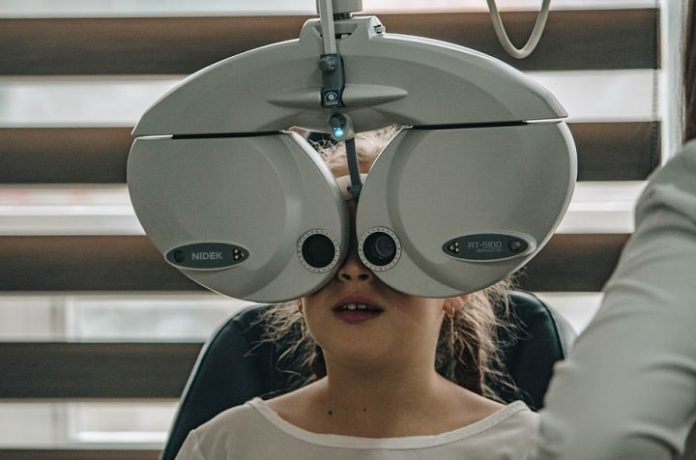
A comprehensive and periodic eye examination is strongly recommended. It is critical to detect and treat vision problems as early as possible. Take vision tests to see whether you have near-sightedness, farsightedness, astigmatism, or presbyopia. You can consider optic nerve and ocular pressure tests to detect glaucoma.

Also, ask your doctor to check your eye coordination. Before and after dilatation, you should undergo microscopic and external eye exams. Tell your doctor about your family history so that he may conduct a more thorough analysis.

Such examinations are critical for identifying and treating asymptotic eye disorders, such as glaucoma before it is too late.

Invest in Eyeglasses and Shades

Following the examinations, you may discover vision problems, such as near-sightedness or farsightedness. Your doctor will provide you with a prescription for eyeglasses. These glasses help you see clearly.

You should also get a pair of high-quality sunglasses that block UV radiation. It is essential if you spend most of your time outdoors. Whether the sun is shining, you are constantly exposed to UV radiation. These radiations are hazardous and can result in eye health issues, such as cornea burns.

UVA and UVB rays have also been linked to macular degeneration and cataract development, as well as the deadliest eye condition, eyelid cancer. As a result, you should use sunglasses to protect your eyes. Sunglasses protect your eyes by blocking UV rays, dirt, and debris.

Itโ€™s essential to buy spectacles and sunglasses from a reputable eyeglass store. Some eyeglass retailers also take eye tests. So, you may book one with them. If you have a prescription, ask them to make a pair of prescription sunglasses for you. After all, you don’t want to deal with UV rays with regular glasses, do you?

Reduce Screentime

Excessive screen time is harmful to the eyes. It causes impaired vision, difficulties with long-distance concentration, dry eyes, eyestrain, headache, and age-related macular degeneration. Reduce and regulate screen time to avoid these risks. You should consider the following things to make this happen:

Go to an eyeglass store and ask for computer-specific glasses. If you have a prescription, request that they make prescription computer reading glasses for you. They will protect your eyes from the damaging blue light emitted by electronic devices, such as laptops and cell phones.

  • Repeatedly blink your eyes in case your eyes dry up
  • To rest your eyes, use the 20-20-20 rule. Look 20 feet away for 20 seconds for every 20 minutes of screen use
  • Adjust the screen to be at least 25 inches away from your eyes
  • Keep the screen at eye level or a little lower
  • Take a 15-minute break every two hours
Consume Healthy Food

Load up your platter with vitamin C and vitamin E. Also, consume lots of omega-3 fatty acids, zinc, and lutein-rich foods. These nutrients improve vision and help avoid eye problems, including cataracts and macular degeneration.

If you already have one, they will assist in slowing the progress of your condition. Consume plenty of green leafy vegetables and citrus fruits. Eat eggs, fish, nuts, and beans because they are high in protein. You can also request your doctor to prescribe the necessary supplements.

Keep an Eye Out for Eye Problems

Don’t depend on routine eye exams to detect vision problems. Look for signs and symptoms yourself. Frequent light flashes, double vision, eye strain, eye discomfort, swelling around the eyes, difficulties seeing in low light, blurry visions, blobs, and red eyes are all red flags. If you happen to experience them, seek immediate medical attention.

Conclusion

In addition to the above practices, you can consider some lifestyle changes for optimum eye health. For instance, you can allow your eye cornea to bathe in some fresh air for oxygen, sleep properly for strain-free eyes, and drink lots of water to avoid dry eyes and prevent eye health concerns.

7 ways to boost healthcare practitioner wellbeing and productivity

7 ways to boost healthcare practitioner wellbeing and productivity

With the Great Resignation in full swing, healthcare institution managers must look for ways to address the physical and mental wellbeing of nurses and carers to keep them in their roles. A 2021 Royal College of Nursing (RCN) survey reported that 60% of nursing staff working in NHS hospital settings were considering or planning to leave their jobs. Healthcare leaders can’t afford to overlook caregiversโ€™ needs when building strategies to retain existing staff and create environments that new recruits want to work in.

To compound the issue, the industry faces a recruitment crisis, as 2021 NHS figures revealed there are about 39,000 vacancies for registered nurses in England, with one in 10 nursing posts unfilled on acute wards in London. Leeds Teaching Hospitals NHS Trust reported almost 700 vacancies for care practitioners, postponing 287 operations in July / August 2021 due to chronic staff shortages. This is just a snapshot of one of many UK hospitals facing similar challenges.

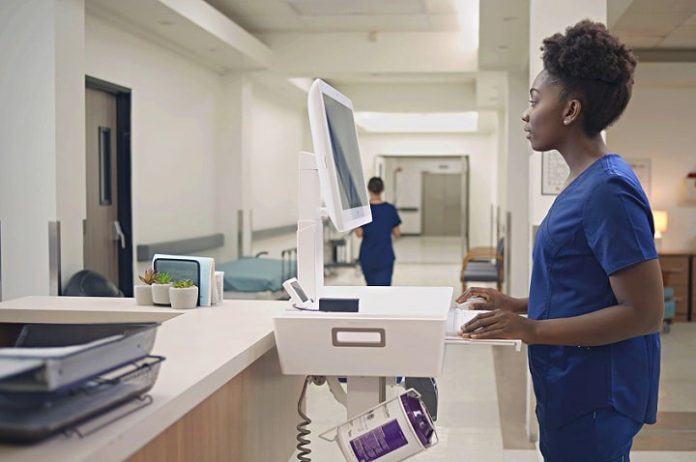
Providing ideal conditions that support caregiver wellbeing can do much more than increase staff retention. More comfortable workspaces with improved access to technology can boost workflow efficiencies, reduce staff injury rates, reduce inaccuracies in care and reduce patientsโ€™ hospital stays.  The National Database of Nursing Quality Indicators discovered that when nurses feel satisfied with their working environment, the quality of care increases 5-20%. When nurses are better provided for, they in turn are more satisfied and provide better care for patients.
Ways healthcare bosses can boost the wellbeing of workers

Hiring managers and HR teams can only move the needle of recruitment and retention by assessing and improving workspace environments, to make a core difference to the way workers feel about carrying out their roles. These are just some of the ways to deliver for healthcare practitionersโ€™ needs which can boost wellbeing and productivity:

1. A full worker assessment to investigate ergonomic needs

Not all caregivers have the same ergonomic needs when it comes to their workspace requirements. Nurses who have been in their career for 10 to 15 years tend to be familiar with musculo-skeletal disorder (MSD) discomfort and repetitive-stress injuries. They recognise wrist, shoulder, and neck pain, and will want an adjustable keyboard and an easily adjustable monitor for themselves and to collaborate with co-workers. Younger caregivers – millennials and Gen Z โ€“ may not feel body aches yet, but they expect a seamless interaction between the physical environment and technology.

Before purchasing any equipment, such as wall-mounted or mobile workstations, organisations should conduct a full worker assessment to investigate ergonomic needs of the staff. This audit should include sit to stand heights for workstations, ease of adjustment, and other key factors such as storage, security, weight, and mobility. Working with an ergonomics partner can help choose the best system for each environment.

2. Access to suitably designed equipment

Current working environments have forced caregivers into bad working habits, such as not taking breaks, and doing repetitive tasks with poor posture. Nurses spend about 35% of their time on documentation, including up to three hours of computer time in an EHR system during a 12-hour shift. As a result, cumulative trauma disorders (CTDs) such as carpal tunnel syndrome, low back pain, and other MSDs are rife.

An ergonomic workstation thatโ€™s easy to use and adjustable for each caregiver supports comfortable and efficient documentation. Being truly ergonomic means positioning workstation desks to the right height for each worker, and the monitor at an ideal viewing height and distance.  A sit-to-stand desk, where the desk height can be positioned to suit each worker, is an ideal solution to benefit busy clinicians.

Providing the right equipment can elevate the documentation experience and empower caregivers with the tools and technology they need to be successful and efficient in their roles. They can more easily share information with patients or colleagues, as they work – sitting or standing – with everything a caregiver needs at their fingertips.

3. The right rest to cope effectively with job pressures

Walking miles each day during long shifts, nurses are often too tired or busy to raise concerns with employers until healthcare issues surface. Nurses need the right amount of rest to cope effectively with job pressures, to avoid making errors in patient care and to manage their self-care.

Itโ€™s not just being off duty that gives nurses and other healthcare workers the right amount of rest. An appropriate balance within the workday of work and breaks, with appropriate locations and spacing between workstations, can ensure that nurses arenโ€™t clocking up miles unnecessarily. A satisfactory amount of mobile and wall-mounted workstations, which are easy to move and position, situates nurses closer to their patients. The Joint Commission found that inaccurate information entered into Electronic Health Records (EHRs) contributed to 120 adverse events and recommends that workstations are located every 50 feet to alleviate pressure on staff.

4. Relieving workers of โ€˜tech managerโ€™ role 

Workstations practitioners typically use are prone to technical issues, such as long EHR reboot times or issues with portable device outages due to batteries only lasting for just over half a shift. Managing the cordless battery life of vital technology devices, such as mobile devices, clinical communication devices, and wireless printers is an added โ€˜tech managerโ€™ responsibility that there just isnโ€™t time for.

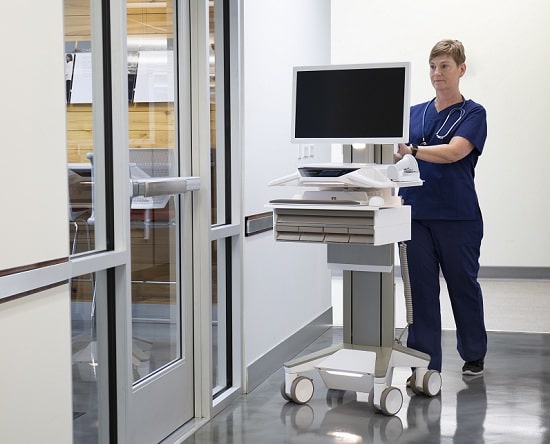
It’s key to alleviate this โ€œpower anxietyโ€ and provide logical, intuitive power solutions that match workflows. This means understanding the physical workflow of the floor or department, before matching that workflow to the best-suited battery-power solution. The key basis for selection includes how long a battery-powered cart is typically unplugged and why and where the battery-powered mobile carts are charged, in case this dictates where a nurse works.

An important feature to choose in a mobile medical cart is remote monitoring of cart fleets by IT managers in real-time. Swiftly handling critical device outages or EHR reboot times reduces downtime and offers nurses a charging workflow they can count on.
5. Provide more efficient medication administration processes

Medication administration errors are a classic indicator of a highly pressurised working environment. Itโ€™s often due to extreme fatigue and research shows that nurses who work more than 12 hours could commit more errors. Reducing error rate can relieve anxiety and support caregiver wellbeing.

Mobile carts with integrated medication delivery can offer a total point-of-care solution, reducing time spent on documentation and distribution and minimising medication inaccuracies. Fitted with an auto locking drawer system, they enable safe medication delivery and sample collection at the bedside. Ensuring an efficient workflow with powered and safely stored devices helps clinicians smoothly administer and track procedures.

They can also be mounted with barcode scanners and printers to support bedside patient identification, further enhancing patient safety and quality of care. Bringing technology to the point of need facilitates access to digital records and maximises productivity while providing access to medical treatment supplies.

6. Reduce long-distance walking

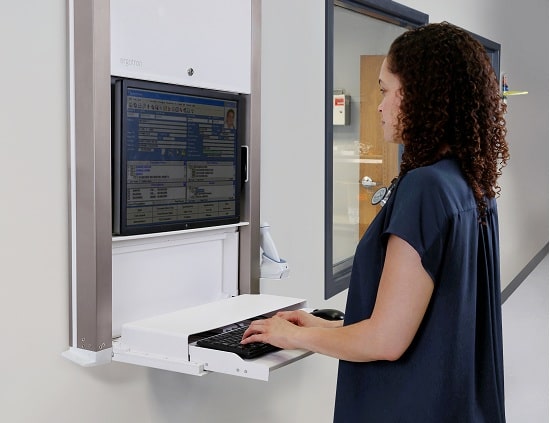
Selecting ideal workstation locations and offering mobile equipment enables more efficient working at patientsโ€™ bedsides and reduces unnecessary caregiver walking time. Having free-standing or wall-mounted terminals located throughout the unit can reduce nursesโ€™ daily footprint and frees up time for face-to-face patient care. Wall-mounted workstations are generally compact and best located in the patient room or in the unit hallway as touchdown points for briefly accessing the digital system.

Mobile medical carts offer easy access to patient records at the point of care which allows caregivers to focus on patients. Clinical staff can log in to a patientโ€™s medical record at the bedside via the mounted PC and display. This promotes better clinician-to-patient communication, as patients can view their own medical records and feel involved in their care journeys. Working at a patientโ€™s bedside dramatically reduces the stress of moving between stations.

7. Offer regular wellbeing check-ins with staff

Direct engagement with care practitioners themselves is vital for healthcare leaders to understand where processes can be streamlined.  Establishing regular wellbeing check-ins with staff will not only provide information about how to provide better care for patients, Theyโ€™re also an opportunity to connect with staff on a physical and mental wellbeing level, to offset any issues before they become insurmountable โ€“ resignation could be only a few days or weeks away.

Taking the time to re-evaluate and note the extra walking distances or process steps raises awareness of pain points and helps stakeholders understand the business case for providing mobile equipment which can create more flexible workspaces. Space planners, IT and clinical staff must collaborate to discuss centralised, decentralised, or blended solutions using various tools.

Boosting productivity, collaboration, and better care

Building safe, comfortable, and productive working environments for nurses can have an indisputable positive effect on the safety, health, and recovery time of patients. Providing mobile workstations and mobile carts that directly address care workers needs, such as ergonomics, distance between patient rooms and the nursing station, worker collaboration with other caregivers, point-of-care access to patient health records, and effective medication administration – can help healthcare organisations improve the working environment and the patient experience โ€“ and ultimately retain and motivate caregivers to a career in care.

Healthy Databots: The Future of Healthcare Data Quality

Healthy Databots: The Future of Healthcare Data Quality

โ€œWe will have clinicians in the loop for a period of time until we can actually trust that AI and those technology solutions are taking care of the patient in the way that is best.โ€

Iโ€™ve been thinking about this quote a lot. In part, it horrifies me. My primary care provider is a true care partner, and I trust her judgment, knowing she will refer me to a specialist when an issue requires it. Iโ€™m not comfortable with the idea that she might be replaced by an AI chatbot.

But then, I never thought Iโ€™d be comfortable with my car making decisions on its own either, yet that has become my new normal.

On the other hand, Iโ€™m a lot more familiar with the details of health information quality and usability than I am with automotive issues. And the healthcare data on which we are relying for AI-based chatbots leaves a lot to be desired.

In fact, a recent survey conducted by Sage Growth Partners found that only 20% of the healthcare executives they interviewed fully trust their data. Less than 8% of them judged their analytics capabilities as very mature, and less than a quarter have a data model that can ingest unstructured data โ€“ the bedrock of healthcare information.

The Tangible Benefits of Investing in Healthcare Data Quality

Sage just published another report, The Hidden Costs of Bad Healthcare Data, in which they discuss the costs associated with poor healthcare data quality. Looking at a variety of peer-reviewed and other credible data sources, they estimated the savings that could be realised by addressing a set of six issues, for example, the implications of duplicate patient records. They came up with a conservative estimate of more than US$40 million in savings for a large US integrated delivery network over the space of three years, based on an investment in better healthcare data quality.

Frankly, Iโ€™m equally interested in the implications for better decision making, better care and better AI. After all, that survey I mentioned earlier also found that 53% of respondents say poor healthcare data quality reduces their ability to make decisions. It also impacts their ability to identify gaps in care, meet quality metrics and optimise the revenue cycle. I must assume it would also affect the results of any exercise in machine learning conducted on such data โ€“ garbage in, garbage out โ€“ right?

My car shows me that what I once thought the stuff of fantasy is entirely possible โ€“ with better quality health information, the same can be true for care, probably sooner than I expect.

Looking Towards a Future with AI Chatbots in Healthcare

My colleague, Russ Leftwich, says that when he was in med school, the dean told them โ€œThree quarters of the patients you see will get better no matter what you do. Try not to screw up!โ€ So if, with a healthy data foundation, we can produce virtual chatbots that can correctly distinguish the three quarters, prescribe chicken soup and paracetamol, and do a reasonable job of triaging the other 25%, then maybe, one day, weโ€™ll have enough healthcare resources to go around.

Translate ยป