








Close
Digital Health & Ai Innovation summit 2026
Medical Taiwan 2026

Understanding the Purpose of Biomedicine

Understanding the Purpose of Biomedicine

Biomedicine is the application of scientific and engineering principles to the study and treatment of biological problems. It is a vast and rapidly growing field, with new discoveries being made all the time. But what does that mean for you? What is the purpose of biomedicine?

The purpose of biomedicine is to improve human health. Thatโ€™s it, plain and simple. Biomedical scientists strive to understand how the body works, how diseases develop and spread, and how we can treat or prevent illness. They work on everything from developing new drugs and treatments to creating artificial organs, to improving public health policies.

Advance of regeneration

Regenerative medicine is a growing field in biomedicine devoted to repairing and replacing cells, tissues, and organs. Scientists are also working on ways of keeping the bodyโ€™s cellular repair mechanisms activated for as long as possible so that people live longer lives with fewer disabilities. These technologies hold the promise of allowing us to live longer than ever before.

Furthermore, researchers are also exploring ways to regrow tissues and organs. In fact, there have been some remarkable successes in recent years as scientists grow functioning bladders, windpipes, and even heart tissue from a patientโ€™s own stem cells. It’s vital to remember that regenerative medicine is still a very new field, and much research remains to be done before we can regrow complex organs. Having said that, there are a number of clinics that work in this medical branch that you can find online.

Creating new materials

In addition to repairing the body, biomedical engineers are also working to improve the materials we use in medicine. Some researchers are using stem cells to produce new tissues and organs, including blood vessels. These artificial body parts have been used to save the lives of people who would otherwise die from a lack of available donor organs.

In other cases, biomedical engineers are working with 3D printers to create plastic body parts that can be implanted into patients. While these prosthetics are currently being designed for aesthetic purposes, researchers are working on ways to supply people who have lost limbs with functional body parts that give them back their mobility.

Improved understanding of aging and disease

Although we cannot yet stop the biological processes that cause our bodies to age, researchers continue to explore ways of slowing down the process and managing its effects. One day we may even be able to stop or reverse aging entirely. Advances in medical science could someday fundamentally change the way we live, making us healthier and more independent for longer periods of time.

We are also learning more about how various diseases develop, progress, and can be treated or managed. Scientists are exploring everything from the molecular level of our cells to the microbiomeโ€”the community of microorganisms living in our bodiesโ€”to get a better understanding of how they affect our health. This knowledge already seems to be improving our ability to treat some diseases. In fact, many of the medications we use today have been developed with a better understanding of how diseases work and what can stop or reverse their effects.

Other areas of research include understanding how our genes influence our chances of developing certain conditions, exploring new ways to diagnose and treat different types of cancer, and finding better ways to manage conditions like diabetes.

Advancing technology

Biomedical scientists also work to translate their discoveries into practical applications that can help people in the real world. For example, researchers may develop a new drug or treatment, but it has to be tested and approved by government agencies before it can be used by patients (a process known as clinical trials). Other scientists are finding new ways to use existing drugs in different areas of the body or at higher doses in order to treat conditions they weren’t originally developed for.

Doctors today have access to a wider range of medical imaging devices, which is allowing us to diagnose and treat disease more accurately than ever before. Imaging tools include technologies like MRI, X-ray, CT scan, ultrasound, and others. For instance, doctors can use an MRI to get a clear picture of the brain without having to expose their patients to the dangers of radiation exposure from X-rays.

Biomedical engineers are also working to bring us improved versions of existing medical devices that are easier to use and more comfortable for patients. Some examples include lighter and less expensive wheelchairs, lightweight prosthetic body parts, and better ways of managing the symptoms of various diseases.

In addition, scientists are looking to create new medical devices that can help people prevent disease or manage its effects earlier on. For example, researchers are working on a swallowable camera that can help doctors discover problems in the digestive tract long before a patient would notice any symptoms. For people who have already been diagnosed with an illness, this type of imaging tool could be used to track how well their treatment plan is working or whether they need to adjust it. Some scientists are also studying ways to create “smart pills” that deliver medicine automatically on a timed-release basis and at the right dose.
Advancing medical research

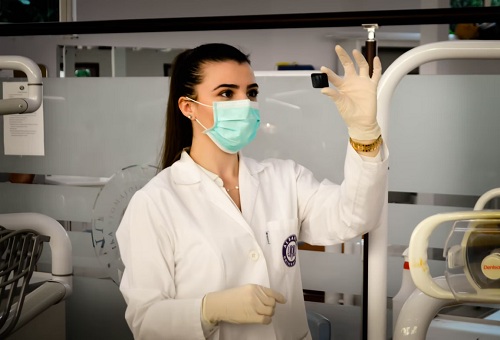
At the most basic level, biomedical science is about gaining a better understanding of how our bodies work and using that knowledge to create new ways of diagnosing, treating, and perhaps even preventing disease in the future. Most of this research doesn’t involve human subjects (because we need to wait for it to be tested and approved, as mentioned above). Instead, biomedical scientists usually work with other animals whose physiology is similar enough that we can learn a lot about the potential effects of a drug or treatment by testing it on them.

In addition, some research is based on observations from animal studies or tests done in laboratories that don’t involve animals. For instance, biologists try to communicate with dolphins to learn more about how they communicate and socialize, and engineers develop new technologies by studying flying insects like dragonflies.

Biomedical science is constantly evolving as researchers learn more about how our bodies work and find new ways to treat diseases. In addition to developing new medications and treatments, scientists are also working on improved versions of existing medical devices, creating new medical devices that can help people prevent disease, and studying ways to deliver medicine automatically on a timed-release basis. All of this research is helping us move closer to a future where we can diagnose and treat disease more accurately and effectively than ever before.

Key Facts You Need To Know About Social Security Benefits

Key Facts You Need To Know About Social Security Benefits

Social security benefits provide an income for millions of people in the United States of America. Without these benefits, coping with the financial impacts of disabilities and retirement is impossible.

But with this, the process of applying for social security benefits is a lot less straightforward than you might assume. Often, legal representation is essential in securing these benefits.

While the rules of claiming can be somewhat complex, we’ve listed a few basic social security benefit facts everyone needs to know.

You Need 40 Credits

To qualify for these particular benefits, you must have at least 40 credits. These credits are earned throughout your career and are applicable when applying for benefits as a retiree.

On the other hand, the credit specifics are different when claiming these benefits for a disability. It’s best to rely on a specialized attorney in this case to navigate the claim process, and you can read more here about the specifics of social security benefits for disabilities.

How Your Benefits Are Calculated

It’s also essential to know how your benefits are calculated; this knowledge will enable you to calculate your benefits and budget accordingly in advance.

The benefits are calculated on the 35 calendar years you earned your income while your income was at its highest. Unfortunately, if you have fewer than 35 years of income, each year without an income will be marked at zero.

Even so, there is a maximum benefit amount, which is around $3000-$4000 per month. With this, relying on an attorney is the best way to ensure you get the best benefits when claiming.

Waiting Will Increase Your Claim Amount

Suppose you decide to claim social security benefits before you reach 62. In this case, your benefits will endure a permanent reduction of around 25%.

On the other hand, waiting longer to claim will have the opposite effect on your benefit amount. So, it’s best to wait before you claim, if possible.

Your Spouse Can Also Receive Benefits

Many consider marriage to be more of a financial agreement than anything, and this is because marriage does bring about some monetary benefits for couples. And while you might be thinking this only really applies to tax obligations, social security benefits are also available to spouses.

When claiming these benefits, your spouse can claim a spousal benefit, which will amount to about 50% of the counterparts’ social security benefits.

Even Children Can Collect Benefits

It’s not only spouses that can collect benefits, as children up to the age of 19 who have not completed high school can also get these benefits. In addition, children under the age of 18 that are disabled are also entitled to social security benefits.

Social security benefits exist to protect those who cannot earn an income due to retirement or disability. These benefits are the lifeblood of many families, and because claims are often rejected due to minor errors, it’s vital to consider legal representation when filing a claim. That said, when choosing a lawyer, be sure to opt for an expert that specializes in social security claims.

Intrex Partners with Wirepas to Bring Real-Time, Actionable Data to Senior Living Communities

Intrex, a medtech company developing next generation solutions for senior living, announced its partnership with Wirepas, a company on a mission to democratize IoT connectivity. Wirepas Massive, a unique connectivity software, enables the Rhythmos platform, an intelligent, personalized system designed around the individual to monitor for safety and manage chronic conditions, ensuring residents can remain safely independent longer. The goal of the partnership is to bring the most advanced technology available to the senior living communities, connecting all facets of care, resulting in improved senior safety and wellness.

The gap between safety and wellness systems is a real and growing problem facing senior living communities and the healthcare facilities at large. Assisted living providers have an electronic medical record (EMR) system in place, but it is almost always completely separated from their nurse call system. This means a resident’s needs data (button presses, falls) and activity data (steps, sleep quality, location and historical positioning) is not tied to their health data (care plan, therapies, medications, etc.)

โ€œHaving worked in these communities, we saw first hand the issues that this siloed approach to healthcare was causing. We knew there was a way to innovate however administrators were hesitant or unable to take action due to the high costs associated with large traditional network providers, says Ted Tzirimis, CTO of Intrex. ย โ€œWith Wirepas, weโ€™re able to bring the most cutting edge solutions to administrators and residents, powered by reliable, easily deployable solutions in a cost-effective form that enables communities of all sizes and means to have access to this life saving solution.โ€

Rythmosย  is a 4-in-1 platform that combines an advanced nurse call system with wander management and integrated access control all in one device. It allows for integration with telehealth devices for chronic care management, facility management, integrations with emerging technologies, and powerful predictive analytics that help keep residents safe and healthy. You can also easily monitor residentsโ€™ precise location to mitigate elopement risk and receive alerts for emergency button pushes and falls from any web-enabled device.

Nurse call systems are typically quite expensive if they support real-time positioning. They also require an additional investment in cables, wires, Wi-Fi, and other infrastructure. For legacy nurse call systems that do not have real-time positioning, it can be costly and complicated to extend and maintain. Rythmos, with Wirepas Massive, enables better coverage throughout any type of building, both new construction and retrofits. The costs are also dramatically lower and the Rythmos system can be kept running on batteries only, even if power and internet is lost.

โ€œAt Wirepas, we champion doing things differently and value partners that think outside the box to bring the very best, cutting edge solutions to their industries. Weโ€™re happy to be Intrexโ€™s reliable network on which they build and innovate in an industry that touches all of us in some way,โ€ says Teppo Hemiรค, CEO of Wirepas.

4 Facts To Know About Drug Tests

Drug usage is becoming more and more prevalent in today’s society. Many teens are taking illegal substances to alter their minds and emotions. There are frequent stories of students being caught with drugs or having bad drug reactions. Drug tests are used to determine if a person has used drugs recently. It is a common form of screening for drugs.

Itโ€™s the most accurate way to detect whether someone has been using drugs, and it can seldom be done without them knowing. There are many reasons why people may need to take a drug test in the workplace or in school. In this article, we will discuss some important facts you should know about drug tests.

Drug Tests are Usually Done For Legal Purposes

People are familiar with the idea of taking a drug test for employment purposes only.ย  Most of the time, they are done for legal reasons like testing whether someone has been driving under the influence of alcohol or other drugs, as part of legal probation, employment requirements where drug use is either illegal or dangerous or for athletes who may use drugs to enhance their performance.

Drug tests can be given to people in employment, probation or parole officers, and judges. These drug tests are common to monitor the person’s progress and also determine whether they have been using drugs. The most common test used today is a urine test.

Circumstances That May Require Drug Testing

There are many circumstances that may require drug testing. These include court-ordered tests, random school or work tests, and substance abuse treatment centers. Drugs are known to make people get hyperactive and give them the drive to be more active than usual.

Many cases happen where people get behind the wheel of a car while high on drugs driving dangerously wanting to getaway. It is for this reason that a lot of companies set out to do random bulk drug testing on their employees and/or applicants just in case they get a wild hair up their backsides from the drugs they have been taking and attempt to get behind the wheel of a car while under the influence.

Methods of Drug Testing

There are several different ways to test for drugs. Some include testing urine, blood, saliva, and hair.

Urine tests are the most frequently used form of drug testing in today’s society. This is because urine samples can be taken from almost anything that comes out of your body such as blood or even sweat. The tests indicate whether one has recently used a specific drug.

When it comes to testing urine, there are two ways in which it can be detected. There is one where the test has to be sent to a lab and the other is done right on-site with an at-home kit. Urine tests check for THC metabolites, which indicate whether someone has been smoking weed over the last few weeks. They check for other drugs as well such as cocaine, methamphetamines, and others which can take a longer time to show up in a person’s urine test.

Detection Periods For Each Drug

The detection period of each drug depends on the form that the drug takes. THC which is what marijuana contains has a detection period of 7 days. THC is available in different types of drugs such as hash oil, cocaine can be detected within 2-4 days depending on the quantity used by the person. On the other hand, Methamphetamine has a detection period that ranges from 1-3 days whether it is being taken intravenously or orally.

Each method for drug testing has its own benefits and disadvantages. For instance, urine tests are able to show drug use over a longer period of time than other forms of testing such as saliva or blood tests. Urine test is also less expensive than saliva test which has a very short detection time for drugs compared to urine tests. Saliva test is able to detect drugs within a very short period of time, but it is also expensive and can be easily manipulated by the person being tested.

Drug Tests Can Tell Which Drug is Being Abused

They are not that complicated. After submitting your sample, it is sent to a laboratory where the technicians analyze the results and send them back to the examiner.ย  Drug tests are able to tell which drug is being abused by the person. This helps in knowing what kind of treatment needs to be given to him or her. For instance, if a person is using cocaine, then he or she will be advised to go through some rehabilitation procedure meant for that particular drug.

Drug tests come in many different forms, but they all have one thing in common: They are designed to identify the presence of drugs. There is a lot more you should know about drug testing.ย  We hope this article has given you some helpful information and insight so you can know what you’re getting into in case your company wants to carry out one.

Improvements in Data Quality Could Yield Up to US$42.1 Million for Healthcare Organisations

Data is an invaluable resource that informs nearly every choice we make, but poor data quality can have devastating effects on the decision-making process and financial outcomes. When it comes to health and patient care in particular, the stakes are at their highest. New research fromย Sage Growth Partners commissioned byย InterSystems, involving C-level leaders from top healthcare organisations, reveals just how critically and financially important harmonised data is, and how investing in higher quality data can yield better benefits and decision-making for patient care.

Hospitals and healthcare organisations (HCOs) currently face a number of bad data challenges, from a growing number of disparate data sources to erroneous and siloed data in fragmented repositories. These inefficient practices can impose a significant financial burden. Research shows that 43% of IT staff time is spent on data extraction and harmonisation. Cutting that time in half alone could save an HCO upwards of nearly US$1.6M in three years.

The report suggests that implementing what has come to be known as a smart data fabric can unify and democratise information, ultimately improving the finances, management and operations of a health system. A smart data fabric can embed a wide range of analytic capabilities, including business intelligence, natural language processing and machine learning to make it easier and faster for HCOs to process and share more accurate data. By implementing a smart data fabric and true interoperability standard across an entire health enterprise, HCOs could save upwards of US$42.1 million over the course of three years.

โ€œEvery clinical and operational decision in healthcare is driven by data,โ€ said Alex MacLeod, Director of Healthcare Commercial Initiatives at InterSystems. โ€œImplementing solutions such as a smart data fabric can improve the quality of the data, enhance interoperability and dramatically increase cost savings for HCOs. There is a pressing need for easy access to data from a single source of truth to put actionable insights back into the hands of administrators and clinicians and improve patient care.โ€

The report looks at the cost of manual data input, duplicate and inaccurate testing, and errors during transition of care as some of the impacts of poor data quality. It also considers the costs of shadow IT systems โ€“ hardware, software or other programs not supported by a central IT department โ€“ and finds these currently consume 40% of the total IT capital budget. Reducing them by half could save the typical HCO a total of US$10 million over three years.

โ€œThe financial burden of bad data cannot be ignored,โ€ said Stephanie Kovalick, Chief Strategy Officer of Sage Growth Partners. โ€œThe annual cost of poor data quality in the U.S. across all industries tracks upwards of US$3.1 trillion. According to Gartner, this burden can be as much as US$12.9 million for an organisation due to data management challenges. With the escalating cost of healthcare in the US, health systems must start to pay more attention here. Investing in a smart data fabric is key to significantly reducing costs and saving clinicians valuable time spent otherwise on chasing and cleansing data to ensure the best possible outcomes.โ€

For more detailed information, read the recent market report โ€œBad Data, Bad Analytics, Bad Decisions.โ€ And watch the recentย LinkedIn Liveย as Stephanie Kovalick discusses the survey findings and what they mean for the industry in greater detail. You can download the full white paperย here.

About Sage Growth Partners

Sage Growth Partners accelerates commercial success for B2B, B2B2C and B2C healthcare organisations through a singular focus on growth. The company helps its clients thrive amid the complexities of a rapidly changing marketplace with deep domain expertise and an integrated application of research, strategy and marketing. Founded in 2005, Sage Growth Partners is located in Baltimore, MD, and serves clients such as the National Minority Health Association, Philips Healthcare, U.S. Renal Care, Quest Diagnostics, Livongo, Olive and iN2L.

UNIST Partners with Yonsei University Health System to Empower Smart Healthcare

UNIST recently joined hands with the Yonsei University Health System to further empower smart healthcare.

On January 10, UNIST signed a memorandum of understanding (MOU) with the Yonsei University Health System to cooperate on strengthening research capabilities in related fields and contribute to the advancement in medical technology.

Under this agreement, both the institutions plan to work on joint research collaborations on smart healthcare. The scope of this MoU between the parties also includes building the foundation for the revitalization of researcher exchange and promoting scientific and technological development in the field of smart healthcare.

Prior to signing this MoU, the two organizations secured KRW 200 million in funding for collaborative research to address challenges in the healthcare sector. Under the theme of โ€˜Genome and Medical Imaging,โ€™ they had selected nine projects for joint research. This includes the development of brain MRI analysis for the neurological prognosis of preterm infants, as well as the genomic analysis of adenoid cystic carcinoma, using spatial multi-omics.

Meanwhile, the ceremony has been attended by UNIST President Yoon Hoon Lee, Vice President Jaiyong Lee, Dean Sung Chul Bae (Office of Budget and Planning, UNIST), Chair Woonggyu Jung (Department of Biomedical Engineering, UNIST), Director Hyung Joon Cho (Smart Healthcare Research Center, UNIST), President Dong-Sup Yoon of Yonsei University Health System, and key officials from both organizations.

Ontario recruiting internationally trained healthcare workers and students to expand hospital capacity

ResMed launches remote ventilator monitoring in Europe

Ontario is calling on internationally trained healthcare workers and nursing students to expand hospital capacity in the fight against COVID-19.

Health Minister Christine Elliott made the announcement on Tuesday, saying the Ontario government is recruiting nursing students and medical students to assist in nursing homes and long-term care facilities.

The province is working with Ontario Health and the Colleges of Nurses of Ontario to deploy some 700 nurses to hospitals, and Elliott said more than 1,200 applicants have expressed interest in the program.

The provinceโ€™s healthcare system has been under growing strain in recent weeks due to the highly transmissible Omicron variant, which has also caused staffing shortages.

Ontario reported 7,951 new coronavirus cases on Tuesday, but case counts are likely an underestimate due to limited testing capacity.

The number of people in hospital with COVID-19 has also skyrocketed and there has been an overall surge in infections.

More than 3,200 people in the province are hospitalized with COVID-19 as of Tuesday with a record number of adults with the virus admitted to intensive care units over the last day.

At least 465 of those patients are in intensive care units according to data from the Ontario Health Association (OHA), with a record 80 adults admitted to Ontario ICUs on Monday.

Another 21 deaths occurred in the past month, and over 53 per cent of all hospital patients in Ontario tested positive for COVID-19 and 82 per cent of ICU patients have the virus.

Elliott said the province will be updating Ontarioโ€™s COVID-19 reporting to distinguish patients hospitalized due to COVID-19 โ€œfrom those admitted for other reasonsโ€ who test positive for the virus.

The province announced Ontario schools will return to in-class learning on Monday, Jan. 17 and Education Minister Stephen Lecce is scheduled to hold a press conference on Wednesday alongside Chief Medical Officer of Health Dr. Kieran Moore.

Ontario has committed to deploy additional HEPA filter units to school boards and N95 masks for staffers, but when asked why the province is returning to in-person learning and what has changed over the last few days.

California allows healthcare workers back to work after COVID-19 exposure, positive test

Master Lock announces product donation to help protect frontline workers and small business amid pandemic

The California Department of Public Health temporarily revised its guidelines to allow healthcare workers who test positive for COVID-19 and are asymptomatic to return to work immediately without isolation or testing.

Effective Jan. 8 through Feb. 1, the return-to-work criteria was updated because of “critical staffing shortages currently being experienced across the healthcare continuum because of the rise in the omicron variant,” according to the state health department.

The California Nurses Association/National Nurses United condemned the decision and demands that it be rescinded, according to a Jan. 8 news release.

“Gov. Newsom and our state’s public health leaders are putting the needs of healthcare corporations before the safety of patients and workers,” said Cathy Kennedy, RN, president of CNA. “We want to care for our patients and see them get better โ€” not potentially infect them. If we get sick, who will be left to care for our patients and community?”

Eliminating the isolation time and having asymptomatic or exposed workers will guarantee more preventable transmission, cases, hospitalizations and death, the union said.

California Nurses Association/National Nurses United is a union and professional association of registered nurses including 100,000 members in California and more than 175,000 nurses nationwide. Founded in 2009, National Nurses United is the result of a merger between the California Nurses Association/National Nurses Organizing Committee, the United American Nurses and the Massachusetts Nurses Association.

At the end of 2021, NNU condemned the CDC’s recommendation that trims the isolation period for asymptomatic healthcare workers with COVID-19 and no longer requires exposed vaccinated workers to quarantine.

Titan Medical Selects Benchmark to Manufacture Enos Robotic Single Access Surgical System

Titan Medical and Cambridge Design Partnership Announce Expanded Engagement for Robotic Instrument Development

Titan Medical Inc., a medical technology company focused on the design and development of innovative surgical technologies for robotic single access surgery, announced today that it has signed a manufacturing and supply agreement with Benchmark Electronics, Inc. to produce Titanโ€™s innovative Enosโ„ข robotic single access surgical system workstations and patient carts. These Benchmark manufactured solutions will be integrated with Titanโ€™s proprietary patented and patent-pending cameras and multi-articulating instruments planned to be manufactured by Titan at its Chapel Hill, North Carolina facility.

This announcement forms part of Titanโ€™s product development and regulatory plan for the manufacturing of surgeon workstations and patient carts that will be used in human studies expected to begin in 2023. These studies are expected to support the companyโ€™s planned De Novo application to the FDA for marketing clearance. Benchmark was selected as a manufacturing partner for its deep experience and vertical integration in complex medical device engineering, manufacturing and assembly, and its capacity to scale production with demand. Benchmark will leverage its full suite of services for assembly and testing of Titanโ€™s Enos system, from high quality manufacturing and supply chain services, assembly and test tooling development, and packaging and fulfillment to enable Titanโ€™s planned commercialization of its Enos system.

โ€œTitan is excited to partner with Benchmark, a company that has served the medical device industry for more than 40 years. Their comprehensive engineering, manufacturing and supply chain capabilities are uniquely suited to design and produce high-quality, complex electromechanical medical systems. Among engineering and manufacturing companies, Benchmark is also differentiated by its expertise in the design and manufacture of visualization systems. This potentially adds additional value to our relationship with core expertise in a technology that is strategic to our Enos system. Benchmark will build upon the extensive product development work that has preceded their engagement, and most recently performed by our expert engineering team in Chapel Hill,โ€ said Paul Cataford, interim president and chief executive officer of Titan. โ€œWe are confident that Benchmark will deliver product quality that is reflective of our position as an innovation leader in robotic single access surgery.โ€

As one of the worldโ€™s leading providers of engineering, design, and manufacturing services, Benchmark produces medical products for some of the most respected brands which embody complex electromechanical systems and sensing technologies, including magnetic resonance imaging units, computed tomography systems, energy delivery devices for surgery, handhelds and connected medical devices.

โ€œBenchmark shares Titan Medicalโ€™s passion for innovation and its drive to improve patient outcomes utilizing new innovative medical device technology,โ€ said Jeff Benck, president and chief executive officer of Benchmark. โ€œThe Enos system showcases our dedication to becoming a trusted partner to innovative, market-leading companies by leveraging our competencies in electronics engineering, manufacturing, test, complex electromechanical assembly and facilitating complex systems integration.โ€

BD, Pfizer, Wellcome Collaborate to Improve Global Hospital Antimicrobial Stewardship Practices

BD, Pfizer, Wellcome Collaborate to Improve Global Hospital Antimicrobial Stewardship Practices

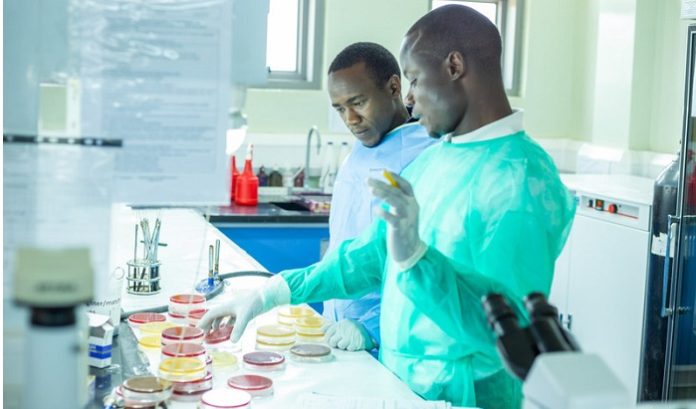
BD (Becton, Dickinson and Company), a leading global medical technology company, announced a collaboration with Pfizer Inc. and global charitable foundation Wellcome to better understand the role of diagnostics in advancing antimicrobial stewardship practices around the world.

BD today announced a collaboration with Pfizer Inc. and global charitable foundation Wellcome to better understand the role of diagnostics in advancing antimicrobial stewardship practices around the world.

Building on ongoing efforts to advance the role of diagnostics in tackling the challenge of antimicrobial resistance (AMR), this collaboration will survey existing diagnostic practices to highlight both benefits and gaps in diagnostic testing in AMR stewardship to improve and further advocate for patient care, clinical practice and health care economics.

“Diagnostic stewardship โ€” meaning coordinated guidance and interventions to improve appropriate use of microbiological diagnostics to guide therapeutic decisions โ€” promotes appropriate, timely diagnostic testing, including specimen collection and pathogen identification as well as accurate, timely reporting of results to guide patient treatment,” said Brooke Story, president of Integrated Diagnostic Solutions for BD. “Research shows us that significant barriers must be overcome to make health care workers aware of the importance and positive impact of diagnostics on AMR.” i

AMR occurs when bacteria, viruses, fungi or parasites change over time and no longer respond to medicines. These changes make infections harder to treat and increase the risk of disease transmission, severe illness and death. As the organisms that cause infections become increasingly drug resistant, even common medical procedures โ€” including surgery, childbirth and chemotherapy โ€” can become increasingly life-threatening.ii A continued rise in AMR could take 10 million lives globally each year by 2050 โ€“ more than currently die from cancer.iii

The important role diagnostics can play as a tool to improve appropriate use of antibiotics is recognized by policymakers and advocates. AMR Review โ€” an organization commissioned by the U.K. prime minister and chaired by Lord Jim O’Neill โ€” includes promotion of “new rapid diagnostics to cut unnecessary use of antibiotics” as one of its 10 primary recommendations.iv However, progress in implementing the AMR Review’s recommendations remains slow and diagnostics remain an under-utilized resource for optimizing antimicrobial (antibacterial, antifungal and antiviral) treatments and supporting antimicrobial stewardship efforts.

“Having the right diagnostic tools for the right contexts, and ensuring their uptake is crucial to fight antimicrobial resistance and save modern medicine,” said Dr. Gemma Buckland-Merrett, DRI Research Lead at Wellcome. “We need to preserve and sustain the efficacy and longevity of existing antimicrobials and protect the effectiveness of future drugs. This collaboration will help address the challenge and contribute to better outcomes for patients, clinical practice and health care.”

The COVID-19 pandemic has put antimicrobial resistance into sharp focus, with early case studies and surveys of COVID-19 treatment pathways showing a high proportion of antibiotic use despite low risk of secondary bacterial infections in the majority of patients.v This early data prompted the World Health Organization (WHO) to issue a bulletin warning about the risk of the COVID-19 pandemic exacerbating the potential for AMR.vi The collaboration will help raise awareness of the critical role of diagnostics in combating AMR.

The incorrect use of antimicrobial medicines is a strong contributor to the growth of resistant microbes, and we need to employ antimicrobial stewardship practices as a way of slowing emergence to resistance and prolonging the usefulness of available treatments,” said Dr. Pol Vandenbroucke, chief medical officer, Hospital Business, Pfizer Inc. “This greater oversight requires a multifaceted approach spanning key diagnostics, improved education and innovative surveillance measures. As AMR continues to rise, we must all work together โ€” across the biopharmaceutical and diagnostic industries, government and other important stakeholders โ€” to invest in measures that will improve the diagnosis and treatment of patients around the world and contribute to our shared goal of slowing the spread of this deadly global public health threat.”

About BD
BD is one of the largest global medical technology companies in the world and is advancing the world of health by improving medical discovery, diagnostics and the delivery of care. The company supports the heroes on the frontlines of health care by developing innovative technology, services and solutions that help advance both clinical therapy for patients and clinical process for health care providers. BD and its 75,000 employees have a passion and commitment to help enhance the safety and efficiency of clinicians’ care delivery process, enable laboratory scientists to accurately detect disease and advance researchers’ capabilities to develop the next generation of diagnostics and therapeutics. BD has a presence in virtually every country and partners with organizations around the world to address some of the most challenging global health issues. By working in close collaboration with customers, BD can help enhance outcomes, lower costs, increase efficiencies, improve safety and expand access to health care.

About Wellcome
Wellcome supports science to solve the urgent health challenges facing everyone. We support discovery research into life, health and wellbeing, and we’re taking on three worldwide health challenges: mental health, infectious disease and climate.

Translate ยป