









Close
Digital Health & Ai Innovation summit 2026
Medical Taiwan 2026

Have You Suffered Severe Injuries In A Pedestrian Accident? Here’s Some Helpful Advice

What do you do when pedestrian accident injuries happen? Do you contact an experienced personal injury lawyer to help with the legal proceedings, or try to recover on your own? This blog post will discuss some of the steps that pedestrians who have suffered severe injuries in pedestrian accidents should take after the incident.

Hire a lawyer

The best way to get compensation for your injuries is by hiring a personal injury lawyer. According to a seasoned pedestrian accident attorney in Harrisonburg, VA, pedestrian accident injuries are best treated by professionals who focus on pedestrian accidents. In Virginia, a lawyer will be able to help you understand your rights, assess the strength of your case, and handle negotiations with insurance companies following the laws in the state.

Your personal injury lawyer will help you with the legal process and make sure you get the compensation that’s owed to you. You should always hire a personal injury lawyer if you have been in an accident, no matter how minor it seems. There are many benefits of hiring a personal injury attorney – not only do they know what they’re doing, but they also handle all the paperwork for you so that nothing falls through the cracks. Hiring a professional can help ensure that your claim gets processed quickly and efficiently – this could be critical when dealing with time-sensitive claims like medical bills or lost wages from work.

●     Tips to find the right lawyer

To find the right lawyer, make sure you look for a pedestrian accident lawyer that is experienced and well-versed in the area of law. You should have an idea about which lawyers can help you if you know any people who have suffered injuries from pedestrian accidents or ask your family doctor to recommend someone they trust.

You should also talk with friends or relatives who may have experience with pedestrian accidents or who have already hired pedestrian accident lawyers before. You can also consult the Internet for information about good pedestrian accident lawyers, but you should be very careful because there are lots of scammers out there so make sure to do your research carefully and thoroughly.

Many law firms will take care of all the paperwork if you decide to hire pedestrian accident lawyers so this is a good choice if you don’t have time or the patience for paperwork.

You should find out which media sources your chosen pedestrian accident lawyer will use to publicize the case and make it clear what benefits you can expect from hiring them. Make sure that they are going to invest money into advertising because pedestrian accident cases are often complex and lengthy so you should have enough money to take care of it.

Get medical treatment right away

If you have suffered pedestrian accident injuries they must be immediately treated by a qualified doctor or hospital – even if you do not think your injuries are severe. Pedestrian accident injuries can be much worse than they initially appear, and getting prompt medical attention is vital to a full recovery from a pedestrian accident-related injury

Collect evidence

It’s important for pedestrians who have suffered pedestrian accident-related injuries to collect as much information about the incident as possible. This includes taking pictures of the accident scene and pedestrian accident injuries. You should also keep track of your medical bills, ambulance receipts, and any other expenses related to pedestrian accidents from a personal injury lawyer in Virginia. Remember if you have been injured due to another person’s carelessness, the evidence must help prove this claim. You may also need to provide evidence related to pedestrian accidents if you are filing an insurance claim.

Know your rights

Pedestrians who have suffered pedestrian accident injuries should know what their legal rights are concerning the incident. If the other party was at fault for pedestrian accidents, they may be held responsible for pedestrian accident-related medical expenses, lost wages, and other pedestrian accident damages.

When you’re in an accident, you must hire a personal injury lawyer right away. They will help with the legal process and make sure that you get what is owed to you. Hiring a professional can also ensure your claim gets processed correctly so there are no mistakes made along the way – which could result in having to pay more for something or not getting compensation at all. If you’ve been injured because of someone else’s negligence, don’t hesitate to contact a lawyer immediately. They will guarantee that you will be compensated for your injuries accordingly.
Memic Announces Robert L. Ryan and Sandra Morgan to Join Board of Directors Upon Closing of Business Combination with MedTech Acquisition Corporation

Memic Announces Robert L. Ryan and Sandra Morgan to Join Board of Directors Upon Closing of Business Combination with MedTech Acquisition Corporation

Memic Innovative Surgery Ltd., a medical device company dedicated to transforming surgery with its proprietary surgical robotic technology, announced that Robert L. Ryan and Sandra Morgan have agreed to join the company’s board of directors. Ryan and Morgan, who served in leadership roles at companies including Medtronic and HCA, respectively, will join the board pending the closing of the business combination agreement between Memic and MedTech Acquisition Corporation currently anticipated for Q4 2021.

“We are very pleased to welcome Bob and Sandra to our board during an important time in Memic’s evolution as we plan for many important milestones and expand the commercial opportunities with our Hominis® platform, a technology that has the potential to transform the way surgeons perform robot-assisted procedures,” said Dvir Cohen, co-founder and chief executive officer of Memic. “Bob is a recognized senior executive with extensive experience in building technology businesses. We believe his operational and financial experience, including serving as CFO at Medtronic, will be a vital asset as we plan for continued growth in our global operations in the years ahead. Sandra’s accomplishments in the healthcare industry span over three decades, including 13 years at HCA. We believe her extensive experience working with hospitals, healthcare providers and payors will be instrumental as we work to build many new relationships with leading surgeons who can benefit from our technology.”

Mr. Ryan has held senior positions in strategic planning and business development at several leading global companies. He served as senior vice president and CFO of Medtronic for more than 12 years, leading the company’s finance functions, including treasury, tax, controllership, internal audit, and investor relations during a period of substantial global growth. He retired from Medtronic in 2005. From 1975 to 1982, he worked for Citibank, including five years as head of the media lending department. He has served as board member of several leading multinational companies including Citi from 2007-2015 where he chaired the mortgage compliance committee and served on the audit and risk management committees. He has also served on the boards of Black & Decker (later Stanley, Black & Decker), General Mills, Hewlett-Packard Company, and UnitedHealth Group. Mr. Ryan is a Trustee Emeritus of Cornell University and served for several years on the Visiting Committee of Harvard Business School. He holds a BS degree in electrical engineering from Wayne State University, an MS degree in electrical engineering from Cornell University, and an MBA from Harvard Business School

“This is a transformational time for Memic, following the recently announced business combination agreement with MedTech Acquisition Corporation last month and the continuing growth in commercial opportunities for the company,” said Mr. Ryan. “I am excited to join the board upon the closing of the business combination with MedTech. We look forward to developing and executing strategic plans that will optimize the commercial opportunities for the Hominis system and bring this innovative technology to leading hospitals and other medical facilities in the United States and around the world.”

Ms. Morgan has 32 years of healthcare and executive leadership experience working for Fortune 100 companies. Most recently, she served as senior vice president, provider relations at HCA Healthcare. During her 13-year tenure at HCA her responsibilities included business growth for hospitals, ambulatory surgery centers, urgent care clinics, transfer centers, and all service lines including surgical and robotics, women’s and children’s, neurology, oncology, emergency services, behavioral health, employer brokers, and rural markets. She also led the HCA Enterprise Transfer Center and founded the management development group that helped advance the careers of many of HCA’s vice presidents, hospital CEOs, COOs, and service line leaders. Prior to HCA, Ms. Morgan served as vice president for Pfizer’s US managed care business, where she played a major role in the launch and formulary adoption of several products. She received her BS degree in business administration from the University of Illinois and an MBA from St. Joseph’s University.

“I am delighted to join the board of directors upon the closing of the business combination with MedTech as Memic plans for continued global commercial opportunities for the disruptive Hominis platform,” said Ms. Morgan. “I look forward to contributing to Memic’s future growth and success building on the company’s first FDA-authorized indication of Hominis in women’s health including benign hysterectomy via the transvaginal approach. This technology has the potential to change patients’ lives.”

National Association of Health Services Executives Announces New Board Chair and Chair-Elect

National Association of Health Services Executives Announces New Board Chair and Chair-Elect

The National Association of Health Services Executives (NAHSE) – the premier non-profit association serving and advocating for Black executives in the health care industry – announced Deborah Lee-Eddie, LFACHE, CPC, as its new Board Chair and Herbert C. Buchanan, Jr., MBA, MS, as Chair-Elect. Deborah and Herbert will assume their positions in October 2021.

In 2019 NAHSE adopted a set of strategies to assure its long-term sustainability and reaffirm its mission of empowering the next generation of Black healthcare leaders and advocating for access to healthcare services for minority and underserved populations. The National Board of Directors selection of these leaders is a significant milestone in achieving NAHSE’s two-year plan to transition its governance structure and operating model. The selection of the Board Chair Lee-Eddie and Chair-Elect Buchanan builds on the association’s robust leadership in the recent hiring of Lisa Maria Mallory, Ph.D., as the organization’s permanent Executive Director.

Chair Lee-Eddie, head of the independent consultancy DLE Group LLC, is a senior executive and professional coach specializing in coaching business executives to accelerate their personal and leadership effectiveness. Before forming the DLE Group, she enjoyed a successful 35-plus year career of progressively responsible leadership roles at the facility, market, and health system levels.

“I am honored to serve as NAHSE’s inaugural elected Board Chair and look forward to convening the National Board of Directors,” said Lee-Eddie. “The Board consists of multi-talented NAHSE member executives that well mirrors the professional diversity, gender, and age bands of the organization’s membership. In concert with Chair-Elect Buchanan and Immediate Past President Fabian Stone, we will oversee the next phase of NAHSE’s structural evolution. Transitioning daily operations and the implementation of strategy into the capable hands of Executive Director Lisa Mallory, the Board is well-positioned to focus its attention on the long-term sustainability and vitality of the organization.”

Chair-Elect Buchanan, a dynamic and effective leader, is currently Senior Vice President, Chief Regional Officer for the South Region of AMITA Health. Among his many career experiences, he has a wealth of senior-level executive experience in academic medical centers and systems, community hospitals, the American Hospital Association, and various health care organizations.

“I look forward to continuing to collaborate with Lisa Mallory, our new Executive Director, and Deborah Lee-Eddie, our Board Chair, to forge new directions and more meaningful accomplishments that build on the NAHSE tradition, vision, and values, and significantly impact health equity and the contributions of NAHSE members and supporters in an industry that is in desperate need. A significant amount of thought and follow through was committed to the evolution of a structure that will serve NAHSE well into the future, and we are grateful to all who were involved,” said Buchanan.

“Since its beginning in 1968, NAHSE has been committed to supporting and building a pipeline of Black healthcare leaders through conferences and educational offerings, mentoring, local chapter programming, and more,” said President Stone. “Our work starts with reaching out to students and continues throughout the length of the executive’s career. With the selection of Deborah and Herb as Chair and Chair-Elect, NAHSE will continue to significantly expand its scope and reach within the health care community. Moreover, these positions are the foundation for ensuring our governance structure is strong and effective.”

4 Ways Healthcare Providers Can Effectively Treat Deafblind Patients

4 Ways Healthcare Providers Can Effectively Treat Deafblind Patients

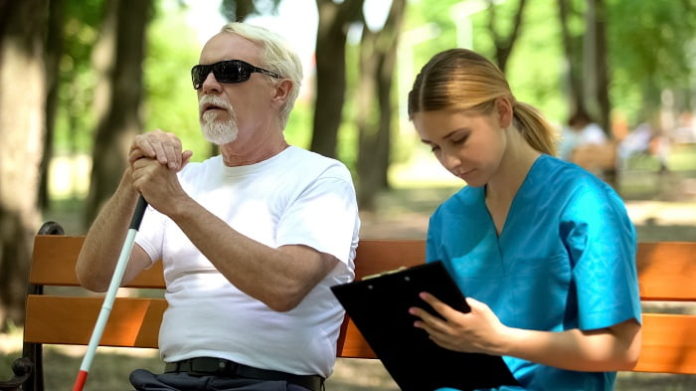
Deafblindness poses a big challenge not just to patients, but also to the people around them. Because of hearing and vision loss or restrictions, deafblind patients tend to be less mobile and more dependent on others. These situations may even lead to sufferers lacking of confidence and having low self-esteem. When these happen, deafblind individuals are likely to be left alone and be less independent.

Fortunately, there are healthcare services that could help patients and their families overcome the difficulties they meet. With the advancements in studies on deafblindness, appropriate techniques have been designed. If you have a deafblind family member who may need professional help, here’s an article about the different ways healthcare providers can best take care of them:

  1. Communication-Based Learning

While deafblindness means loss of sight and hearing, most deafblind individuals could still learn to communicate as they still have some of their sense of hearing or sight left. With the trends in communication-based learning, deafblind patients could develop their communication skills. For instance, if you live in Australia or its nearby territories, you could learn more about deafblindness and the different ways patients can improve their communication skills through various organizations, such as Deafblind Information.

Meanwhile, some of the standard communication learning methods are the following:

  • Tactile-based language: In this method, deafblind patients put their hands over the signer’s to follow what’s communicated through movement and touch.
  • Sign language: This could be one of the oldest forms of deafblind communication methods. Here, the signer uses facial expressions, gestures, body language, or other objects. In this method, the teacher relies on hand signs and visual images.
  • Tactile fingerspelling: This also uses sign language, but focuses on spelling letter by letter. The deafblind patient learns by tracing the fingers of the signer who fingerspells.
  • Print on palm: Signers ‘write’ on the patient’s hand so they could ‘read’ what’s ‘written.’
  • Hand tracking: In this method, the patient interprets the signer’s hand, wrist, and forearm movements.
  • Tadoma: The patient touches the signer’s face and familiarizes themselves with the facial expressions and movements.
  • Braille: The patient ‘reads’ the raised dots through touching. This is the common method for individuals who are completely blind or have extremely low vision.
  • Lipreading: Partially and completely deaf patients draw meaning from how the speaker talks and expresses their mind through movements and facial expressions.
  1. Custom-Fit Care Plan

Deafblind healthcare providers offer activities that could improve the patient’s sensory functions for them to be more independent. For this purpose, they design deafblind-friendly facilities for in-house activities. These activities are based on the patient’s initial and mid-assessments. In some cases, the provider suggests using a guide dog or a long cane to help in the training.

The goal of custom-fit care planning is to help patients do their daily activities independently. Depending on the patient’s situation, healthcare providers assign the following aides to further improve the treatment:

  • Communicator guide: ideal for patients who’ve been deafblind in the latter part of their lives
  • Intervenor: more appropriate for patients who were born deafblind
  • Interpreter: a healthcare worker focused on the communication learning and development

  1. Support Group

Healthcare providers underscore the need to assist deafblind people holistically. Apart from the physical and mental development, healthcare workers also work on patients’ emotional wellbeing. For this purpose, they provide sessions that serve as avenues for patients to talk about themselves—their experiences, struggles, and aspirations. The insights and information gained in these sessions become bases for future assessments and activities for the welfare of the patients.

  1. Medical Treatment

Some healthcare providers also offer hearing and vision treatments using surgery and medication, such as surgeries for cataract and macular surgeries for cataract and macular degeneration. Through such things, patients are still able to maximize any remaining hearing or vision they have. Coupled with other forms of treatment, deafblind patients could live like most people usually do, or, at least, close to it.

Wrapping Up

Deafblindness affects a significant portion of the world’s population. To help deafblind patients around the globe, many healthcare providers have started designing custom-fit treatments. This way, deafblind individuals will have a high chance of improving their efficiency and productivity. With the advancements in the field of healthcare, the use of specially designed instruments, surgeries, and sessions can contribute to achieving the goal of every deafblind patient, which is to live confidently and independently.

If you have a deafblind family member, you may use this article as your guide. The insights could, hopefully, help you decide whether or not to enroll your family member to a deafblind healthcare institution.

Illuminate a new path to precision care: the unsung heroes of healthcare transformation

As your organization’s IT leader, you have a clear vision – Getting healthcare informatics right, to transform tomorrow’s medicine. What do healthcare IT leaders say?

COVID can speed up evolution of healthcare technology

In 1972, Stephen Jay Gould and Niles Eldridge proposed a theory called punctuated equilibrium. This model bolstered Charles Darwin’s theory of evolution, which outlined a gradual and steady process of change within Earth’s species. But it also acknowledged what scientists observed in the field – that the fossil record showed more radical change.

Rather than gradual evolution, punctuated equilibrium held that the creation of a new species occurred quickly, in terms of geological time, usually because of new environmental pressures. And between these punctuations they observed long periods of stasis where a species’ adaptation to their environment is “good enough” and doesn’t change radically.

It’s interesting to note that species — from the tiny trilobite to the titanic T-rex to modern humans — don’t know whether they’re living through a punctuation event or a period of stasis. The fossil record tells that story, long after species have endured the consequences.

So, what does punctuated equilibrium have to do with healthcare? The COVID-19 pandemic and the rapid pace of innovation may have placed healthtech in the middle of one such punctuation event right now.

If this is true, healthcare leaders have a remarkable opportunity that the dinosaurs never had. We can decide to prioritise the innovative healthcare technologies and processes that give evolution an edge over extinction.

Challenges morph in response to COVID-19

When a species is in stasis, its members are attuned to the environment. That continues until rapid or profound external pressure kicks natural selection into gear. Then, after evolutionary adaptations occur, stasis once again returns.

Does that sound familiar?

Every healthcare organisation, from care providers to life sciences and MedTech companies, has seen its challenges and strategic goals morph in response to COVID-19. For example, health systems focusing on patient engagement, population health and quality improvement pivoted to building COVID wards, supporting mass testing, resourcing contact tracing and deploying integrations. Healthcare organisations once again shuffled priorities when vaccines hit the market.

Although organisational concerns change every year, the pandemic represented a radical acceleration. Agility and innovation became crucial to survival. Rapid prototyping, fast failure and a commitment to key objectives incited healthcare innovation in everything from advanced technology projects to simple workflow revisions.

InterSystems clients established digital vaccination appointment booking systems in a month, mass testing programs in weeks, and new wards in days. Some experts believe that telehealth, meanwhile, jumped 10 years forward. Our customers adapted on their own by opening new labs and hospital wards in record time and innovating their processes, all without major changes to their technology platform.

COVID-19’s relationship with healthtech included precisely the kinds of environmental pressure and adaptative response that define punctuated equilibrium.

Punctuation event necessitates agility and resilience

We’ve been helping healthcare organisations innovate long before today’s punctuation event. Our commitment to agility drove the decision to move InterSystems TrakCare® to a continuous release process, a major change through which we resolved to release all new features and projects at the moment of completion.

We have also made it easier for TrakCare clients to stay current but supporting the latest release of TrakCare on more than one version of InterSystems IRIS for Health, which allows clients to stay current without having to undertake major upgrade projects.

We believe that a data platform built specifically for healthcare is key to getting through this punctuation event. Multi-dimensional data storage, a full FHIR repository, analytics and a suite of interoperability tools empower healthcare organisations to make the most of their data, which has proved critical during COVID.

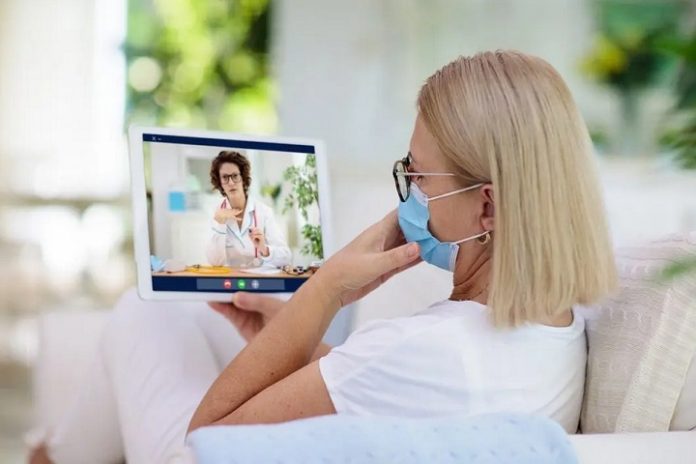
We also had to stay flexible to meet local needs and regulations. To facilitate virtual appointments, InterSystems integrated with Google Meet in Chile, Microsoft Teams in Thailand and the Middle East, and WeChat in China, to name a few. Each integration used the same underlying pattern to book, store and notify patients of appointments and allow clinicians to launch the appointment from within TrakCare.

COVID-19 reminded us that healthcare innovation can come from within an organisation. In Australia, a team of four InterSystems interns developed new tools within TrakCare, building a chat bot that enabled clinicians to access patient data through Microsoft Teams and an integration with Google and Apple wallets for outpatient appointment booking, in just two months. Our customers built similar chat bots that helped get them through the pandemic, but we liked the wallet integration so much that it’s going to become a part of TrakCare.

My point: Innovation can occur even under tight constraints.

Opportunity for change won’t last forever

No one knows when healthcare will reach its next period of stasis, but it could take years. Everyone in this industry has the opportunity to support innovation today, for long-term value tomorrow. Healthcare organisations that choose to hesitate rather than innovate only risk reserving their place in the fossil record.

TransMedics Receives FDA Approval for its OCS Heart System Enabling Broader Utilization of Donor Hearts for Transplantation in the U.S.

TransMedics Receives FDA Approval for its OCS Heart System Enabling Broader Utilization of Donor Hearts for Transplantation in the U.S.

TransMedics Group, Inc., a medical technology company that is transforming organ transplant therapy for patients with end-stage lung, heart, and liver failure,  announced that the U.S. FDA has granted premarket approval (PMA) of its OCS Heart System for use with organs from donors after brain death.

The OCS Heart System is indicated for the preservation of DBD donor hearts deemed unsuitable for procurement and transplantation at initial evaluation due to limitations of prolonged cold static cardioplegic preservation (e.g., > 4 hours of cross-clamp time). This indication is based on the results of the OCS Heart EXPAND Trial, the associated OCS Heart EXPAND Continued Access Protocol (CAP) and the OCS Heart PROCEED II Trial.

“We are thrilled to achieve this important milestone for heart transplantation in the United States. This was the culmination of several years of collaboration with leading heart transplant experts and FDA to bring our lifesaving OCS technology to help more heart transplant patients in the U.S.,” said Waleed Hassanein, MD, President and Chief Executive Officer. “We are honored and humbled that the OCS Heart System is now the only FDA approved device indicated for ex-vivo perfusion and assessment of both donor hearts and lungs as an alternative to the antiquated cold storage preservation. We take this responsibility very seriously, and we are looking forward to the next phase of commercial activities, the initiation of the OCS Heart Perfusion (OHP) Registry, and potentially expanding our clinical indications in the future.”

“The approval of this revolutionary technology marks a critical step forward for heart transplantation,” said Dr. Jacob Schroder, surgical director of heart transplantation at Duke University Medical Center and the principal investigator for the OCS Heart EXPAND Trial. “The OCS Heart System allows surgeons to assess donor heart’s viability in real time and minimizes the negative effects of cold storage. This will increase utilization of donor hearts that are rarely used due to limitations of cold storage preservation. By expanding the donor pool of acceptable hearts, the OCS will enable us to better meet the growing demand for heart transplantation in the U.S. and save lives.”

The approval of the OCS Heart System follows FDA approval and subsequent commercialization of the OCS Lung System. TransMedics is also seeking FDA approval for its OCS Liver System, which received a favorable vote in support its approval by a panel of experts during an FDA Advisory Committee Meeting on July 14th, 2021.

About TransMedics Group, Inc.

TransMedics is the world’s leader in portable extracorporeal warm perfusion and assessment of donor organs for transplantation. Headquartered in Andover, Massachusetts, the company was founded to address the unmet need for more and better organs for transplantation and has developed technologies to preserve organ quality, assess organ viability prior to transplant, and potentially increase the utilization of donor organs for the treatment of end-stage heart, lung, and liver failure.

Northwest Surgical Hospital uses new robotic technology to help treat patients and protect from COVID-19

Northwest Surgical Hospital uses new robotic technology to help treat patients and protect from COVID-19

As COVID-19 cases continue to rise in our area, Northwest Surgical Hospital is using new technology in an effort to keep patients out of main hospitals to protect them from the virus.

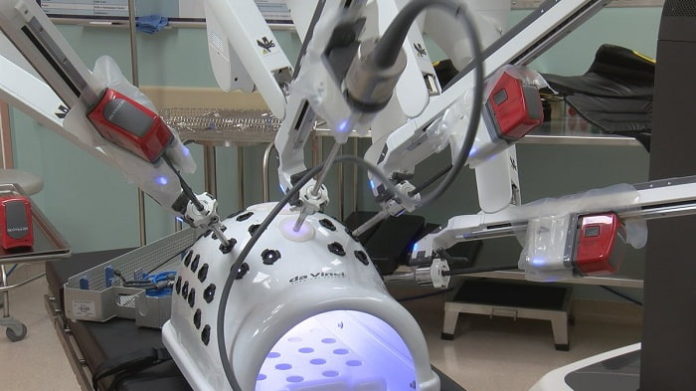
The Di Vinci XI is the only system that’s located in an offsite surgical facility outside the metro area and it’s right here in Amarillo at Northwest Surgical Hospital. This means patients in the area don’t have to travel miles to bigger cities or go to main hospitals to be treated.

The primary message is that it keeps hospitals open to treat other patients right now and opens up for procedures that can be done at offsite locations like this one.

“At hospitals we need space to take care of those patients. So, when you do surgeries, you utilize resources, man power, which can be easily and efficiently done in the surgical center. The second point is also the efficiency is better. We can get these things done a lot faster because of the way the system is at the surgery center level,” said Muhammad Nazim, regional chairman and professor of surgery at TTUHSC.

Nazim says this tool helps provide better care to his patients because the system minimizes complications, causes minimal pain with a faster recovery time and improves outcomes.

“If you started out with open surgery, the patient used to come in and stay at the hospital for a long time, a long recovery, pain and going back to work was all prolonged. This really revolutionized the way we deal with these situations and you know of course, really cut down on the cost, the quality of the patient, minimizing complications and stuff like that. I see robotic surgery as the future of any specialties and surgeries,” said Nazim.

This technology allows the physician to sit at the consul while doing the surgery. The system moves in all directions, where if the physician was doing the surgery with his or her hands, they may not be able to maneuver in all the same directions the system can.

“All of the physicians do have to have additional training. A lot of people laugh about the kids doing all of the Xbox and everything. I mean that is exactly where it’s getting all their skills from, is all these physicians, I’m not saying that they’ve all done Xbox, but I’m just saying that just the hand, eye coordination is what gets them going,” said Destiny Thompson, assistant director of the surgery center at Northwest Surgical Hospital.

Nurosene and Netramark Partnership to Provide Enhanced AI Capabilities and Data Analysis in Mental Health Treatment

Nurosene Health Inc. is pioneering innovative ways of managing and researching mental health disorders. The company provides mobile technology with tools to empower users to take better control of their mental wellness. Nurosene’s mission is to build the next generation of better, healthier brains by leveraging technological advancements in artificial intelligence (AI) and machine learning.

With a team of experts and partners, the company is well-positioned at the leading edge of critical research and innovation, striving to disrupt traditional mental health treatments.

The prevalence rate of mental disorders is high worldwide. According to the National Institute of Mental Health (NIMH), nearly 1 in 5 adults — about 51.5 million — in the U.S. alone live with a mental illness.

Mental disorders, also called mental illness or psychiatric disorders, are a wide range of conditions that affect mood, thinking and behavior. These disorders vary in degree of severity, ranging from mild to moderate to severe. Mental illness falls into 2 categories — any mental illness (AMI) and serious mental illness (SMI).

Nurosene’s innovative approach to mental wellness is being delivered through its mobile health app — Nuro. The app is designed to help people discover and introduce healthy habits into their daily routines. Many of the activities introduced in the app are quick and efficient — micro-actions can lead to macro-results.

A multitude of activities in the app focus on the 3 pillars needed for a healthy brain: blood flow/oxygen, glucose/sugar and the activation of neural networks instead of “brain areas.”

The Nuro app is committed to targeting the underlying neurobiology of the brain in a way that preserves and restores its wonderfully evolved structure and function. It is also designed to integrate into an individual’s existing lifestyle, which optimizes for the “practicality” needed to create improved habits and behavior.

The company said through the app, users will discover a fully integrated system between the brain and body. The human brain learns by doing and Nurosene believes that improved brain health often leads to better behavior. The Nuro app was designed to accompany an individual on a path towards a better today and brighter tomorrow.

Nurosene – NetraMark Partnership

To further enhance the capabilities of the Nuro app, Nurosene announced on August 10 that it has entered into a term sheet with NetraMark Corp., a private Ontario, Canada-based AI and pharma-tech company, to acquire all of its issued and outstanding shares.

This partnership provides enhanced AI capabilities and data analytics that integrate and drive the Nuro mobile health app, propelling Nurosene to mature from a health tech company to a pharma tech company.

Nurosene explained that this acquisition “will not be assuming any long-term debt and no finder’s and/or other fees that are payable, in conjunction with the transaction. The nonbinding term sheet was executed on July 9, 2021, and both parties completed their mutual due diligence investigations and waived all remaining due diligence conditions on August 6, 2021.”

All required parties are expected to enter into a definitive agreement by September 15 (subject to extension by mutual agreement between the parties), which will contain customary terms and conditions for transactions of this nature.

“We are looking forward to adding NetraMark’s talented technology team led by Dr. Joseph Geraci, whose proprietary machine-learning capabilities will evolve and advance Nurosene’s mission of building a generation of better, healthier brains,” stated Nurosene’s CEO, Ranj Bath.

“NetraMark’s powerful data analysis and machine-learning technology NetraAI will power the Nuro app in approaching the underlying biology of the brain and its inherent complexity with a framework that can adapt and learn over time. This will enable Nuro to extract extensive amounts of valuable data; with a portion of that data becoming predictive over time. These insights will be invaluable in supporting Nurosene’s quest to push beyond the conventional, ineffective strategies addressing mental health and other complex disorders.”

NetraMark Founder and CEO Joseph Geraci, Ph.D., added, “Nurosene provides a platform and team that we can leverage to further market and transform our proprietary technology. Together we want to build a future for health and wellness that will advance precision medicine and drug development with the goal to develop new and personalized preventative therapeutics.”

“By building upon the established AI and data-driven techniques of NetraMark’s products, we can effectively accelerate Nurosene’s mission to improve mental wellness by evaluating and predicting optimal treatments and therapeutic formulations in collaboration with their proprietary mobile application,” he added.

About NetraMark

NetraMark Corp., an AI and pharma-tech company, has developed proprietary solutions for pharmaceutical and biotechnology companies. These solutions allow them to leverage small to large data in order to optimize clinical trials and drug development. This is accomplished by providing a superior understanding of their patient populations and these insights also are used to develop new drugs and nutraceuticals.

Founded in 2016 by Dr. Joseph Geraci, PhD, and Richard M. Brooks, LLB, NetraMark was built to address current gaps in the pharmaceutical market. Using AI and machine learning, NetraMark provides powerful insights into how to treat patients at the individual level instead of a one-size-fits all model. NetraMark was built to accelerate the path towards new medications and nutraceuticals through leveraging the full extent of AI and machine learning.


Stryker Acquires Med Device Company Gauss Surgical

Stryker Acquires Med Device Company Gauss Surgical

Stryker announced the acquisition of Gauss Surgical, a Menlo Park, CA-based medical device company that has developed Triton™, an artificial intelligence-enabled platform for real-time monitoring of blood loss during surgery. Financial details of the acquisition were not disclosed.

Triton combines the power of A.I. with the simplicity of a mobile device to deliver accurate blood loss during surgery. Triton has demonstrated improvements in maternal and surgical care through earlier recognition of hemorrhage leading to earlier intervention.

About Gauss

Founded in 2011, Gauss’s mission is to digitally augment clinicians with software that radically improves diagnostic accuracy and leads to improved patient safety and clinical outcomes. Gauss’s flagship product, Triton, leverages computer vision to detect surgical and obstetric hemorrhage in real-time and notifies clinicians who can enact timely intervention and treatment. Triton was granted De Novo clearance from the U.S. Food and Drug Administration (FDA) in 2014, as the first-ever computer vision software for surgical use, and several follow-on 510(k) clearances. Available on the iPhone, Triton has been widely adopted by health systems in the United States and is a recipient of the Apple Design Award, which recognizes the best in design, innovation and technology on Apple platforms.

Translate »