









Close
Digital Health & Ai Innovation summit 2026
Medical Taiwan 2026

Saint Luke’s Health System Moves to the Innovaccer Health Cloud

Innovaccer, the Health Cloud company, announced that Saint Luke’s Health System, one of the largest health networks in Kansas City, Mo., is now using the Innovaccer Health Cloud to support its initiatives around the Primary Care First and commercial value-based care models.

The nationally recognized health system, a leader on U.S. News and World Report’s Best Hospitals List, turned to the Innovaccer Health Cloud and it’s Data Activation Platform to unify claims and clinical data from it’s EHR and disparate HIT systems. Doing so provides a unified patient record that enables comprehensive, actionable insights that can improve multiple factors crucial for success with complex value-based care and reimbursement models.

These include understanding and managing performance on specific quality measures, streamlining care management and collaboration, enhancing coding accuracy, reducing network leakage, boosting wellness visits through patient engagement, and improving the consumer experience and patient satisfaction.

Saint Luke’s Health System currently manages more than 100,000 patients and employs more than 4,500 medical staff, all of whom can now benefit from a truly unified data platform capable of delivering real-time analytics that support timely, effective decision-making, right at the point of care.

“We take great pride in providing exceptional care to our patients, and we need an exceptional data platform to do that,” says Daphne Bascom, Vice President of Population Health at Saint Luke’s Health System. “Value-based reimbursement models are all about rewarding value and quality, but you can’t succeed at them without analytics and the insights they bring to help manage and improve clinical, financial, and operational outcomes. By partnering with Innovaccer, we have been able to unify our patient data and have a single source of truth for these areas. This partnership is just one piece that will help us continue delivering quality outcomes for patients.”

About Innovaccer Inc.
Innovaccer Inc., the Health Cloud company, is a leading San Francisco-based healthcare technology company committed to helping healthcare care as one. The Innovaccer? Health Cloud unifies patient data across systems and settings, and empowers healthcare organizations to rapidly develop scalable, modern applications that improve clinical, operational, and financial outcomes. Innovaccer’s solutions have been deployed across more than 1,000 care settings in the U.S., enabling more than 67,000 providers to transform care delivery and work collaboratively with payers and life sciences companies. Innovaccer has helped organizations integrate medical records for more than 24 million people and generate more than $600 million in savings. Innovaccer is recognized as a Best in KLAS vendor for 2021 in population health management and is the #1 customer-rated vendor by Black Book.


UTM:Healthcare Adds Charge Capture Feature to Remote Patient Monitoring Solution

C Spire partners with Delta Regional Medical Center on remote patient monitoring

Mobile health technology company UTM:Healthcare announced an enhancement to its remote patient monitoring (RPM) solution that enables health care providers to track both time spent monitoring patients and their patients’ utilization of the RPM system, which will support charge capture and third party billing for these services.

The UTM:RPM system can now track the time that providers spend monitoring patients and the transmission of data related to overseeing their care remotely across a 30-day billing cycle. The system generates detailed reports with drill-down information that a provider can then use to file reimbursement claims to health plans. Four distinct procedure codes can be used in the billing process.

“We are excited to add this transmission tracking capability to our RPM system, making it easier for physicians to accurately track their remote patient care and appropriately manage revenues and resources,” said Seth Lachterman, a partner and co-founder of UTM:Healthcare and its parent, YouThisMe. “We plan to continue to update this feature so that, ultimately, it will integrate with a broad array of electronic medical records systems.”

UTM:RPM is a seamless, HIPAA-compliant, simple-to-use remote patient monitoring system that enables hospitals and health systems to remotely manage common chronic conditions such as congestive heart failure and heart attacks, COPD, diabetes, and pneumonia. The solution helps patients manage their own health at home and avoid unnecessary trips to their doctor’s office or to the hospital.

Data is collected by patients through Bluetooth-enabled biometric devices, such as digital blood pressure gauges and pulse oximeters, and transmitted securely to physicians, physician assistants, nurse practitioners, nurses or case managers. The UTM:RPM application is available in Apple’s App Store and in the Google Play app store.

About UTM:Healthcare

UTM:Healthcare, LLC is a wholly owned subsidiary of UThisMe, LLC (YouThisMe), developer of a seamless, secure, HIPAA-compliant, and simple-to-use remote patient monitoring system that allows patients to remain in their homes while giving providers essential information for managing chronic conditions and avoiding hospital readmissions. For more information, visit www.utmhealthcare.com.


ENPICOM introduces a powerful liability prediction solution to de-risk antibody development

 ENPICOM introduces a powerful liability prediction solution to de-risk antibody development

ENPICOM, an innovative bioinformatics software company, announced at the Biologics UK conference new IGX Platform capabilities to accurately annotate exposed liabilities, perform structural modeling of antibodies at scale, and determine developability profiles using customizable penalties. This major development allows researchers to improve their candidate selection by making accurate developability predictions for thousands of sequences at the same time, in a secure, intuitive environment.

“The spectacular progress in the field of antibody discovery calls for more powerful tools to effectively leverage all generated data. ENPICOM has tackled the challenge of candidate pool expansion with the launch of the Antibody Discovery Module earlier this year. The new liability analysis capabilities we are adding today will enable scientists to easily select better antibodies with even greater confidence”, said Jos Lunenberg, co-founder and Chief Executive Officer at ENPICOM.

From thousands of sequences to that needle-in-a-haystack antibody

Existing approaches to predict developability and identify sequence liabilities that are based on simple sequence analysis scale well in terms of the required computational resources, but do not provide sufficient accuracy, as they fail to consider the 3D structure of the antibody. Structural modeling, on the other hand, provides detailed insight into the surface exposure of unwanted motifs, leading to highly reliable liability predictions. Performing these predictions in a high-throughput manner is incredibly challenging and time-consuming, as it requires significant computational resources and specialized software infrastructure. ENPICOM solves these challenges by integrating SAbPred directly into the IGX Platform. SAbPred is developed by the Oxford Protein Informatics Group and is a validated, peer-reviewed, and globally recognized toolbox for accurate and efficient structural analysis of antibodies.

“The three main challenges in the analysis of liabilities we aim to address are accuracy, throughput, and ease of use.” commented Dr Nicola Bonzanni, co-founder and Chief Product Officer at ENPICOM. “The IGX Platform enables researchers to fully utilize the added value of NGS data. You can accurately predict exposed liabilities for thousands of sequences at once, easily assess the developability of candidates, and proceed with your selection with confidence.”

Feature highlights

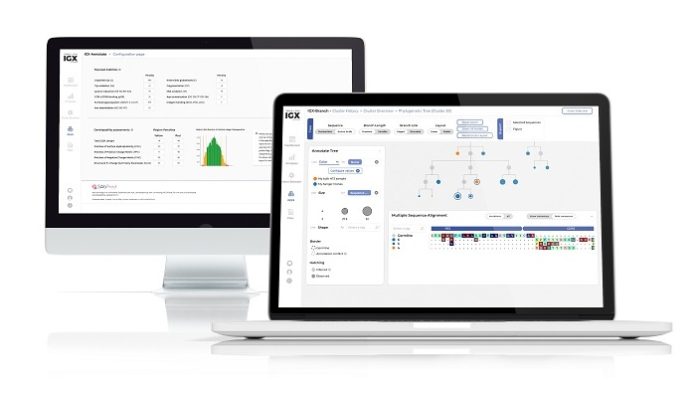
The new IGX-Annotate App enables scientists to accurately predict exposed liabilities, configure custom liability penalties, and integrate developability information throughout their entire workflow. In addition, researchers can now better gauge antibody developability by comparing characteristics of newly discovered antibody candidates to those already brought to the market.

The new Select page provides a flexible environment to compare and rank the most promising antibody candidates based on user-defined characteristics. It brings antibody sequences, experimental metadata, and in silico predictions together into one comprehensive overview, making it easy to select the best candidates to express in the lab or move further down the development pipeline.

Scientists using the IGX Platform can now:

  • Use a validated tool to independently perform structural modeling analysis and accurately annotate liabilities.
  • Increase candidate success by flagging exposed liabilities early in the discovery phase and identify antibodies with the best developability properties.
  • Annotate structural liabilities for thousands of sequences and integrate the developability information throughout their entire workflow.
  • Configure their own liability penalties through an intuitive UI to compute scores that align with their de-risking strategy.
  • Benchmark candidate developability profiles against a database of clinically validated antibodies.
  • Overlay developability characteristics on information-rich visualizations like phylogenetic trees to prioritize and select the best candidates.


The IGX Platform and the Antibody Discovery Module provide an end-to-end cloud solution that enables researchers to easily perform complicated tasks such as clustering, phylogeny, and prediction of exposed liabilities in a secure and scalable environment. With the addition of these new tools, researchers can now expand their candidate pool and improve their antibody selection.

About ENPICOM

ENPICOM is an innovative bioinformatics software engineering company delivering ground-breaking products and customized solutions to decode the immune system and improve human health. With a diverse team of over 25 experts in various disciplines, ENPICOM serves customers from all over the world, ranging from academic research centers doing basic research related to the immune system, to biotech and global pharmaceutical companies focusing on the discovery and development of novel immunotherapies and vaccines.

Leveraging a unique mix of immunology knowledge, bioinformatics method development, and software engineering skills, ENPICOM offers a world-class repertoire sequencing data analysis solution – the ImmunoGenomiX (IGX) Platform. IGX is an innovative platform to manage, store, analyze, visualize, and interpret immune repertoire sequencing data from T and B cell receptors. In collaboration with DDL Diagnostic Laboratory, ENPICOM delivers full immune repertoire sequencing and analysis service.

Signify Research : Adopting an Enterprise Imaging Strategy

Care pathways for many diseases and conditions are complex, involving interactions with many different care teams within a healthcare system. Medical imaging plays a significant role in an array of conditions and treatments. A patients’ journey through a healthcare system is commonly tracked via digital patient record, provisioned by and enterprise electronic medical record (EMR). However, many aspects of imaging and its associated content are poorly integrated with EMR software, leaving significant gaps in the care record. The complexity and variety of imaging, diagnostic procedures and reports integration with digital care records, is challenging.

This paper will explore the importance of access to a complete imaging health record for patients, clinicians, IT administrators and other stakeholders in care pathway. Further, it will address how an enterprise imaging strategy forms the foundation for establishing longitudinal imaging health records and the potential benefits for key stakeholders. Finally, it will outline the important considerations and fundamentals for healthcare providers adopting an enterprise imaging strategy.


Requirements of key stakeholders in the patient journey.

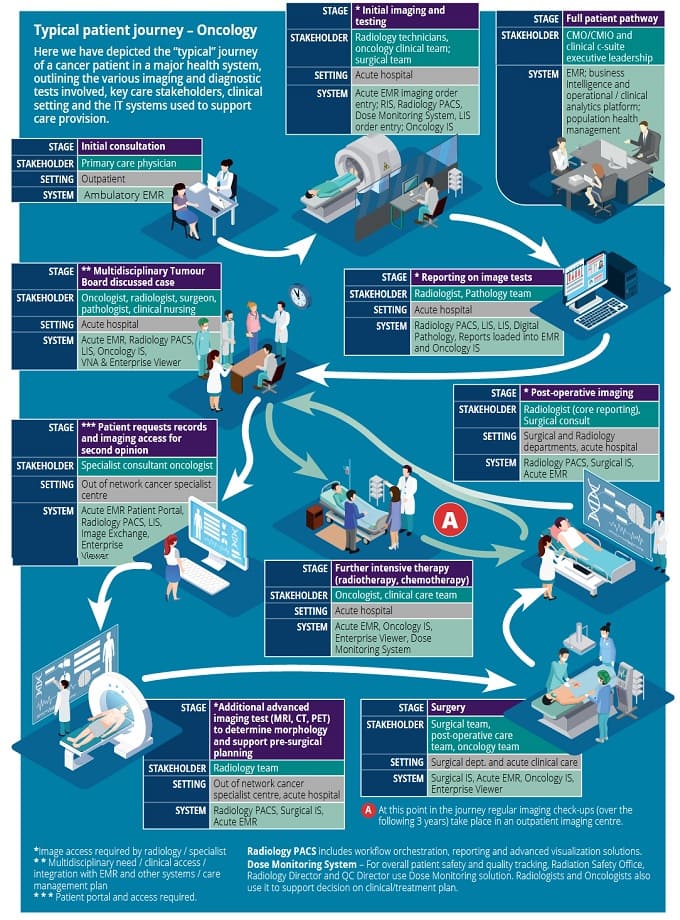
As outlined in the diagram on page 2, diagnostic and clinical stakeholders involved in care provision each have specific requirements. While the core EMR offers a central platform for tracking core administration, monitoring, clinical notes and reports, it rarely offers full access to diagnostic imaging data, which is usually managed and accessed in separate departmental systems. However, as outlined in the care pathway above, each care stakeholder as a specific need for access to the EMR and an array of diagnostic information in order to be able to deliver appropriate and high standards of care to the patient. Below we have outlined some specific informatics requirements for leading care providers in a care pathway:

RADIOLOGIST
● Consolidated access to all imaging from radiology and imaging studies conducted in other clinical departments, including prior history
● Access to imaging studies conducted in outpatient imaging centres both within and out-of-network
● Singular user interface (UI) and user experience (UX) across all diagnostic reporting, viewing and sub-speciality reading 
● Access to broader patient history and relevant diagnostic content from the EMR within core diagnostic UI
● Clinical collaborative tools for inter- departmental consultation

ACUTE CLINICIAN (ONCOLOGY/SURGEON)
● Access full patient case history from EMR including all associated imaging, reports and diagnostic results
● Streamlined tumour-board case management tools to support collation of relevant patient record content from across the patient record and diagnostic IT systems – allowing access to all imagery and pathology information in context of the EMR
● Collaborative tools for inter-disciplinary consultation ongoing care pathway management

PRIMARY CARE PHYSICIAN
● Updates and access to care management plan and associated diagnostic test reports and associated imaging
● Referral and communication portal to acute clinical and broader diagnostic team

CMO/CMIO AND CLINICAL C-SUITE EXECUTIVE LEADERSHIP
● Aggregated view of major care pathways, outcomes and broader patient cohort management across health system
● Metrics and analytics on predictive cost of care, patient risk and care team resourcing
● Integration of clinical and diagnostic metrics into enterprise care management and population health solutions

IT ADMINISTRATOR
● Consolidate governance and maintenance, reducing manual processes for different applications
● Reduce IT resource required for custom APIs and time-intensive integration of system applications
● Minimise risk from security breaches and cyber-attack with enterprise-wide security management and compliance.

What is Enterprise Imaging?

As our cancer patient pathway shows, imaging is no longer performed and accessed solely in the radiology department today. Therefore, radiology specific software products can have limitations in supporting the integration and access to imaging and associated data across the health network. Some healthcare providers are therefore turning to an enterprise imaging strategy to centralize and consolidate all imaging data and associated content into a centralised platform, thereby allowing better access and improved data management and administration. However, each health provider is also approaching enterprise imaging in a different way, blurring definitions. The best consensus definition for enterprise imaging so far is offered from a partnership between two leading health informatics associations:

One existing framework that is available to providers to support planning and implementation of an enterprise imaging strategy is the Digital Imaging Adoption Model (DIAM), a joint project by the European Society of Radiology (ESR) and the Healthcare Information and Management Systems Society (HIMSS) in 2016. The 8-stage framework provides a set of sequential compliance goals (levels 0-4), with Level 4 requiring imaging management at an enterprise level, integration with EMR/HIS and seamless receiving, processing and access to images from all patient units and departments within the healthcare provider network. Levels 5-7 are non-hierarchical and include addition of advanced tools such as analytics and personalised medicine capabilities, Clinical Decision Support (CDS) and advanced Health Information Exchange (HIE).

For many healthcare providers, the DIAM framework provides a clear starting point and means of tracking progress versus peers; however, each healthcare provider may also need to address additional nuances based on the combination of software already in use at their institution and other strategic or clinical initiatives. Furthermore, the DIAM is mostly focused on enterprise imaging management; some providers may also need to more broadly address not only centralising access to imaging content, but also access to associated diagnostic and clinical content that supports image interpretation and broader diagnosis.

Healthcare informatics – Illuminate a new path through the care continuum

Learn how Philips – as a certified organization for the HIMMS Analytics DIAM – can help healthcare IT leaders adapt and advance digital health transformation at defining moments in a patient’s journey, which paves the way for precision care. For more information Click here

Laying the foundation for complete imaging health records. Read the Signify research white paper.

Click hear to Download the White Paper

Consider These Points When Refinancing Your Medical Student Loans

Crowdfunding supports medical students amid a nationwide doctor shortage

Although the medical profession is a lucrative one, it’s no secret that medical school itself is expensive, and many people graduate with a high student loan balance. There is also a long residency period in which you earn substantially less than most doctors eventually do. It’s important to be smart about repayment, and sometimes, that might involve refinancing.

Strategies for Repayment

What may seem like the easiest option or at least the path of least resistance is to simply pay back what you owe based on the original agreement. You may have a date in mind when you are going to be debt-free, and you simply plan to pay the same amount each month until that date arrives. One of the biggest disadvantages to this approach is that it means you never take advantage of changing interest rates. By keeping an eye on interest rates and acting quickly to refinance when they drop, you can save a significant amount of money.

Advantages

You will probably have multiple loans, and you can pick and choose which ones to finance. For example, it might be advantageous to refinance your private student loans but not your federal ones if the interest rate on the latter is lower. One reason to refinance is so that you can pay off what you owe more quickly, but this is not the only reason. You might want to refinance loans from a private lender so that you can free up immediate savings if you are having cash flow issues. Sometimes, refinancing can do both things for you, giving your more money to spend and allowing you to get out of debt more quickly. Paying down what you owe improves both your debt-to-income ratio and your credit score, and as the former improves, the latter does as well.

During Residency

One advantage of refinancing your during your residency is that money may be tight during this time, and you could end up with lower payments. In fact, some private lenders specialize in medical student loans. However, you might need to have someone cosign. If you have federal loans, you should decide whether you want to take advantage of an income-driven plan, which could mean you don’t have to pay anything toward your loans.

This could also give you more flexibility in the type of job that you choose afterwards since you won’t have to worry as much about a salary that allows you to cover your repayments. Refinancing federal loans means you won’t have access to this and other advantages, but many medical school graduates have a mix of federal and private loans, and private ones generally do not offer this option in the first place.

After Residency

One advantage of refinancing after residency is that you have the opportunity to build a good credit history, which can give you a better rate. You may want to refinance more than once if you can get a better interest rate each time. In this way, you can save a substantial amount of money over time.

ClearDATA Partners with Interlace Health to Safeguard Data for Zero-Touch Patient Intake Solution

MSU Health Care Taps Epion Health to Drive Digital Patient Access

ClearDATA, the leader in operationalizing healthcare privacy and security, announced its partnership with Interlace Health to provide the framework for its patient intake solutions’ deployment in the cloud. This partnership enables easy assessment, enforcement and remediation of the privacy and security framework of Interlace Health. The ClearDATA platform’s HITRUST CSF 9.3 Certification underscores their mutual commitment to ensuring that PHI data is managed in a secure, compliant cloud environment.

With the ClearDATA Healthcare Privacy and Security Platform, the company provides the automation and infrastructure upon which Interlace Health has built the security and compliance for their innovative process transformation technology. ClearDATA Cloud Operations and Managed Defense Services supplement the cloud native platform, providing threat intelligence and vulnerability lifecycle management for continuous security and compliance. To keep on pace with the accelerating momentum of the healthcare industry’s adoption of cloud-based solutions, Interlace Health’s strategic partnership with ClearDATA will enable expanded cloud deployment for patient intake and future solutions.

“The demand for digital healthcare and new zero-touch patient engagement strategies has skyrocketed, building steady momentum around the cloud. This critical period during COVID provided hospitals and health systems an opportunity to modernize their patient intake process so they can pivot quickly, optimize costs and prepare for the future,” said Allison Reichenbach, President at Interlace Health. “Privacy, security and compliance are paramount priorities for Interlace Health and our customers. By partnering with ClearDATA, we have employed the most rigorous tools and managed defense available to ensure our providers and their patients that sensitive healthcare data is protected in the cloud.”

Interlace Health’s data in the cloud is now protected by ClearDATA, providing a robust set of technical controls mapped to compliance standards and frameworks such as HIPAA, GDPR and NIST to detect, enforce and remediate compliance – an extra, critical layer of protection for valuable patient data increasingly sought after by bad actors.

“We’re at an unprecedented juncture of technical innovation in cybersecurity automation and rapid adoption of digital healthcare solutions to improve patient experience and streamline provider and insurer processes. The latter is often rushed at the expense of data security and adequate compliance measures,” said Darin Brannan, Chief Executive Officer and Co-Founder at ClearDATA. “Interlace Health’s partnership with ClearDATA enables them to accelerate and scale their innovations, modernizing healthcare to aid patients, providers and insurers with operationalized privacy and security baked into the solution.”

For more information, and to learn more about how the companies are making healthcare better every single day, visit them at https://www.interlacehealth.com and https://www.cleardata.com.

About ClearDATA

Healthcare leaders across the globe trust ClearDATA to protect their sensitive data and securely accelerate their digital transformation in the cloud. With proprietary, healthcare-specific IP and expertise, ClearDATA operationalizes cloud, privacy and security – demonstrating compliance, remediating risk and securing health data in the cloud.

About Interlace Health

Interlace Health lives at the intersection of the relationships, environments and experiences at the heart of modern healthcare. By enabling seamless data capture and information exchange among providers, staff, and patients, Interlace Health solves many of healthcare’s central challenges through process transformation. The result for its clients is reduced costs, increased collections, uplifted patient experiences, improved operational efficiency, and enhanced support of an organization’s integration strategy. Interlace Health’s platform enables several solutions that are accessible by clinicians and patients inside and outside the walls of the healthcare system. These include patient intake, revenue cycle management, electronic consent, forms-on-demand, and downtime contingency.

Temple Health Chooses Comprehensive Mobile Platform from Gozio Health to Provide Seamless Digital Connection with Patients

Temple Health Chooses Comprehensive Mobile Platform from Gozio Health to Provide Seamless Digital Connection with Patients

Gozio Health, an industry-leading, customizable end-to-end mobile platform, announced a new partnership with Temple Health in Philadelphia, Pa., to provide a digital front door for patients. The first health system in Pennsylvania to launch the fully featured mobile platform, Temple Health will use Gozio’s robust functionality to tightly integrate all consumer-facing digital elements into a single mobile application, improving patient access and overall experiences at every point of care.

A digital front door strategy is timely, according to a recent digital health consumer survey from Accenture. Notably, half of consumers surveyed said that a bad digital experience can ruin an entire experience with a provider, and 26% said they would switch to a new healthcare provider for high-quality digital services.

“Temple Health always strives to identify better ways to connect with patients and engage them in their care,” said Michael A. Young, MHA, FACHE, President and CEO of Temple University Hospital and Temple University Health System. “Digital access has become paramount to the patient experience, and we believe we have found the right partner in Gozio Health to position us for the future of mobile interactions.”

The Gozio platform enables patients and visitors to access indoor and outdoor navigation as well as patient flow capabilities, ensuring they are guided to locations in the order they need to be accessed. The solution will make it easy for patients and visitors to find onsite amenities, from restaurants to restrooms to ATMs, and will help patients access digital services such as physician directories, appointment scheduling, patient records and more.

“Today’s consumers expect quality digital experiences across all aspects of their lives, and healthcare is no exception. In fact, as the COVID-19 pandemic demonstrated, seamless digital connections in healthcare are now critical,” said Joshua Titus, CEO and founder of Gozio Health. “We applaud Temple Health for setting the bar high for digital engagement in Pennsylvania and look forward to a successful partnership.”

About Gozio Health

Gozio Health offers an end-to-end, customizable mobile platform exclusively for healthcare systems, including digital front door. Gozio’s extensible mobile platform enables seamless consumer interactions and provides an anytime, anywhere connection to patients improving their overall experience and access to care. Popular patient engagement features include patented indoor wayfinding with turn-by-turn navigation, virtual visits, physician directories, appointment scheduling, access to electronic health records, Urgent Care and Emergency Department wait times, bill pay and extensive analytics capabilities.

About Temple Health

Temple University Health System (TUHS) is a $2.2 billion academic health system dedicated to providing access to quality patient care and supporting excellence in medical education and research. The Health System includes Temple University Hospital (TUH)-Main Campus; TUH-Episcopal Campus; TUH-Jeanes Campus; TUH-Northeastern Campus; Temple University Hospital – Fox Chase Cancer Center Outpatient Department; TUH-Northeastern Endoscopy Center; The Hospital of Fox Chase Cancer Center, together with The Institute for Cancer Research, an NCI-designated comprehensive cancer center; Fox Chase Cancer Center Medical Group, Inc., The Hospital of Fox Chase Cancer Center’s physician practice plan; Temple Transport Team, a ground and air-ambulance company; Temple Physicians, Inc., a network of community-based specialty and primary-care physician practices; and Temple Faculty Practice Plan, Inc., TUHS’s physician practice plan. TUHS is affiliated with the Lewis Katz School of Medicine at Temple University.

Siemens Healthineers has received first IVDR certifications to keep in-vitro diagnostics available throughout the EU

Siemens Healthineers has received first IVDR certifications to keep in-vitro diagnostics available throughout the EU

Siemens Healthineers has announced that its first products have been certified by the TÜV Rheinland certification agency as complying with the European In-vitro Diagnostic Regulation (IVDR), EU 2017/746. These certifications granted by notified bodies like TÜV Rheinland are required for in-vitro diagnostics to continue being sold in the EU. The IVDR’s extensive requirements were adopted by the European Parliament in 2017 and must now be implemented by May 26, 2022. Siemens Healthineers has steadily implemented the EU’s regulatory requirements and made all the necessary preparations to get more than 4000 products for laboratory, molecular and point-of-care diagnostics certified.

“It’s an extraordinary team achievement for us to enable a successful transition to the new regulation in spite of the COVID-19 pandemic,” said Kerstin Wagner, Head of Marketing for Laboratory Diagnostics at Siemens Healthineers. “The entire industry had to set new priorities, such as bringing COVID-19 tests to market in record time and overcoming constraints in the global supply chain. These challenges have made the implementation of the IVDR more difficult, but have not delayed it so far.”

TÜV Rheinland has now certified the first 129 in-vitro diagnostic products from Siemens Healthineers for hemostasis and nephelometry. These were prioritized in accordance with IVDR classifications because they serve to diagnose and monitor treatment of critical diseases. The necessary declarations of conformity were issued by TÜV Rheinland for additional, less critical diagnostic products as well. These certifications confirm that the products meet the IVDR’s high quality standards, which focus on protecting the health of patients and users. To safeguard those standards now and in the future, the IVDR calls for additional performance assessments over and above its predecessor directive, based on scientific, clinical and analytical data. It also improves traceability in the supply chain, and establishes a proactive monitoring system for the early detection of issues in products already in circulation. Along with further changes, the new regulation also expands the responsibility of the notified bodies. Previously, they were involved in less than 20 percent of the regulatory procedures for all aspects of in-vitro diagnostics; now they need to be included in around 80 percent.

The IVDR becomes mandatory as of May 26, 2022. There are also transitional rules that will allow well-established instruments that are have not been IVDR-certified, but have entered the EU previously, to still be sold until 2025. Depending on their shelf lives, these can also be used after 2025. Siemens Healthineers has been investing in IVDR compliance since 2017, and chose TÜV Rheinland, a notified body that was able to begin certifying the entire relevant portfolio. Siemens Healthineers expects more than 4000 products to be certified in good time by May 2022, and thus, continuous, extensive patient care can be maintained.

Siemens Healthineers AG is shaping the future of healthcare. As a leading medical technology company headquartered in Erlangen, Germany, Siemens Healthineers enables healthcare providers worldwide through its regional companies to increase value by empowering them on their journey towards expanding precision medicine, transforming care delivery, improving the patient experience, and digitalizing healthcare. Siemens Healthineers is continuously developing its product and service portfolio, with AI-supported applications and digital offerings that play an increasingly important role in the next generation of medical technology. These new applications will enhance the company’s foundation in in-vitro diagnostics, image-guided therapy, in-vivo diagnostics, and innovative cancer care. Siemens Healthineers also provides a range of services and solutions to enhance healthcare providers’ ability to provide high-quality, efficient care to patients. In fiscal 2020, which ended on September 30, 2020, Siemens Healthineers generated revenue of €14.5 billion and adjusted EBIT of €2.2 billion. Following the acquisition of Varian Medical Systems, Inc. the company has approximately 66,000 employees worldwide.

DKSH Facilitates Equitable Access to Healthcare for Patients in Asia Pacific with Launch of PSPhere Lite+

DKSH Facilitates Equitable Access to Healthcare for Patients in Asia Pacific with Launch of PSPhere Lite

DKSH Business Unit Healthcare, the trusted partner for healthcare companies seeking to grow their business in Asia and Australasia, has further strengthened its digital offering by launching PSPhere Lite+ as the latest product in our digital patient engagement platform for patients and healthcare players in this region.

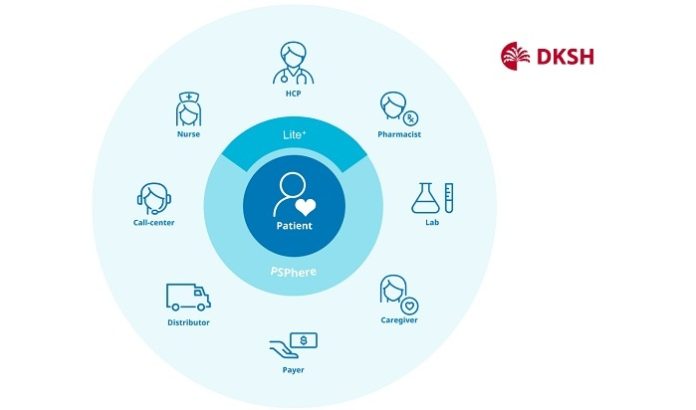
PSPhere Lite+ is part of the PSPhere product portfolio, a digital platform that manages the digitized patient journey by bringing together stakeholders involved in the delivery of healthcare to patients, while ensuring that the patient is at the center of the experience. Given its interoperability, external technologies can easily be integrated securely into PSPhere, so challenges related to access, adherence, and convenience for the patient can be solved from the moment a prescription is made, all the way through the care continuum. This means that beyond-the-pill services, such as home nursing, remote monitoring devices, digital therapeutics, and telemedicine services can be delivered in an integrated manner and patients can get the support required outside of a clinical setting. Integrated systems are proven to support improved healthcare outcomes, a key objective of any healthcare system.

DKSH first introduced its patient solutions offering 18 months ago through a cloud-based solution with the DKSH PSP Cloud. After starting nearly 100 projects and delivering proven success for many multinational pharma clients, the platform evolved into a “sphere” of services throughout the patient journey. This led to the rebranding of DKSH PSP Cloud to PSPhere, representing DKSH’s commitment to patient centricity. DKSH’s belief is that improved outcomes will come from better connection and collaboration across and between the different stakeholders involved in the delivery of healthcare. DKSH’s aim is to not only improve healthcare outcomes for the patients, but also outcomes for all members of the ecosystem.

To further the company’s commitment to facilitate equitable access to healthcare for Asian patients, DKSH is now launching PSPhere Lite+, a lower-cost solution with standardized features to enable all clients to quickly and cost-effectively implement their own Patient Solutions Programs (PSP). This modular approach allows clients to grow their patient engagement as they scale.

Most importantly, DKSH sets the compliance standards for patient support programs (PSPs) in Asia Pacific by ensuring that patient safety takes top priority, alongside data security and privacy. All interactions between patient and stakeholders, including benefits administered towards improving patient outcomes, are managed on the platform, allowing strict controls and seamless audits.

As distribution partner of choice for many healthcare companies across Asia Pacific, DKSH is uniquely positioned to provide support to the patient along the entire value chain of healthcare.

Ruch de Silva, Senior Director Digital Acceleration, Patient & Payor Solutions at DKSH, commented “We are excited to play our part in ensuring equitable access to healthcare for all patients in Asia Pacific through this customizable, patient-centric, digital platform. Orchestrating the healthcare journey begins with the patient at the heart, and I am confident that we will continue to achieve exactly this with our portfolio of PSPhere solutions”.

About DKSH

DKSH’s purpose is to enrich people’s lives. For more than 150 years, we have been delivering growth for companies in Asia and beyond across our Business Units Healthcare, Consumer Goods, Performance Materials and Technology. As a leading Market Expansion Services provider, we offer sourcing, market insights, marketing and sales, eCommerce, distribution and logistics as well as after-sales services. Listed on the SIX Swiss Exchange, DKSH operates in 36 markets with 32,450 specialists, generating net sales of CHF 10.7 billion in 2020. The DKSH Business Unit Healthcare distributes pharmaceuticals, consumer health and over-the-counter (OTC) products as well as medical devices. With around 7,970 specialists, the Business Unit generated net sales of CHF 5.4 billion in 2020.

Reasons Why Hiring A Personal Injury Lawyer Is A Good Idea

Reasons Why Hiring A Personal Injury Lawyer Is A Good Idea

There’s never a good time to sustain an injury, and it’s always worse when it wasn’t our fault. We may have received inadequate training, been given faulty equipment or suffered at the hands of a reckless or drunken driver. When another party was negligent, it’s often possible for someone to file a claim for compensation.

Sometimes people deny that it was their fault, and insurance companies frequently resist paying out. When you’re feeling unwell and vulnerable – and facing mounting medical bills – a legal battle can be the last thing you feel like having. If you’re in this situation right now, this article will help you understand why hiring a personal injury lawyer is your best next step.

They Have The Knowledge And Expertise

These attorneys understand the laws, procedures, and legal processes involved. It can put your mind at ease knowing your case will be handled properly from start to finish. In turn, you can focus on your greatest need, which is to receive medical treatment and recover from your injuries.

Ohio is a state located in the Midwestern region of the United States and it has a population of around 11.8 million people. It’s possible to go online to discover an Ohio personal injury law firm and you can often have live chats and request free case evaluations. Lawyers’ websites often show how much money they’ve recovered from previous claims, also displaying FAQs, client reviews, and photos of the teams.

They Know The Evidence To Collect

Lawyers need to collate and produce this in a way that helps them win the case.  This evidence may include police reports, medical evidence, witness statements, and photos.

Police Reports

They can be crucial evidence when it comes to winning your claim. They are produced if the Police were required to attend an accident scene, for instance, on the freeway.

If the accident occurred as the result of another driver breaking traffic rules (e.g. speeding or running a red light), these reports can provide vital evidence to support the claim. If you were not at fault and there is evidence from police records that prove it, your lawyer will use those documents to strengthen your case.

Medical Evidence

Medical reports are another useful resource that can be used in court to show how badly you were hurt and why treatment was required. These reports can include x-rays, hospital records, doctor’s notes, specialists’ reports, prescriptions for medication, or specific treatments like physiotherapy sessions. This evidence can support your claim regarding pain, suffering, trauma, or a loss of enjoyment of life.

Witness Statements

They will come from people who saw you prior to, during, and/or following the accident. This evidence provides first-hand information about how bad you looked and why the incident occurred in the first place.

Photos

They can be used to prove how badly you were injured and to show the scene after the accident. They may include details of the vehicle damage and road debris. The photos may also show the actual road conditions, e.g. signs or warning devices which were not in operation at the time of your accident. Alternatively, the pictures may show that the road was poorly maintained, e.g. by having potholes, loose gravel, overhanging trees, or poor lighting.

They Know What To Claim For

In order to receive the maximum financial compensation due to you, it’s imperative that the lawyer knows what to claim for. As well as pain, suffering and emotional trauma it could cover loss of income (if you were unable to work following the incident).

In terms of medical costs, this could include hospital bills, medical equipment (wheelchairs or prosthetics), medical devices, and medication. The lawyer will also claim for the cost of any future medical treatment or house modification (e.g. stairlifts, wheelchair ramps) that may be required.

They Can Fight Reluctant Insurance Companies

If you were to handle the case on your own, it would mean dealing with multiple insurance companies over a sustained period of time. A personal injury lawyer can deal with all such communication on your behalf, and also negotiate a fair financial settlement. Added to that, they can advise you whether to accept or reject any early settlement offers.

As you can see, there are many compelling reasons why it’s best to employ a personal injury lawyer to support your claim. Statistics confirm you are more likely to win – and to win more money – if you use one. You will then be able to move on with your life as your health returns.

Translate »