Close
Digital Health & Ai Innovation summit 2026
LiGHT26

FDA May Scrutinize Medical Device Cybersecurity More in 2026

Medical Device Cybersecurity

The scrutiny by the US Food and Drug Administration – FDA around medical device cybersecurity is going to intensify prominently as one moves into 2026, forecasts an expert.

It is well to be noted that in June 2025, the agency went ahead and published its final expectations for premarket submissions and also post-market lifecycle obligations when it comes to medical device cybersecurity protocols as per theย Federal Food, Drug, and Cosmetic – FD&C Act under Section 524B.

The team lead of life science practice at Founder Shield, the technology broker, Justin Kozak, expects that the FDA is going to switch its focus from pre-market paperwork to active operational execution in the coming year.

Kozak went on to confirm to theย Medical Device Network that the FDA is going to move beyond reviewing plans under Section 524B in order to audit the real-world effectiveness when it comes to post-market security processes.

Notably, Section 524B, which was brought to the fore in December 2022 as part of the Consolidated Appropriations Act, goes on to mandate a range of cybersecurity needs all throughout the lifecycle for some medical devices. Those targeted through the legislation are the ones that connect to the internet and also include software that is validated and installed as well as authorized by a device manufacturer.

Required details go on to include information around security controls of the device and plans for vulnerability disclosure along with the provision of a software bill of materials – SBOM.

In October 2023, the FDA went on to execute its refuse to accept โ€“ FTA policy as per Action 524B. The action gave the agency authority to reject the pre-market application โ€“ PMA submissions for in-scope medical device submissions that lacked complete cybersecurity information.

Kozak further said that the fast integration of AI or generative AI โ€“ genAI within the devices is introducing quite distinct security risks, which go on to demand specialized governance along with secure-by-design principles in order to maintain the safety of the patient.

Kozak also remarked that this transition will force the companies to prove their vulnerability management works within the field and not only at pre-product launch.

Given the fact that the premarket enforcement has been in existence since 2023, the industry has been kind of bracing itself for the post-market cybersecurity needs. For instance, UL Solutions, the safety testing company, has a page that is dedicated on its website to going ahead and answering FAQs on how to navigate Section 524B to its best.

Kozak underscored that small medtech companies go on to face a heightened risk because of resource limitations and also a threat of regulatory failure.

He added that they often lack the deep pockets that the larger companies have, thereby resulting in a triple burden situation.

In order to deal with the requirements promulgated under Section 524B, Kozak advises the smaller companies to go ahead and treat security as a central engineering requirement right from day one, as opposed to an afterthought.

Kozak opines that the most effective strategy is certainly to embed automated security checks much earlier in the development pipeline. The reason for this kind of shift-left strategy is that fixing susceptibilities during coding is indeed more cost-efficient as compared to post-market remediation.

Recon DL Tool from GE HealthCare Receives a PMA

Recon DL Tool from GE HealthCare

Pristina Recon DL tool from GE HealthCare which uses two deep learning -DL models has gone on to receive a pre-market authorisation โ€“ PMA from the US Food and Drug Administration โ€“ FDA.

Recon DL is a 3D mammography image reconstruction technology that is available as an upgradeable feature on the Pristina Via platform from GE HealthCare. It makes use of two deep learning -DL models in tandem in order to separate meaningful signals coming from noise in the mammography images.

Recon DL tool from GE HealthCare is the first mammography technology to make use of deep learning in combination with iterative reconstruction in order to improve the digital breast tomosynthesis โ€“ DBT image quality.

The first DL model goes on to reconstruct the 3D volumes in order to minimize the artifacts, whereasย the second is trained to enhance the visualization of certain clinically relevant information in a synthesized 2D view.

A GE HealthCare study that supported the PMA submission with the FDA went on to show that Recon DLโ€™s complete image quality was indeed preferred by breast radiologists in 99.1% of the image reviews as compared to the previous DBT reconstruction tools.

The tool also went ahead and performed strongly when it comes to the detection of microcalcification clusters as well as masses, as demonstrated by a trial that modelled clinical data.

Jyoti Gupta, the womenโ€™s health and X-ray president and CEO at GE HealthCare, commented that through applying advanced deep learning tech, they are indeed shaping the future when it comes to breast imaging โ€“ the one that is defined through faster workflows, uncompromised image quality, and greater confidence in terms of cancer detection.

GE HealthCare confirmed that it has worked along with the academic institutions as well as imaging centers in order to develop as well as validate the algorithms that are used in Recon DL all across its development process.

National Cancer Institute โ€“ NCI research indicates that breast cancer still remains one of the most common cancers in women, with one in every eight expected to go through a diagnosis in a lifetime.

GlobalData analysis says that the global mammography equipment market, which is a subcategory of the broader diagnostic imaging market, is witnessing a surge at a CAGR of 4.9% and also forecasts to reach a valuation of somewhere around $4bn by 2034, which is up from the $2.4bn that was seen in 2024.

Apparently, in January 2024, Siemens Healthineers started the first installations of its Mammomat B.brilliant, which is a mammography system also featuring 3D image reconstruction technology.

GE HealthCare secures PMA for deep-learning 3D mammography system, which was created and published originally byย a GlobalData-owned brand – Medical Device Network.

Abbott to Acquire Cancer Test Maker for Around $21 Billion

Cancer Test Maker

In a recent move, Abbott has gone ahead and agreed to acquire Exact Sciences, the cancer test maker, for almost $21 billion.

For the unversed, Exact Sciences goes on to make the Cologuard non-invasive screening test when it comes to colorectal cancer. The company also makes tests in order to detect multiple kinds of cancer early and also identify certain molecular residual diseases so as to evaluate the risk of recurrence.

The deal is anticipated to close in the second quarter of 2026, subject to the shareholder and regulatory approvals. Abbott anticipates Exact Sciences to generate over $3 billion in revenue in 2025 and also grow the total diagnostics sales of Abbott to over $12 billion per year post the acquisition.

This acquisition goes on to mark a new foray when it comes to cancer care for Abbott, whose medical device business focuses quite heavily on diabetes as well as cardiovascular disease.

Robert Ford, the CEO, on a call with analysts on November 20, 2025, said that the decision to acquire Exact Sciences goes on to reflect a view that Abbott can very well bring long-term value when it comes to cancer diagnostics.

He added that they are making a pretty prominent move here, which looks more long-term in terms of how one witnesses medical need and also clinical need throughout the global healthcare markets. They know this is a very valuable area, opines Ford.

This deal, apparently, further strengthens the position of Abbott in diagnostics, confirmed Ford, who also added that this is a whole new growth platform that is going to unlock immense opportunities for them.

It is worth noting that cancer screening and precision oncology diagnostics are a $60 billion segment in just the U.S., as per Abbott.

Apart from Cologuard, the product lines of Exact Sciences include the Oncotype DX breast cancer test along with liquid biopsy tests pertaining to multi-cancer early detection as well as molecular residual disease testing.

Abbott remarked that the acquisition is going to be immediately accretive when it comes to its revenue growth as well as gross margin. The shareholders of Exact Sciences are going to receive $105 per share. Abbott anticipates absorbing an estimated $1.8 billion of debt of Exact Sciences.

Acquiring Exact Sciences may revitalize the diagnostics business of Abbott and potentially return the segment to the pre-pandemic growth rates, said Joshua Jennings, the TD Cowen analyst, in a note on November 20.

Puneet Souda, the Leerink Partners analyst, called this transaction a sector-defining event when it comes to diagnostics, apart from benefiting the cancer test maker. The acquisition is indeed the largest that has been announced in the medtech industry so far in 2025.

According to Souda, they see this transaction as positive for the overall Dx sector, as they believe it is going to help validate the sector along with the central lab business model.

Surgical Wound Irrigation System Introduced in Europe

Surgical Wound Irrigation

Becton, Dickinson and Company โ€“ BD has gone on to introduce the Surgiphor surgical wound irrigation system in Europe.

The system, which has received the CE approval, is at present available across the select nations in the region.

Notably, it is designed as a pre-mixed, sterile irrigation solution in order to assist with the eradication of debris as well as foreign material due to surgical wounds.

It is well to be noted that the solution is intended for application across the procedures, cutting the need for preparation by the hospital staff.

It claims to have in it a trusted antiseptic as a preservative in order to aid in reducing the bacterial load, which is always linked to the risk of certain surgical site infections.

Moreover, the BD Surgiphor also comes with an easy-to-handle design, which enables quick as well as seamless application by surgical teams.

Rian Seger, the BD Surgery worldwide president, said that this European launch goes on to mark quite a prominent landmark when it comes to advancing surgical care.

He adds that the surgical site infections are indeed multifactorial and also continue to present quite major issues to both patient outcomes as well as healthcare systems. Surgiphor goes on to support clinicians in executing the evidence-based practices like surgical wound irrigation in order to help decrease the risk, elevate the recovery, and also upgrade the overall surgical safety.

As per BD, this launch goes on to demonstrate the ongoing focus of the company on progressing surgical care by way of practical solutions, which often prioritize patient safety.

It was in August 2025 that the companyย had announced an investment of more than $35m to expand the manufacturing capacity of BD PosiFlush prefilled flush syringes at the Columbus facility in Nebraska, US.

This expansion is anticipated to create 50 new jobs and also increase the production so as to meet the growing demand coming from US health systems as well as hospitals.

Recently, BDย went on to obtain 510(k) clearance from the US Food and Drug Administration as well as CE marking as per the In Vitro Diagnostic Regulation of the European Union for its bacterial panels when it comes to the usage on the BD COR System.

Web Diagnostic Viewer by Phillips to Streamline Radiology

Web Diagnostic Viewer by Phillips

Philips has gone ahead and launched a new image management platform, which has in it a web-based imaging viewer, which aims to advance how the radiologists go on to access as well as interpret the medical images.

Philips, which is the Dutch imaging giant, remarked that Image Management 15, which is an updated version of the Philips Vue PACS platform, is designed so as to facilitate the radiology capabilities by way of a desktop workstation through a standard web browser.

As per Philips, the new viewer is going to help the radiologists to streamline the workflows, enhance the collaboration between teams, and, at the same time, reduce IT intricacy throughout their enterprise.

By way of natively connecting along with the interactive reporting module, the web browser goes on to manage the reporting in the picture archiving and communication system โ€“ PACS workflows of the users. Philips said that the capability cuts the requirement when it comes to separate dictation or reporting systems, thereby offering the radiologists a means so as to review the images and generate reports without leaving the reading application.

The Image Management 15 can also interface along with any imaging centers connected to AI-based imaging tools, hence consolidating all the relevant imaging insights in one place, added Philips.

The imaging informatics business leader at Philips, Madhuri Sebastian, opined that the web diagnostic viewer by Phillips is indeed a milestone in their journey towards cloud-enabled as well as AI-integrated diagnostic imaging.

She added that it for sure brings the power of advanced visualization and collaboration as well as intelligence to any kind of browser, therefore helping the radiologists to stay connected and productive wherever the care takes place while at the same time streamlining the IT operations.

It is well to be noted that diagnostic imaging is indeed one of the fastest advancing areas within the healthcare space. As per a GlobalData analysis, the global diagnostic imaging market is rising at a CAGR of 4.4% and is anticipated to reach a valuation of almost $81.4bn by 2034, which is up from the $52.8bn that was recorded in 2024.

The imaging rival of Philips, GE HealthCare, also has remote image viewing provisions on its mind. The company has recently inked a $2.3bn contract to acquire Intelerad, the Canadian imaging software provider. This move aligns with the stated aim of GE HealthCare so as to prominently increase its range when it comes to cloud-enabled products by 2028.

In addition to the advances that have been made in the imaging software and management platforms such as this web diagnostic viewer by Phillips, AI is consistently having an appreciable impact when it comes to medical imaging, especially within the advancing radiology workflows. In 2024, big tech players like NVIDIA as well as Microsoft entered partnerships along with academic institutions in order to test and develop generative AI โ€“ genAI foundation models when it comes to radiology.

A technology in order to efficiently analyze a large number of unstructured datasets – GenAI,ย has massive potential in the radiology space. Protocols have in them the ability to elevate the radiological image quality, conduct diagnoses that are on par with the radiologist, and also assist with the imaging report summaries.

When it comes to radiology, such sort of assistance is of critical significance, given that research has already indicated that there is quite a prominent shortfall in radiologists. One of the 2024 reports from the Association of American Medical Colleges โ€“ AAMC forecasts that the radiologist shortfall within the US could well hit a figure of 42,000 by 2036.

New Policy to Boost Medical Device Industry in China

Medical Device Industry in China

Beijing has gone on to release a new policy so as to promote the development when it comes to the medical device industry in China, stressing strong support in terms of digitalization and application of artificial intelligence within the sector.

The policy, which has been jointly issued by the Beijing Municipal Bureau of Economy and Information Technology as well as five other departments on November 24, 2025, goes on to support the medical device industry in China and also makers in allying along with the large language model firms in order to develop and also roll out certain industry-specific LLMs. For projects that attain domestic first-class as well as global leading benchmarks, almost CNY30 million, which is equivalent to USD4.2 million, is going to be provided based upon the computing power costs.

The policy also encourages the medical institutions to go ahead and integrate new AI diagnostic and treatment technologies within their present practices and also establish pricing benchmarks that are based on the present prices. For innovative projects, it goes on to support the institutions to initiate trials as per a conditionally added approach, with selected promotion as well as application of AI-assisted diagnostic and also treatment projects, which would be able to get around 30% of the investment, but with a cap of CNY50 million.

Besides this, the policy also promotes open cooperation as well as international expansion for innovative medical devices. For those devices that already have received an approval from global regulators such as the US Food and Drug Administration, the Pharmaceuticals and Medical Devices Agency of Japan, the European Conformity, the Therapeutic Goods Administration of Australia, regulatory agencies across the BRICS countries, and also the World Health Organization, and have been approved within the related foreign markets, there would be a certain level of support that will be offered for their registration application costs, with a maximum amount for a single product of CNY1 million or USD140,935 and for a single firm of CNY3 million every year.

Additionally, the policy also goes on to cover the research and development registration pertaining to innovative medical devices, clustering of supply chains, transformation and application of results, and overseas expansion, as well as certain other aspects. For example, almost CNY2 million can be awarded when it comes to innovative medical devices hitting the market, CNY10 million for companies having quite an outstanding clinical promotion outcome, and also CNY50 million when it comes to building industrial facilities.

The policy is going to be effective from the date of its release till December 31, 2028.

US Lawmakers Push Access For AI-Powered Medical Devices

AIPowered Medical Devices

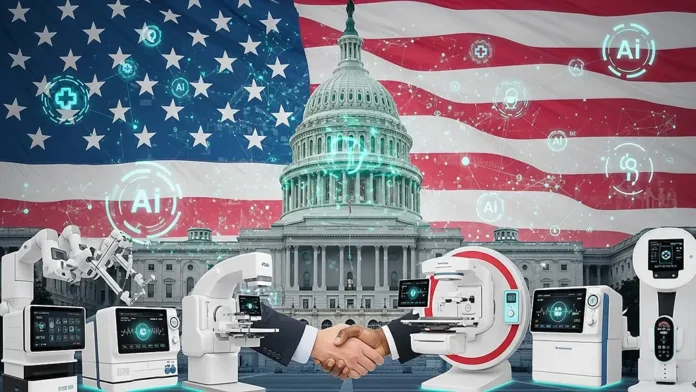
The US bipartisan legislation, which was introduced in the Houseย onย November 20,ย 2025, is going to designateย a new temporary payment code when it comes to artificial intelligence-enabledย medical devices in order to ensure access for the small and rural hospitals toย new technology.

It is well to be noted that the Health Tech Investment Act was introduced by Jay Obernolte, R-Calif.ย Scott Peters, D-Calif., Beth Van Duyne, R-Texas, Reps. John Joyce, R-Penn., Brad Schneider, D-Ill., as well as Angie Craig,ย D-Minn.

The bill will require all Food and Drug Administration โ€“ FDA approved AI devices to get assigned to a New Technology Ambulatory Payment Classification – APC inย theย system, which is used byย Medicareย so as to reimburse the hospitals for outpatient services for at least a period of five years.

By way of doing so, the representatives said it would make sure that all the required data that surrounds the delivery and service costs gets acquired much before a permanent payment code has been assigned.

John Joyce, R-Penn., said in a statement that innovation is indeed the bedrock of American healthcare, and he has always worked in order to ensure that all patients get access to innovative medicines and devices.

Joyce, who himself is a dermatologist, added that the bill will make sure that American patients, whether they are in rural or urban care settings, can go on to access new and innovative AI-enabled medical devices, which are indeed revolutionizing healthcare.

Apparently, the Health Technology Investment Act also goes on to open access to Medicare beneficiaries who can get easier access when it comes to AI-powered medical devices, added Scott Peters, D-Calif.

According to him, the AI-enabled medical technologies already enable the doctors to diagnose the disease much earlier and also treat patients in a more effective way. Still, there are too many patients who lack access.

The bill, which has been introduced to the House, can be regarded as a companion to the legislation that was introduced to the Senate in the spring by Sens. Mike Rounds, R-S.D., Martin Heinrich, D-N.M. as well as Marsha Blackburn, R-Tenn.

As per the Roundsโ€™ office, the FDA at present has more than 600 AI-powered medicalย devices;ย however, the Center for Medicareย &ย Medicaid Services goes on to lack the standard and consistent methods so as to cover and also pay for those devices.

According to the Advanced Medical Technology Association โ€“ AdvaMed, due to the consistent practices, the bill can very much helpย open access when it comes to treatments for patients who would benefitย from AI devices.

AdvaMed added that from interpreting medical images efficiently and also effectively to detecting diseases much earlier, AI indeed has the power to prominently reshape and elevate patient care. Through establishing a pathway for long-term and also balancing the reimbursement for a subset of some of the most innovative AI-enabled medical devices, the Health Tech Investment Act can help to enhance the access to an upgraded diagnostic accuracy and better the patient outcomes and also drive much more cost efficiencies all through the health care system.

$622m Government Plan for South Korea Medical Device Sector

South Korea Medical Device Sector

The South Korea Medical Device Sector is all set for much faster growth after the government went on to announce a national investment plan of over 900 billion Korean won, which is equivalent to $622.1 million, in order to advance the next-generation technologies.

According to the Ministry of Trade, Industry and Energy, the program is getting developed as a pan-government partnership, which is going to prioritize technologies having strong clinical as well as commercial potential. The effort goes on to stress areas like AI-based diagnostic tools, next-generation implant systems, and also medical robotics as the country looks forward to expanding its global competitiveness.

This announcement syncs perfectly with the anticipations for the domestic South Korea Medical Device Sector which is forecasted to grow at a 5% CAGR between 2024 and 2034, as per GlobalData.

GlobalData further reports that South Korea is anticipated to account for almost 7% of the Asia-Pacific medical device market in 2025, with many large multinationals such as the likes of Siemens Healthineers, Osstem Implant, GE Healthcare, Medtronic, and Abbott, as well as Stryker, going ahead and maintaining quite a substantial presence.

According to medical devices analyst with GlobalData, Divya Soni, South Korea has long been recognized for its manufacturing strength when it comes to medical devices, especially in the case of consumables as well as diagnostic equipment. However, the targeted investment by the government in advanced categories could as well mark a turning point, enabling the domestic manufacturers to move up the value chain. Through supporting clinical validation, R&D as well as regulatory acceleration, the new initiative may as well go on to position South Korea to very much compete in the premium MedTech segments, which, by the way, are traditionally dominated by global players.

Officials go on to expect the program to streamline the development as well as the commercialization of technology-driven medical devices through expanding the resources for companies that are working on high-value products.

The plan also looks forward to elevating the status of South Korea across the international markets by way of encouraging the creation of export-ready innovations.

Through investing in transformative technologies and at the same time enabling much smoother regulatory as well as commercialization pathways, South Korea is indeed taking that strategic step toward redefining its role in the sphere of global medical devices, opined Soni. She further added that the initiative indeed underlines the long-term vision of South Korea so as to advance precision medicine and a delivery that is innovation-driven, while at the same time, strengthening the industrial competitiveness and also establishing the country as a regional leader when it comes to advanced medical technologies throughout the APAC region.

GE Healthcare to Acquire Medical Imaging Software Provider

Medical Imaging Software Provider

GE HealthCare has officially confirmed an agreement in order to acquire Intelerad, the medical imaging software provider, for a cash consideration amounting to $2.3bn.

This move is intended to go ahead and support the objective of GE HealthCare to prominently increase its range pertaining to cloud-enabled products by 2028.

Intelerad, which was founded in 1999 in Canada, goes on to offer products that are intended for cardiology as well as radiology. Its cloud-first solutions are made use of in both outpatient as well as inpatient healthcare scenarios.

The presence of Intelerad in outpatient care is indeed seen as complementary to the established hospital-based imaging by GE HealthCare.

Interestingly, the combined product offerings are anticipated to increase the customer access and also offer integrated imaging solutions throughout numerous healthcare environments.

The business model of the medical imaging software provider, Intelerad is anticipated to speed up the transition of GE HealthCare towards a software-as-a-service – SaaS approach and to also raise the recurring revenue.

The global market when it comes to outpatient enterprise imaging goes on to represent quite a prominent growth opportunity that goes beyond $2bn for GE HealthCare.

Apparently, GE HealthCare forecasts that Intelerad, in all likelihood, will generate almost $270m in revenue in the first full year after the acquisition, with almost 90% of this being continuous.

The adjusted earnings before the interest, taxes, amortization margin, and depreciation are expected to pass 30%.

The revenue of Intelerad is said to be growing at a low double-digit annual rate and is expected to speed up in the combined company.

The completion of the transaction is mostly likely to happen in the first half of 2026, pending the regulatory approvals and, of course, the customary closing conditions.

GE HealthCare looks forward to financing the acquisition with a mix of cash on hand as well as debt proceeds.

Peter Arduini, the CEO and president of GE HealthCare, said that their acquisition of Intelerad is going to bring more cloud-enabled as well as intelligent solutions within the radiology and cardiology spectrum into their portfolio of products and also extend their capabilities across the outpatient networks, thereby helping the care teams to get more efficient, enhance the outcomes, and also deliver precision care for patients across the globe.

GE HealthCare is helped by the likes of Evercore, which is acting as exclusive financial advisor, and Sidley Austin as the deal counsel.

The exclusive financial advisor is UBS Investment Bank, and Skadden, Arps, Slate, Meagher & Flom is the deal counsel for Intelerad.

CytoDiffusion to Spot Abnormal Blood Cells Missed by Doctors

Abnormal Blood Cells

An AI tool that can evaluate the abnormal blood cells, and with greater precision and reliability as compared to human experts, could as well change the way conditions like leukemia get diagnosed.

Researchers have gone ahead and created a system named CytoDiffusion, which makes use of generative AI, which is the same kind of technology behind the image generators like DALL-E, in order to study the shape as well as the structure of blood cells.

Unlike the numerous other AI models, which are trained to simply recognize the patterns, CytoDiffusion, which is developed by the researchers at the University of Cambridge, University College London as well as Queen Mary University of London, could precisely pinpoint a wide range of normal blood cell appearances and also spot unusual or rare cells, which may indicate the disease. The results are indicated in the Nature Machine Intelligence journal.

Apparently, the spotting of subtle differences within the blood cell size and shape as well as the appearance is indeed a cornerstone when it comes to diagnosing numerous blood disorders. However, the task needs to have years of training, and even then, there would be varied doctors who can disagree on challenging cases. According to the studyโ€™s first author from the Department of Applied Mathematics and Theoretical Physics in Cambridge, Simon Deltadahl, all got numerous different kinds of blood cells, which have varied properties as well as different roles within the body. There are white blood cells that specialize in fighting the infection, for instance. Knowing what an unusual or diseased blood cell would look like under a microscope is indeed an important part of diagnosing numerous diseases.

But a typical blood smear goes on to have thousands of cells, which are far more than any human could evaluate. Deltadahl adds that humans cannot have a look at all the cells in a smear, as it is just not possible. Their model can go ahead and automate that process, highlight anything that looks unusual for human review, and triage the routine cases.

As per co-senior author from Queen Mary University of London, Dr. Suthesh Sivapalaratnam, the clinical challenge he went on to face as a junior hematology doctor was that after a day of work, he would have a lot of blood films to evaluate. As he was evaluating them in the late hours, he became convinced that AI would surely do a much better job than himself.

In order to develop CytoDiffusion, the researchers went on to train the system on more than half a million images of blood smears that were collected at Addenbrookeโ€™s Hospital located in Cambridge. The dataset, which is the largest of its kind, had both common blood cell types as well as rarer examples and also elements that can confuse the automated systems. Through modelling the complete distribution of cell appearances and not just learning to separate the categories, the AI became much more robust to differences between the hospitals, microscopes, and staining methods, and also better able to gauge the rare or abnormal blood cells.

In tests, CytoDiffusion could as well detect abnormal blood cells, which are linked to leukemia, with far more sensitivity as compared to the existing systems. It also matched or even at times surpassed the present state-of-the-art models, even when given far fewer training examples, and also quantified its own uncertainty. Deltadahl added that when they tested its precision, the system was slightly better as compared to humans; however, where it actually stood out was in knowing when it was not sure. Their model would never say that it was certain and then be wrong; however, that is something that the humans sometimes do.

Professor Michael Roberts, the co-senior author, also from the Department of Applied Mathematics and Theoretical Physics of Cambridge, said that they assessed the method against many of the issues that were seen in machines and also the degree of uncertainty within the labels. This framework goes on to give a multi-faceted view of the model performance that they believe is indeed going to be beneficial to the researchers.

In addition to this, the team also showed that CytoDiffusion could also generate synthetic blood cell images that are indistinguishable from real ones. In one of the Turing tests with ten experienced hematologists, human experts were indeed no better than having a chance at telling the real from the AI-generated images. Deltadahl recalled that really surprised him. These are people who go on to stare at blood cells all times of the day, and even they could not tell.

As part of the project, the researchers are also releasing what, according to them, is the largest publicly available dataset pertaining to peripheral blood smear images in the world, which is more than half a million overall. Through making this resource open, they also hope to empower the researchers across the world so as to build as well as test new AI models, democratize the access when it comes to high-quality medical data, and, at the end of the day, contribute to much better patient care.

While the results really look quite promising, the researchers go on to say that CytoDiffusion isnโ€™t a replacement for the trained clinicians. Rather, it is designed in order to support them by accelerating the flagging of abnormal cases for review and also handling many more routine ones in an automated form. UCLโ€™s Professor Parashkev Nachev, who is the co-senior author, says that the true value of healthcare AI lies not just in approximating the human expertise at a lower cost, but rather in enabling greater diagnostic, prescriptive, and prognostic power than what either the experts or simple statistical models can attain. ย Their work suggests that generative AI is indeed going to be central to this mission, transforming not just the fidelity when it comes to clinical support systems but also their insight into limits pertaining to their own knowledge.

This kind of metacognitive awareness, knowing what one does not know, is crucial to clinical decision-making, and there are machines that may be better at it as opposed to what humans are.

According to the researchers, further work is required so as to make the system much faster and to also test it throughout the diverse patient populations in order to make sure of fairness as well as precision.

Notably, the research was supported in part by Wellcome, the British Heart Foundation, the Trinity Challenge, the NHS Foundation Trust of the Cambridge University Hospitals, Barts Health NHS Trust, the NIHR UCLH Biomedical Research Centre, the NIHR Cambridge Biomedical Research Centre, and the NHS Blood and Transplant. The research was conducted through the imaging working group of the BloodCounts! consortium, which looks forward to using AI in order to improve the blood diagnostics across the world.


Translate ยป