












Close
Digital Health & Ai Innovation summit 2026
Medical Taiwan 2026

What You Should Do After You Have Suffered A Personal Injury: 6 Critical Steps

What You Should Do After You Have Suffered A Personal Injury: 6 Critical Steps

Statistics suggest that thousands of accidents occur every year. Personal injury cases vary in nature – they can occur on the road in the form of a car crash, and they can also happen at work, whether this is part of a job hazard or happens unexpectedly. Regardless of what type of accident you experience, becoming a victim of personal injury is difficult and can pose a variety of negative impacts on those involved. You may not be aware of the process to deal with this situation if it happens to you.

Accidents often occur unexpectedly and are caused by someoneโ€™s negligence. Evidently, the more cautious we are, the fewer chances of getting into such a situation, but this can still happen even when you take the appropriate steps to ensure your safety. This article will provide you with six critical steps on what you should do after you have suffered a personal injury so that you know exactly what steps to take if you become a victim of a personal injury.

Seek Medical Support

Being involved in an accident can have serious consequences for you and your health. The very first step to take in these cases should be to seek medical support. Depending on the level of the accident, usually, medical emergency services are called to the scene so that you can receive basic first aid and be taken to the hospital. However, if the accident is minor this may not necessarily be the case. No matter how minor your injury is, you should aim to see the doctor as soon as you can, even if you have no visible injuries. This is because you may have incurred internal injuries that you are not aware of, and only a health professional will be able to identify this and advise you appropriately. In addition to this, medical records also act as evidence in case you need to file for compensation.

Report The Incident

Reporting the accident is crucial so that there is an official record of the events. The way you report it will depend on the type of accident that you have. If your personal injury occurs in the workplace, you should contact your line manager as well as the health and safety lead for your job role. If you experience an accident on the road, you must contact the police, who should attend the scene of the accident.

Gather Evidence

If you are healthy enough, you should start thinking about gathering as much evidence as possible. This is fundamental, particularly if the other party is not taking responsibility for their part in the accident. You may need evidence to prove that you are not at fault. Start by taking photographs of the scene as well as of your injuries and any damage to property as a result of the accident. You should also inquire whether any individuals around have witnessed the events and obtain their statements to support your case.

Consult with Legal Professionals

Hiring a lawyer is one of the most important steps to take after suffering a personal injury. An Athens personal injury attorney suggests that legal professionals have the knowledge and training to support you through the process of claiming compensation to reward you for the events and help you pay for any damage and support your recovery. This can be a lengthy process, therefore having an attorney is a smart move so that you can focus on recovering whilst the professionals deal with the legalities.

Claim for Compensation

As we mentioned above, you may be entitled to compensation if you can prove that you are not at fault and that the accident was caused by someone elseโ€™s negligence. Achieving this may not be as easy as it sounds, and many cases end up in court for the judge to review the evidence and decide who is to blame. This is why you should have a lawyer, as they will be able to support you through this.

Focus on Your Recovery

Many people forget to take the time off they need for their recovery, although this is a critical step. Suffering a personal injury can be challenging for you and your loved ones, therefore you must take the time to recover. Do not rush back to work and follow your doctor’s orders until you are ready to get back out there.

Being involved in an accident is difficult and involves a range of emotions to those involved, which causes people to lose adequate thinking skills when dealing with such situations. If you find yourself in this unfortunate situation, make sure to follow the steps discussed on this page, which are critical to guide you through the process if you have suffered a personal injury.

Medtronic Announces FDA Approval of Next-Gen TAVR System for Treatment of Symptomatic Severe Aortic Stenosis

Procedure-Related Techniques and Care Pathways from the OPTIMIZE PRO Clinical Study Show Promising Early Outcomes for Patients Implanted with the Medtronic Evolut TAVR System

Medtronic plc, the global leader in medical technology, announced U.S. Food and Drug Administration (FDA) approval of its newest-generation, self-expanding transcatheter aortic valve replacement (TAVR) system, the Evolutโ„ข FX TAVR system. Designed to enhance ease-of-use and provide greater precision and control throughout the procedure, the Evolut FX system maintains the industry-leading hemodynamic (blood flow) and durability benefits of the Evolut platform, while bringing product and procedure innovation for patients with symptomatic severe aortic stenosis.

The Evolut FX system incorporates the same supra-annular valve design that has shown hemodynamic performance superior to surgical aortic valve replacement (SAVR) across large-scale, randomized clinical trials. The fourth-generation Evolut technology is equipped with gold markers built into the frame to provide implanters with direct visualization of depth and valve leaflet location during implant. In addition, the Evolut FX system incorporates a redesigned catheter tip for a smoother insertion profile, a more flexible delivery system that allows for 360-degree freedom of motion, with a stable, predictable deployment. Like its predecessor (Evolut PRO+), the newest system includes four valve sizes for the largest indicated patient treatment range and the lowest delivery profile currently on the market.

โ€œThe self-expanding, supra-annular Evolut platform has evolved considerably over time and has brought heart teams innovative features like recapturability, an expanded size matrix, and advanced valve sealing to help minimize paravalvular leak. Today, the Evolut FX system further refines a trusted platform with key product and procedural enhancements that make the self-expanding system easier to use with enhanced visualization capabilities for orientation and depth,โ€ said Jeffrey Popma, M.D., vice president and chief medical officer for the Coronary & Renal Denervation business and the Structural Heart & Aortic business, which are part of the Cardiovascular Portfolio at Medtronic.

Severe aortic stenosis occurs when the aortic valve leaflets become stiff and thickened and have difficulty opening and closing, making the heart work harder to pump blood to the rest of the body. Severe aortic stenosis often reduces a patientโ€™s quality of life and limits their daily activities. If left untreated, patients with symptomatic severe aortic stenosis can die from heart failure in as little as two years.

The Evolut TAVR platform (including the Evolutโ„ข R, Evolutโ„ข PRO, Evolut PRO+, and Evolut FX) is indicated for symptomatic severe aortic stenosis patients across all risk categories (extreme, high, intermediate and low) in the U.S. Limited commercial release is planned for the fall with a full launch anticipated in early 2022.

In collaboration with leading clinicians, researchers and scientists worldwide, Medtronic offers the broadest range of innovative medical technology for the interventional and surgical treatment of cardiovascular disease and cardiac arrhythmias. The company strives to offer products and services that deliver clinical and economic value to healthcare consumers and providers around the world.

DKSH Selected as Medigen’s COVID-19 Vaccine Distribution Partner in Taiwan

DKSH Business Unit Healthcare, the leading partner for healthcare companies seeking to grow their business in Asia and beyond, will offer complete vaccine cold chain solutions for Medigen, a biopharmaceutical company in Taiwan. The range of services will include storage, distribution, delivery as well as value-added services, such as labeling and repackaging. Together with a dedicated healthcare delivery team covering all regions of Taiwan, DKSH will be providing storage in a two-to-eight-degree Celsius environment for Medigenโ€™s temperature-sensitive COVID-19 vaccines in the companyโ€™s brand-new cold chain facility. The cold chain facility is certified by the Ministry of Health and Welfareโ€™s Pharmaceutical Inspection Co-operation Scheme for Good Manufacturing and Distribution Practices (PIC/S GMP and PIC/S GDP) licenses to ensure the quality of the product is protected throughout the entire supply chain process.

Leo Lee, Executive Vice President of Medigen, indicated: โ€œDKSH Taiwan has been serving the healthcare industry for more than 20 years. With a highly professional, dedicated team and an extensive healthcare supply chain network covering hospitals, clinics and all levels of healthcare service outlets, we are confident that DKSH will speedily and reliably deliver the vaccine to the right locations for people to be vaccinated in a timely manner.โ€ Wennie Chang, Vice President, Business Unit Healthcare, DKSH Taiwan, shared: โ€œMedigenโ€™s successful development of COVID-19 vaccines has established a remarkable milestone in the biotechnology industry. It is our great honor to work with Medigen to contribute to the goal of healthcare for all and help our society alleviate the impacts of the pandemic.โ€

In addition to the brand-new cold chain facility, DKSH has a PIC/S GDP and PIC/S GDP certified multi-temperature healthcare distribution center and two depots, all supported by a dedicated healthcare delivery team.

About Medigen Vaccine Biologics Corporation
Medigen Vaccine Biologics Corporation (also known as MVC) is a biopharmaceutical company focusing on the development and production of vaccines and biologics. MVC has established a foothold in Taiwan and given priority to developing innovative pharmaceutical products for unmet medical needs. Meanwhile, MVC is dedicated to not only becoming the vaccine development and supply hub of the Asia-Pacific region but also protecting human health globally from the threats of various diseases.

About DKSH
DKSHโ€™s purpose is to enrich peopleโ€™s lives. For more than 150 years, we have been delivering growth for companies in Asia and beyond across our Business Units Healthcare, Consumer Goods, Performance Materials and Technology. As a leading Market Expansion Services provider, we offer sourcing, market insights, marketing and sales, eCommerce, distribution and logistics as well as after-sales services. Listed on the SIX Swiss Exchange, DKSH operates in 36 markets with 32,450 specialists, generating net sales of CHF 10.7 billion in 2020. The DKSH Business Unit Healthcare distributes pharmaceuticals, consumer health and over-the-counter (OTC) products as well as medical devices. With around 7,970 specialists, the Business Unit generated net sales of CHF 5.4 billion in 2020.

Unlocking the healthcare growth mindset

Unlocking the healthcare growth mindset

Why Hospital Operations innovation has never been more important and how small mindset changes can have a big impact

A passionate advocate of positive partnerships and purposeful business, Dawn Bruce is Services & Solutions Delivery Lead for Philips. An originator of the Operational Intelligence approach and backer of people-powered progress and soft skills, she has extensive experience of outcomes-driven business transformation and healthcare system change management.

โ€œThere are two main mindsets we can navigate life with: growth and fixed. Having a growth mindset is essential for success. Itโ€™s also key to transformation and so if we want to transform healthcare, we need to look at our individual mindsets, their role in our motivation and self-regulation, and their impact on achievement and interpersonal processes.โ€ย 

Dawn Bruce, Services & Solutions Delivery Lead, Philips

Transformation is a term that is synonymous with healthcare and yet all too often the mere mention of word strikes fear in our hearts. Fear that healthcare is so complex and fragmented that weโ€™ve failed at change before weโ€™ve even started, or perhaps fear because the solution is so often outsourced to technology and ignores the fact that value-based transformation, while enabled by process and technology, can only be enabled by an intangible and inconsistent element: people.

Strategies are lofty, solutions are many and yet few discussions around the pursuit of successful healthcare transformation pay more than lip service then to the psychology of its key players and the importance of believing that change is possible.

A pioneer in the importance of believing that improvement is possible, American psychologist and professor at Stanford University, Carol Dweck[1] found that humans approach a challenge with either a fixed or a growth mindset.ย In a fixed mindset we believe our talents and abilities are fixed, we are who we are. In a growth mindset, by contrast, we believe there is always room for improvement. In a fixed mindset, feedback about suboptimal professional performance is threatening as it confronts ourselves with our own shortcomings. In a growth mindset, feedback is a gift, as it helps us to further develop.

Recent advances in neuroscience go even further, revealing that the brain is far more malleable than we ever knew. Research into brain plasticity[2]ย has shown how connectivity between neurons can change with experience. With practice, neural networks grow new connections, strengthen existing ones, and build insulation that speeds transmission of impulses. These neuroscientific discoveries have shown that we can increase our neural growth by the actions we take, such as using good strategies, asking questions, practicing, and following good nutrition and sleep habits.

At the same time that these neuroscientific discoveries have been gaining traction, researchers have also started to explore and better understand the link between mindsets and achievement. It turns out, if you believe your brain can grow, you behave differently. This supposition has resulted in numerous interventions and studies that prove that we can indeed change a personโ€™s mindset from fixed to growth, and when we do, it leads to increased motivation and achievement[3].

Healthcare transformation is perhaps the ultimate mindset challenge; an industry where complex change is required and yet even the best hospitals have a work culture that is populated with setbacks, challenges and hierarchy and constraints.

As the Harvard Business Review has reported in its article, โ€˜Positive intelligenceโ€™, โ€œresearch shows that when people work with a positive mind-set, performance on nearly every level โ€“ productivity, creativity, engagement โ€“ improves.โ€ New research from MIT also bears this out. In fact, breakthrough research by a team at MITโ€™s Picower Institute for Learning and Memory has documented one type of environmental feedback that triggers plasticity: success. Equally important and somewhat surprising: its opposite, failure, has no impact.

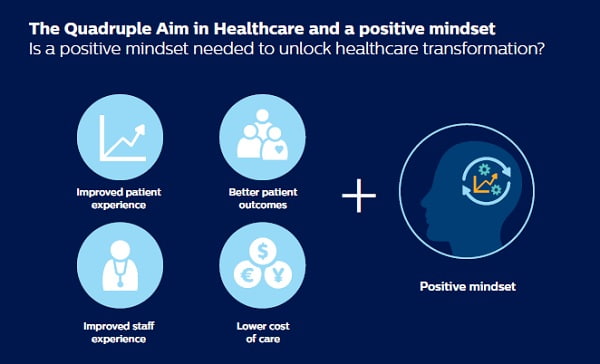
Is a positive mindset, then, perhaps a missing factor in achieving the Quadruple Aim in healthcare? And, if so, how do we unlock the growth mindset of healthcare transformation?

Dawn Bruce, Services & Solutions Delivery Lead for Philips believes that a great place to start is in Operations, the backbone but also the brain of a hospital and where a range of departments and disciplines come together and where strategic and structural change can be most effective.

In fact, Operations, she believes, has the ability to be the driver of change if it can build the new capabilities and behaviors that modern healthcare needs. Not only does it enable new, integrated ways of working, it also has the potential to enable its disparate workforce to believe that change is possible but also to have the resilience to realise it. This is especially vital since research indicates that resilience, originally studied in young children suffering major traumatic events, is an essential quality in healthcare and that for an environment to facilitate resilience it needs to be both high in challenge and support.

Itโ€™s a quality that has never been more in demand within long term teams, facing unprecedented challenges, such as those presented by the COVID-19 global pandemic, as Dr Helen McGill, Medical Director and Responsible Officers, NHS Professionals, has recognized stating: โ€œResilience is needed in the NHS now more than ever โ€“ at an individual, organisational and systemic level. We all need to work together to prepare for, respond to and adapt to both ongoing change and major unexpected disruptions. This is not just about surviving, itโ€™s about minimising crises and identifying improvements, both personally and professionally[4].โ€

Dawn Bruce also believes that unlocking a growth mindset offers opportunities for innovating procurement and governance as well as developing future-fit healthcare training that will attract and retain a millennial worker.

For more insights into unlocking the growth mindset for healthcare, read Dawn Bruceโ€™s follow up article in the next issue or visit www.philips.com/Operational-Intelligence

References:

[1] Mindset: The new psychology of success, Dr. Carol S. Dweck Ph.D, 2007
[2] Positive intelligence, Harvard Business Review, https://hbr.org/2012/01/positive-intelligence
[3] Success gets in your head โ€“ and changes it, Harvard Business Review https://hbr.org/2010/01/success-gets-into-your-head-and-changes-it
[4] The importance of resilience in the NHS right now, Dr Helen McGill, Medical Director and Responsible Officers, NHS Profession, https://www.nhsprofessionals.nhs.uk/en/joining-nhsp/latest-news/detail?Id=the-importance-of-resilience-in-the-nhs-right-now

Jump Technologies introduces Case Companion to help hospitals optimize clinical workflows and control costs in the OR

Jump Technologies introduces Case Companion to help hospitals optimize clinical workflows and control costs in the OR

Jump Technologies, a leading hospital supply chain solutions provider, announced the launch of Case Companion, a clinical solution designed to help hospital staff reduce duplicate documentation, improve real-time charge capture in the OR, control surgical material costs, and avoid costly stockouts.

Case Companion is a clinical solution designed to help optimize OR clinical workflows, reduce costs in procedural areas, and increase hospital revenue through enhanced supply capture. Case Companion enables these outcomes through the use of a mobile application for picking cases and recording consumption and waste during a case. With Case Companion, clinicians are able to easily scan lot, serial number, and expiration dates for items such as implants used in the OR or procedural suites. This data is used to update the case in the hospitalโ€™s EHR, decrement inventory, and generate requisitions directly into the hospitalโ€™s ERP system.

โ€œThe operating room is the heart of a hospital, but it is also a primary driver of materials costs, and a significant source of waste due to inefficient workflows and lack of data visibility. Case Companion gives clinicians the tools to update supplies used during a case, in real time, via a mobile platform that integrates with the organizationโ€™s EHR and ERP systems,โ€ said John Freund, president and CEO, Jump Technologies. โ€œThis gives clinicians and supply chain professionals the data transparency needed to eliminate stockouts, improve charge capture for OR supply items, and improve materials management in the OR. But most importantly, it allows clinicians to focus their attention where it matters most โ€” on patients.โ€

Case Companionโ€™s simple interface and integrations with backend systems reduce clinical documentation time, which ultimately increases user adoption. The data captured by Case Companion can be leveraged to improve charge capture in procedure areas and provide real-time analytics for ongoing performance management. By using Case Companion, hospitals can:

  • Improve cash flow by identifying data errors that prevent proper billing to payers.
  • Reduce costs by publishing costs per case, per physician, which allows doctors to see opportunities to save money.
  • Improve purchasing power and reduce costs per case by identifying opportunities for vendor consolidation.
  • Improve patient outcomes by highlighting variances in materials consumed, allowing them to be compared against outcomes.
  • Reduce waste caused by outdated preference cards

โ€œWe believe that with access to the right data, hospital supply chain and clinicians working together have the power to save lives by eliminating costly stockouts that put patients and staff at risk, all while improving the bottom line,โ€ said Freund. โ€œCase Companion makes this possible through powerful interoperability, real-time data analytics, and a safe, simple interface.โ€

About Jump Technologies

Headquartered in Eagan, MN, Jump Technologies creates safe, simple, and cost-effective solutions that help hospitals reduce stockouts, overordering, and waste, while increasing inventory turns and improving billing accuracy across a facility or system. The companyโ€™s JumpStock solution facilitates data-driven decision making that allows hospitals to save time, free up cash, and improve nurse satisfaction with supply chain.

Prisma Health Partners with TytoCare to Expand Telehealth Offerings

Prisma Health Partners with TytoCare to Expand Telehealth Offerings

TytoCare, the global health care industry’s first all-in-one modular device and examination platform for AI-powered, on-demand, remote medical exams announced its partnership with Prisma Health, the largest healthcare system in South Carolina. The integration of TytoCare into Prisma Health’s current virtual care offering will allow the health system to diagnose and treat patients remotely with in-depth, physical examinations during video visits.

During the global COVID-19 pandemic, telehealth has proven itself to be a successful alternative to in-person care, encouraging health systems to expand and enhance their current offerings. With TytoCare, Prisma Health will seamlessly shift the point-of-care into the home, meeting patients where they are and navigating them to the right treatments for their conditions. TytoCare enables Prisma Health’s network of doctors to provide patients with convenient, secure, and clinic-quality care during telehealth visits.

TytoCare’s FDA-cleared handheld examination kit allows users to perform comprehensive physical exams of the heart, skin, ears, throat, abdomen, and lungs, as well as measure blood oxygen levels, heart rate, and body temperature, which are key for monitoring COVID-19 and many other chronic and acute conditions. This allows physicians to gain the vital clinical data they require to monitor, diagnose, and treat patients and avoid unnecessary in-person visits.

“We are thrilled to partner with Prisma Health to help expand its existing telehealth offering by fully replicating an in-person visit with the TytoCare device and platform,” said Dedi Gilad, CEO and Co-Founder of TytoCare. “TytoCare is enabling Prisma Health to provide the telehealth experience consumers desire in today’s on-demand world, allowing for more thorough virtual care when it’s most convenient for the patient. We look forward to supporting Prisma Health as it continues to expand its current digital health programs.

Prisma Health is using TytoCare to enable patients to perform guided medical exams with Prisma Health providers from the comfort of their home. This includes use by children with medical complexities and Prisma Health team members. Additionally, Prisma Health is utilizing TytoCare for its federally funded post-COVID-19 disaster relief program, offering the device to vulnerable patients who would benefit from more comprehensive telehealth visits.ย The health system is also utilizing TytoCare for professional use in schools, for behavioral health, walk-in clinics, and senior care.

“At Prisma Health we’re committed to improving access to quality, convenient, and affordable care to our patients,” said Dr. Nick Patel, Chief Digital Officer of Prisma Health. Through our partnership, we can now reach more patients, decrease costs, and transform the virtual care experience. We look forward to working together with TytoCare to offer our patients clinic-quality, at-home care in this new era of telehealth.”

About TytoCare

TytoCare is a telehealth company using AI to transform primary care by putting health in the hands of consumers. TytoCare seamlessly connects people to clinicians to provide the best virtual home examination and diagnosis solutions.ย Its solutions are designed to enable a comprehensive medical exam from any location and include a hand-held, all-in-one tool for examining the heart, lungs, skin, ears, throat, abdomen, andย body temperature; a complete telehealth platform for sharing exam data, conducting live video exams, and scheduling visits; a cloud-based data repository with analytics; and built-in guidance technology and machine learning algorithms to ensure accuracy and ease of use for patients and insights for healthcare providers. Co-founded by Dedi Gilad and Ofer Tzadik in 2012, TytoCare has FDA and CE clearances and has partnered with over 120 major health systems, health plans, and strategic partners in the U.S., Europe, Asia, Latin America, and Israel.

About Prisma Health

Prisma Health is a not-for-profit health company and the largest healthcare system in South Carolina. With nearly 30,000 team members, 18 acute care and specialty hospitals, 2,947 beds, approximately 300 outpatient sites, and nearly 5,000 employed and clinically integrated network physicians and providers, Prisma Health serves more than 1.2 million unique patients annually in its 21-county market area that covers 50% of South Carolina. Prisma Health’s goal is to improve the health of all South Carolinians by enhancing clinical quality, the patient experience and access to affordable care, as well as conducting clinical research and training the next generation of medical professionals.

Verizon Business streamlines patient care with advances to BlueJeans Telehealth

Verizon Business streamlines patient care with advances to BlueJeans Telehealth

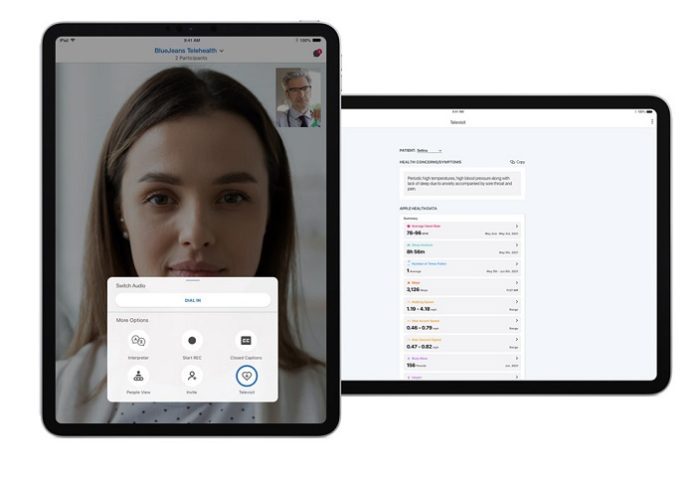
Verizon Business announced that BlueJeans Telehealth, a purpose-built, HIPAA-ready virtual care solution to help drive better patient interactions, now includes new features and integrations to further enhance virtual encounters with a more rounded view of the patientโ€™s health. Building on the overall patient care experience, the new Televisit Tile and integration with the Apple Health app empower patients to share specific categories of health data like heart rate, sleep, falls, and more with their provider during telehealth appointments for more informed conversations, while providing patients with control over which data they choose to share.

According to McKinsey and Company, as of July 2021, telehealth utilization has stabilized at levels 38X higher than before the pandemic. The same study found that โ€œbetween 40 and 60 percent of consumers express interest in a set of broader virtual health solutions, such as a โ€˜digital front doorโ€™ or lower-cost virtual-first health plan.โ€ Designed from the ground up working closely with leading healthcare providers, BlueJeans Telehealth promotes successful virtual encounters by simplifying the join and visit experience, extending the reach of services available and providing more flexibility for patients and healthcare providers.

Delivering Data-Driven Care

By mapping the patient experience more closely to clinical team workflows, BlueJeans Telehealth helps replicate the experience of onsite care encounters and patient interactions, while also providing the flexibility of virtual-first care. BlueJeans Telehealth now features a new Televisit Tile that compiles and displays encounter-specific information collected during the visit. The Tile displays patient-entered symptom data and will support information and document sharing to ensure a seamless communication exchange with healthcare providers. Ideal for group sessions, the new Tile features a patient selector to ensure that user data will only be viewable and secure between the patient and their healthcare provider.

With these new purpose-built workflows meant to improve the patientโ€™s telehealth experience from anywhere, BlueJeans Telehealth works across mobile and desktop devices and includes single-touch, download-free access to mitigate potential technology challenges. For those joining from an iPhone, integration with the Apple Health app allows patients to share certain categories of their Health app data โ€” including heart rate, ECG, sleep, step count, falls and mobility data โ€” directly into the BlueJeans Telehealth app, so patients and healthcare providers can have more meaningful and tangible health-related conversations that can improve the overall outcome of the visit. Health app users remain in control of which categories of Health app data they choose to share with their provider during each telehealth appointment, and shared data is encrypted in transit and at rest.

Using the BlueJeans iOS app, users will be able to select Apple Health app data from within the pre-visit patient landing experience or through the Televisit Tile during the visit. Once synced, the healthcare provider will be able to see and interact with the Apple Health app data patients have chosen to share from the Televisit Tile while in the Provider View. The healthcare provider can expand data to better observe trend lines as well as screen share the data for use during the televisit.

โ€œThe future of virtual healthcare is dependent on connectivity and the ability to drive real-time insights and deliver care through connected health,โ€ said Krish Ramakrishnan, Chief Innovator and Strategist, BlueJeans by Verizon. โ€œBy empowering patients to shareย this level of contextual information directly into the BlueJeans Telehealth visit, we are enabling patients and healthcare providers to have more meaningful conversations and successful virtual consultations that can lead to better patient outcomes.โ€

Johns Hopkins develops Epic-embedded tool to better support telehealth patients

Telehealth's Big Picture

Johns Hopkins Medicine has developed a tool aimed at automatically identifying patients likely to need telehealth technical assistance.

According to an editorial in the Harvard Business Review by four members of the Johns Hopkins team, the tool is embedded in the health system’s Epic electronic health record.

“The tool can be used by either a central IT support team or by frontline clinical and front desk staff, so they can proactively reach out to patients in need of assistance,” wrote the Johns Hopkins team.

When telemedicine appointments skyrocketed during the COVID-19 pandemic, the Johns Hopkins team struggled to support patients who needed extra assistance.

Clinical and front desk staff usually called each patient before a telemedicine visitย to help make the process more seamless, but they also said it was difficult to take on this extra work while still performing other job duties.

For that matter, some patients said they didn’t need extra assistance and found the process disruptive and unnecessary.

In response, the Johns Hopkins team developed what they called an automated “video visit technical risk score” tool in their Epic EHR.

The score (which increases based on the risk a video visit will be unsuccessful) is based on patients’ digital health interactions, such as the patient not having an active account in MyChart,ย not having completed the system’sย eCheck-in process in the previous seven daysย and not having had a video-visit appointment in the past three months.

“The score is automatically calculated based on stored EHR data and displayed as a column that can be added to a providerโ€™s or clinic staff memberโ€™s schedule views,” read the Harvard Business Review article.

A central IT support team or frontline clinical and front desk staff can use the tool to proactively reach out to patients in need of assistance.

Johns Hopkins is currently using the tool as part of a pilot project to improve patient support.

“Outside of this pilot program, most of our clinic sites have chosen to continue to rely on their clinical support and front desk staff to support telemedicine visits. From what we have learned anecdotally, using the risk score has improved the efficiency of these teams,” wrote the team.

Even as telemedicine use has expanded, advocates have emphasized the importance of ensuring it does not widen the health gap.

In addition to broadband access, experts have pointed to digital health literacy as a social determinant of health, due to the increasing reliance on the Internet for services.

There have been issues with who is able to use virtual health,” said Brigham and Women’s Hospital General internal medicine division chief Dr. David Bates during a WEDI Quest for Health Equity event in February.

Happify Health & Higi Partnership to Create an AI-Driven Patient-Engagement Ecosystem that Makes Value-Based Healthcare Accessible Worldwide

Qualities to Look for in a General Practitioner

Happify Health and Higi announced plans to build a connected patient ecosystem that uses Happify Healthโ€™s AI and digital therapeutics to deliver personalized care through Higiโ€™s omni-channel distribution network. This partnership combines the power of Higiโ€™s consumer health engagement platform, which reaches leading retail and healthcare organizations through a connected network of Smart Health Stations, with Happify Healthโ€™s digital platform, which combines digital therapeutics and AI-driven care delivery solutions, to improve mental health, physical health & well-being.

Together, Happify Health and Higi will leverage their respective platforms to build an integrated healthcare ecosystem that makes Happify Healthโ€™s portfolio of digital therapeutics accessible through Higiโ€™s proprietary network of 10,000 Smart Health Stations in retail drug and grocery stores across the country.

Every stakeholder in healthcare that wants to create seamless customer journeys to care for unique patient populations, including those disproportionately affected by chronic disease, can benefit from this partnership.

Happify Healthโ€™s ability to proactively capture non-episodic health data, and use artificial intelligence to deliver digital therapeutics, equitably, through Higiโ€™s retail distribution network represents a new and unique way to engage underserved communities with a personalized healthcare experience that improve peopleโ€™s health.

โ€œFor Happify Health, Higiโ€™s massive retail network allows us to reach a new and diverse population of people and engage them in a digital healthcare journey,โ€ said Tomer Ben-Kiki, Happify Healthโ€™s Chief Executive Officer.ย  โ€œThis powerful combination of in-person and digital healthcare creates an ecosystem for care delivery that we can, in turn, package and deliver for employers, health plans, pharmaceutical companies, and life sciences companies. Essentially, any organization looking to deliver better health outcomes for people can benefit from this partnership. Weโ€™re also thrilled to point out that Higiโ€™s platform is built on Microsoft Azure, which makes it possible for us to deliver a seamless, secure platform experience for our customers who rely on Azure as a key component to their technology backend.โ€

Happify Health is a digital health platform that uses AI and clinically-validated digital therapeutics to deliver sustained patient engagement around behavioral and physical health. The behavioral health data that Happify Health collects is interoperable with other platforms and can be leveraged to deliver personalized care journeys across pharma, life science, provider, payer, and employer group ecosystems.

โ€œNearly half (44%) of the participants in our Heart Guide program, which offers free, self-guided care plans powered by American Heart Association science, told us theyโ€™ve felt down, depressed or hopeless several or more days in the past 2 weeks. Simultaneously, theyโ€™re managing their physical health and working toward achieving goals like reducing blood pressure, learning healthy eating habits, and taking their medications as prescribed,โ€ says Jeff Bennett, CEO of Higi. โ€œImagine the additional burden of taking on a potentially daunting personal health goal without the appropriate behavioral health support. For too many Americans, this is a reality. Our partnership with Happify unlocks an impactful new engagement channel for platform users.โ€

As the partnership develops, the two plan to co-invest to further build upon their omni-channel platform, relying on Azureโ€™s cloud services and security baseline for services provided.

About Happify Health:

Happify Health is a global software-enabled healthcare platform. We design and deploy software to help improve mental health, physical health and well-being. We are creating a future where better health outcomes can be powered by technologyโ€”leading to more personalized care that can improve the everyday lives of more people.ย  The Happify Health platform offers a full spectrum of science-backed Digital Therapy and Care Journey solutions for customers and individual end-users; including Wellness, AI-based Coaching, Community, as well as Combination and Prescription Digital Therapeutics.

Our patient solutions are disseminated through unified products and services we deploy for the healthcare ecosystem; including enterprises, health plans, health systems, pharma and medical device manufacturers. Our global platform is available in 10 languages, supports more than 10 chronic conditions, and covers more than 20 million lives.

About Higi

Higi is a consumer health engagement company making it easier for all people to measure, track and act on their health data by bridging physical and digital touch points of the healthcare ecosystem. In service of health systems, health plans, retailers and consumer healthcare brands, Higiโ€™s omni-channel platform meets consumers in their communities, at home and on the go. Our partners connect with the consumers they care for through our nationwide network of 10,000 FDA-cleared, free-to-use self-screening Smart Health Stations, home health devices, digital and mobile tools. The Higi platform addresses the needs of healthcare consumers across the care continuum through education designed to improve health literacy, disease specific assessments to inform risk stratification and drive digital navigation, and connected care offerings to avoid unscheduled care and improve outcomes. With the ability to move this data into healthcareโ€™s workflows, Higi delivers digital health engagement at scale, creating actionable connections to the healthcare organizations that provide care and support. To date, more than 61 million people have used a Higi Station to conduct over 372 million biometric tests.

Health Tips And Advice: How To Take Proper Care Of Yourself

Health Tips And Advice: How To Take Proper Care Of Yourself

Selfcare should not be a one-time thing. Neither should you wait until things go wrong before you start taking care of yourself.

Selfcare is supposed to be an everyday thing. You need to be super intentional about it. That means investing your effort, time, and resources to take care of your body, mind, and soul. And the best thing is that taking care of yourself comes with endless rewards.

So here are eight tips on how you can take good care of yourself:

1.ย  Watch Your Diet

Selfcare starts with getting your nutrition right. Always keep in mind that the food you consume affects your well-being.

Therefore, you need to be conscious of what is on your plate. Eat lots of green leafy veggies, fruits, nuts, blueberries, and fatty fish.

Something else you shouldnโ€™t forget is hydration. Start your day with a glass of water first thing in the morning. Then invest in a gorgeous water bottle to help you stay hydrated throughout the day.

2.ย  Exercise Regularly

Exercises are good for your physical and mental health. This has been confirmed in countless trials. So do not ignore the importance of working out. And the best part is there are different ways of staying active.

You could go for a regular walk, jog, or run. But if you want to make things even more interesting, incorporate some yoga exercises, dances, etc. These exercises will burn calories, elevate your mood, combat medical conditions, promote your sleep quality, and even improve your sex life.

3.ย  Get Enough Sleep

Your body and brain need sufficient sleep. Why? Because this is the time for healing, repair, and recovery. If you donโ€™t get enough sleep, none of these processes will be completed. And that will affect the performance of your brain and body.

Create a strict sleeping routine and stick to it. Donโ€™t let your smartphone or favorite tv shows come between you and the sleep your body desperately needs.

4.ย  Connect With Others

Human beings need a social connection. So donโ€™t isolate yourself in the name of self-care. You do need friends. But not just any friends. Find positive people. People who light your mood. People you can share your wins and worries with.

These connections will improve the overall quality of your life. They will also give you a sense of belonging. And when you experience challenges, you will always have a support pillar among your friends.

So invest in quality friendships.

5.ย  Meditate

Meditation is a brilliant way of clearing your mind. Studies show that regular meditation is good for anxiety, depression, high blood pressure, and irritable bowel syndrome (IBS).

Meditating can be a bit challenging in the early stages. But you can start slow and build up gradually. Try a few minutes of meditation every day. You can also use apps and other online resources to guide you through the process. With practice, youโ€™ll get better at it, and the results will be even more staggering.

6.  Read A Book

Technology has improved our lives in many ways. Thereโ€™s no doubt about that. However, it does come with its fair share of drawbacks.

For starters, spending all your free time on social media exposes you to too many triggers. Sure, there are a few heartwarming posts. However, you will also come across sad and traumatizing posts about all the bad things happening in different parts of the world. This can ruin your mood.

Thatโ€™s why you should always have a book within arms reach. Instead of spending endless hours on your phone, immerse yourself in an interesting novel. This will keep you in a good mood. Books also keep the brain sharp and creative.

7.  Get A Medical Cover

Having medical insurance is also part of self-care. It helps to minimize your financial burden should you find yourself in need of medical care.

However, you need to be careful about the cover you pick. There are many types of medical policies out there. Do the research and try your best to avoid the worst medicare advantage plans, which can appear cheap but are not that helpful. Instead, pick a good cover that provides the security you need while giving you access to the best medical care.

8.  Take A Break

We can all agree that weekends alone are nowhere near enough as far as taking a break is concerned. Your body needs more time to refresh.

So, do not overwork yourself throughout the year.

Take your calendar, pick your vacation dates, and start making plans for your holiday. Be intentional about it and follow through with the plans.

Itโ€™s very easy to focus on work and other responsibilities at the expense of self-care. Donโ€™t let that happen because the consequences can be severe. You need to take care of yourself. And honestly, if you donโ€™t do it, youโ€™ll never be able to perform at your best.

Translate ยป