






Close
Digital Health & Ai Innovation summit 2026
Medical Taiwan 2026

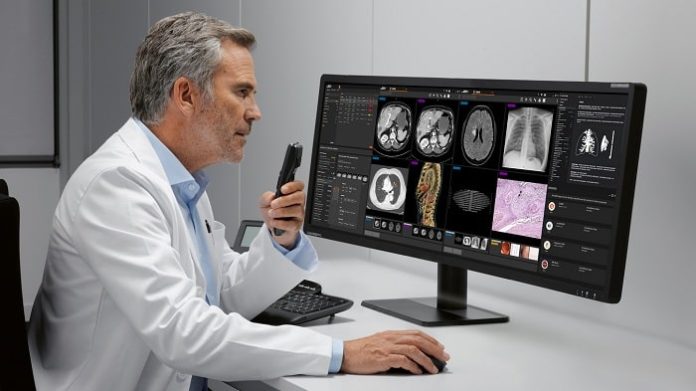
Syngo Carbon imaging and diagnostic software from Siemens Healthineers integrates intelligent reports from Smart Reporting

Syngo Carbon imaging and diagnostic software from Siemens Healthineers integrates intelligent reports from Smart Reporting

The SmartReports diagnostic software from the HealthTech company Smart Reporting will be part of Syngo Carbon1, a modular, cross-departmental software environment from Siemens Healthineers that manages and displays all types of image and diagnostic data in a patient-centered manner and ensures more diagnostic reliability, less redundancy and more efficiency in everyday clinical practice . The integrated solution meets the criteria for three funding conditions of the Hospital Future Act (KHZG) and is therefore eligible for funding under this law on the digitization of hospitals. Both Siemens Healthineers and Smart Reporting are certified to support hospitals in preparing funding applications.

Syngo Carbon, the new enterprise imaging and reporting solution from Siemens Healthineers, opens up innovative possibilities in image interpretation, diagnosis, the use of artificial intelligence (AI) and data management for the clinical environment. Many clinical departments use their own systems for image management, archiving, and reporting. As a result, the findings can turn out very differently and the data are not always available everywhere. With Syngo Carbon, the data from various departments are fetched from their silos and integrated into a uniform environment – including diagnosis and reporting. In this way, workflows can be simplified and collaboration improved. The solution is tailored to treatment pathways and the cross-departmental value chain of imaging. Syngo Carbon paves the way for a patient-centered and data-driven workflow.

The integration of SmartReports in Syngo Carbon makes it possible to link information in the findings with image-based data in the radiology workflow. Higher quality diagnostic findings optimize therapy planning and increase the diagnostic reliability on the basis of quality-assured medical content. Since the findings are made available centrally in medical institutions, they are easily accessible across departments. In this way, doctors can be supported in their decision-making and efficiency in everyday clinical practice can be improved. The interlinking of the two systems, SmartReports and Syngo Carbon, not only enables more digitization and innovation, but also enables funding by the KHZG.

With structured report templates, SmartReports can be integrated intuitively into the reporting habits of doctors: reports can be spoken or written as free text and automatically assigned to the structure of guideline-based decision trees. The result is medical documentation that is machine-readable and can be digitally processed so that it can also be used for AI-based evaluations and clinical research – the basic requirement for digitization in everyday hospital life.

“The digitization of the clinical infrastructure is one of the greatest challenges and the integration of SmartReports in Syngo Carbon is another building block on the way to a modern IT infrastructure in the hospital landscape,” explains Prof. Dr. Wieland Sommer, founder and managing director of Smart Reporting.

โ€œThe integration of SmartReports in Syngo Carbon stands for innovative image and report creation that brings together existing technologies in an intuitive solution. With the approach of โ€œradiologists for radiologistsโ€, SmartReports fits perfectly into our requirement profile: We want to make everyday life easier for doctors, to generate structured reports supported by automation and AI, to break up data silos and to merge and standardize information. Smart Reporting is one of our preferred partners in the diagnosis area, โ€explains Christian Zapf, Head of Syngo at Siemens Healthineers in Germany.

Smart Reporting was founded in 2014 by Wieland Sommer, Professor of Radiology and Master in Public Health (Harvard, USA) in Munich with the vision of using the value of data in medicine for better decision-making and treatment. Today the company brings together a large interdisciplinary team of doctors and software engineers to develop software based on a deep understanding of clinical workflows. Its multilingual, cloud-based software for structured reporting in radiology and pathology is used by more than 10,000 doctors in over 90 countries.

About Siemens Healthineers AG
Siemens Healthineers AG (listed in Frankfurt a.M. under SHL) aims to shape the healthcare system of the future. As one of the leading medical technology companies headquartered in Erlangen, it supports healthcare providers worldwide through its regional companies in achieving more on their way to expanding precision medicine, redesigning healthcare, improving patient experience and digitizing the healthcare system. Siemens Healthineers is continuously developing its product and service portfolio with AI-supported applications and digital offers that are playing an increasingly important role in the next generation of medical technology. These new applications will further strengthen the company in in vitro diagnostics, image-guided therapy, in vivo diagnostics and innovative cancer treatment. Siemens Healthineers also offers a range of services and solutions to improve healthcare providers’ ability to deliver high quality, efficient care to patients. In fiscal 2020, which ended on September 30, 2020, Siemens Healthineers achieved sales of 14.5 billion euros and adjusted EBIT of 2.2 billion euros. After the acquisition of Varian Medical Systems, Inc., the company has around 66,000 employees worldwide.
Google develops search tools for COVID-19 resources in India

Google develops search tools for COVID-19 resources in India

As India continues to see a surge in COVID-19 cases, big tech is looking to help people living in the country find vaccines, oxygen and accurate information.

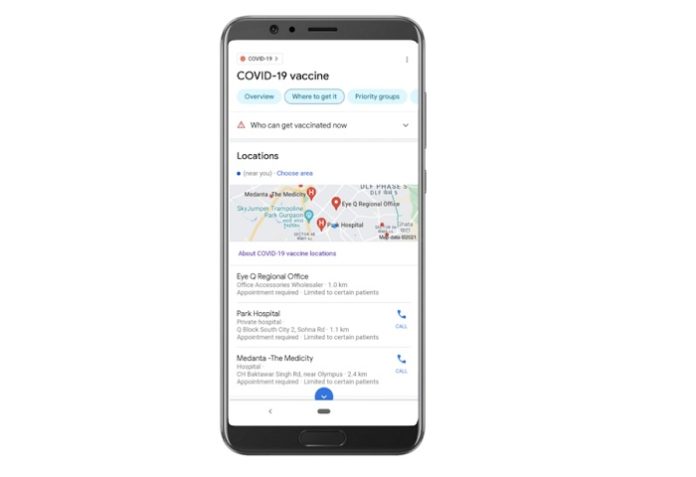
This morning, Google announced new efforts in India focused on locating testing centers, hospital resources and vaccination sites.

The Silicon Valley giant worked with India’s Ministry of Health and Family Welfare to show the locations of 23,000 vaccination centers nationwide, as well as 2,500 testing centers on Search and Maps.

Google is also piloting a new feature in India that lets people crowdshare the availability of hospital beds and medical oxygen.

“To help them find answers more easily, weโ€™re testing a new feature using the Q&A function in Maps that enables people to ask about and share local information on availability of beds and medical oxygen in select locations,” authors of the Google blog wrote. “As this will be user-generated content and not provided by authorized sources, it may be required to verify the accuracy and freshness of the information before utilizing it.”

Additionally, the company is rolling out programs to combat misinformation. Every time a user searches Google for vaccine information, the search engine will display information about vaccine safety, efficacy and side effects. It will also give users information about registering for the vaccine and connect to Co-Win, a site based in India that helps people sign up for the shots.

Google isn’t the only FAANG company jumping in to provide COVID-19 resources to India. At the end of April, Facebook announced a partnership with the government of India to help roll out a Vaccine Finder tool.

Both Facebook and Google have provided money to India-focused COVID-19 relief funds. Facebook CEO Mark Zuckerberg announced a $10 million raise, and Google announced an internal donation campaign, which has raised over $4.6 million in relief efforts.

The number of COVID-19 cases in India has skyrocketed since March. According to the Johns Hopkins tracker, 246,116 people in India have died of the virus. The seven-day average of new coronavirus cases in India is roughly 391,000, according to the JHU tracker.

The vaccine is beginning to roll out in India; however, only a small percentage of the population has had the shot. According to Our World in Data, the most recent data indicates that 9.8% of the Indian population has had one dose or more, and 2.5% are fully vaccinated.

Large tech companies have teamed up with public health organizations to spread the word about coronavirus for some time. In January, Google added a feature to help users find COVID-19 vaccination sites in the U.S. Shortly after this, Facebook and Apple connected to the same finder.

In April, YouTube, owned by Google, teamed up with health organizations on a public service announcement that features talks between celebrities and health experts, such as White House Chief Medical Advisor Dr. Anthony Fauci.

Earlier on in the pandemic, Google teamed up with Apple on an exposure notification API to help with contact-tracing efforts.


IIT-M researchers develop blockchain-based healthcare info system for mobile apps

IIT-M researchers develop blockchain-based healthcare info system for mobile apps

The BlockTrack innovation is now protected through a provisional IP filed with the Indian Patent Office, said a release by IIT-M.

With an aim to digitise healthcare information systems, researchers at the Indian Institute of Technology (IIT-M) Madras have developed a blockchain-based data exchange system for a mobile phone-based application.

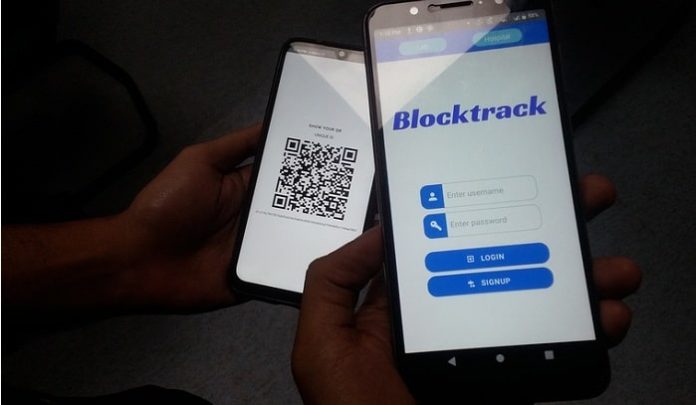
The system, โ€˜BlockTrackโ€™, is currently being field-tested at IIT Madras Institute Hospital. The project has been undertaken with support from Infosys as part of its CSR prgramme which began during the peak of the Covid-19 pandemic last year.

BlockTrack aims to digitise healthcare information systems while ensuring the protection of sensitive personal information and medical records by decentralising the control and ownership of patient data, through a blockchain-based innovation.

The BlockTrack innovation is now protected through a provisional IP filed with the Indian Patent Office, said a release by IIT-M.

The android version of the application has been developed separately for both patients as well as doctors. BlockTrackโ€™s algorithm generates identification codes for users and ensures uniqueness across boundaries with very little chance for duplication. It opens up the promise of universal and transferable healthcare information management with a strong emphasis on data privacy and tracking the spread of infectious diseases across geographies.

Prabhu Rajagopal, department of mechanical engineering, IIT Madras, said, โ€œBlockTrack is an exciting project that depicts engineering innovations that have disruptive potential to transform multiple domains. This is one of the first implementations of blockchain technology for securing healthcare data management systems and we see immense impact this approach can make in securely digitising and maintaining unique patient records across the country and indeed across the world eventually.โ€

Henry Ford Health System cardiologists have new tool for heart attack victims

FDA Approves Next-Generation ZOLL TherOx System for Widowmaker Heart Attack Patients

David Johnson is experiencing another chance at life two years after he went from working out and enjoying life to sudden problems.

He said he was uncharacteristically tired then start sweating – a lot. His brother called 911 and as David walked outside to meet the paramedics he remembers sitting down in the ambulance and nothing else.
Sponsored Links
Is your kid aged 4-6? Get them Personalized Reading Classes. Free Demo Class!Vedantu SuperReaders | Online

Sat on the cot in the truck and I was out,” he said.”Four days later and I woke up in the hospital.

David had a heart attack and cardiogenic shock. His heart couldn’t pump sufficient blood to vital organs and David died – for at least a moment.

“I wasn’t apparently dead not very long,” he said. “They did the right things and got my heart started.”

David can tell his story because of a protocol developed by cardiologists at Henry Ford Hospital using a device called Impella Heart Pump. Henry Ford Health System’s Dr. William O’Neil was the principal investigator for the study.

“Weโ€™ve used a device thatโ€™s been approved by the FDA it goes in from the leg and goes into the heart. It helps the heart pump while we can restore blood flow to the heart,” he said.

And allows us time to sufficiently open the heart blockage and allows us ideally to recover the heart,” said Dr. Babar Basir.

Cardiologists started working to develop this procedure back in 2005 and it’s now a game-changer for countless suffering from heart attacks including some like Johnson.

“We’ve actually had 34 patients who were basically dead. We were pounding on the chest and doing chest massage while we were putting the catheter in and 70% of those people survived and literally they would have been dead without this therapy,” Dr. O’Neil said.

Cardiologists at Henry Ford are working to extend this knowledge to hospitals outside their system.

“We had hundreds of places around the world that implemented the best practices that we discussed and they getting good outcomes throughout their own countries,” Dr. Basir said.

Johnsonโ€™s heart is working so well for now that heโ€™s opting not to have a heart transplant and says he’s grateful to the doctors and this medical procedure and is back to doing what he loves.

“I’m still working on the old house,” David said. “I still exercise all the time. I think they just needed to tweak me a little bit.”

Lilly collaborates with leading diabetes technology companies to integrate connected insulin pen solutions for people with diabetes

Lilly collaborates with leading diabetes technology companies to integrate connected insulin pen solutions for people with diabetes

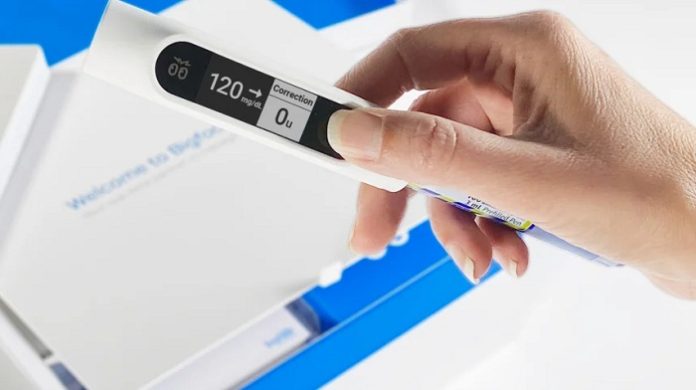
With a goal of integrating data and technology to help streamline diabetes management, Eli Lilly and Company signed strategic international agreements with four companies โ€“ DexCom, Inc., Glooko Inc., myDiabby Healthcare and Roche โ€“ to advance connected solutions and streamline care for people living with diabetes in markets outside of the United States. These companies offer unique diabetes management platforms that will be compatible with Lilly’s Tempo Penโ„ข (approved in several global markets) and Tempo Smart Buttonโ„ข (currently in late-stage development) to support people with diabetes and healthcare professionals.

The Tempo Pen is a modified version of Lilly’s existing prefilled, disposable insulin pen to which the Tempo Smart Button โ€“ pending CE (Conformitรฉ Europรฉenne or European Conformity) marking โ€“ attaches. Through these new agreements, the Tempo Smart Button will pair with software and/or medical devices offered by Dexcom, Glooko, myDiabby Healthcare and Roche, with its mySugr app, to facilitate the integration of personalized data and actionable insights.

“We’re pleased to work alongside these innovative partners who share our commitment to improving diabetes outcomes by bringing together medicine and digital solutions for the global diabetes community,” said Marie Schiller, vice president of product development for Connected Care and Insulins at Lilly. “Insulin dose logging is often an incomplete piece of the diabetes management puzzle for people who use insulin pens and manually track their doses. By integrating data from the connected insulin pen solutions into widely used compatible software, including potential future collaborations, we aim to support improved decision-making for people with diabetes and their healthcare providers with accurate, real-time data collection. These solutions may also help address psychological barriers like fear of hypoglycemia that may negatively impact diabetes management.”

Lilly aims to receive CE mark for the Tempo Smart Button later in 2021 and will launch the Tempo Pen and Tempo Smart Button in several international markets following this certification.

“People with diabetes need access to all of the key information about their condition. For those who use insulin pens, tracking how much insulin they delivered and the time of the dose and bringing that information together with glucose data can help them meaningfully improve their management,” said Tadej Battelino, Head of Endocrinology, Diabetes & Metabolism, UCH Professor, at the University of Ljubljana. “These agreements mark a meaningful step towards providing useful tools that help provide real-time guidance and holistic support to ease some of the burdens of living with diabetes.”

About Diabetes
An estimated 463 million adults worldwide1 have diabetes. Type 2 diabetes is the most common type, accounting for an estimated 90 to 95 percent of all diabetes cases2. Diabetes is a chronic disease that occurs when the body does not properly produce or use the hormone insulin.

About DexCom Inc.
DexCom, Inc. empowers people to take control of diabetes through innovative continuous glucose monitoring (CGM) products. Headquartered in San Diego, California, Dexcom has emerged as a leader of diabetes care technology. By listening to the needs of patients, caregivers, and clinicians, Dexcom simplifies and improves diabetes management around the world.

About Glooko Inc.
Glooko is transforming digital health by connecting people with diabetes and related conditions and their health care professionals, enabling telehealth, clinical research, and improved collaboration. The company’s software platforms, Glookoยฎ and diasendยฎ, empower the management of diabetes and other chronic conditions by collecting and unlocking the power of data from blood-glucose meters, CGMs, insulin pumps, connected insulin pens, blood pressure cuffs, nutrition apps, connected scales and activity trackers โ€“ bringing insights together in one place. Data is easily uploaded โ€“ remotely via app or in-clinic, securely shared, and visualized in actionable charts and graphs. This creates a solid foundation enabling collaboration and confident treatment decisions. The platforms are compatible with over 95% of global diabetes devices, along with biometric devices, giving people with diabetes and other chronic conditions and their care teams the freedom of choice. Over 3 million users have benefitted from health data insights using Glooko’s solutions, which are trusted by world leaders in diabetes and chronic care, and used in 28 countries across 20 languages. Learn more at glooko.com.

About myDiabby Healthcare
MyDiabby Healthcare is the leading European software used by diabetes healthcare providers in order to manage and help their patients with diabetes remotely thanks to telemonitoring and tele consultation. As the treatment for diabetes is based on the visualisation of blood glucose and insulin, our goal is to make it easier for patients to share their data with their physician. More than 400 hospitals are using myDiabby Healthcare in France, Belgium, and Switzerland.

About Roche Diabetes Care and mySugr
Roche Diabetes Care has been pioneering innovative diabetes technologies and services for more than 40 years. Being a global leader in integrated Personalised Diabetes Management (iPDM), Roche Diabetes Care aims to support people with diabetes and those at risk to achieve more time in their target ranges and experience true relief from the daily therapy routines.

Under the brands RocheDiabetes, Accu-Chek and mySugr, comprising glucose monitoring, insulin delivery systems and digital solutions, Roche Diabetes Care unites with its partners to create patient-centred value. By building and collaborating in an open ecosystem, connecting devices and digital solutions as well as contextualising relevant data points, Roche Diabetes Care enables deeper insights and a better understanding of the disease, leading to personalised and effective therapy adjustments.

Since 2017, mySugr, one of the most popular diabetes management apps, is part of Roche Diabetes Care. mySugr aims to simplify life with diabetes and gives people with diabetes the tools, know-how, and confidence to manage their diabetes therapy and health outcomes, making it quick and easy to collect relevant therapy data in one place through a growing number of connected devices, integrations, and manual entry. Available in 79 countries and 24 languages, mySugr has more than three million registered users. For more information, please visit www.rochediabetes.com, www.accu-chek.com and www.mysugr.com.

About Lilly Diabetes
Lilly has been a global leader in diabetes care since 1923, when we introduced the world’s first commercial insulin. Today we are building upon this heritage by working to meet the diverse needs of people with diabetes and those who care for them. Through research, collaboration and quality manufacturing we strive to make life better for people affected by diabetes and related conditions. We work to deliver breakthrough outcomes through innovative solutionsโ€”from medicines and technologies to support programs and more.

About Eli Lilly and Company
Lilly is a global health care leader that unites caring with discovery to create medicines that make life better for people around the world. We were founded more than a century ago by a man committed to creating high-quality medicines that meet real needs, and today we remain true to that mission in all our work. Across the globe, Lilly employees work to discover and bring life-changing medicines to those who need them, improve the understanding and management of disease, and give back to communities through philanthropy and volunteerism.

UC Davis integrates new virtual patient care technology in Deep Brain Stimulation program

UC Davis integrates new virtual patient care technology in Deep Brain Stimulation program

The Departments of Neurology and Neurological Surgery at the UC Davis Medical Center recently became the first hospital in Northern California to adopt NeuroSphere, a remote patient care system created by the medical device company Abbott Laboratories. Utilized in tandem with its device as part of the Deep Brain Stimulation (DBS) program to help relieve movement disorders, the app has revolutionized telehealth to provide better patient accessibility to health care.

Neuromodulation therapy involves modifying the way the nervous system processes electrical impulses. The DBS program is one established form of neuromodulation therapy that focuses on treating patients screened and diagnosed with movement disorders like Parkinsonโ€™s disease, essential tremor and dystonia.

Laura Sperry, an adult nurse practitioner and the program director for the DBS program at the UC Davis Medical Center, described how health care providers previously required in-person visits to adjust the device for DBS patients undergoing neuromodulation therapy.

โ€œThe only way that we could connect with the patients, modify their settings, check their battery status and see if they have any abnormal impedances that might indicate a fractured or damaged system was in the clinic,โ€ Sperry said. โ€œPatients needed to be within a few feet from us so that we could connect with them through Bluetooth or a wire, depending on the system that weโ€™re using.โ€

For these patients with motor disabilities, the device operates internally, being embedded in the chest of the patient with a wire connecting through the back of the neck to electrodes surgically implanted on the brain. Following surgery, patients would oftentimes have to make multiple visits to the hospital to have their devices fine-tuned, which could be burdensome for any patient, let alone those who live outside the area.

Dr. Kiarash Shahlaie, a professor in the department of neurological surgery practicing cranial surgery and conducting research at the UC Davis Center for Neuroscience, emphasized how NeuroSphere expands accessibility of health care to patients by just requiring them to have a Wi-Fi connection.

โ€œFor a hospital like UC Davis, which has such a big geographic catchment area, weโ€™re the only academic medical center all the way up to the Oregon border,โ€ Shahlaie said. โ€œSo we have patients that live hours and hours away that come here because weโ€™re specialized, and we have this ability to to do these operations and implant these devices. Some of the devices require pretty frequent visits early on, especially if you want to really fine-tune it, so this platform is pretty exciting because it allows us to treat patients anywhere in the world. As long as we can get online and get access to their device, we can have a visit with them.โ€

Dr. Lin Zhang, a clinical professor in the department of neurology and the co-director of the DBS program, further described the convenience of NeuroSphere for both health care providers and patients.

โ€œThe significance is being able to give the patients the convenience to not have to come to the clinic and to be able to receive the same level of care as if they were here in person, at home,โ€ Zhang said.

During the pandemic, the expansion of telehealth with NeuroSphere is a big step toward enabling access to health care for many who cannot travel or fear in-person visits at hospitals. Shahlaie provided a glimpse of how NeuroSphere might shape the future of healthcare with smarter and precise technology.

โ€œWe think these devices are going to get smaller, so we certainly anticipate the implants to get smaller,โ€ Shahlaie said. โ€œTheyโ€™re certainly getting smarter, meaning that the systems that used to all be open-loop, kind of just stimulating [the brain] blindly all day long, are now becoming closed-loop. They have an input and a decision to stimulate the brain, and so we anticipate some degree of AI, where computers have algorithms and they get better and better over time to modulate the brain more effectively, since every brain is going to be different.โ€

Snapdeal launches ‘Sanjeevani’ to connect patients with potential plasma donors nationwide

Snapdeal launches 'Sanjeevani' to connect patients with potential plasma donors nationwide

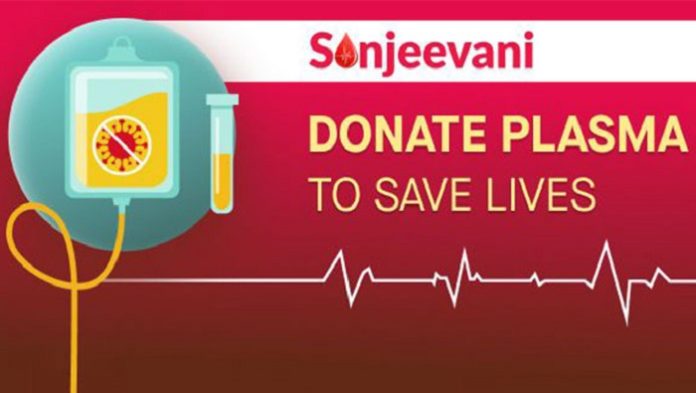
Snapdeal, India’s largest value e-commerce company, today launched an initiative to connect COVID 19 patients with potential plasma donors. Using its wide reach in India across smaller towns & cities, Snapdeal has created an easy to use platform called “Sanjeevani” accessible via website and mobile app.

Patients and donors can register themselves with their mobile numbers/email ids and provide relevant information like blood group, location, age and donor recovery date. After registering, Snapdeal’s algorithm will look for relevant matches and connect patients with potential donors.

Sanjeevani was first launched to help the employees of Snapdeal find possible donors. But given that it has been especially hard to find eligible plasma donors at this time, Snapdeal has opened this platform for everyone.

Sanjeevani will also help raise awareness on the importance of plasma donation and encourage recovered COVID 19 patients to donate.


With MedTech’s growth, data is a challenge and an opportunity

 With MedTech's growth, data is a challenge and an opportunity

Medical technology is a dynamic and growing part of the APAC economy. By 2022, the size of the APAC MedTech industry is expected to climb by 8.8% a year to US$157 billion, according to the Asia Pacific Medical Technology Association.

Despite the opportunities that come with rapid growth, APAC MedTech companies face a number of challenges. This becomes quite obvious when you look at the trends shaping the future of the sector, and the impact of the global pandemic.

COVID-19 has certainly changed the rules. Rapid deployment of technology and innovation, for example, are destined to become part of the new normal, as is increased use of data to inform healthcare decision making.

Looking beyond COVID, however, the MedTech sector must manage the exponential growth of both data volumes and the number of data sources that products must integrate with to be successful.

Data growth rates are higher in the healthcare sector than almost anywhere else. According to the IDC white paper, โ€œData Age 2025โ€, healthcare data is projected to grow faster than in manufacturing, financial services or media, experiencing a compound annual growth rate (CAGR) of 36 percent through to 2025.

Smart healthcare devices and point of care devices located in patients’ homes are just some of the drivers of this trend, with data captured from them allowing real-time monitoring of the patientโ€™s condition.

This exponential data growth presents a major challenge for data scientists at medical device manufacturers, who often spend as little as 20% of their time on actual data analysis.

Interoperability a โ€œstumbling blockโ€

According to John Kelly, Regional Manager, MedTech for InterSystems, the bulk of data scientistsโ€™ time is spent tracking down, cleaning and reorganising huge volumes of data stored in multiple silos and in different formats and standards.

โ€œInteroperability โ€“ in other words the ability of disparate software to exchange and make use of information โ€“ is key,โ€ says Kelly. โ€œUnfortunately, the lack of interoperability between systems has been a major stumbling block for innovation. We are investing a lot of effort into solving this problem to make sure that our customers have clean, compliant and complete data available for advanced analytics.โ€

When developing MedTech solutions, compliance with different healthcare standards is also paramount, says Kelly, so that solutions can fit easily into existing healthcare environments. โ€œNo matter how innovative a new solution may be, if it cannot slot neatly into existing healthcare infrastructure and facilitate the sharing of data between different systems and solutions, adoption is likely to be low.โ€

Data privacy and security are further considerations, including data management and consent principles that give patients control over their own data. And because MedTech is a global industry, European General Data Protection Regulation(GDPR) and California Consumer Privacy Act(CCPA) concerns, such as who owns patient-generated data, must also be addressed. Standards compliance, with high levels of scalability, needs to be front of mind even if you start with a proof of concept.

Technologies like artificial intelligence (AI) and the Internet of Things are also introducing new cybersecurity challenges. To address these, regulators around the world are introducing stringent guidelines on cybersecurity as a distinct process within each stage of development, from R&D through to systematic identification of risks during practical usage.

Artificial Intelligence that improves with use

Meeting these challenges will create new opportunities for MedTech companies. With increased data volumes, data quality, and consumer trust, AI will become more reliable. Couple this with machine learning and you will get a virtuous cycle where the more practice AI algorithms get, the better they will become.

AI and machine learning are already proving themselves in maximising the effectiveness of high-value medical equipment. For example, Mercy Radiology in New Zealand, working with Ferrum AI, has deployed two AI algorithms which use machine learning to improve over time with use. Operating in a second read capacity for radiologists, the two use-cases are in lung nodules on CT scans and limb fractures on X-ray.

The algorithms have improved the quality of reporting and โ€œthere has been positive engagement from clinicians as well,โ€ says Lloyd McCann, CEO of Mercy Radiology and Head of Digital Health for Healthcare Holdings Limited.

Ultimately, however, for MedTech companies to seize the opportunities afforded by healthcare data, they must not only be able to handle increasing volumes and types of data, and deal with privacy and security concerns, but ensure that data is fit for purpose.

The success of data innovations based on AI and machine learning in particular will succeed or fail on the quality of the data that is used, and that makes the choice of data platforms that manage it a critical business decision.

Crucial Steps You Should Take If Injured In A Car Accident

Crucial Steps You Should Take If Injured In A Car Accident

Accidents are an unfortunate fact of life, and it is vital to be prepared should the worst happen. If you find yourself in a car accident, it may be distressing and upsetting, and you will need to consider your legal obligations and practicalities.

Here are some of the essential steps you should take if you find yourself injured in a car accident.

Stop Your Car

You should stop in a safe place immediately after an accident, put your hazard lights on and exit the vehicle if it is safe, and you can do so. You should remain at the scene and help others if you can.

Seek Medical Attention

If you or others are seriously injured, you should call 911 to receive emergency medical help. You may not feel some injuries immediately due to shock, so even if you feel fine, you should seek a medical assessment after any accident.

Inform The Police

Texas law requires car accidents that result in injury or damage over $1,000 to be reported to the police. If you donโ€™t need emergency assistance, you can report the accident using your local police departmentโ€™s non-emergency phone number.

Exchange Information

You should talk to the other people involved in the accident and exchange contact details and insurance information. If you hope to make a personal injury claim against another driver, you should also get the information of any witnesses. Do not discuss potential litigation with the other driver at the roadside.

Call An Attorneyย 

An accident and personal injury lawyer can assess whether you have a claim to make. You should get in touch with a lawyer and give them as much information about the crash, your injuries and medical treatment as you can.

You should talk to several lawyers before choosing one to represent you. The Lopez Law Group is an excellent example of what to look for in a local accident lawyer.

Contact Your Insurance Company

You should inform your insurance company of the accident, regardless of whether you believe you were at fault or not. You should be cautious talking to the other partyโ€™s insurance company if you plan to get a lawyer involved.

Keep Records

You should take pictures of your injuries and the damage done to your vehicle. You should keep all of the information you receive from the police, medical professionals, and insurance company. You should keep notes of how the accident has impacted you financially, mentally and physically. This can provide evidence if you take the other driver to court.

Fix Your Car

You should get quotes from local mechanics of how much it will cost to repair your car. You should keep any receipts and invoices for work done to add to your records.

Talk To Someone

Being involved in a car accident can lead to mental health concerns such as PTSD. You should talk to a therapist if you feel you are not coping with the stress of the accident and your resultant injuries.

Dutch hospital expands its use of Sectras solution from radiology to enterprise imaging

Dutch hospital expands its use of Sectras solution from radiology to enterprise imaging

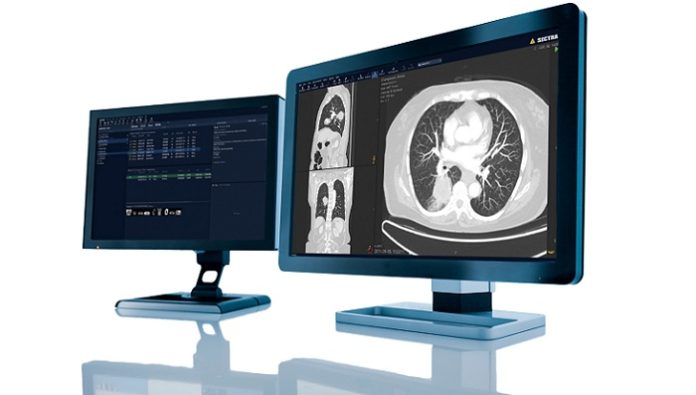
International medical imaging IT and cybersecurity companySectra has signed an enterprise imaging contract with the Dutch hospital Alrijne Zorggroep. The contract is an expansion of an existing agreement and will initially broaden the use of the imaging solutions currently used in radiology to include cardiology. Alrijne has the possibility to further expand its use of the solution to include all medical imaging across the enterprise. Consolidating image management across Alrijne Zorggroep will reduce IT complexity and enable efficient cross-discipline collaboration around patients.

“We have used Sectra’s solution for many years in radiology. It’s an intuitive solution with high availability that helps our radiologists to efficiently deliver high-quality care. Sectra has proven to be a partner that listens to its customers and clearly wants to meet both current and future needs. This was important in our decision to move beyond radiology and make Sectra our enterprise imaging partner,” says Richard de Wit, Infrastructure and Automatization Manager at Alrijne Zorggroep.

The contract was signed in April 2021 and includes an expansion of the use of the enterprise archive (VNA) and universal viewer to store and access cardiology information. Alrijne Zorggroep has been a Sectra customer since 2007.

“We are thrilled to have the opportunity to support Alrijne as they now gradually realize their centralized image management strategy to support their vision of continuously improving patient care. The trust they have shown in us by expanding our partnership is a recognition of Sectra’s dedication to customer success, which makes me proud,” says Peter Osinga, Manager at Sectra in the Netherlands.

Sectra’s enterprise imaging solution provides a unified strategy for all imaging needs while lowering operational costs. The scalable and modular solution, with a VNA at its core, allows healthcare providers to grow from ology to ology and from enterprise to enterprise. Sectra’s cardiology imaging module is currently available in limited markets. Read more about Sectra and why it’s top-ranked in “Best in KLAS”.

About Sectra

Sectra assists hospitals throughout the world to enhance the efficiency of care, and authorities and defense forces in Europe to protect society’s most sensitive information. Thereby, Sectra contributes to a healthier and safer society. The company was founded in 1978, has its head office in Linkรถping, Sweden, with direct sales in 19 countries, and operates through partners worldwide. Sales in the 2019/2020 fiscal year totaled SEK 1,661 million. The Sectra share is quoted on the Nasdaq Stockholm exchange.

Translate ยป