








Close
Digital Health & Ai Innovation summit 2026
Medical Taiwan 2026

AWS Announces Amazon HealthLake for Healthcare Organizations to Store, Transform and Analyze Data

AWS Announces Amazon HealthLake for Healthcare Organizations to Store, Transform and Analyze Data

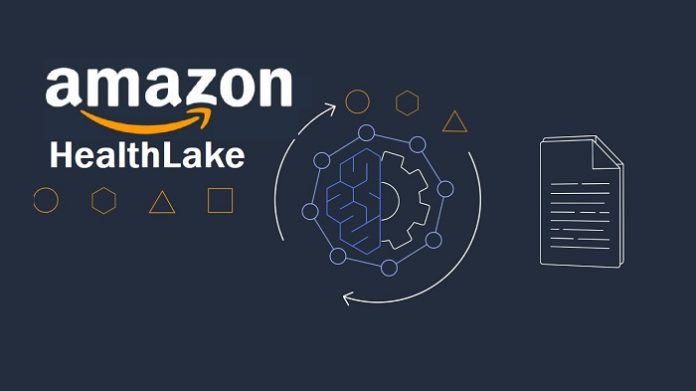
AWS re:Invent, Amazon Web Services, Inc. (AWS), an Amazon company announced Amazon HealthLake, a HIPAA-eligible service for healthcare and life sciences organizations. Amazon HealthLake aggregates an organizationโ€™s complete data across various silos and disparate formats into a centralized AWS data lake and automatically normalizes this information using machine learning. The service identifies each piece of clinical information, tags, and indexes events in a timeline view with standardized labels so it can be easily searched, and structures all of the data into the Fast Healthcare Interoperability Resources (FHIR) industry standard format for a complete view of the health of individual patients and entire populations.

As a result, Amazon HealthLake makes it easier for customers to query, perform analytics, and run machine learning to derive meaningful value from the newly normalized data. Organizations such as healthcare systems, pharmaceutical companies, clinical researchers, health insurers, and more can use Amazon HealthLake to help spot trends and anomalies in health data so they can make much more precise predictions about the progression of disease, the efficacy of clinical trials, the accuracy of insurance premiums, and many other applications.

As machine learning becomes more mainstream, companies across every vertical business are trying to apply it to their data to deliver meaningful business value. Healthcare is applying machine learning to improve operations and patient care, with AWS customers like 3M, Anthem, AstraZeneca, Bristol Myers Squibb, Cerner, the Fred Hutchinson Cancer Research Center, GE Healthcare, Infor, Pfizer, and Philips embracing the cloud and machine learning to get more value out of their vast data troves. From family history and clinical observations to diagnoses and medications, healthcare organizations are creating huge volumes of patient information every day with the goal of getting a full view of a patientโ€™s health and applying analytics and machine learning to improve care, analyze population health trends, and improve operational efficiency. However, clinical data is complex and renowned for being siloed, incomplete, incompatible, and stored in on-premises systems spread across multiple locations. Getting all this information aggregated and in the FHIR format is a start toward the goal of standardizing structured data, but the majority of data remains unstructured and still needs to be tagged, indexed, and structured in chronological order to make all of the data understandable and able to query.

Some healthcare organizations build rule-based tools to automate the process of transforming unstructured data (e.g., medical histories, physician notes, and medical imaging reports) and tagging clinical information (e.g., diagnoses, medications, and procedures), but these solutions often fail because the data needs to be normalized across disparate systems and because the tools canโ€™t account for every possible variation in spelling, unintended typos, and grammatical errors. Other organizations use general-purpose optical character recognition (OCR) software to process data sources, but these tools lack the medical expertise to be effective and so organizations resort to manual data entry by medical professionals which adds expense to the digitization process.

Even if organizations are able to aggregate and structure their data, they still need to build their own analytics and machine learning applications to uncover relationships in the data, discover trends, and make precise predictions. The cost and operational complexity of doing all this work is prohibitive to most organizations; and as a result, the vast majority of organizations end up missing out on the untapped potential to use their data to improve the health of patients and communities.

Amazon HealthLake offers medical providers, health insurers, and pharmaceutical companies a service that brings together and makes sense of all their patient data, so healthcare organizations can make more precise predictions about the health of patients and populations. The new HIPAA-eligible service enables organizations to store, tag, index, standardize, query, and apply machine learning to analyze data at petabyte scale in the cloud.
 

Connected health player to expand medical data platform

Connected health player to expand medical data platform

VivaLNK, a provider of connected healthcare solutions for remote patient monitoring (RPM), has announced the expansion of its Medical Data Platform for global partners.

The platform is designed for rapid development and deployment of RPM applications, and ensures patient vitals can be captured continuously from any location and delivered successfully to clinical applications.

Built on a foundation of VivaLNKโ€™s medical wearable sensors for monitoring vital signs, the Medical Data Platform is used to power RPM and telemedicine for more than 90 digital healthcare technology partners, and includes applications such as pharmaceutical clinical trials, cardiac monitoring, remote and in-patient vitals monitoring. The expansion of the Medical Data Platform includes:

Vitals Data Service – a turnkey solution designed for continuous remote patient data capture and delivery for clinical trials and providers.
Sensor Data Kit – an all-inclusive development kit for healthcare application developers to integrate medical wearable sensors into their solution. The kit includes wearable sensors for human vitals, software tools, and developer support to rapidly build and deploy healthcare application solutions.

RPM in the real world not only needs to address technical challenges, but also human factors involved with user adherence, requiring both a quantitative and a qualitative approach. On the technical side, one of the most common issues is interruptions in the data network. But when it comes to human factors, comfort and ease-of-use is paramount.

Partners around the world are excited about how simply VivaLNK enables RPM and telemedicine solutions. VivaLNK has also expanded its partners in Europe with the addition of CardioCalm in Italy, Avittia in Greece, and Current Health in the UK. Current Health, founded in Scotland and now serving the US and UK markets, is a full-service remote healthcare platform to monitor, manage and engage patients at home.

Chris McCann, CEO and founder, Current Health, said: “With VivaLNK’s continuous temperature sensor, the data is automatically captured 24 hours a day, allowing our solution to provide a more complete, and accurate picture of the patient’s condition.โ€

Jiang Li, CEO of VivaLNK, added: โ€œOur growing capabilities and offerings allow us to power more remote care around the world, taking on the heavy burden of trustworthy data capture and transmission so our partners can focus on their given application or therapeutic area. This helps to democratise healthcare by enabling rapid innovation with cost effective approaches.โ€

Cantel Medical and Censis Technologies Enter into Partnership to Develop Differentiated Endoscope Reprocessing Software Solution

AIG Hospitals and Satisfai Health announce collaboration to transform Gastroenterology and GI Endoscopy with Artificial Intelligence

CANTEL MEDICAL CORP. and Censis Technologies announced a new long-term partnership to combine Cantel’s leading infection prevention endoscope reprocessing workflow portfolio with the surgical asset management and instrument tracking solutions from Censis.

The new enhanced, co-branded software solution will combine the CANEXISโ„ข Integrated Workflow Solution for Endoscopy from Cantel with Censis’ CensiTracยฎ surgical asset management software to create the leading instrument reprocessing and scope tracking software available to the market. Leveraging Censis’ strengths in software development, cloud-based technology, and professional services and support with the leading position in endoscope reprocessing and infection prevention from Cantel, the combined solution will support endoscopy customers with best-in-class quality management tools, providing peace of mind and confidence that their facility is executing best practices to support patient safety and infection prevention.

This enhanced integrated workflow solution is a key tool in the fight to avoid the spread of infection, while helping to protect patients and reducing the economic burden on facilities, while also supporting improved efficiency and understanding of the use of critical medical devices in healthcare facilities. In today’s environment, efficiency and process consistency are increasingly critical to the day-to-day and long-term success of infection prevention, and this software application is an important resource for helping to ensure a consistent repeatable standard of care and process at each facility.

Healthcare associated infections (HAIs) are a complex and persistent issue in healthcare facilities. Each year, approximately 1.7 million HAIs occur, and outbreaks also pose a severe economic burden to the health system, with the total direct, indirect, and nonmedical social costs of HAIs to hospitals ranging from US$96 billion to $147 billion.1

“We are thrilled to be partnering with Censis on this critical endeavor,” said Michael Spicer, President, Medical Business Unit at Cantel. “At Cantel, we strive to ensure our Complete Circle of Protection includes best-in-class offerings for our customers and patients, and by partnering with Censis, we are taking the next step toward providing greater efficiency, protection, and analytics to allow our customers to maximize their practice workflow while providing solutions designed to improve the safety and protection of their patients.”

Randy Smith, CEO, Censis Technologies said, “The relationship with Cantel will expand Censis’ leadership in surgical asset management and tracking solutions by further introducing innovative SaaS-based technology for the reprocessing of endoscopes. We are excited that the combined efforts of these two organizations will provide our customers opportunities to improve patient safety, workflow optimization and analytics.”

Within the United States, users of the current CANEXISโ„ข Software can look forward to robust coverage, including implementation, upgrades, and technical support, as their service is enhanced through the co-brand partnership.

About Cantel Medical:
Cantel Medical is a leading global company dedicated to delivering innovative infection prevention products and services for patients, caregivers, and other healthcare providers which improve outcomes, enhance safety and help save lives. Our products include specialized medical device reprocessing systems for endoscopy and renal dialysis, advanced water purification equipment, sterilants, disinfectants and cleaners, sterility assurance monitoring products for hospitals and dental clinics, disposable infection control products primarily for dental and GI endoscopy markets, instruments and instrument reprocessing workflow systems serving the dental industry, dialysate concentrates, hollow fiber membrane filtration and separation products. Additionally, we provide technical service for our products.

About Censis Technologies
Censis Technologies, based in Franklin, Tennessee, is the leader in surgical instrument and asset management software. Censis offers a range of solutions, including CensiTrac, which is a highly advanced, web-based software system focused on maximizing OR throughput and regulatory compliance. Censis Technologies’ software is deployed in over 1000 hospitals in the United States, Canada, and Australia.


What You Should Know About the Benefits of Physiotherapy

What You Should Know About the Benefits of Physiotherapy

The field of physiotherapy is vast, and it offers plenty of benefits. Physiotherapy helps people with various health conditions, injuries, or illnesses that limit their ability to function or move. However, even with its benefits, many people are still skeptical about physiotherapy as a treatment option. Most people believe that surgery is a quick and effective method to treat the problem. If you start a physiotherapy program, it can help return you to your previous functioning level.

Additionally, it will encourage you to engage in lifestyle activities and changes, which will prevent further injury; This helps to promote your health and well-being. Are you wondering what makes physiotherapy exceptional? Let’s dive in and take a look.

1.ย  Prevention against Injuries

One of the critical aspects of physiotherapy involves the evaluation of weak areas in a patient’s body. After this assessment, a physiotherapist will prepare a plan to strengthen patients’ weak and vulnerable areas. According to an Orleans Physiotherapy clinic, a therapist will help to address your skeletal or muscular weakness for evaluation. This allows them to analyze the likelihood of a patient suffering from an injury. They will implement an exercise routine for you, targeting the weak muscle areas and strengthening the joints. This helps to hinder injuries in these areas.

2.ย  You Can Avoid Surgery

Sometimes surgery is unavoidable, especially in critical injuries. However, physiotherapy can help you avoid surgery when the condition is not severe. If surgery is required, you can take advantage of pre-surgery physiotherapy. Going into surgery in good form will help to speed your recovery process. Additionally, avoiding surgery means you can cut down on unnecessary expenses.

3.ย  Suitable for a Woman’s Health

The benefits of physiotherapy also apply to women during the postnatal and antenatal period. Antenatal physiotherapy classes help to keep a mother and the child healthy. Additionally, this also eases the delivery process and allows a woman to deal with contractions and labor pains. In some cases, post-delivery causes a woman to experience many problems. Some of these problems, like neck pain, back pain, or low back pain, can be rectified by physiotherapy. This therapy will help you to keep the right posture and aids in alleviating pain. If your posture is improved, it will help avoid neck and back pains, especially during feeding.

4.ย  Balance and Mobility

When someone undergoes a major surgery or suffers from a severe injury, they might have a challenging time standing or walking. Some simple activities like eating, writing, or mobility might prove challenging for a patient. This is where physiotherapy comes into play. Engaging in strengthening exercises can help to improve your movement issues.

5.ย  Manage Diabetes

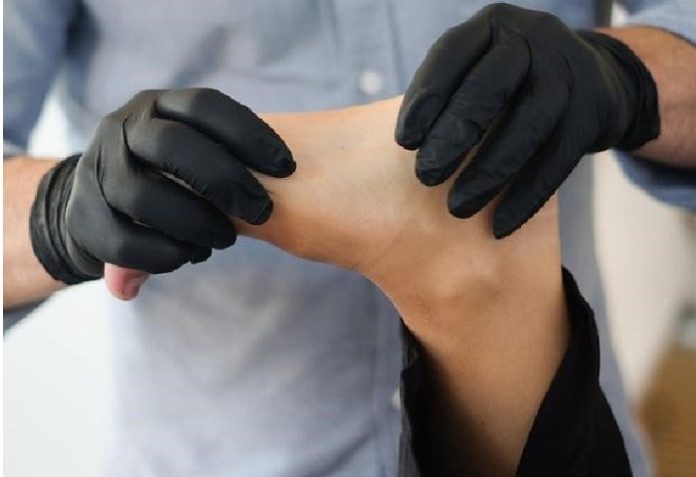
Some medical conditions like diabetes require an exercise routine to help control blood sugar. In some cases, people with diabetes experience problems with loss of sensation in their legs and feet. A physiotherapy regimen will help to educate patients on the best foot care. This helps to hinder any future problems that the patient may have.

Physiotherapy has plenty of benefits, and even though we couldn’t cover all of them, we hope the ones we covered have shed more light on this therapy. Physiotherapy works, but you need to seek the services of an experienced therapist. Sometimes many people go through an ineffective program that fails to solve the patient’s issues. Finally, remember to consult your doctor on the best physiotherapy routine that works for you.

The Most Powerful Supplements to Boost Brain Health

The Most Powerful Supplements to Boost Brain Health

Working for hours on end surely takes its toll. You may wake up refreshed after a full night of sleep but feel completely burned out when it is time to tackle your everyday tasks. If you have been struggling to finish tasks on time or simply increase your attention span, you might be wondering if there is a magical way of getting a quick mental boost.

Luckily, there are a plethora of supplements that you can try to improve your mental performance. However, it may be hard to figure out which supplements are effective and which ones are a total waste of money. Donโ€™t worry, though, because weโ€™ve got you covered! Read on to know more about some of the best supplements for enhancing brain health.

Fish Oil

You have probably heard about the benefits of fish oil before, so it only makes sense that it comes at the top of the list of the most brain-enhancing supplements. Fish oil is heralded for being a key ingredient to brain health, and for good reason. It contains great amounts of Omega 3 fatty acids, which are known for their memory-boosting properties. In addition to improving your memory, fish oil supplements fend off depression and anxiety. Some people prefer to drink pure fish oil and others take it in the form of pills. We wouldnโ€™t recommend the first method, though, because the taste is simply atrocious!

Vitamin B12

Even though vitamin B12 is not as popular as fish oil, it is an amazing supplement for increasing mental capabilities. When taken in a 5000-mcg dose, vitamin B12 helps one feel more energetic and alert. However, according to research, vitamin b12 5000 benefits for your brain do not stop at that; they can reduce the risks of heart disease and heart failure as well. Because it is hard to get your recommended daily dose of B12 from food, opting for supplements can help you avoid vitamin B12 deficiency, feel more active, and focus for longer periods.

Caffeine

Letโ€™s be real; there are not many things that are perfect as having a hot cup of joe first thing in the morning. Yet, youโ€™d be surprised how many people do not actually like the taste of coffee! If you are one of them, there is another way to get your daily dose of caffeine other than gulping down bitter coffee. Caffeine supplements have shown great promise in helping people stay alert and focused for longer. So, popping a caffeine pill just 15 minutes before you start working can do wonders. Be careful, though, of exceeding the recommended daily limit. The FDA asserts that 400 milligrams per day is enough for you to feel the benefits of caffeine without suffering from its side effects: jitters, nausea, and elevated HR. If you have a heart condition, it is better to consult your GP before taking caffeine pills since they might aggravate your symptoms.

Vitamin E

For the longest time, vitamin E was only known for its nail, skin, and hair-enhancing properties, and until recently, people used it for purely cosmetic reasons. This all has changed, however, as more studies on its brain-enhancing properties emerged. Quite notably, vitamin E has been found to decrease the rate of mental deterioration in Alzheimerโ€™s patients. This has led doctors to conduct more research to find out whether it helps prevent dementia. While the results remain inconclusive, you may find great benefit in taking vitamin E supplements.

Resveratrol

If you have never heard of resveratrol, you are certainly missing out on a lot of health benefits! In a nutshell, resveratrol is an antioxidant that fights free radicals and reduces the risk of developing cancer. Recently, it has been discovered that it also aids in maintaining the hippocampus, the part of your brain responsible for memory.

By taking resveratrol supplements, you will experience a boost in memory and avoid hippocampus deterioration when you are older. Only 200mg a day is enough to feel the memory-enhancing benefits of resveratrol. It is often found in the skin of red grapes, but you can find it in the form of pills in most online stores, as it can be bought without a prescription.

As you grow older, you may find that your mental faculties are not as sharp as they used to be. Even if you are still considerably young, you might be already suffering from a short attention span and an inability to concentrate properly. To improve brain health, you can supplement your diet with vitamin E, fish oil, vitamin B12, or resveratrol. For a quick boost in productivity, consider taking caffeine pills. As is the case with any health-related matter, it is crucial to talk to your doctor before taking any supplement, just to be on the safe side.

What You Should Know About Development Disabilities in Children

What You Should Know About Development Disabilities in Children

There are many different types of developmental disabilities in children and they are quite frequently misunderstood. The CDC states that at least one in six children in the United States will have or does have developmental disabilities or other developmental delays. Because of their frequency, it is time that we begin to research and understand them. A few of the most common developmental disabilities are:

  • Autism spectrum disorder (ASD);
  • Attention-deficit (hyperactivity) disorder;
  • Cerebral palsy;
  • Vision loss and hearing loss.

However, even though one in six children have or will have a developmental disability, only one in twelve is diagnosed before beginning their schooling. Because of the huge lack of misunderstanding and the lack of diagnosis, it is important that we begin to understand these disabilities, which is exactly what this page will hope to tell you how to do.

Here is what you should know about developmental disabilities in children.

Causes and Risk Factors

Developmental disabilities can begin at any point during a childโ€™s developmental period, and in most cases, these disabilities will last for the entirety of their lifetime. Developmental disabilities often occur before a child is born, but can happen afterwards, following injury, illness, or trauma. Developmental disabilities are generally said to be caused by:

  • Genetics;
  • Infections in the mother during pregnancy, or that the child may experience during their early life;
  • Exposure to high environmental toxins;
  • Poor parental behaviour, such as alcoholism or drug use during pregnancy. Foetal alcohol syndrome is well known among doctors and scientists;
  • Birth complications.

Developmental Milestone

When children grow up, each achievement is a milestone; their first steps, their first woods, the first time they laugh. However, if you notice that your child is not having these milestones, or if they are incredibly delayed, it may be time to consult a doctor to test for any developmental disabilities. It is well known that with autism specifically, communication can be very difficult, but according to the autism specialists of www.autismparentingmagazine.com, there are a number of therapies available to autistic children, some that prove to be very successful. If your child is not talking, walking, or expressing emotion, there is a strong likelihood that your child may suffer from a developmental disability.

Monitoring and Screening

As a child grows up, their development will be tracked both by the childโ€™s parents and by a paediatrician. With every visit that passes, the childโ€™s doctor will test, examine, and look for any developmental delays or problems that the child may be experiencing that the parents have not picked up on. The doctor will discuss any of these concerns with the parents so that they can establish a proper treatment plan and move forward according to the situation.

If problems are noticed by the doctor, an additional process, developmental screening, will take place. Developmental screening is a test the child undergoes to establish whether or not the child exhibits basic learning skills, or if there are any delays developmentally. Identifying developmental disabilities as early as possible reduces the stress, cost, and need for medical intervention over your childโ€™s lifetime.

Living with Disabilities

Living with a child, teenager, or adult with a developmental disability can definitely be challenging. The important part is to stay active and engage with them. Having disabilities is not a death sentence and does not mean that your child cannot enjoy the same things as you; it also does not mean that your child is not healthy and cannot benefit from outdoor exercise. In order to stay healthy, one must eat healthily and exercise. Your child is not exempt from this. However, it can be more challenging with children who have developmental disabilities because they are more likely to suffer from asthma, eczema, skin allergies, migraines, and gastrointestinal problems, which can mean they will need a careful diet, to avoid allergens, and to see a doctor frequently, even into adulthood.

Schooling

It is often teachers and school administrators who notice developmental disabilities in children first. If your baby or toddler begins to fall behind, is not reaching their milestones, or loses developed skills, they will contact you and explain that they think your child could be suffering from a developmental disability. They may have their own in-school support specialist who will be assigned to your child to oversee their formative education and ensure that they develop in the school and classroom as well as at home. You may also be given the option to have your child attend a school for children with developmental disabilities.

With this page, you should now know about developmental disabilities in children, including what causes developmental disabilities, and how to live with them. Many children who suffer these disabilities go on to lead long, healthy, and happy lives, so you neednโ€™t be overly worried.

Philips Lumify handheld ultrasound has become instrumental for doctors fighting COVID-19

Philips Lumify handheld ultrasound has become instrumental  for doctors fighting COVID-19

Over the past nine months, Philips Lumify point-of-care ultrasound has become an indispensable tool in the global response to COVID-19, according to doctors on the front lines. The award-winning tablet-based ultrasound solution has been helping clinicians in the Emergency Department (ED) and the Intensive Care Unit (ICU) make faster, more refined care decisions during the pandemic, while also helping manage the risk of spreading COVID-19 within their departments.

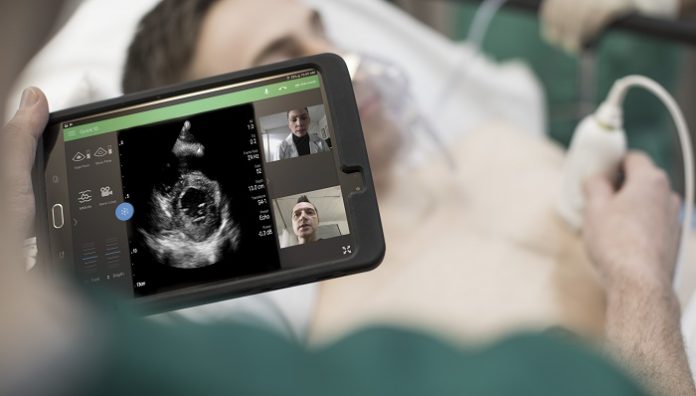
In the early days of the pandemic, Philips worked closely with healthcare workers to understand their challenges and meet their needs, ultimately ramping up production of Lumify, a hand-held point-of-care ultrasound solution with integrated Reacts tele-ultrasound capabilities for remote collaboration and training. The Reacts collaborative platform is integrated with the Philipsโ€™ Lumify and enables users to share the live ultrasound stream from a Lumify device with a remote colleague on a mobile device, tablet or computer, who can provide real time feedback without the need for physical proximity during scans.

The strategy was that Lumify would again revolutionize healthcare at the point-of-care just as it did in 2015 when it became the worldโ€™s first app-based ultrasound. As a tablet-based ultrasound, Lumify brings flexible ultrasound capabilities with exceptional imaging to every healthcare provider and patient, in every situation, everywhere in the world. Now, amid the COVID-19 pandemic, Lumify is proving to be an integral part of the process in acute care settings, especially where patients need to be isolated and equipment brought to their bedside. Lumify is the most portable Philips ultrasound system and can perform continuous scanning for up to 5 hours with a single charge or scan all day long with swappable power modules. The solution is also designed to be used while wearing PPE and rapidly cleaned between patients.

Both tablet-based and point-of-care ultrasound have been instrumental in my clinical practice during the COVID-19 pandemic. Lumify gives me the confidence to best support my patients and help keep my staff safe,โ€ said Max Bursey, D.O., of Augusta University, who uses Lumify point-of-care ultrasound on a daily basis in the ER and ICU. โ€œPhilips point-of-care ultrasound provides clinical information at the bedside to help narrow or expand differential diagnosis in real time. It enables faster and more refined clinical decision-making, and has become an extension of my physical exam in almost every patient I see. Getting a fast diagnosis enables treatment to begin faster, which is critical in treating COVID-19.โ€

With tablet-based ultrasound available at the bedside, healthcare systems are also better able to reduce potential exposure to the virus for their staff and other patients. Intubation, for example, is a procedure that can create aerosols that spread COVID-19. Lumify can be used by clinicians as a precious adjunct to confirm endotracheal tube placement, which provides confidence that the procedure can proceed safely.

โ€œWith our COVID patients in the ICU, we have extensively used our Lumify systems for assessment of the heart and lung function as well as for procedural guidance,โ€ said Dr. Yanick Beaulieu, head of clinical science for Philips Ultrasound and a cardiologist-intensivist at Montrealโ€™s Sacre-Coeur Hospital. โ€œWith the integrated Reacts tele-ultrasound capabilities, we were able to significantly reduce the use of PPE, continue provide clinical training and supervision to our residents and maintain very efficient, high-quality care to those very sick patients.โ€

By enabling remote communication, Lumify with Reacts reduces the need for physical interaction. This is essential during the pandemic to help minimize the risk of virus transmission among medical teams, making Lumify a critical diagnostic solution in the management of COVID-19-related lung and cardiac complications. In a recent study where Lumify was used for point-of-care focused cardiac exams on COVID-19 patients, scan time was reduced by 79%, while decontamination time was reduced by 85%. [1]

In addition to helping clinicians diagnose and treat COVID-19 patients and reduce exposure, the solution has also helped doctors understand links between cardiac abnormalities and a poor COVID-19 prognosis [2]. Lumify with Reacts is also being used to support teaching hospitals by having students learn via tele-ultrasound in the hospital hallway rather than having multiple people in a patientโ€™s room, limiting exposure.

Philips virtual platform at RSNA 2020
Starting Nov. 29 through Dec. 5, visitors to the Philips virtual RSNA platform can participate in live, on-demand sessions and explore a unique 3D environment that allows them to customize hands-on demos featuring the latest breakthrough innovations from Philips across diagnostic and interventional imaging, including Philips Lumify. Visit Philips Live at RSNA 2020 for more information on Philipsโ€™ integrated workflow solutions within the Radiology Workflow Suite that connect data, technology and people to redefine radiology workflow efficiencies.

Philips triple duty of care

The COVID-19 pandemic continues to highlight how interconnected the worldโ€™s social, economic and environmental challenges are. Philips remains fully focused on delivering against its triple duty of care: meeting critical customer needs, safeguarding the health and safety of its employees, and ensuring business continuity. As a purpose-driven health technology company, Philips is applying its innovation strength to improve the health and well-being of people. The company is deeply committed to doing business responsibly and sustainably, recently setting out a range of challenging new environmental, social and governance targets.

Philips boosts digital pathology with enhanced informatics to advance precision diagnosis in oncology

Philips boosts digital pathology with enhanced informatics to advance precision diagnosis in oncology

Royal Philips, a global leader in health technology,ย  announced it will introduce its latest advancements in digital pathology at the European Congress of Pathology 2020 virtual event, Dec. 6-8. Building on its strong portfolio to support oncology clinical decision-making, Philips brings together the power of imaging, pathology, genomics and longitudinal data with insights from artificial intelligence, to empower clinicians to deliver clear care pathways with predictable outcomes for every patient.

Pathology is vital to healthcare delivery, with 70% of decisions affecting a personโ€™s life involving a laboratory or pathology test [1]. However, with current resource shortages, the growing volume of complex requests, and workflow inefficiencies across systems and departments, pathology labs are facing major pressures on multiple fronts.

Rather than viewing oncology as many single moments of care, Philips envisions a continuous care pathway empowered by integrated solutions for oncology and pathology that help transform and enhance multi-disciplinary workflows, including the oncology tumor board process. Critical patient data is made visible for both oncologists and pathologists, which allows them to collaborate more efficiently, to drive the right care in the right sequence at the right time.

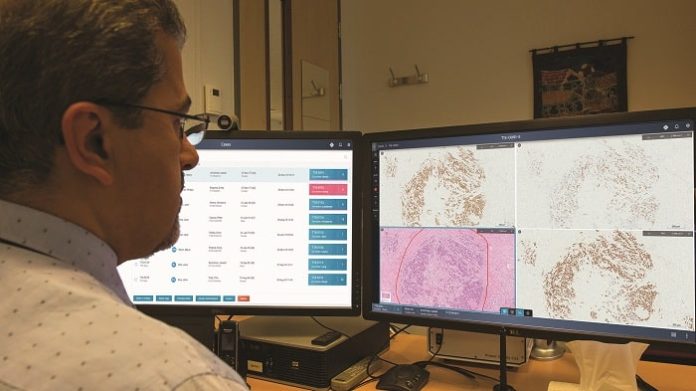
By taking a systems view across the imaging enterprise, Philips leverages the power of smart diagnostic technologies and advanced informatics to remove the obstacles standing in the way of optimized workflows. The newly released Philips IntelliSite Pathology Solution features a leading-edge user experience (UX), enhancing ease of use while helping streamline the imaging workflow in an automated digital solution. With this latest iteration, Philips connects healthcare systems to scale digital operations and improve efficiency in high volume scanning, stimulate collaboration and enable precision diagnosis.

Philips commitment to an open pathology platform
Philips IntelliSite Pathology Solution offers an open, scalable, and interoperable platform that supports flexibility in deployments of image analysis software tools, strengthening Philips commitment to the Open Pathology platform. Other software tools allow developers and researchers to work with data natively in the iSyntax format for core research and algorithm development, enabling collaboration for education and the creation of third-party applications.

โ€œA precise diagnosis informs the patientโ€™s care pathway progress, from screening and diagnosis to treatment, monitoring, assessment, and the transition toward home care,โ€ said Kees Wesdorp, Chief Business Leader Precision Diagnosis at Philips. โ€Philips integrated solutions for oncology, including this latest enhancement in digital pathology, help empower the cancer care team to reach clinical treatment decisions based on richer dashboards, clinical images, reports, and structured patient data. The seamless integration of information into the oncology workflow will help improve the clinician experience and ultimately, patient outcomes.โ€
Philips participation in the Virtual ECP 2020 Congress

Philips will host a virtual presence during the 32nd European Society of Pathology Congress (ECP 2020) from December 6-8. ECP attendees will experience digital pathology imaging through demonstrations and webinars. Dr. Juan Retamero, a digital pathology professional, will share his experiences and vision on how digital pathology brings great potential to enhance patient care.

About Royal Philips

Royal Philips is a leading health technology company focused on improving people’s health and well-being, and enabling better outcomes across the health continuum โ€“ from healthy living and prevention, to diagnosis, treatment and home care. Philips leverages advanced technology and deep clinical and consumer insights to deliver integrated solutions. Headquartered in the Netherlands, the company is a leader in diagnostic imaging, image-guided therapy, patient monitoring and health informatics, as well as in consumer health and home care. Philips generated 2019 sales of EUR 19.5 billion and employs approximately 81,000 employees with sales and services in more than 100 countries.

CT in a Box Helps Rapidly Boost Imaging Capability at COVID Surge Hospitals

CT in a Box Helps Rapidly Boost Imaging Capability at COVID Surge Hospitals

As hospitals see an influx of COVID-19 (SARS-CoV-2) patients, many are looking for ways to rapidly expand their radiology imaging capabilities. Large computed tomography (CT) system vendors offer semi-truck trailer configurations, and some began offering CT systems packaged neatly inside cargo shipping containers so they can be installed as semi-permanent buildings.

When the demand for additional imaging capability was needed during the spring 2020 surge of novel coronavirus in Paris, France, GE Healthcare created a prefabricated cabin to house a CT system outside the entrance of the giant Henri-Mondor Hospital in Crรฉteil, a commune in the southeastern suburbs of Paris. Nestled inside the specially designed 36-square-meter module has been dubbed โ€œCT in a boxโ€ by the GE Healthcare engineers who invented it.

The extra machine helped Hospital Henri-Mondor in assessing disease progression and complications in COVID-19 patients while also smoothing patient flow across the facility. That is because the module is entirely dedicated to COVID-19 patients, explained Franรงois Meignan, a project manager at GE Healthcare who designed the project. โ€œItโ€™s not just about patient numbers โ€” it creates a specific flow for them.โ€

GE first deployed the technology in China and the United Arab Emirates. โ€œAt the beginning of the outbreak, Chinaโ€™s clinicians in remote or pop-up hospitals quickly called for the precise images CT scans provide to help them spot complications earlier,โ€ said Kieran Murphy, GE Healthcare CEO, wrote in an opinion piece published in Barronโ€™s. โ€œTo address this need, our engineers quickly developed CT-in-a-box, an easy to install modular machine that captures the same robust imagery of traditionally installed CT scanners. Learning from our experience there, GE Healthcare teams in France developed a similar solution to address the urgent need for additional imaging capacity โ€” and specifically adapted it to the needs of clinicians caring for COVID-19 patients.โ€

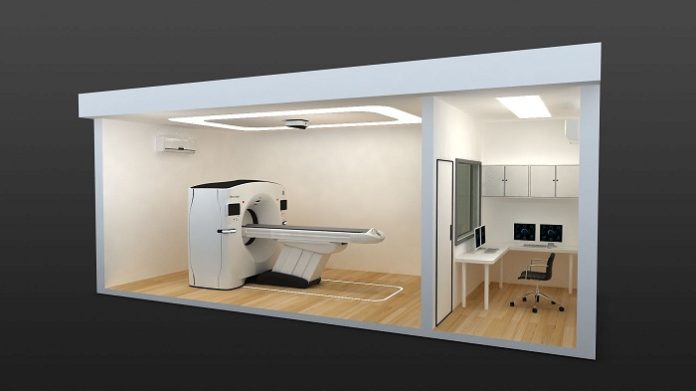
A cut-away view of the two cabins that compose the “CT-in-a-box” solution from GE to rapidly deploy CT scanners at hospitals amid a COVID surge. The CT room is completely separate from the control room to aid in sanitation and keeping technologists away from COVID patients.The French hospital already had plans to beef up its intensive care unit (ICU) bed capacity several months before the coronavirus pandemic, but the rapid spread of the infection accelerated its plans. In late March, hospital authorities decided to nearly double the facilityโ€™s ICU capacity from 90 to 175 beds. โ€œOur three CTs were already fully busy, [so we thought] how can we create a fourth one?โ€ said Professor Alain Luciani, radiologist and medical head of Academic and Medical Department FIxIT. โ€œWe turned to GE Healthcare and said โ€˜OK, how can you help us?โ€™โ€

Brainstorming began immediately. โ€œThe opening of the new building was already planned for April 9, so we had to find a solution โ€” concept and build โ€” in two weeks,โ€ explains Meignan, a project manager who works at GE Healthcare in the north of France. โ€œThey [the hospital] wanted an easy-to-install solution, fast in concept, and fast in building, so we worked on drawings to find a solution,โ€ said Meignan.

Designing a CT Room in a Box

The team soon discovered that designing this CT in a box required some out-of-the-box thinking. The sticking point was not fitting the CT machine itself in a trailer, but replicating the safe, controlled and easily accessible environment of a hospital CT room.

The small dose of radiation emitted by a CT scan may be low-risk to the patient, but imaging technicians repeat the procedure several times per day. That is why CTs always have lead-shielded walls and thick windows between the exam room and control room, where technicians and clinicians can observe the patient and perform the imaging process. Itโ€™s also why the exam room and control room each have their own doors.

CT scan rooms also use sophisticated heating, ventilation and air conditioning (HVAC) systems to maintain a constant temperature of around 72 degrees Fahrenheit. The exam room is prone to increasing temperatures because the gantryโ€™s electronics expel plenty of heat.

Inspired by the CT-in-a-box solutions their GE Healthcare colleagues had developed for Chinaโ€™s remote and pop-up hospitals, Meignan and his team designed their own modules, drawing materials from local supply chains. Of course, they knew theyโ€™d need much more than a big trailer and a power supply. โ€œWe had to find a place outside to create an exam room with specificities like electrical supply, HVAC and shielding,โ€ Meignan said.

They settled on a design consisting of two small, prefabricated cabins joined into a single, square module with a shielded partition wall between the exam and control rooms. While there would be no windows, technicians in the control room would monitor real-time webcam images of the exam room via TV screens. The module would have an HVAC unit to maintain its temperature, and there would a door for each room, separated at opposite ends.

A cut-away view of the two cabins that compose the “CT-in-a-box” solution from GE Healthcare to rapidly deploy CT scanners at hospitals amid a COVID surge. The CT room is completely separate from the control room to aid in sanitation and keeping technologists away from COVID patients.The next step was to determine whether all the materials were available in northern France: The whole country had begun a strict lockdown on March 17. But GE Healthcare partner Ramery Energies and its suppliers came through. โ€œThey worked day and night so we could finish the module as soon as possible,โ€ Meignan said.

Post-assembly, GE Healthcareโ€™s team ensured the box was battle-ready before it departed for Paris. โ€œHVAC was checked, the shielding was finished, and the power distribution was already installed,โ€ said Meignan. A truck then hauled the moduleโ€™s two pieces to the hospital, where a small crane lowered them into place. A forklift then hoisted the two main parts of the CT machine โ€” the hulking gantry and the long, flat table โ€” into the module. Finally, workers laid a metal ramp up to the cabin, allowing patients to be wheeled out the hospital doors and directly up alongside the CT scanner.

The whole setup looks similar to mobile blood banks that erected in parking garages or the medical cabins at rock festivals.

โ€œOnsite, you just put together the two boxes, plug in the cable and thatโ€™s it,โ€ Meignan said. After a couple days of machine calibration, Crรฉteilโ€™s CT in a box was ready to scan its first patients.

Including the exam table, the GE Healthcare-manufactured machine, which is part of the Optima CT family, tips the scale at 2.5 tons. โ€œItโ€™s a big and heavy machine, so we needed reinforcement inside the module,โ€ Meignan said. But it is worth its weight in gold: The clinical consensus is that CT scans are an important imaging modality for assessing disease progression and complications in COVID-19 patients. โ€œPatients are very fragile in terms of their respiratory condition, and they face different complications โ€” and CT is there to detect those complications,โ€ explains Luciani, the Albert Chenevier-Henri-Mondor doctor.

While the scan itself be completed in a matter of minutes โ€” or even seconds โ€” technicians can accommodate around one patient per hour, due to the time needed to prep the patient and fully sanitize the exam room. But, as Meignan explains, the new module is not just about boosting the n
umber of scans, but smoothing patient flow across the entire hospital. That is because the module will relieve pressure on the facilityโ€™s three existing CT machines and because it is located near the hospitalโ€™s ICUs, where it treats its COVID-19 patients.

It might just be the beginning for the CT-in-a-box concept in Europe. Jerome Duhamel, the healthcare project management leader for GE Healthcare in Europe, said 18 such modules were being sent to the U.K.โ€™s National Health Service (NHS) just a few weeks after the Paris install.

โ€œWe were ready to go, 10 days after [reaching out to GE Healthcare]โ€ said Luciani. โ€œIt was an adventure for us, for GE Healthcare and for the workers who worked night and day to build those containers.โ€

The CT-in-a-box solution is being highlighted this week by GE at the 2020 Radiological Society of North America (RSNA) virtual meeting.


University of Iowa Health Care Contracts with Caresyntax to Support Operating Room Safety, Quality, and Standardized Team-Based Assessments

University of Iowa Health Care Contracts with Caresyntax to Support Operating Room Safety, Quality, and Standardized Team-Based Assessments

Caresyntax, a pioneer in surgical automation, analytics, and AI software and technologies, announced an agreement with the University of Iowa Health Care to help improve the safety and efficiency of surgeries performed at the university medical center.

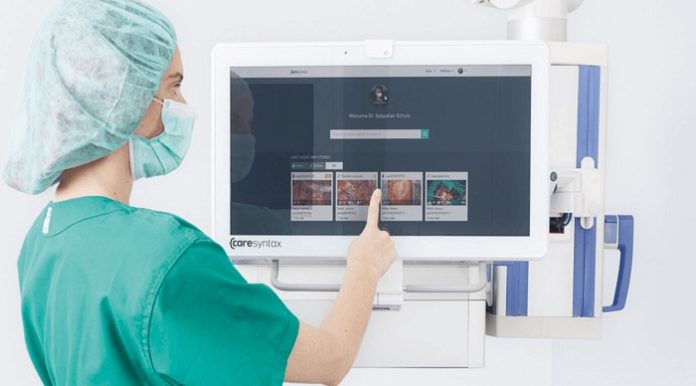
As part of the project, UI Health Care will use near real-time data to improve patient safety and quality across the surgical continuum. Caresyntax will install hardware to collect surgical and procedural and team-based video and audio data using CX-ADVANCE, a component of the company’s digital surgery platform that enables hospitals to manage and review surgical data for quality improvement and risk reduction. Vendor-neutral and web-based, CX-ADVANCE will guide team-based and technical refinements to continuously improve patient outcomes beginning in January 2021.

“The COVID-19 pandemic has exacerbated the clinical, regulatory, and financial demands hospitals and health systems must meet,” said Dennis Kogan, caresyntax CEO and co-founder. “Our work with this renowned institution will help it adapt the outstanding technical skills of its faculty and staff to respond to these needs by improving technical โ€” and non-technical skills โ€” to create a more predictable, consistent, and reliable OR.”

A major focus of this initiative at UI Health Care is to enhance cooperation among surgical teams. The data collected and analyzed by caresyntax will enable surgical teams to evaluate the relationship between teamwork scores and surgical complications or adverse events.

“A big challenge hospitals currently face is making use of somewhat scattered OR data to meaningfully drive how we operate,” said John W. Cromwell, M.D., F.A.C.S, director of the division of gastrointestinal surgery, minimally-invasive and bariatric surgery at the University of Iowa Carver College of Medicine. “Innovative tools, like those developed by caresyntax, help us determine where to best allocate resources to improve outcomes in a systematic way that meets the ever-increasing challenges of clinical practice.”

About caresyntax

caresyntax is working to make mission-critical procedural-based specialties such as surgery, interventional radiology, and obstetrics smarter and safer. The company’s proprietary solutions leverage IoT, analytics and AI technologies to automate clinical and operational decision support for surgical teams and support all outcome contributors in the delivery and management of risk-bearing contracts. By integrating data from medical devices, electronic health records, and other sources inside the OR into a unified data platform, caresyntax helps caregivers better identify and manage risk, increase workflow efficiency, reduce surgical variability and improve operational or clinical outcomes at the point of care. Today, caresyntax technologies are used in more than 8,000 operating rooms worldwide and support surgical teams in over 13 million procedures per year.

About University of Iowa Health Care

University of Iowa Health Care is the state’s only comprehensive academic medical center, dedicated to providing world-class health care and health-related outreach services to all Iowans. Based in Iowa City, UI Health Care includes University of Iowa Hospitals & Clinics, University of Iowa Roy J. and Lucille A. Carver College of Medicine, and University of Iowa Physicians, the state’s most comprehensive multi-specialty physician group practice.

Translate ยป