











Close
Digital Health & Ai Innovation summit 2026
LiGHT26

AI in Healthcare: Legal and Ethical Considerations in this New Frontier

legal and ethical considerations

The rapid integration of artificial intelligence into healthcare systems represents one of the most significant technological transformations in modern medicine. As AI applications expand from diagnostic imaging to treatment recommendations and patient monitoring, healthcare organizations find themselves navigating an increasingly complex landscape of legal obligations and ethical responsibilities. The global market for AI in healthcare, projected to reach $19 billion by 2027, underscores the urgent need to establish robust frameworks that balance innovation with patient protection. This transformation demands careful consideration of liability structures, regulatory compliance requirements, and ethical principles that will shape the future of medical practice while ensuring that technological advancement does not compromise fundamental human rights or patient welfare.ย 

Regulatory Landscapes and Legal Frameworks Across Jurisdictionsย 

International Approaches to AI Healthcare Regulationย 

The regulatory approach to artificial intelligence in healthcare varies significantly across jurisdictions, reflecting different cultural values, legal traditions, and technological priorities. The European Union has established itself as a leader in comprehensive AI regulation through the Artificial Intelligence Act, which came into effect in 2024. This regulation categorizes AI systems based on risk levels and mandates strict compliance requirements for high-risk applications, particularly those used in healthcare settings. Under this framework, AI systems that diagnose diseases or recommend treatments must undergo rigorous pre-market assessments and continuous post-market monitoring.ย 

In contrast, the United States has adopted a more fragmented approach, relying primarily on existing regulatory frameworks adapted for AI applications. The Food and Drug Administration has approved 882 AI-enabled medical devices as of March 2024, with 96.7% receiving clearance through the 510(k) pathway. This pathway requires demonstration of substantial equivalence to existing approved devices, creating a regulatory environment that favors incremental improvements over revolutionary innovations. The FDA’s approach emphasizes transparency requirements and human oversight while allowing for expedited approval processes that encourage innovation.ย 

The United Kingdom, Australia, and Canada have chosen to apply technology-neutral laws to AI applications rather than creating AI-specific regulations. This approach provides flexibility but can create uncertainty for developers and healthcare providers seeking clear guidance on compliance requirements. Japan and South Korea are developing risk-based frameworks that attempt to balance innovation promotion with safety assurance, while China has implemented state-controlled approval processes that reflect its unique regulatory philosophy.ย 

AI Healthcare Legal Frameworksย 

Jurisdictionย  Framework Typeย  Key Focusย  Approval Processย  Implementation Statusย 
United Statesย  FDA Guidelinesย  Medical Device Safetyย  510(k) Clearanceย  Activeย 
United Statesย  AI Bill of Rightsย  Consumer Protectionย  Not Applicableย  Blueprint Stageย 
European Unionย  AI Actย  High-Risk AI Systemsย  Conformity Assessmentย  Active (2024)ย 
European Unionย  GDPRย  Data Protectionย  DPO Requiredย  Active (2018)ย 
United Kingdomย  Technology-Neutral Lawsย  Existing Regulationsย  Case-by-Caseย  Activeย 
Australiaย  Technology-Neutral Lawsย  Existing Regulationsย  Case-by-Caseย  Activeย 
Japanย  AI-Specific Lawsย  Innovation & Safetyย  Risk-Basedย  In Developmentย 
South Koreaย  AI-Specific Lawsย  Innovation & Safetyย  Risk-Basedย  In Developmentย 
Chinaย  AI-Specific Lawsย  State Controlย  State Approvalย  Activeย 
Canadaย  Technology-Neutral Lawsย  Privacy Protectionย  Health Canada Reviewย  Activeย 

Compliance Burdens and Harmonization Challengesย 

These diverging regulatory approaches create significant compliance burdens for companies developing and deploying AI healthcare solutions across multiple markets. Organizations must navigate different approval processes, documentation requirements, and ongoing monitoring obligations depending on their target markets. The lack of international harmonization means that a device approved in one jurisdiction may require entirely different validation studies and documentation for approval elsewhere.ย 

Efforts toward international collaboration are emerging through organizations like the World Health Organization, which has published regulatory considerations for AI in health. These guidelines emphasize the need for documentation and transparency, risk management approaches, intended use validation, and data quality assurance. However, translating these high-level principles into consistent regulatory frameworks across different legal systems remains a significant challenge.ย 

Liability Attribution and Legal Responsibilityย 

Medical Malpractice in the AI Eraย 

The integration of AI into clinical decision-making fundamentally alters traditional concepts of medical malpractice and professional liability. In conventional medical practice, liability typically centers on the physician’s duty of care, the standard of care expected within the medical community, and the causal relationship between actions and patient harm. AI introduces additional complexity by creating scenarios where multiple parties may share responsibility for patient outcomes, including the healthcare provider, AI developer, healthcare institution, and potentially the data providers whose information trained the AI system.ย 

Recent legal analysis reveals that liability claims involving AI generally fall into three categories: harm caused by defects in software used to manage care or resources, physicians’ reliance on erroneous software recommendations, and malfunctioning of software embedded in medical devices. The case of Lowe v. Cerner exemplifies the first category, where a drug-management software product’s defective user interface led physicians to mistakenly believe they had scheduled medication that was never administered. Such cases highlight how user interface design decisions by AI developers can directly impact patient safety and create liability exposure.ย 

The second category involves more complex questions about professional judgment and the standard of care. When physicians rely on AI recommendations that prove incorrect, courts must determine whether the physician’s reliance was reasonable given the AI system’s known capabilities and limitations. This analysis requires consideration of factors such as the AI system’s validation status, the availability of alternative diagnostic methods, and the physician’s independent clinical assessment.ย 

Shared Liability Models and Risk Distributionย 

The emergence of shared liability models reflects the reality that AI-enabled healthcare decisions involve multiple stakeholders with varying degrees of control and expertise. Healthcare providers maintain ultimate responsibility for patient care decisions but may lack the technical expertise to fully evaluate AI system reliability. AI developers possess technical knowledge about system capabilities and limitations but may have limited understanding of clinical contexts and patient-specific factors.ย 

This distribution of expertise and control creates challenges for traditional tort law concepts that typically assume a single responsible party. Some jurisdictions are exploring presumptive liability frameworks where the burden of proof shifts to defendants under certain circumstances. The European Union’s proposed AI Liability Directive introduces rebuttable presumptions regarding both causation and fault when high-risk AI systems are involved in patient harm. These presumptions are triggered when there is non-compliance with AI Act obligations and when the defendant’s negligent conduct reasonably influenced the AI output that caused damage.ย 

Insurance and Risk Management Implicationsย 

The complexity of AI liability has significant implications for professional liability insurance and institutional risk management strategies. Traditional medical malpractice insurance policies may not adequately cover risks associated with AI system failures or may require specific endorsements for AI-related claims. Healthcare organizations must carefully negotiate licensing agreements with AI developers to ensure appropriate risk allocation and indemnification provisions.ย 

Risk assessment frameworks are emerging to help healthcare organizations evaluate the liability exposure associated with different AI tools. These frameworks consider factors such as the likelihood and nature of errors, the probability that errors will be detected before causing harm, the potential severity of consequences, and the likelihood that injuries would result in compensable tort claims. Organizations using these frameworks can make more informed decisions about AI adoption and implement appropriate safeguards to minimize liability exposure.

AI Healthcare Liability Scenariosย 

Scenario Typeย  Primary Liabilityย  Secondary Liabilityย  Legal Basisย  Typical Damagesย  Prevention Strategyย 
Diagnostic Errorย  Healthcare Providerย  AI Developerย  Medical Malpracticeย  Patient Harmย  Validation Studiesย 
Treatment Recommendationย  Shared Liabilityย  AI Developerย  Negligenceย  Inappropriate Treatmentย  Clinical Guidelinesย 
Data Breachย  Data Controllerย  Healthcare Institutionย  Data Protection Lawsย  Privacy Violationย  Security Measuresย 
Algorithmic Biasย  AI Developerย  Healthcare Providerย  Discrimination Lawsย  Discriminatory Outcomesย  Bias Testingย 
System Malfunctionย  Device Manufacturerย  Healthcare Providerย  Product Liabilityย  Patient Injuryย  Quality Assuranceย 
Inadequate Trainingย  Healthcare Institutionย  AI Developerย  Institutional Negligenceย  Substandard Careย  Staff Educationย 
Consent Issuesย  Healthcare Providerย  AI Developerย  Informed Consentย  Autonomy Violationย  Clear Disclosureย 
Off-Label Useย  Healthcare Providerย  AI Developerย  Off-Label Liabilityย  Unexpected Outcomesย  Usage Guidelinesย 

Ethical Principles and Moral Considerationsย 

Foundational Bioethical Principles in AI Contextย 

The application of traditional bioethical principles to AI-enabled healthcare reveals both continuities with established medical ethics and novel challenges requiring new frameworks. The principle of beneficence, requiring that medical interventions promote patient welfare, takes on new dimensions when AI systems demonstrate superior diagnostic accuracy or treatment optimization capabilities. However, realizing these benefits requires careful attention to implementation processes, validation studies, and ongoing performance monitoring to ensure that theoretical advantages translate into improved patient outcomes.ย 

Non-maleficence, the imperative to “do no harm,” becomes particularly complex in AI contexts where harm can result from system errors, biased algorithms, or over-reliance on automated recommendations. The potential for AI systems to perpetuate or amplify existing healthcare disparities creates new categories of potential harm that extend beyond individual patient encounters to broader population health effects. Healthcare organizations must therefore consider both direct patient safety risks and systemic equity implications when implementing AI tools.ย 

The principle of patient autonomy requires that individuals have meaningful control over medical decisions affecting them. AI systems can both enhance and undermine autonomy depending on how they are implemented. When AI provides more accurate information or identifies treatment options that might otherwise be overlooked, it can enhance patients’ ability to make informed choices. However, when AI recommendations are presented without adequate explanation or when patients lack understanding of how AI influences their care, autonomy may be compromised.

AI Healthcare Ethical Considerationsย 

Ethical Principleย  Key Challengeย  Current Risk Levelย  Mitigation Strategyย  Stakeholder Responsibilityย 
Beneficenceย  Ensuring AI improves patient outcomesย  Mediumย  Evidence-based validationย  Developers & Cliniciansย 
Non-maleficenceย  Preventing AI-caused harmย  Highย  Robust testing protocolsย  All Stakeholdersย 
Autonomyย  Maintaining patient choiceย  Highย  Informed consent processesย  Healthcare Providersย 
Justiceย  Equal access to AI benefitsย  Highย  Bias detection & correctionย  Developers & Regulatorsย 
Transparencyย  Black box algorithmsย  Highย  Explainable AI developmentย  Developersย 
Accountabilityย  Liability attributionย  Highย  Clear liability frameworksย  Legal Frameworkย 
Privacyย  Data protectionย  Highย  Privacy-by-design approachย  Developers & Institutionsย 
Fairnessย  Algorithmic biasย  Highย  Diverse training dataย  Developers & Data Scientistsย 
Human Dignityย  Human-AI relationshipย  Mediumย  Human oversight requirementsย  Healthcare Providersย 
Trustย  Reliability concernsย  Mediumย  Transparent communicationย  All Stakeholdersย 

Algorithmic Fairness and Healthcare Equityย 

Algorithmic bias represents one of the most significant ethical challenges in AI healthcare implementation. Studies have documented systematic biases in AI systems that can lead to disparate impacts on different demographic groups, potentially exacerbating existing healthcare inequalities. These biases can arise from multiple sources, including historical inequities reflected in training data, genetic variations affecting algorithm performance across populations, and differences in healthcare access that create sampling biases.ย 

The challenge of achieving algorithmic fairness is compounded by the fact that different definitions of fairness can be mathematically incompatible. For example, ensuring equal accuracy across demographic groups may conflict with ensuring equal treatment recommendations, creating trade-offs that require explicit ethical choices. Healthcare organizations must therefore engage in deliberate discussions about which fairness metrics to prioritize and how to balance competing ethical considerations.ย 

Mitigation strategies for algorithmic bias include diverse data collection, algorithmic auditing, and continuous monitoring for disparate impacts. However, these technical approaches must be complemented by organizational commitments to equity and systematic processes for identifying and addressing bias when it occurs. The FAIR (Fairness of Artificial Intelligence Recommendations) framework provides a comprehensive approach that includes ensuring diverse training data, implementing independent audits, educating stakeholders about bias, and establishing accountability mechanisms.ย 

Transparency and Explainability Requirementsย 

The “black box” nature of many AI systems creates significant challenges for transparency and accountability in healthcare decision-making. Patients have legitimate interests in understanding how medical recommendations are generated, particularly when AI plays a substantial role in diagnosis or treatment planning. Healthcare providers need sufficient insight into AI reasoning to maintain appropriate clinical oversight and to explain recommendations to patients.ย 

However, the technical complexity of modern AI systems makes complete transparency impractical in many cases. Deep learning models may involve millions of parameters and complex non-linear relationships that resist simple explanation. This has led to the development of explainable AI techniques that attempt to provide interpretable approximations of AI decision-making processes without revealing proprietary algorithms or overwhelming users with technical details.ย 

The challenge is determining what level of explanation is sufficient to meet ethical obligations while remaining practically feasible. Different stakeholders may require different types and levels of explanation. Patients may need high-level summaries of how AI contributes to their care, while healthcare providers may need more detailed information about system capabilities and limitations. Regulators may require comprehensive documentation of validation studies and performance characteristics.ย 

Patient Rights and Informed Consent in AI-Mediated Careย 

Evolving Standards for AI Disclosureย 

The question of when and how to inform patients about AI involvement in their care has become increasingly complex as AI systems become more sophisticated and ubiquitous. Traditional informed consent frameworks were designed for discrete medical procedures with clearly defined risks and benefits. AI systems often operate continuously in the background, influencing multiple aspects of care delivery in ways that may not be immediately apparent to patients or even healthcare providers.ย 

Current legal and ethical frameworks generally support disclosure of AI use when it materially affects diagnosis, treatment recommendations, or clinical decision-making. However, the practical implementation of this principle requires careful consideration of factors such as the degree of AI involvement, the availability of alternative approaches, and the patient’s expressed preferences for information about their care.ย 

Research on patient preferences reveals significant variation in desired levels of AI disclosure, with factors such as age, education, and health literacy influencing information needs. Some patients prefer detailed explanations of AI capabilities and limitations, while others are primarily concerned with outcomes rather than processes. This variation suggests that effective informed consent processes should be tailored to individual patient preferences rather than applying uniform disclosure standards.ย 

Consent Complexity and Decision-Making Frameworksย 

The complexity of AI systems creates challenges for meaningful informed consent that go beyond simple disclosure requirements. Patients must understand not only that AI is being used but also how it influences their care options and what alternatives might be available. This is particularly challenging when AI systems operate as decision support tools rather than autonomous decision-makers, creating ambiguity about the relative contributions of human and artificial intelligence to clinical recommendations.ย 

Different AI applications may require different consent approaches. AI used for administrative purposes or basic data analysis may require minimal disclosure, while AI systems that directly influence diagnosis or treatment recommendations may require more comprehensive consent processes. AI systems used for prognosis or survival prediction may require the most detailed consent, given their direct impact on life-altering medical decisions.ย 

The development of standardized frameworks for AI-related informed consent is still in early stages. Some healthcare organizations have implemented AI-specific consent processes that explain the role of AI in care delivery, describe system capabilities and limitations, and provide patients with options to opt out of AI-assisted care when alternatives are available. However, the effectiveness of these approaches in promoting genuine understanding and autonomous decision-making requires further research and refinement.ย 

Implementation Challenges and Practical Solutions

Organizational and Technical Barriersย 

Healthcare organizations implementing AI systems face numerous challenges that extend beyond regulatory compliance and ethical frameworks. Technical barriers include data integration complexities, where AI systems must interface with existing electronic health record systems that may use different data formats or quality standards. Interoperability challenges can prevent AI systems from accessing the comprehensive data needed for optimal performance, while concerns about algorithm transparency can create trust issues among healthcare providers.ย 

Organizational barriers often prove more challenging than technical issues. Workflow integration requires careful analysis of existing clinical processes and gradual implementation strategies that minimize disruption to patient care. Change management becomes critical as healthcare staff must adapt to new decision-making processes while maintaining confidence in their professional judgment. The success of AI implementation depends heavily on user acceptance, which is influenced by factors such as system design, training quality, and demonstrated value in clinical practice.ย 

Professional Education and Training Requirementsย 

The successful integration of AI into healthcare practice requires comprehensive education programs that address both technical and ethical aspects of AI use. Healthcare professionals need understanding of AI capabilities and limitations, recognition of potential biases and errors, and skills for appropriately integrating AI recommendations with clinical judgment. This education must be ongoing, as AI systems continue to evolve and new applications are introduced.ย 

Training programs must address the risk of automation bias, where healthcare providers may become overly reliant on AI recommendations without maintaining appropriate critical oversight. Conversely, training must also address resistance to AI adoption that may stem from concerns about professional autonomy or job displacement. Effective programs emphasize AI as a tool to enhance rather than replace human clinical expertise.ย 

Professional medical education curricula are beginning to incorporate AI literacy as a core competency, but this integration is still in early stages. Medical schools, residency programs, and continuing education providers are developing new approaches to AI education that balance technical understanding with ethical reasoning and practical application skills.ย 

Future Directions and Emerging Considerationsย 

The regulatory and ethical landscape for AI in healthcare continues to evolve rapidly as technology advances and real-world experience accumulates. Emerging technologies such as generative AI, federated learning, and blockchain integration present new opportunities and challenges that existing frameworks may not adequately address. The integration of AI with Internet of Things devices and continuous monitoring systems will expand the scope of AI influence on patient care while creating new privacy and security considerations.ย 

International efforts toward regulatory harmonization may reduce compliance burdens and facilitate innovation, but achieving meaningful coordination across different legal systems and cultural contexts remains challenging. Professional medical organizations, technology companies, and regulatory agencies must collaborate to develop standards and best practices that can serve as the foundation for more coordinated approaches to AI governance.ย 

The ultimate success of AI in healthcare will depend not only on technological capabilities but on the development of legal, ethical, and practical frameworks that ensure AI serves human values and promotes equitable access to high-quality care. This requires ongoing dialogue among all stakeholders, including patients, healthcare providers, technology developers, policymakers, and ethicists, to navigate the complex trade-offs inherent in AI implementation while maximizing benefits and minimizing risks for all members of society.ย 

Hybrid Imaging Modalities: Functional and Anatomical Insights

hybrid imaging modalities

Hybrid Imaging Modalities: Combining Functional and Anatomical Insights to Optimize Diagnostics and Treatmentย 

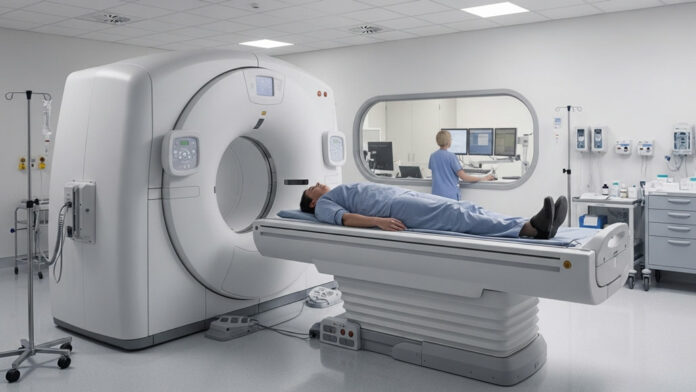
The evolution of medical imaging has reached a transformative milestone with the development of hybrid imaging modalities that seamlessly integrate functional and anatomical information within a single examination. These sophisticated systems represent a paradigm shift from traditional single-modality approaches, delivering comprehensive diagnostic insights that neither functional nor anatomical imaging could achieve independently. The global hybrid imaging market, valued at approximately $8.2 billion in 2023, continues to expand as healthcare providers recognize the profound impact these technologies have on diagnostic accuracy, treatment planning, and patient outcomes.ย 

Modern hybrid imaging modalities have fundamentally altered the landscape of medical diagnostics by addressing the inherent limitations of standalone imaging techniques. Where conventional anatomical imaging provides structural detail but lacks information about physiological processes, and functional imaging reveals metabolic activity without precise anatomical localization, hybrid systems create synergistic combinations that enhance diagnostic capabilities far beyond the sum of their individual components. This integration has proven particularly valuable in complex clinical scenarios where precise anatomical correlation of functional abnormalities is essential for accurate diagnosis and optimal treatment planning.ย 

The Foundation of Hybrid Imaging Excellenceย 

Technical Integration and System Architectureย 

The development of hybrid imaging modalities required overcoming substantial technical challenges related to hardware integration, data acquisition synchronization, and image co-registration. Positron Emission Tomography combined with Computed Tomography represents the most established hybrid technology, with over 7,000 PET/CT systems operating worldwide as of 2024. The sequential acquisition approach employed in PET/CT systems allows for rapid CT scanning followed by PET imaging, enabling precise anatomical localization of metabolic abnormalities while providing attenuation correction for quantitative PET analysis.ย 

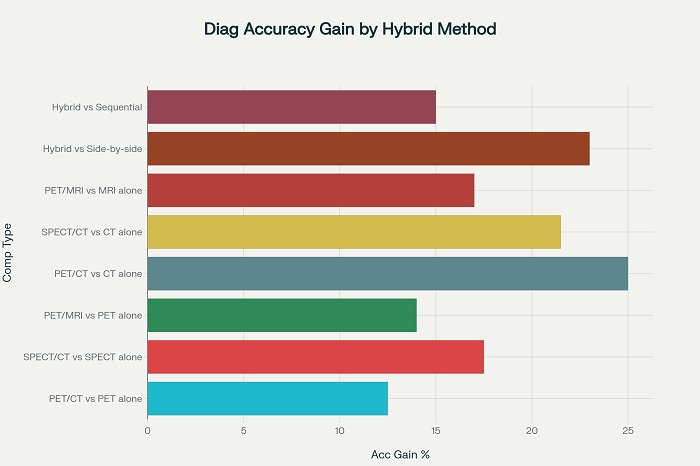
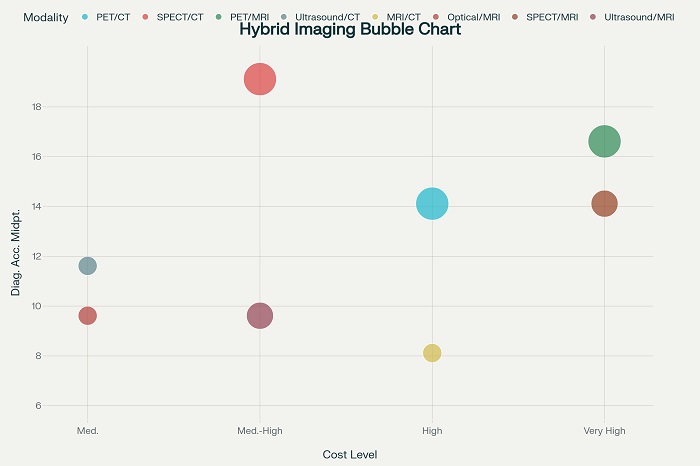
Single Photon Emission Computed Tomography integrated with CT has emerged as another highly successful hybrid modality, particularly valuable in clinical scenarios where radiopharmaceutical localization requires anatomical context. SPECT/CT systems have demonstrated remarkable versatility across multiple medical specialties, with studies consistently showing diagnostic accuracy improvements of 15-20% compared to SPECT alone. The technology has proven especially beneficial in bone imaging, where the combination of functional bone metabolism information with detailed skeletal anatomy enhances detection and characterization of both benign and malignant conditions.ย 

The newest addition to the hybrid imaging family, PET/MRI, represents the most technologically sophisticated approach, combining the metabolic insights of PET with the superior soft tissue contrast and functional capabilities of magnetic resonance imaging. These systems offer unique advantages in pediatric imaging and neurological applications, where the reduced radiation exposure of MRI compared to CT becomes particularly significant. However, the complexity of simultaneous PET and MRI acquisition has required innovative solutions for attenuation correction and magnetic field interactions that continue to evolve.ย 

Radiopharmaceutical Integration and Multimodal Contrast Agentsย 

The success of hybrid imaging modalities depends critically on the availability of appropriate radiopharmaceuticals and contrast agents that can provide meaningful functional information while maintaining compatibility with anatomical imaging requirements. Fluorine-18 fluorodeoxyglucose remains the most widely utilized PET tracer, providing information about glucose metabolism that proves invaluable in oncology, cardiology, and neurology applications. The 110-minute half-life of F-18 allows sufficient time for comprehensive hybrid imaging protocols while minimizing radiation exposure concerns.ย 

Emerging radiopharmaceuticals designed specifically for hybrid imaging applications are expanding the diagnostic capabilities of these systems. Gallium-68 labeled compounds have gained prominence for neuroendocrine tumor imaging, while newer tracers targeting specific receptors and cellular processes continue to broaden the clinical applications of hybrid imaging. The development of multimodal contrast agents that can be detected by both PET and MRI components represents an active area of research that promises to further enhance the synergistic benefits of hybrid systems.ย 

diag accuracy gain

Diagnostic accuracy improvements achieved through hybrid imaging modalities compared to single-modality approachesย 

Clinical Applications and Diagnostic Impactย 

Oncological Excellence Through Integrated Imagingย 

In oncology, hybrid imaging modalities have fundamentally transformed cancer diagnosis, staging, and treatment monitoring. PET/CT has achieved widespread adoption as the gold standard for cancer staging, with diagnostic accuracy rates consistently exceeding 92% in lung cancer, lymphoma, and melanoma applications. The ability to simultaneously assess tumor metabolism and anatomical extent provides oncologists with comprehensive information essential for treatment planning, from initial staging through response monitoring and surveillance for recurrence.ย 

The integration of functional and anatomical information has proven particularly valuable in distinguishing between treatment-related inflammation and residual or recurrent tumor tissue. This capability has significant implications for patient management, as it enables clinicians to avoid unnecessary interventions when apparent abnormalities represent benign post-treatment changes rather than active disease. Studies demonstrate that hybrid imaging reduces equivocal interpretations by up to 40% compared to single-modality approaches, leading to more confident clinical decision-making and improved patient outcomes.ย 

SPECT/CT applications in oncology focus primarily on specialized scenarios such as sentinel lymph node mapping, neuroendocrine tumor localization, and radioiodine therapy planning for thyroid cancer. The technology has shown particular strength in bone metastasis detection, where the combination of radiopharmaceutical bone uptake with detailed skeletal anatomy provides superior sensitivity and specificity compared to conventional bone scintigraphy. This enhanced performance directly impacts treatment decisions, enabling more accurate staging and appropriate selection of therapeutic interventions.ย 

Cardiovascular Applications and Risk Stratificationย 

Cardiac applications of hybrid imaging modalities have revolutionized the assessment of coronary artery disease and myocardial viability. SPECT/CT myocardial perfusion imaging combines functional assessment of coronary blood flow with anatomical information about cardiac structure and coronary calcification, providing comprehensive evaluation that guides both medical and interventional treatment decisions. The technology enables clinicians to correlate perfusion defects with specific coronary territories and assess the likelihood of successful revascularization procedures.ย 

The integration of CT-based attenuation correction in cardiac SPECT/CT has significantly reduced artifacts that historically complicated interpretation of myocardial perfusion studies, particularly in obese patients and those with breast attenuation. This improvement has enhanced diagnostic confidence and reduced the need for repeat studies or additional imaging modalities. Clinical studies demonstrate that hybrid cardiac imaging influences treatment decisions in approximately 30-40% of patients compared to single-modality approaches.ย 

PET/MRI cardiac applications focus primarily on assessment of myocardial viability and evaluation of cardiac sarcoidosis and other inflammatory conditions. The superior soft tissue contrast of MRI combined with the metabolic information from PET provides detailed assessment of myocardial tissue characteristics that cannot be achieved with other imaging modalities. This information proves particularly valuable in patients being considered for cardiac transplantation or high-risk revascularization procedures.ย 

Neurological and Brain Imaging Advancementsย 

In neurology and psychiatry, hybrid imaging modalities have enhanced the diagnosis and monitoring of neurodegenerative diseases, brain tumors, and epilepsy. PET/CT brain imaging provides valuable information about glucose metabolism and specific receptor binding that correlates with cognitive function and disease progression. The technology has proven particularly valuable in differentiating between various forms of dementia and in monitoring treatment response in brain tumor patients.ย 

PET/MRI has emerged as the preferred hybrid modality for many neurological applications due to the superior soft tissue contrast of MRI and the reduced radiation exposure compared to CT. The technology enables simultaneous assessment of brain structure, function, and metabolism, providing comprehensive information that supports both diagnosis and treatment planning. Studies indicate that PET/MRI detects clinically significant findings missed by PET/CT in more than 50% of brain tumor patients, highlighting the importance of optimal soft tissue contrast in neurological imaging.ย 

The application of hybrid imaging in epilepsy evaluation has transformed surgical planning by providing precise localization of epileptogenic foci relative to critical brain structures. This information enables neurosurgeons to plan more targeted resections while minimizing risks to eloquent brain regions. The technology has contributed to improved surgical outcomes and reduced morbidity in patients with medically refractory epilepsy.ย 

Technological Advantages and Clinical Benefitsย 

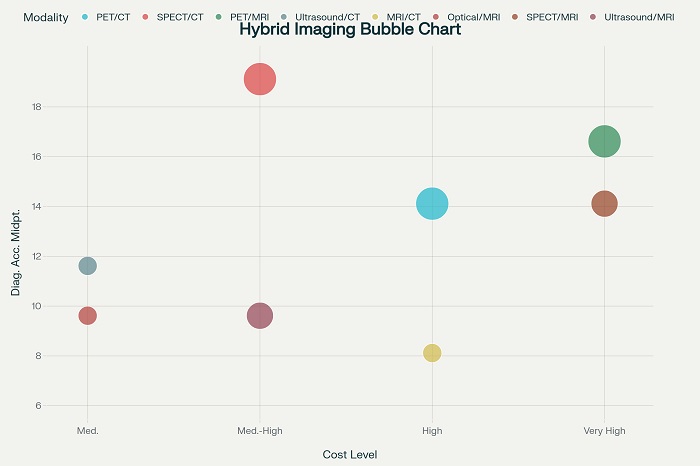
hybrid imaging modalities ย Cost-effectiveness analysis of hybrid imaging modalities showing relationship between cost, accuracy improvement, and clinical applicationsย 

Quantitative Analysis and Standardizationย 

Hybrid imaging modalities provide unique opportunities for quantitative analysis that enhance diagnostic accuracy and enable standardized interpretation across different institutions and imaging systems. The integration of CT-based attenuation correction in both PET/CT and SPECT/CT enables accurate quantification of radiopharmaceutical uptake, supporting more precise diagnosis and improved monitoring of treatment response. This quantitative capability has proven particularly valuable in oncology applications where standardized uptake values provide objective measures of treatment response.ย 

The anatomical information provided by hybrid systems enables more accurate region-of-interest analysis by providing precise boundaries for functional measurements. This capability reduces inter-observer variability and improves the reproducibility of quantitative assessments. Clinical studies demonstrate that standardized quantitative analysis of hybrid imaging data correlates more strongly with clinical outcomes compared to qualitative interpretation alone.ย 

Advances in artificial intelligence and machine learning are further enhancing the quantitative capabilities of hybrid imaging systems. Automated analysis algorithms can extract complex features from both functional and anatomical components of hybrid images, providing insights that may not be apparent to human interpreters. These developments promise to further improve diagnostic accuracy while reducing interpretation time and inter-observer variability.ย 

Workflow Efficiency and Patient Experienceย 

The integration of multiple imaging modalities into single examination sessions provides significant benefits for both healthcare providers and patients. Hybrid imaging reduces the need for separate appointments and multiple imaging studies, improving workflow efficiency and reducing healthcare costs. Patients benefit from reduced travel time, fewer appointments, and more convenient scheduling, leading to improved satisfaction and adherence to imaging recommendations.ย 

The reduction in total examination time achieved through hybrid imaging also decreases patient anxiety and discomfort associated with prolonged medical procedures. This benefit proves particularly important in pediatric applications and in patients with claustrophobia or other conditions that make prolonged imaging challenging. Studies indicate that patient satisfaction scores are consistently higher for hybrid imaging procedures compared to sequential single-modality examinations.ย 

Healthcare providers benefit from more efficient utilization of imaging resources and reduced scheduling complexity. The comprehensive information provided by hybrid imaging often eliminates the need for additional imaging studies, reducing both costs and radiation exposure. This efficiency enables healthcare systems to serve more patients while maintaining high diagnostic standards.ย 

Future Directions and Emerging Technologiesย 

The continued evolution of hybrid imaging modalities promises even greater integration of functional and anatomical information with enhanced diagnostic capabilities. Artificial intelligence integration is expected to revolutionize image analysis and interpretation, providing automated detection of abnormalities and quantitative analysis that enhances diagnostic accuracy while reducing interpretation time. These developments will democratize access to expert-level image interpretation and reduce healthcare disparities related to imaging expertise availability.ย 

Novel radiopharmaceuticals designed specifically for hybrid imaging applications continue to expand the clinical capabilities of these systems. Theranostic approaches that combine diagnostic imaging with targeted therapy are emerging as particularly promising applications of hybrid imaging technology. These developments enable personalized treatment approaches based on individual tumor characteristics and treatment response patterns.ย 

The integration of hybrid imaging with other advanced technologies such as artificial intelligence, robotics, and precision medicine platforms promises to create comprehensive diagnostic and treatment systems that optimize patient outcomes while minimizing healthcare costs. These developments represent the future of personalized medicine, where individual patient characteristics guide both diagnostic and therapeutic decisions.ย 

Modern hybrid imaging modalities have established themselves as indispensable tools in contemporary medical practice, providing diagnostic capabilities that significantly exceed those of single-modality approaches. The integration of functional and anatomical information within single examination sessions has transformed clinical practice across multiple specialties while improving patient outcomes and healthcare efficiency. As technology continues to advance and new applications emerge, hybrid imaging modalities will play an increasingly central role in delivering precision medicine that optimizes diagnostic accuracy while minimizing patient burden and healthcare costs.ย 

AI Automated Radiology: Reducing Errors and Shortages 2025

AIenabled automated radiology

AI-Enabled Automated Radiology: Reducing Diagnostic Errors and Addressing Radiologist Shortagesย 

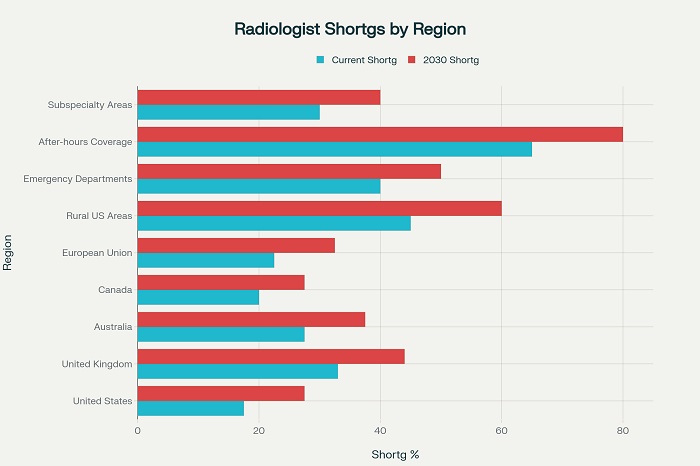
The healthcare industry stands at a critical juncture where the demand for medical imaging services continues to surge while radiologist availability remains severely constrained. This perfect storm of challenges has catalyzed the development and deployment of AI-enabled automated radiology systems that promise to fundamentally transform how diagnostic imaging is performed, interpreted, and delivered. The global radiologist shortage, which currently affects 15-20% of positions in the United States and is projected to reach 25-30% by 2030, has created an urgent need for innovative solutions that can maintain diagnostic quality while addressing workforce limitations. Artificial intelligence has emerged as the most promising technology to bridge this gap, offering unprecedented capabilities in image analysis, diagnostic accuracy, and workflow optimization that extend far beyond simple automation to encompass genuine clinical intelligence.ย 

The implementation of AI-enabled automated radiology represents more than technological advancementโ€”it embodies a paradigm shift toward precision medicine where human expertise is amplified rather than replaced by computational intelligence. Studies conducted across major healthcare networks demonstrate that AI integration can improve report generation efficiency by an average of 15.5%, with some radiologists achieving productivity gains as high as 40% without compromising diagnostic accuracy. These remarkable improvements occur through sophisticated algorithms that can analyze medical images at unprecedented speed and precision, detecting subtle patterns and anomalies that might escape human observation while simultaneously reducing the cognitive burden on radiologists who face increasing workloads and time pressures.ย 

Transforming Diagnostic Accuracy Through Computational Intelligenceย 

Advanced Pattern Recognition and Error Mitigationย 

AI-enabled automated radiology systems excel in areas where human perception faces inherent limitations, particularly in detecting subtle abnormalities and maintaining consistent accuracy across high-volume interpretation workloads. Deep learning algorithms trained on vast datasets of annotated medical images demonstrate remarkable proficiency in identifying pathological patterns, achieving diagnostic accuracy rates of 87-95% compared to traditional human interpretation rates of 75-85%. These systems prove particularly valuable in detecting early-stage cancers, lung nodules, and cerebrovascular abnormalities where early identification directly correlates with improved patient outcomes and survival rates.ย 

The most significant advantage of AI systems lies in their immunity to fatigue-related errors and cognitive biases that affect human radiologists. Research indicates that radiologists must interpret an image every 3-4 seconds during a typical 8-hour workday, creating conditions that inevitably lead to decision fatigue and increased error rates. AI algorithms maintain consistent performance regardless of workload volume or time constraints, providing a reliable safety net that can flag potential abnormalities and prioritize urgent cases for immediate human review. Northwestern Medicine’s implementation of generative AI across their 11-hospital network demonstrated a 37% reduction in critical result reporting times while maintaining 95% accuracy in automated report generation.ย 

radiologist shortage percentages

Current and projected radiologist shortage percentages showing critical gaps in specialized areas and rural regionsย 

The error reduction capabilities of AI extend beyond simple detection accuracy to encompass systematic improvements in diagnostic consistency and reproducibility. Traditional radiology practice exhibits inherent variability in interpretation between different radiologists, leading to diagnostic discrepancies that can affect patient care quality. AI systems standardize diagnostic criteria and eliminate subjective interpretation variations, reducing false positive rates by 15-25% and significantly decreasing unnecessary follow-up procedures and patient anxiety associated with ambiguous results. This standardization proves particularly valuable in high-volume screening programs where consistent interpretation quality directly impacts program effectiveness and cost-efficiency.ย 

Real-Time Critical Case Prioritization and Triageย 

AI-enabled automated radiology systems revolutionize workflow management through intelligent case prioritization that ensures critical findings receive immediate attention regardless of study acquisition time or departmental workload. Advanced algorithms can identify life-threatening conditions such as intracranial hemorrhages, pulmonary embolisms, and acute strokes within milliseconds of image acquisition, automatically routing these cases to the top of radiologist worklists and triggering immediate notification protocols. This capability proves invaluable in emergency department settings where rapid diagnosis directly influences treatment decisions and patient outcomes.ย 

The implementation of AI triage systems demonstrates particular strength in managing complex multi-study examinations and prioritizing cases based on clinical urgency rather than simple chronological ordering. Machine learning algorithms analyze multiple data sources including clinical history, vital signs, laboratory values, and imaging characteristics to generate comprehensive risk scores that guide case prioritization decisions. This sophisticated approach ensures that patients with the highest probability of serious pathology receive expedited attention while routine studies are efficiently processed without unnecessary delays.ย 

Addressing the Global Radiologist Shortage Crisisย 

Workforce Multiplication Through Technology Enhancementย 

The radiologist shortage represents one of the most pressing challenges facing modern healthcare systems, with the United Kingdom experiencing a 33% shortfall in 2023 that is projected to reach 44% by 2024. AI-enabled automated radiology offers a pragmatic solution to this crisis by effectively multiplying the productive capacity of existing radiologists rather than attempting to replace human expertise entirely. Studies indicate that AI implementation can reduce radiologist workload by up to 53% through automation of routine tasks, preliminary screenings, and standardized measurements.ย 

The workforce multiplication effect proves most pronounced in settings with the most severe shortages, particularly rural healthcare facilities, emergency departments, and after-hours coverage scenarios. Rural areas currently experience radiologist shortages of 40-50%, projected to increase to 55-65% by 2030, making traditional recruitment strategies insufficient to meet clinical demands. AI systems enable centralized radiologist expertise to serve multiple facilities simultaneously, providing 24/7 coverage capabilities that would be economically unfeasible with human-only staffing models. Teleradiology platforms enhanced with AI capabilities can extend subspecialty expertise to underserved regions while maintaining diagnostic quality standards comparable to major academic medical centers.ย 

Workflow Optimization and Professional Sustainabilityย 

AI-enabled automated radiology systems address radiologist burnout and professional sustainability concerns through intelligent workflow optimization that eliminates repetitive tasks and reduces cognitive workload. Traditional radiology practice requires substantial time investment in routine activities such as measurement calculations, protocol selection, and report templating that contribute to professional fatigue without adding significant diagnostic value. AI automation handles these routine functions seamlessly, enabling radiologists to focus their expertise on complex diagnostic challenges and direct patient care activities.ย 

The professional sustainability benefits extend beyond simple task automation to encompass enhanced decision support and educational capabilities. AI systems provide radiologists with comprehensive case histories, relevant prior imaging studies, and evidence-based differential diagnoses that support more informed clinical decisions. This augmented intelligence approach reduces the stress associated with high-stakes diagnostic decisions while providing continuous learning opportunities that help radiologists stay current with evolving medical knowledge and imaging techniques. Studies indicate that radiologists using AI support systems report 35-50% reduction in work-related stress and improved job satisfaction compared to traditional practice models.ย 

Implementation Strategies and Clinical Integrationย 

Seamless Electronic Health Record Integrationย 

Successful implementation of AI-enabled automated radiology requires sophisticated integration with existing healthcare information systems to ensure seamless workflow incorporation and optimal clinical utility. Modern AI platforms integrate directly with Picture Archiving and Communication Systems, Electronic Health Records, and Radiology Information Systems to provide contextual diagnostic support without disrupting established clinical workflows. This integration enables AI systems to access relevant patient history, laboratory results, and clinical information that inform diagnostic accuracy and report quality.ย 

The most effective implementations utilize cloud-based architectures that enable real-time data processing and analysis while maintaining compliance with healthcare privacy regulations and security requirements. Cloud platforms provide the computational power necessary for complex AI algorithms while enabling scalable deployment across multiple healthcare facilities and imaging modalities. This architectural approach ensures that AI capabilities can be rapidly updated and enhanced as new algorithms become available without requiring substantial infrastructure investments at individual healthcare facilities.ย 

Training and Adoption Facilitationย 

Healthcare organizations implementing AI-enabled automated radiology must address the human factors associated with technology adoption to ensure successful clinical integration and optimal outcomes. Comprehensive training programs help radiologists understand AI capabilities and limitations while developing skills necessary for effective human-AI collaboration. These programs emphasize AI as an augmentative technology that enhances rather than replaces human expertise, addressing concerns about job displacement while highlighting opportunities for professional growth and enhanced patient care.ย 

The most successful implementations involve radiologists in the AI development and validation process, creating ownership and investment in technology success. Collaborative approaches that include radiologist feedback in algorithm training and refinement ensure that AI systems meet real-world clinical needs while maintaining the trust and confidence of the professionals who will use them daily. This participatory approach proves particularly important in addressing the “black box” concerns associated with AI decision-making processes, ensuring that radiologists maintain appropriate clinical oversight and professional accountability.ย 

Future Directions and Technological Evolutionย 

The evolution of AI-enabled automated radiology continues to accelerate with advances in generative AI, multimodal integration, and predictive analytics that promise even greater clinical utility and diagnostic capability. Generative AI models now demonstrate the ability to create comprehensive, personalized radiology reports that match individual radiologist writing styles while incorporating all relevant clinical information and diagnostic findings. These systems reduce report generation time by up to 80% while maintaining clinical accuracy and completeness standards that meet regulatory and professional requirements.ย 

The integration of AI with emerging imaging technologies including hybrid modalities, molecular imaging, and real-time image guidance creates opportunities for diagnostic capabilities that exceed current clinical possibilities. AI algorithms trained on multimodal datasets can integrate information from different imaging techniques, laboratory values, and genomic data to provide comprehensive diagnostic assessments that inform personalized treatment planning. This convergence of AI with precision medicine approaches promises to transform radiology from a primarily diagnostic discipline to an integral component of personalized therapeutic decision-making.ย 

The implementation of AI-enabled automated radiology represents a critical evolution in healthcare delivery that addresses fundamental challenges while enhancing diagnostic quality and clinical efficiency. Success requires thoughtful integration strategies that respect human expertise while leveraging technological capabilities to achieve outcomes that neither humans nor machines could accomplish independently. As healthcare systems worldwide grapple with increasing demand and limited resources, AI-enabled automated radiology offers a pathway toward sustainable, high-quality diagnostic services that can adapt to evolving clinical needs and technological possibilities.ย 

Global AI Medical Device Regulations Explained for 2025

Navigating Global Regulatory Expectations for AI-Enabled Medical devicesย 

The landscape of artificial intelligence in medical devices has transformed dramatically over the past five years, with regulatory bodies worldwide scrambling to establish frameworks that balance innovation with patient safety. As AI technologies become increasingly sophisticated and autonomous, manufacturers face the complex challenge of navigating diverse regulatory expectations across multiple jurisdictions while maintaining competitive advantage in this rapidly evolving market.ย 

The global regulatory environment presents a patchwork of approaches, each reflecting different philosophical perspectives on risk management and innovation promotion. The United States Food and Drug Administration has emerged as a leader in pragmatic AI regulation through its Total Product Lifecycle approach, culminating in the December 2024 finalization of guidance on Predetermined Change Control Plans for AI-enabled device software functions. This framework allows manufacturers to predefine algorithm update parameters during premarket submission, enabling post-approval modifications within approved safety boundaries without requiring additional regulatory submissions for each change.ย 

hybrid imaging bubbleย Global regulatory timeline for AI-enabled medical devices showing key compliance milestones by regionย 

Regional Approaches and Strategic Implicationsย 

The European Union has adopted the most comprehensive regulatory stance through the dual application of the Medical Device Regulation and the newly implemented Artificial Intelligence Act. Under this framework, AI-enabled medical devices are classified as high-risk AI systems, subjecting them to stringent conformity assessment procedures that extend beyond traditional medical device requirements. The AI Act mandates comprehensive risk management systems, rigorous data governance protocols, human oversight mechanisms, and detailed technical documentation that demonstrates compliance with both safety and ethical standards.ย 

This dual compliance burden creates significant challenges for manufacturers seeking European market access. Unlike the FDA’s flexible PCCP approach, the EU framework requires that substantial algorithm modifications undergo complete re-evaluation through notified body assessment processes. The August 2026 implementation deadline for high-risk AI systems under the AI Act has created urgency among manufacturers to align their quality management systems with these enhanced requirements.ย 

The United Kingdom has charted a distinctive course through its AI Airlock initiative, which emphasizes real-world evidence gathering and collaborative regulatory development. This approach reflects the UK’s post-Brexit strategy of maintaining competitive advantage through regulatory innovation while ensuring patient safety. Similarly, Japan and South Korea are developing risk-based frameworks that attempt to balance innovation promotion with safety assurance, incorporating unique requirements for AI interpretability and cybersecurity compliance.ย 

China’s approach emphasizes data localization and state oversight, requiring manufacturers to conduct localized clinical trials and obtain specific approvals for algorithm performance evaluation. This creates additional complexity for global manufacturers who must develop region-specific validation strategies while maintaining consistent product quality across markets.ย 

Implementation Challenges and Compliance Strategiesย 

The fundamental challenge for manufacturers lies in managing the inherent tension between the adaptive nature of AI systems and traditional regulatory frameworks designed for static medical devices. Machine learning algorithms continuously evolve through exposure to new data, potentially altering their performance characteristics in ways that traditional change control processes cannot adequately address.ย 

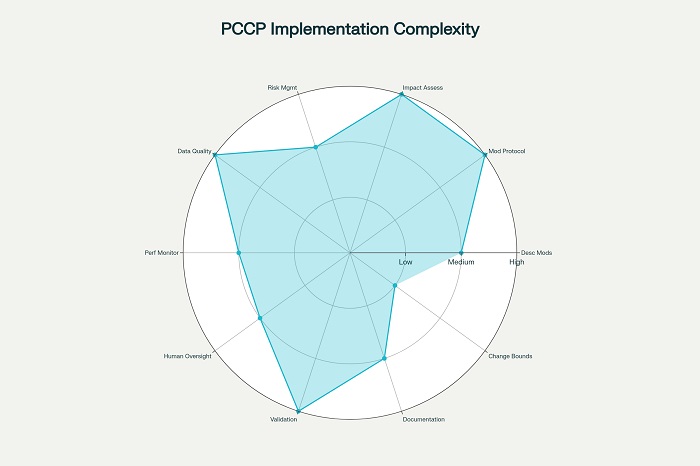
pccp complexity radar

Implementation complexity assessment for Predetermined Change Control Plan (PCCP) requirementsย 

The FDA’s PCCP framework represents the most mature approach to this challenge, requiring manufacturers to define three essential components: description of anticipated modifications, modification protocols for development and validation, and impact assessments of planned changes. However, implementing effective PCCPs demands sophisticated technical capabilities in algorithm validation, data governance, and risk assessment that many organizations are still developing.ย 

Data quality management emerges as perhaps the most complex aspect of AI device regulation across all jurisdictions. Manufacturers must demonstrate that training datasets are representative, unbiased, and traceable while maintaining compliance with varying data protection requirements. The European AI Act’s emphasis on algorithmic fairness and non-discrimination adds additional layers of complexity, requiring ongoing bias monitoring and mitigation strategies throughout the device lifecycle.ย 

Human oversight requirements present another universal challenge, with regulators worldwide emphasizing the need for meaningful human control over AI-driven clinical decisions. This requirement must be balanced against the desire to leverage AI’s full capabilities while ensuring that human oversight mechanisms do not become mere formalities that compromise patient safety.ย 

Strategic Recommendations for Global Complianceย 

Successful navigation of this complex regulatory landscape requires strategic planning that anticipates future harmonization efforts while addressing current jurisdictional differences. Organizations should prioritize development of robust quality management systems that can accommodate the most stringent requirements across target markets, using the EU AI Act as a baseline for global compliance strategies.ย 

Investment in explainable AI technologies will become increasingly important as regulators worldwide emphasize transparency and interpretability requirements. Manufacturers should also develop comprehensive post-market surveillance capabilities that can demonstrate real-world performance across diverse patient populations and clinical environments.ย 

The establishment of regulatory science capabilities within organizations will prove essential for managing ongoing compliance obligations. This includes developing expertise in algorithm validation methodologies, bias detection and mitigation strategies, and risk assessment frameworks that can adapt to evolving regulatory expectations.ย 

As the regulatory landscape continues to mature, the goal of global harmonization remains elusive but increasingly necessary. The target date of 2027 for meaningful international coordination reflects the urgency of establishing consistent standards that can support innovation while ensuring patient safety across all markets. Organizations that invest early in comprehensive compliance strategies will be best positioned to capitalize on the transformative potential of AI in healthcare while meeting their regulatory obligations across all jurisdictions.

AI Clinical Decision Support Impact on Hospitals & Patients

AIdriven clinical decision support systems

The Impact of AI-Driven Clinical Decision Support Systems on Hospital Efficiency and Patient Safety

Transforming Healthcare Through Intelligent Technology

The integration of artificial intelligence into clinical decision support systems represents one of the most significant technological advances in modern healthcare. As hospitals worldwide grapple with increasing patient volumes, rising costs, and growing demands for improved outcomes, AI-driven Clinical Decision Support Systems (AI-CDSS) have emerged as powerful solutions that simultaneously enhance operational efficiency and patient safety outcomes.

The global clinical decision support systems market, valued at USD 5.79 billion in 2024, is projected to reach USD 10.71 billion by 2030, reflecting the growing recognition of these technologies’ transformative potential. This remarkable growth trajectory underscores healthcare organizations’ increasing confidence in AI-powered solutions to address critical operational challenges while maintaining the highest standards of patient care.

Redefining Clinical Excellence Through AI Integration

The modern healthcare landscape demands precision, speed, and consistency in clinical decision-making. Traditional decision support systems, while valuable, often fall short in processing the vast amounts of complex data generated in contemporary medical practice. AI-driven systems bridge this gap by leveraging machine learning algorithms, natural language processing, and deep learning models to analyze patient data with unprecedented accuracy and speed.

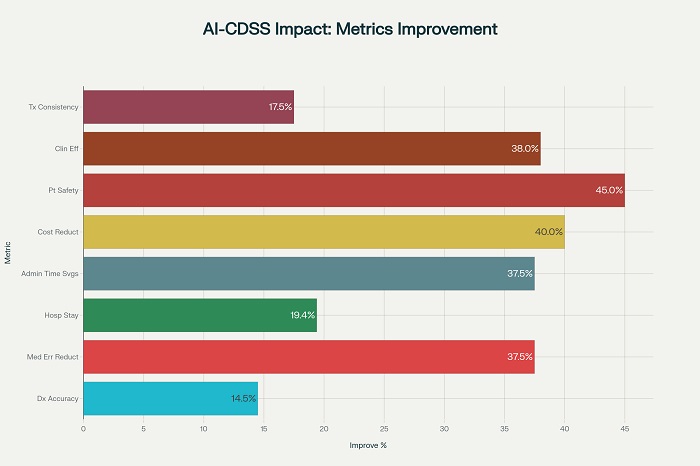
Recent implementation studies demonstrate remarkable improvements across multiple performance metrics. Diagnostic accuracy has increased from the traditional 75-80% baseline to an impressive 87-92% with AI assistance. This enhancement represents more than statistical improvement; it translates directly into better patient outcomes, reduced misdiagnoses, and more targeted treatment interventions.

The sophistication of these systems extends beyond simple diagnostic support. AI-CDSS platforms now provide real-time risk stratification, personalized treatment recommendations, and predictive analytics that enable healthcare providers to intervene before adverse events occur. For instance, advanced deep learning models have demonstrated the ability to predict cardiovascular events in diabetic patients with remarkable precision, enabling proactive interventions that prevent serious complications.

Operational Efficiency and Cost Optimization

Streamlining Administrative Processes

One of the most immediate and measurable impacts of AI-CDSS implementation lies in administrative efficiency improvements. Healthcare systems implementing these technologies report administrative time savings ranging from 25% to 50%. These improvements stem from the automation of routine tasks such as clinical documentation, prescription verification, and patient data processing.

The economic implications are substantial. Administrative costs, which typically account for 15-30% of total healthcare expenditures, can be significantly reduced through AI automation. McKinsey analysis suggests that AI-enabled prior authorization processes alone could decrease manual effort by 50-75%, freeing healthcare professionals to focus on direct patient care activities.

Natural language processing capabilities within AI-CDSS have revolutionized clinical documentation workflows. Systems can now automatically extract relevant information from unstructured clinical notes and populate electronic health records with structured data, reducing documentation time by an average of 7.8 minutes per patient encounter. This efficiency gain accumulates to significant time savings over the course of a typical clinical day.

Resource Allocation and Workflow Optimization

AI-driven systems excel at optimizing resource allocation through predictive analytics and real-time monitoring. Hospitals implementing these technologies report improvements in patient flow management, with average length of stay reductions of approximately 19.4%. This improvement results from more accurate discharge planning, better coordination of care transitions, and proactive identification of patients ready for discharge.

The systems’ ability to predict patient acuity and resource needs enables more effective staffing decisions and equipment allocation. Predictive models can analyze historical data, seasonal patterns, and current patient census to forecast demand, allowing administrators to deploy resources more strategically. This optimization reduces both operational costs and patient wait times while ensuring adequate staffing levels during peak demand periods.

ai cdss impact bar

Key performance improvements achieved through AI-driven clinical decision support systems implementation

Patient Safety Enhancement Through AI Intelligence

Medication Error Prevention

Medication errors represent a significant patient safety concern, with traditional rates ranging from 15-20 errors per 100 admissions. AI-CDSS implementation has demonstrated the ability to reduce these rates to 8-12 errors per 100 admissions, representing a 35-40% improvement in medication safety. These systems provide real-time alerts for drug interactions, dosage errors, and contraindications, creating multiple safety checkpoints throughout the medication administration process.

The financial impact of medication error prevention extends beyond immediate safety benefits. Preventable medical errors cost the healthcare system approximately $20 billion annually, making error reduction a critical component of cost containment strategies. AI systems contribute to this reduction through continuous monitoring of prescribing patterns, patient responses, and potential adverse reactions.

Predictive Risk Assessment

Advanced AI algorithms excel at identifying patients at high risk for adverse events before clinical deterioration becomes apparent. These systems analyze multiple data streams including vital signs, laboratory values, medication histories, and clinical notes to generate risk scores that guide clinical interventions. Early warning systems for conditions such as sepsis, falls, and cardiac events have shown remarkable success in preventing serious complications.

The implementation of AI-powered sepsis detection systems has yielded particularly impressive results. Johns Hopkins Medicine reported up to 20% reductions in ICU mortality following deployment of AI-based early sepsis detection tools. Similar improvements have been documented for fall prevention, pressure ulcer avoidance, and postoperative complication reduction.

Quality Assurance and Clinical Consistency

AI-CDSS contributes significantly to clinical quality assurance by promoting evidence-based decision-making and reducing practice variation. Treatment consistency rates have improved from baseline levels of 70-75% to 85-90% following system implementation. This improvement reflects the systems’ ability to provide standardized, guideline-based recommendations that reduce subjective variability in clinical decision-making.

The systems also enhance quality monitoring through automated documentation review and outcome tracking. AI algorithms can identify patterns in clinical data that might indicate quality issues, enabling proactive interventions before problems become systemic. This capability is particularly valuable in complex clinical environments where manual monitoring of all quality indicators would be resource-prohibitive.

Economic Impact and Return on Investment

Financial Analysis and Cost-Benefit Considerations

The economic justification for AI-CDSS implementation requires careful analysis of both direct and indirect costs and benefits. Initial implementation costs typically range from $725,000 to $1.2 million for comprehensive systems, with annual maintenance costs of approximately $185,000. However, the return on investment becomes apparent relatively quickly, with most organizations achieving positive ROI within 2-3 years of implementation.

Annual cost savings from AI-CDSS implementation average $2.75 million for large healthcare systems. These savings derive from multiple sources including reduced medication errors ($850,000 annually), shortened length of stay ($1.2 million annually), administrative efficiency gains ($400,000 annually), and reduced readmissions ($300,000 annually).

The five-year net ROI for comprehensive AI-CDSS implementation typically exceeds $11 million when accounting for all direct and indirect benefits. This substantial return reflects not only cost savings but also revenue enhancement through improved patient throughput, reduced liability exposure, and enhanced reputation for quality care.

Value-Based Care Alignment

AI-CDSS implementation aligns particularly well with value-based care initiatives that emphasize outcomes over volume. These systems support value-based care goals by tracking and improving key performance metrics such as readmission rates, preventive care delivery, and patient satisfaction scores. The ability to demonstrate measurable improvements in these areas positions healthcare organizations favorably for value-based contracts and quality incentive programs.

The systems’ predictive capabilities enable proactive care management that reduces expensive acute care episodes. By identifying high-risk patients early and facilitating appropriate interventions, AI-CDSS helps shift care delivery from reactive treatment to preventive management, aligning with the fundamental principles of value-based healthcare.

Implementation Challenges and Strategic Solutions

Technical and Organizational Barriers

Despite the clear benefits, AI-CDSS implementation faces significant challenges that organizations must address strategically. Technical barriers include data integration complexities, system interoperability issues, and concerns about algorithm transparency. Many healthcare organizations operate with legacy systems that were not designed for AI integration, requiring substantial infrastructure investments and technical expertise.

Organizational barriers often prove more challenging than technical issues. Workflow integration requires careful analysis of existing processes and gradual implementation to minimize disruption. Change management becomes critical, as clinical staff must adapt to new decision-making processes while maintaining confidence in their clinical judgment. Training requirements are substantial, requiring ongoing education programs to ensure effective system utilization.

User Acceptance and Trust Building

Healthcare professionals’ acceptance of AI-CDSS depends heavily on system design, transparency, and demonstrated value. Automation bias represents a significant concern, where clinicians may become overly reliant on system recommendations without appropriate clinical judgment. Conversely, some practitioners may resist AI recommendations due to concerns about professional autonomy or system reliability.

Successful implementation requires user-centered design approaches that involve clinical staff in system development and refinement. Transparency in algorithm decision-making, clear explanations of recommendations, and easy override mechanisms help build trust and appropriate utilization patterns. Regular feedback collection and system updates based on user experience contribute to long-term acceptance and effectiveness.

Regulatory and Compliance Considerations

The regulatory landscape for AI in healthcare continues to evolve, creating uncertainty for organizations considering implementation. Approval and certification processes for AI-enabled medical devices can be complex and time-consuming, with limited numbers of qualified certifying bodies creating bottlenecks. Data privacy compliance, particularly under regulations such as GDPR, requires careful attention to data handling, storage, and access controls.

Healthcare organizations must develop comprehensive governance frameworks that address these regulatory requirements while enabling innovation. Privacy-by-design approaches, regulatory consultation during development, and robust audit trails help ensure compliance while supporting system effectiveness.

Future Directions and Emerging Opportunities

The evolution of AI-CDSS continues to accelerate, with emerging technologies promising even greater impact on hospital efficiency and patient safety. Integration with Internet of Things devices, wearable sensors, and remote monitoring systems will expand the data available for clinical decision-making while enabling more continuous patient monitoring.

Blockchain technology integration offers potential solutions to data security and interoperability challenges, while advances in explainable AI will address current concerns about algorithm transparency. The development of more sophisticated natural language processing capabilities will further enhance documentation efficiency and clinical communication.

The growing emphasis on personalized medicine creates new opportunities for AI-CDSS to provide more targeted, patient-specific recommendations. Integration with genomic data, lifestyle factors, and social determinants of health will enable more comprehensive risk assessment and treatment optimization.

Maximizing Implementation Success

Healthcare organizations pursuing AI-CDSS implementation should adopt a strategic, phased approach that addresses both technical and human factors. Initial implementation should focus on high-impact, low-risk applications that demonstrate clear value while building organizational confidence and expertise. Comprehensive training programs, ongoing support, and regular performance monitoring are essential for sustained success.

Collaboration between clinical, technical, and administrative stakeholders ensures that system design meets real-world operational needs while addressing practical implementation challenges. Regular assessment of outcomes, user satisfaction, and system performance enables continuous improvement and optimization of the investment.

The evidence clearly demonstrates that AI-driven clinical decision support systems represent a transformative opportunity for healthcare organizations. When implemented thoughtfully with attention to both technical requirements and human factors, these systems deliver substantial improvements in hospital efficiency and patient safety while providing strong economic returns. As the technology continues to evolve and mature, the potential for even greater impact on healthcare delivery becomes increasingly evident, positioning AI-CDSS as an essential component of modern healthcare infrastructure.

NHS Boards to Explore Joint Working in Sussex and Surrey

NHS Boards to Explore Joint Working

In a recent update, two NHS boards to explore joint working in Sussex and Surrey, which would be a part of a government savings drive. The Surrey Heartlands and Sussex Integrated Care Board (ICBs), which happen to oversee the running of health services in their respective counties, have gone on to confirm the move after they were told to cut their running expenditures by 50% until December 2025.

Apparently, these changes happen to be a part of the latest round of NHS reforms that happen to include the abolition of NHS England as well as the scrapping of Healthwatch, the independent watchdog.

At one of the Brighton and Hove City Council meetings, which was held in July 2025, Stephen Lightfoot, the chairman of NHS Sussex, remarked that a prominent number of the board staff were facing losing their jobs.

In a statement, which was almost identically worded, the Surrey Heartland and Sussex ICBs said that, as with all the ICBs across England, the two NHS boards to explore joint working in order to fulfill the requirements that are being asked by the Department of Health and Social Care (DHSC) as well as NHS England.

Apparently, their proposal in order to work collaboratively along with NHS Sussex is getting the support of NHS England, and they are now working together on the transition strategy.

Notably, earlier in 2025, a DHSC spokesperson had said that the government was indeed committed in order to cutting back on unnecessary bureaucracy and also reinvesting savings when it came to frontline care.

Approximately 9000 administrative roles are getting cut at NHS England and also the DHSC as part of the changes, which amount to almost 50% of the total roles across both organizations.

With the addition of Surrey and Sussex, the total comes to 13 clusters or mergers, which have been confirmed across 42 ICBs throughout England so far.

MEDICAL FAIR THAILAND 2025 opens next month with record-breaking participation and expanded highlights

MEDICAL FAIR THAILAND 2025

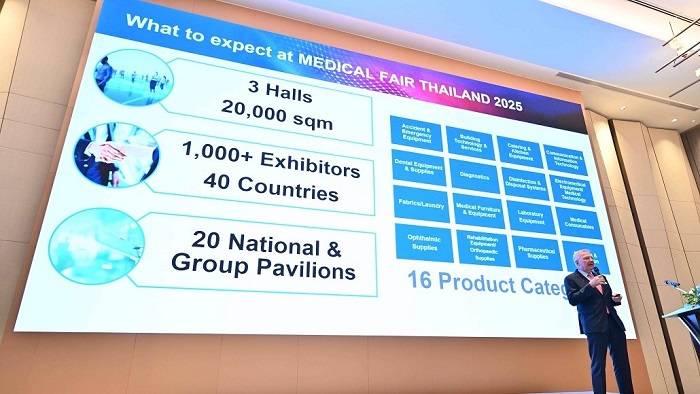
MEDICAL FAIR THAILAND 2025, the 11th edition of Thailandโ€™s leading medical and healthcare exhibition, will return from 10 โ€“ 12 September 2025 at BITEC, Bangkok, setting new records in scale and scope. Organised by Messe Dรผsseldorf Asia, the exhibition will feature 1,000 exhibitors from 40 countries and regions, 20 national and group pavilions, and is expected to welcome thousands of trade visitors, hosted buyers, and healthcare professionals from across ASEAN and beyond.

โ€œMEDICAL FAIR THAILAND 2025 is a milestone edition โ€“ it is a catalyst for healthcare transformation in ASEAN,โ€ said Mr. Gernot Ringling, Managing Director, Messe Dรผsseldorf Asia. โ€œWith record international participation, the return of signature zones such as the Medical Manufacturing Zone, and a comprehensive seminar programme spanning MedTech, wearable health technologies, digital health, and rehabilitation, this yearโ€™s edition brings together the full healthcare value chain. By uniting policy, academia, and industry, the exhibition fosters collaborations, accelerates innovation, and underscores Thailandโ€™s growing role as a MedTech and healthcare hub in Asia.โ€

Global innovation meets regional growth

Reflecting the industryโ€™s diversity, MEDICAL FAIR THAILAND 2025 will showcase the latest in medical technologies, healthcare equipment, MedTech and HealthTech solutions, with participants ranging from global manufacturers to regional innovators.

Co-located with GITEX DigiHealth and Biotech Thailand, the event creates a single platform where digital health, AI, big data, and biotechnology converge with hospital and clinical solutions โ€“ highlighting the regionโ€™s readiness to embrace future healthcare models.

Medical Manufacturing Zone โ€“ Thailandโ€™s rising role

A key highlight this year is the return of the Medical Manufacturing Zone, modelled after COMPAMED in Dรผsseldorf and Medical Manufacturing Asia in Singapore. The zone underlines Thailandโ€™s expanding role in the global supply chain by showcasing: advanced manufacturing systems, high-performance components and materials, and next-generation medical device technologies.

Together with the main exhibition, it reinforces MEDICAL FAIR THAILANDโ€™s position as the only platform in ASEAN that spans the full continuum from upstream manufacturing to downstream patient care.

Knowledge platforms โ€“ Conferences and Live programmes

Beyond the exhibition floor, MEDICAL FAIR THAILAND 2025 delivers an extensive programme of conferences and workshops designed to inform and inspire:

Medical Fair Thailand 2025

  • Medical Manufacturing Conference โ€“ strategic perspectives on regional competitiveness, global supply chains, and investment outlooks in MedTech manufacturing.
  • Wearable Technologies Conference โ€“ insights into next-generation wearables for patient monitoring, preventive care, and health data.
  • Thought Leadership Sessions โ€“ covering topics such as Empowering Nurses for the Future of Healthcare and Artificial Intelligence & Cybersecurity for All Hospitals in 2025.
  • Special Live workshop and demo with real patientsโ€“ a 2-hour live workshop led by Assoc. Prof. Dr. Parit Wongphaet, rehabilitation specialist and inventor of the award-winning robotic gait training system. The sessions will offer evidence-based approaches for retraining gait and balance in patients recovering from stroke, TBI (traumatic brain injuries), and Parkinsonโ€™s disease.

Strengthened Thai partnerships and collaboration

MEDICAL FAIR THAILAND 2025 also reflects deepened ties with Thai organisations and government agencies, including the Ministry of Public Health (MoPH) and the Medical Innovations Development Center (MIND Centre) – ย Faculty of Medicine Ramathibodi Hospital, Mahidol University, and many others, ensuring innovations showcased are aligned with national healthcare priorities and ASEAN growth strategies.

โ€œMEDICAL FAIR THAILAND 2025 will serve as a vital platform for promoting MedTech, HealthTech, and AI innovations that can be applied in hospitals to meet safety and quality-of-life goals for patients in a sustainable way,โ€ said Ms. Witthitha Pannow, representative of the Director, Medical Engineering Division, Department of Health Service Support, MoPH.

โ€œThrough the flagship seminar themed โ€˜Integrating Innovation and Safety: Directions in Medical Technology under the HS4 Standard and Patient-Centered Care,โ€™ the programme will provide healthcare leaders with a strategic roadmap to balance adoption of innovation with safety. We are not merely hosting a seminar โ€” we are building a community of leaders who will drive Thailandโ€™s healthcare system forward with stability and sustainability,โ€ she added.

Business and networking opportunities

As Southeast Asiaโ€™s most established medical and healthcare exhibition, MEDICAL FAIR THAILAND 2025 will also feature curated business matching programmes, hosted buyer delegations from ASEAN and beyond, as well as local visiting delegations from the hospitals and healthcare facilities.

Together, these elements cement the exhibitionโ€™s role as a strategic platform for partnerships and growth in one of the worldโ€™s most dynamic healthcare markets.

Visitor registration is available online at www.medicalfair-thailand.com.

NHS Performance Standards Tested as Patients Volume Grows

NHS Performance Standards

The NHS in England has remained under relentless pressure throughout the summer, in spite of it often being a time for them to catch their breath, as per the Health Foundation.

According to the latest NHS performance standards & statistics, the waiting list for NHS treatment has grown slightly in June 2025 by 9,712 to 7.37 million. In around 191,813 of these cases, the patients have been waiting for over 52 weeks.

But there were also around 103563, which is 2% more treatments that were delivered in June 2025, as compared to the same month in 2024, with the proportion of patients waiting less than 18 weeks when it came to treatment at 61.5%, which, by the way, happens to be the highest proportion since June 2022.

Tim Gardner, the health foundationโ€™s assistant director of policy, said that while the summer is often a time for the NHS to catch its breath, the data today shows hospitals as well as ambulance services remaining under relentless pressure.

He added that July 2025 brought slight improvements in A&E waiting times and even ambulance response times; however, the constitutional yardstick of the NHS performance standards still remains an issue. And there are many patients who are waiting far too long for their treatment.

He further said that there has been a small fall in the waiting times when it comes to routine hospital treatment in June 2025. But the impact of the waiting list was felt in a more acute way in the most deprived communities.

The very slight improvements that are seen this summer offer a glimmer of hope. However, the commitment when it comes to tackling the waiting list requires ensuring that more timely treatment becomes a reality for all patients, regardless of where they are living.

Dr. Becks Fisher, Nuffield Trustย Director of Research and Policy, said that the reported numbers when it comes to the planned treatment waiting list only show a partial picture. He added that their new analysis shows that waiting list reductions in the months that have passed are not completely due to increases in appointments being delivered. As a matter of fact, the NHS is still treating fewer patients as compared to what are being referred. However, an average of almost 245,000 cases have been coming off the list every month because of reasonsย other than patients being recorded as getting the treatment.

Doing this sort of work so as to enhance the accuracy of the waiting list is imperative; however, one should be under no illusions that in inspite of delivering more appointments, the NHS is still not meeting the patient demand.

It is well to be noted that in separate data, NHS England went onย to record the amount of activity that was done during the resident doctorsโ€™ strike between 25 and 30 July, which found that more care was delivered in the July 2025 industrial action as compared to the five-day strike that took place in June 2024. It went on to estimate that another 11,071 appointments as well as procedures went ahead in spite of the strikes.

Interestingly, staff absence was also lower during these strikes, with almost 1243 fewer staff, which is almost 7.5% absent every day on average as compared to last June.

West Streeting, the health secretary, said that a year back, they promised 2 million more appointments. And one year later, they have delivered almost another 5 million extra appointments. Due to this, the figures of today show that in inspite of record numbers of people coming forward for their treatment, they are cutting the waiting times with the lowest number of patients waiting for more than 18 weeks for their treatment in 3 years.

He further added that todayโ€™s data also shows the health service being more resilient against the strike, which took place last month, than ever before. Streeting remarked that he would like to thank the NHS staff for delivering 11,000 more appointments as well as procedures for patients as compared to the previous strikes. They are getting on with the job of delivering progress in the face of uncertainty – in this case strikes and they will continue to put the patients first.

Why Your Stress Hormones Drop Near Moving Water

stress relief near moving water

Being near moving water, like a river, a cascade, or a serene stream, generally leaves one involuntarily feeling relaxed. Many people feel lighter, less tense, and mentally clear after a few minutes by the water. Now, science can define why such is not just imaginary experienceโ€”itโ€™s the body responding positively to natural stimuli, which reduces stress hormones. In the next article, we discuss water’s impact on relaxation, the science of managing hormones, the boon on a clear mind, and how such natural stress buster can be integrated into life.

Historical Note: Humankind has congregated around rivers and ponds not only due to necessity but also due to serenity of spirit. Ancient Roman cities were laid out with fountains and aqueducts, not only for drinking purposes but creating tranquil public spaces. Traditional Japanese gardens employed the gentle noise of trickling streams for centuries in order to foster awareness and equilibrium. Such historical decisions demonstrate a primitive comprehension of water’s tranquilizing effect on the human psyche.

Natureโ€™s calming effect

Spending time near moving water has a way of quieting the mind and relaxing the body. The natural environment surrounding streams, lakes, and rivers reduces the constant overstimulation people experience in daily life. When you pause to listen to water flowing, your breathing slows down and your muscles relax, which helps lower cortisol, the main stress hormone. Many wellness professionals, including those at Legacy Healing Center, highlight the restorative power of water for mental and physical health. Being outdoors near water combines fresh air, natural scenery, and sound therapy in one simple, accessible practice.

  • Gentle sounds of water reduce mental tension
  • Flowing water naturally lowers stress hormones
  • Outdoor settings improve mood and clarity

All of these elements work together to create a calming atmosphere that supports inner balance. Even brief moments near moving water can shift your body toward relaxation and help clear mental fog.

The science of water sounds

  1. The sound of flowing water promotes relaxation by slowing brainwave activity.
  2. Natural rhythms of streams or waves mimic the pace of calm breathing.
  3. The brain associates water sounds with safety, lowering stress signals.
  4. Listening to water reduces distractions and improves focus.

Observation:

Imagine a person walking near a stream after a stressful day. At first, their mind races, full of tension. After a few minutes of hearing the steady flow, they notice their thoughts quiet down. Their shoulders drop, and they feel calmer without forcing it. The water does the work naturally.

When you listen to moving water, your nervous system responds almost instantly. The rhythmic sounds help your brain shift from alert mode into rest mode. This change allows your body to regulate blood pressure, release tension, and sharpen focus.

Common questions about water and stress

Lots of people ask why stress levels are lower when they are spending time around moving water. One of the questions asked is the question of how moving water can reduce stress hormones. It all has to do with the natural flow of moving water, which has a tendency to induce relaxation in the brain. Sight and hearing of streams, rivers, or waves conveys calming messages to the nervous system, lowering levels of cortisol and allowing the body to release tension. This is why a brief visit can be so refreshing even on a riverbank or shoreline.

Another question people want to know is whether sleeping close to water can make sleep better. And the reply is yes. When your stress levels are lowered, your body automatically relaxes. Hearing rushing water before you sleep, or spending time outside by water during the day, can help you synchronize your sleep pattern and be able to relax better. Body and mind recovery are aided by the calming effect.

Quick tips to relax near water

Spending time around moving water is a simple way to ease stress, and small steps can make the benefits even stronger. By being intentional with your time outdoors, you can turn natural settings into your personal stress relief tool.

  • Take a short daily walk near a river or lake
  • Practice mindful breathing while listening to water flow
  • Bring a journal to capture calming thoughts
  • Sit quietly and watch the movement of ripples
  • Schedule outdoor breaks instead of indoor ones

Simple actions like these can help you reconnect with nature, calm your mind, and reduce stress hormones naturally.

Real life example of waterโ€™s effect

One of the wellness coaches related the anecdote of a patient who suffered chronic stress after work all day in the city. Relax skills like meditation and deep breathing helped a little, but the significant change occurred when the patient began spending time by a neighborhood stream three times a week. Initial walks lasted only 15 minutes, but grew gradually up to nearly a one-hour span. The noise of the water had a rhythmic effect, which dampened anxious thoughts and relaxed body tension.

Studies have found that water in motion can help ease one’s levels of cortisol by up to 30 percent in just 20 minutes.

This real-world example shows how the natural world can be a beneficial aid in physical and mental well-being. The coach commented on the fact that within a few weeks of practicing in this way, the client had said they slept better, were feeling patient, and even had better concentration at work. Incorporating nature into their weekly plan, the client had a long-term remedy for stress reduction that they felt would work and which they enjoyed. This illustrates how moving water is something more than a pleasant background โ€” it can be a therapeutic environment that induces longer-term wellness.

Finding calm in daily life

Being near moving water offers one of the simplest paths to stress relief. Whether it is a quick visit to a park fountain, a walk by a lake, or time spent at the ocean, your body and mind respond with calm. Let your stress hormones drop near moving water and discover peace in your everyday routine.

Translate ยป