

















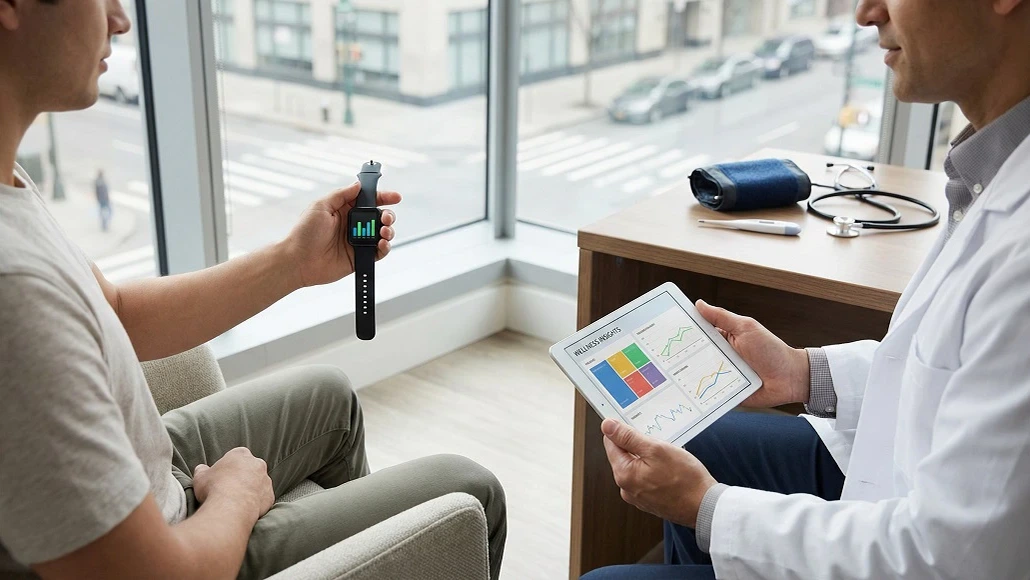

The U.S. Food and Drug Administration confirmed that it is going to limit the regulation of wearable devices along with software designed to offer support for healthy lifestyles, thereby issuing new guidance in order to clarify its regulatory approach.
The guidance, in addition to the comments from Marty Makary, the FDA Commissioner,
goes on to add to the present policy that classifies low-risk wellness tools like fitness apps and also activity trackers, which encourage exercise, as non-medical devices exempt from the stringent regulation, provided that they do not make claims that are related to disease diagnosis or even treatment.
Makary remarked in an interview given to Fox Business about artificial intelligence software such as ChatGPT that they have to promote these products and simultaneously just guard against the major safety concerns, further adding that if people are looking for a symptom on an AI-based tool, it is ideal to have that conversation when they come in to see their respective doctor or do a virtual visit.
Makary added that they want to let companies know, with crystal clear guidance, that if their device or even, for that matter, software is simply offering information, they can do that without the regulation from the FDA.
The only stipulation is if they go on to make claims of something being of medical grade, such as a blood pressure measurement. Makary said that they don’t want people altering their medicines based upon something that is just a screening tool or probably an estimate of a physiologic parameter.
Apparently in 2025, the FDA had issued a warning letter to WHOOP – the fitness band maker stating that its blood-pressure insights go on to feature a blurred line between wellness and medical devices through estimating systolic and diastolic values that are used to diagnose hypertension.
Notably, they along with the regulation of wearable devices went ahead and sent out a broader warning to consumers pertaining to the risks that unauthorized devices pose.