






The Strategic Necessity of a Connected Digital Infrastructure
In the early years of medical digitization, many healthcare organizations operated as “information silos,” with data locked within proprietary systems that were unable to communicate with one another. This fragmentation forced clinicians to rely on fax machines, phone calls, and the patient’s own memory to piece together a medical history a process that was both inefficient and error-prone. Today, healthcare interoperability enabling connected care systems is a strategic necessity, as the volume and complexity of medical data continue to grow. Interoperability is the “bridge” that allows data to flow securely across different organizations and geographic boundaries, ensuring that a patient’s medical history follows them wherever they go. This continuity is essential for providing safe and effective care, particularly in emergency situations where immediate access to allergy lists or current medications can be life-saving.
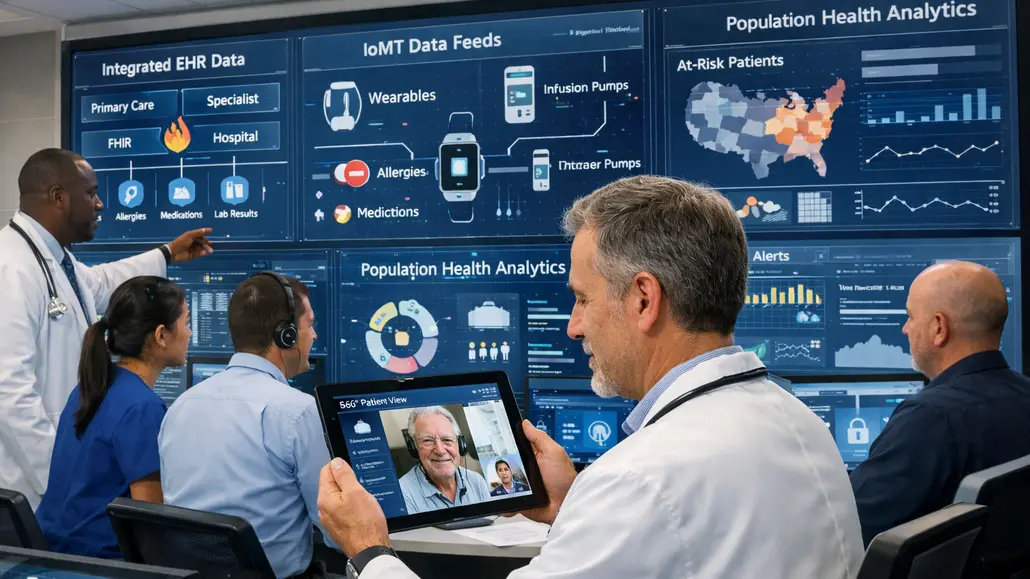
Furthermore, the move toward value-based care has increased the demand for a more holistic view of the patient’s health. To truly improve outcomes and reduce costs, providers must be able to see the “big picture” including everything from primary care visits and specialist consults to hospital stays and laboratory results. Healthcare interoperability allows for the aggregation of this diverse data into a single, longitudinal record that provides a 360-degree view of the patient. This comprehensive perspective is vital for identifying trends, predicting risks, and coordinating complex treatment plans. By breaking down the silos of the past, we are creating a more intelligent and responsive healthcare system that is better equipped to manage the health of both individuals and entire populations. Interoperability is not just a technical requirement; it is a fundamental pillar of modern clinical excellence. From a broader ecosystem perspective, HHM Global notes that interoperability is increasingly shaping the foundation of connected healthcare, enabling providers to transition from fragmented data environments to unified, insight-driven care delivery models.
Seamless Data Exchange and the End of Fragmented Care
The true power of interoperability is felt most strongly at the point of care, where the seamless exchange of data allows for a more fluid and efficient clinical workflow. When systems are fully integrated, a primary care physician can instantly view the notes from a patient’s recent specialist visit, or an emergency room doctor can access the results of a lab test performed at another facility. This immediate access to information eliminates the need for redundant testing and ensures that every provider is working from the most up-to-date and accurate data. This level of coordination is a cornerstone of healthcare interoperability enabling connected care systems, as it reduces the cognitive load on the clinician and ensures that no critical piece of information is overlooked. When the data is connected, the care is connected.
Moreover, the standardization of data formats such as FHIR (Fast Healthcare Interoperability Resources) is playing a vital role in enabling this exchange. These global standards ensure that data is not only transmitted but also “understood” by the receiving system, maintaining the clinical context and meaning of the information. This “semantic interoperability” is essential for supporting advanced decision-support tools and AI-driven analytics, which require high-quality, standardized data to function effectively. By speaking a common digital language, healthcare organizations can collaborate on a scale never before possible, sharing insights and best practices that drive the entire industry forward. This collaborative spirit is a hallmark of the modern healthcare IT integration movement, ensuring that the benefits of innovation reach every patient and every provider.
Integrated Health Records and Patient-Centered Coordination
At the heart of a connected care system is the integrated health record, which provides a unified and accessible view of the patient’s entire medical journey. This record is not just a collection of documents; it is a dynamic and interactive tool that supports the entire care team. For a patient with a complex, chronic condition like heart failure or cancer, coordination across multiple specialists is essential. Interoperability ensures that every member of the team from the cardiologist and oncologist to the physical therapist and home health nurse has access to the same treatment plan and historical data. This shared understanding prevents conflicting orders, reduces the risk of medication errors, and ensures that the patient is receiving a consistent and supportive care experience. Healthcare interoperability enabling connected care systems is therefore a vital tool for improving the quality of life for the most vulnerable patients.
The benefits of integrated records also extend to the patients themselves. Through interoperable patient portals, individuals can access their own health data from multiple sources in one place. They can see their latest vitals from a wearable device alongside their hospital discharge summary and their upcoming appointments with various providers. This consolidated view empowers patients to take an active role in their own care, fostering a deeper sense of engagement and self-efficacy. By providing a “single source of truth” for health information, interoperability reduces the confusion and stress that often accompany complex medical care. It allows the patient to focus on their healing, knowing that their entire care team is aligned and informed. This patient-centered coordination is the ultimate goal of all our interoperability efforts, ensuring that the technology always serves the human need.
The Role of Health Data Exchange in Population Health
Beyond individual care, health data exchange (HDE) is a powerful tool for managing the health of entire communities. By aggregating anonymized data from thousands of interoperable systems, public health officials can identify emerging health trends, track the spread of infectious diseases, and monitor the effectiveness of community-wide health initiatives. This high-level oversight is essential for building a more resilient and proactive healthcare system that can respond quickly to public health threats. Interoperability ensures that the “early warning signals” of a potential outbreak are not lost in the fragmented records of individual hospitals but are captured and analyzed at a population level. This collective intelligence is a vital part of healthcare interoperability enabling connected care systems, as it provides the data needed to protect the health of the entire society.
Furthermore, data-driven population health management allows for the identification of “at-risk” groups who may benefit from targeted interventions. For example, by analyzing interoperable records, a health system can identify a group of patients who are consistently missing their preventative screenings or who have a high risk of developing a chronic condition based on their family history and lifestyle factors. The system can then automatically trigger outreach and support to these individuals, providing them with the resources they need to stay healthy. this proactive approach is only possible when data flows freely and accurately across the entire healthcare ecosystem. By leveraging the power of interoperability, we are moving from a reactive “sick-care” model toward a proactive “well-care” model that prioritizes prevention and health maintenance. This shift is essential for the long-term sustainability of the healthcare system and for the well-being of the communities it serves.
Overcoming the Technical and Cultural Barriers
Despite the clear benefits, achieving full interoperability is a complex challenge that requires overcoming both technical and cultural barriers. Technically, the industry must continue to move away from legacy systems and proprietary formats toward a common, open-standard architecture. This requires a significant and ongoing investment in healthcare IT integration and a commitment to maintaining high levels of data security and privacy. As data moves more freely between systems, the risks of unauthorized access increase, requiring robust encryption and authentication protocols to protect patient information. By prioritizing security alongside connectivity, the medical community can ensure that the benefits of interoperability are achieved without compromising the fundamental right to privacy.
Culturally, the shift toward interoperability requires a change in mindset from competition to collaboration. In the past, some organizations viewed their data as a “competitive asset” and were reluctant to share it with other providers. Today, there is a growing recognition that the “patient’s story” belongs to the patient and that sharing data is a professional and moral obligation. This change in culture is being driven by both regulatory mandates and the realization that the best outcomes are achieved through a team-based approach to care. By fostering a culture of transparency and mutual support, healthcare organizations are building the trust that is essential for a truly connected care system. The journey of interoperability is therefore as much about the human relationship as it is about the digital connection, ensuring that the technology is a tool for unity rather than division.
Future Horizons: The Internet of Medical Things (IoMT)
As we look toward the future, the expansion of the Internet of Medical Things (IoMT) will further increase the demand for interoperability. Industry insights highlighted by HHM Global suggest that the growing convergence of connected devices and data ecosystems will make interoperability a critical enabler of real-time, intelligence-driven healthcare delivery. We are moving toward a world where every medical device from the infusion pump in the hospital to the heart rate monitor on the patient’s wrist is connected and sharing data in real-time. This explosion of “edge data” provides a wealth of information for clinicians, but it also creates a massive interoperability challenge. To be useful, this data must be integrated into the clinical workflow and interpreted in the context of the patient’s overall health record. Healthcare interoperability enabling connected care systems will be the primary filter and engine for this data, turning raw signals into actionable clinical insights.
Furthermore, the rise of artificial intelligence will further accelerate the need for high-quality, interoperable data. AI models are only as good as the data they are trained on, and a fragmented data landscape is the biggest obstacle to the development of effective AI tools. By creating a unified and standardized data ecosystem, interoperability provides the “fuel” for the next generation of medical innovation. From predictive analytics that identify the early signs of sepsis to AI-driven drug discovery that identifies new treatments for rare diseases, the future of medicine depends on our ability to connect and share data. As we continue to build this digital foundation, we are not just connecting computers; we are connecting the best minds and the best evidence in medicine to ensure a healthier future for all.
Conclusion: The Foundation of a Modern Clinical Ecosystem
The ongoing journey of healthcare interoperability enabling connected care systems is a testament to the power of integration and the pursuit of a more coordinated healthcare system. We have moved from a past of fragmentation and isolation to an era of connectivity and collaboration. By prioritizing seamless data exchange, integrated health records, and population-level insights, we are ensuring that the healthcare system is prepared for the challenges of the 21st century. Interoperability is the “glue” that holds the various parts of the medical institution together, providing a unified and consistent standard of care for every patient, regardless of where they are or who they see.
Ultimately, the success of interoperability is measured by the clarity and continuity it provides for the patient’s journey. When the data flows perfectly, the transition from primary care to surgery to home health is seamless, and every provider along the way has the information they need to support the patient’s recovery. This is the ultimate goal of all our technical and cultural efforts. By investing in the highest levels of interoperability and data connectivity, we are safeguarding the future of healthcare, ensuring that the healing process is supported by the best that modern science and technology have to offer. This is the promise of connected care, and it is a promise we are fulfilling every day, for every patient.