











The Strategic Importance of a Resilient Medical Supply Chain
Historically, the healthcare supply chain was often viewed as a “back-office” function, primarily focused on cost reduction and just-in-time delivery. However, recent global events have exposed the inherent vulnerabilities of this lean model, highlighting the need for a more comprehensive and durable approach. Today, healthcare supply chain resilience improving operations is a top priority for clinical leaders, who recognize that a shortage of even the most basic items such as sterile gloves or IV fluids can lead to cancelled surgeries and compromised patient outcomes. A resilient supply chain is characterized by its ability to anticipate disruptions, absorb shocks, and recover quickly, ensuring that the clinical team always has the tools they need to perform their duties. This shift toward resilience requires a fundamental move away from transactional relationships with vendors toward long-term, strategic partnerships built on transparency and mutual support. In line with broader industry trends, HHM Global underscores that supply chain resilience is increasingly viewed as a strategic imperative, with healthcare organizations recognizing its direct impact on patient safety, operational continuity, and long-term sustainability.
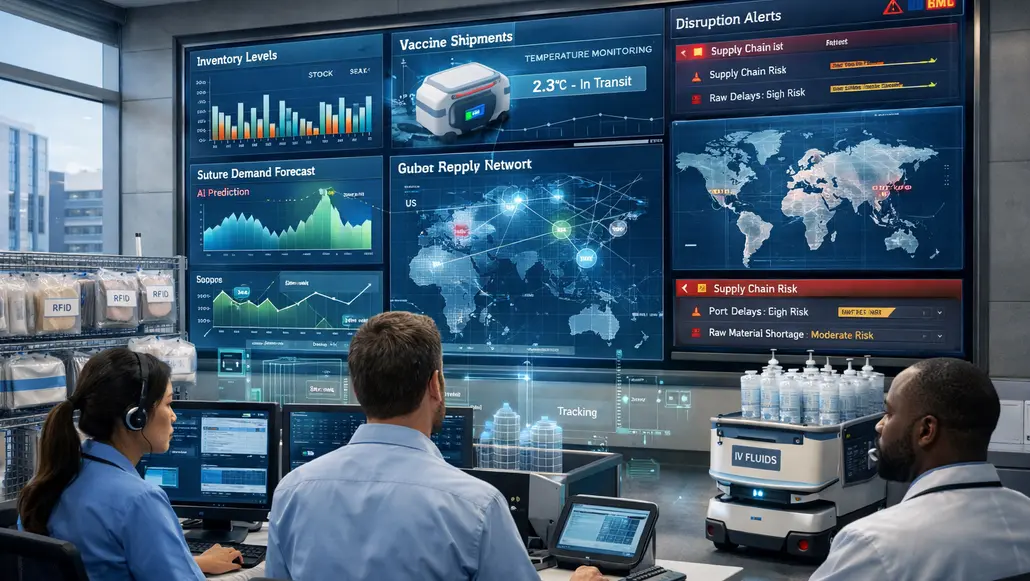
Furthermore, the complexity of the medical supply chain has increased exponentially with the rise of specialized pharmaceuticals and high-tech medical devices. These products often require stringent temperature controls and careful handling throughout the entire logistics process. Managing these requirements at scale demands a level of sophistication that traditional manual systems simply cannot provide. By adopting advanced medical supply chain management practices, institutions are creating a “digital twin” of their physical inventory, allowing them to track the movement and condition of products in real-time. This visibility is essential for identifying bottlenecks before they lead to shortages and for ensuring that every item used in a clinical setting meets the highest standards of quality and safety. The move toward resilience is therefore as much about quality assurance as it is about availability.
Real-Time Tracking and the End of Invisible Inventory
One of the primary obstacles to efficiency in the hospital setting is “invisible inventory” supplies that are hidden in nursing stations, operating room cabinets, or emergency carts without being properly logged into the central system. Real-time tracking technologies, such as RFID and advanced barcoding, are revolutionizing how hospitals manage these assets. By placing a digital tag on every item, from expensive implants to basic bandages, the system can provide a precise, up-to-the-minute view of what is available across the entire facility. This transparency is a cornerstone of healthcare supply chain resilience improving operations, as it eliminates the need for “panic ordering” and prevents the waste associated with expired products. When the supply chain team knows exactly what is on the shelf, they can make more informed decisions about when and how much to order.
Beyond the walls of the hospital, real-time tracking extends to the global transit of goods. IoT-enabled sensors can monitor the location and environment of a shipment as it moves from the manufacturer to the distribution center. For a critical batch of vaccines or biological samples, this means that the clinical team can be alerted immediately if a temperature excursion occurs, allowing them to take corrective action before the product is compromised. This level of oversight is vital for maintaining the integrity of the healthcare logistics network. It provides the medical community with the confidence that the supplies they are using are not only available but are also safe and effective. As these tracking technologies become more integrated, the “blind spots” in the supply chain will be eliminated, leading to a more predictable and reliable flow of essential goods.
Inventory Optimization and the Role of AI
Managing the inventory of a large hospital is a monumental task, involving tens of thousands of individual SKUs and highly fluctuating demand. Drawing from ongoing industry developments, HHM Global highlights that AI-powered inventory optimization is fundamentally transforming how healthcare systems balance efficiency with preparedness. Traditionally, this was managed through “par levels” static inventory targets that often led to overstocking of low-use items and shortages of high-demand ones. Modern hospital inventory systems are now utilizing artificial intelligence and machine learning to move toward a more dynamic and predictive model of inventory optimization. These algorithms can analyze years of historical usage data, combined with current patient census and seasonal trends, to predict the exact amount of each item that will be needed in the coming days or weeks. This predictive capability is a key benefit of healthcare supply chain resilience improving operations, as it ensures that capital is not tied up in excess inventory while still maintaining a safe “buffer” for emergencies.
AI can also identify patterns in usage that might indicate a larger clinical trend or a potential issue with a specific product. For example, if the system notices a sudden increase in the use of a particular type of suture, it can alert the procurement team to investigate the cause whether it is a change in surgical technique or a batch of defective products. This “intelligent oversight” allows the supply chain to be a proactive participant in the clinical mission, rather than just a reactive responder. By optimizing inventory levels based on actual and predicted need, hospitals can significantly reduce their operational costs and decrease the environmental impact of medical waste. This focus on efficiency and sustainability is a vital part of the long-term vision for a resilient healthcare supply chain.
Supplier Diversification and Risk Management Systems
The reliance on a single supplier for a critical item is a significant risk that many healthcare organizations have learned to address through supplier diversification. A resilient supply chain requires a network of multiple, geographically dispersed suppliers who can provide redundant capacity in the event of a localized disruption. This strategy is an essential component of healthcare supply chain resilience improving operations, as it ensures that the hospital is never dependent on a single point of failure. Diversification also fosters a more competitive and innovative marketplace, as suppliers are encouraged to differentiate themselves through quality, reliability, and service rather than just price. By building a diverse and robust supplier network, healthcare institutions are creating a “safety net” that protects their patients from the vagaries of global trade and environmental events.
Supporting this diversification are advanced risk management systems that continuously monitor the health and stability of the supply base. these systems can analyze a wide range of data from financial reports and news sentiment to weather patterns and geopolitical events to identify potential risks to a specific supplier or a particular region. When a risk is identified, the system can automatically suggest alternative sourcing options or trigger a pre-planned “contingency order” to build up a temporary safety stock. this proactive approach to risk management is a hallmark of supply chain resilience healthcare, moving the organization away from crisis management toward a state of constant readiness. By understanding the vulnerabilities in their supply base, clinical leaders can make strategic decisions that protect the continuity of care for their community.
Integrating Logistics with Clinical Workflows
The true potential of a resilient supply chain is only realized when it is fully integrated with the daily clinical workflows of the hospital. For many clinicians, “supply chain” is something that happens in the basement or on a loading dock, far removed from the patient’s bedside. However, when the two are connected through a unified digital platform, the benefits are profound. For example, when a surgeon schedules a procedure, the system can automatically verify that all the required implants and specialized instruments are in stock and reserved for that specific case. If an item is missing, the system can trigger an immediate alert, allowing the team to resolve the issue days in advance rather than minutes before the surgery. This seamless integration is a prime example of healthcare supply chain resilience improving operations, as it reduces the administrative burden on the clinical team and ensures a more focused and safe environment for the patient.
Furthermore, integrated systems allow for the automated capture of “utilization data” exactly which product was used for which patient and by which provider. This information is invaluable for both clinical research and financial management. It allows the hospital to track the outcomes of specific medical devices and to identify the most cost-effective treatment paths. It also facilitates a “per-patient” cost analysis that is essential for the move toward value-based care. By making the supply chain a visible and active part of the clinical process, healthcare organizations are fostering a culture of accountability and continuous improvement. The data generated through these connected systems is a powerful tool for optimizing both the clinical and operational performance of the entire institution, ensuring that the hospital remains a resilient and sustainable place of healing.
Future Horizons: Automation, Robotics and the Last Mile
Looking toward the future, the integration of robotics and autonomous systems will further enhance the resilience and efficiency of healthcare logistics. Autonomous mobile robots (AMRs) are already being used in many hospitals to handle the internal transport of goods, freeing up human staff for more complex tasks. In the future, we may see the use of drones for the “last mile” delivery of critical medical supplies to rural or hard-to-reach areas, ensuring that the benefits of a resilient supply chain reach every patient, regardless of their location. These technological advancements represent the next phase of healthcare supply chain resilience improving operations, where automation provides a level of speed and reliability that was previously unimaginable. By embracing these tools, the medical community is ensuring that it remains at the forefront of logistical innovation, dedicated to the singular goal of patient health.
Moreover, the rise of 3D printing (additive manufacturing) offers the potential for “on-demand” production of certain medical supplies directly at the point of care. This would allow hospitals to bypass traditional manufacturing and shipping delays for specific items, such as custom-fitted prosthetic components or specialized surgical guides. This level of local production would be the ultimate expression of supply chain resilience, providing a nearly instantaneous response to clinical needs. While still in its early stages, the move toward localized, digital manufacturing is a clear indication that the healthcare supply chain of the future will be more agile, more decentralized, and more responsive than ever before. As we continue to build these resilient systems, we are not just moving boxes; we are building a more secure and healthy future for all.
Conclusion: The Foundation of a Reliable Healthcare System
The ongoing journey of healthcare supply chain resilience improving operations is a testament to the power of integration and the pursuit of operational excellence. We have moved from a time of manual, fragmented logistics to an era of high-tech, data-driven resilience. By prioritizing visibility, diversification, and clinical integration, healthcare organizations are ensuring that their essential resources are managed with the same level of care and precision as their patients. The supply chain is no longer a hidden cost center; it is a vital organ of the medical institution, providing the lifeblood of supplies that allow the clinical mission to flourish. As we continue to push the boundaries of what is possible in logistics, the healthcare sector will remain a model of resilience and reliability in a complex world.
Ultimately, the success of a resilient supply chain is measured by the silence it produces the absence of shortages, the absence of delays, and the absence of administrative stress for the clinical team. When the system works perfectly, it is invisible, allowing the focus to remain entirely on the patient. This is the ultimate goal of all our logistical efforts. By investing in the highest levels of resilience and technology, we are safeguarding the future of healthcare, ensuring that the healing process is never interrupted by a missing bandage or a delayed shipment. This is the promise of modern medical supply chain management, and it is a promise we are fulfilling every day, for every patient.