




The Virtual Revolution in Hospital Management
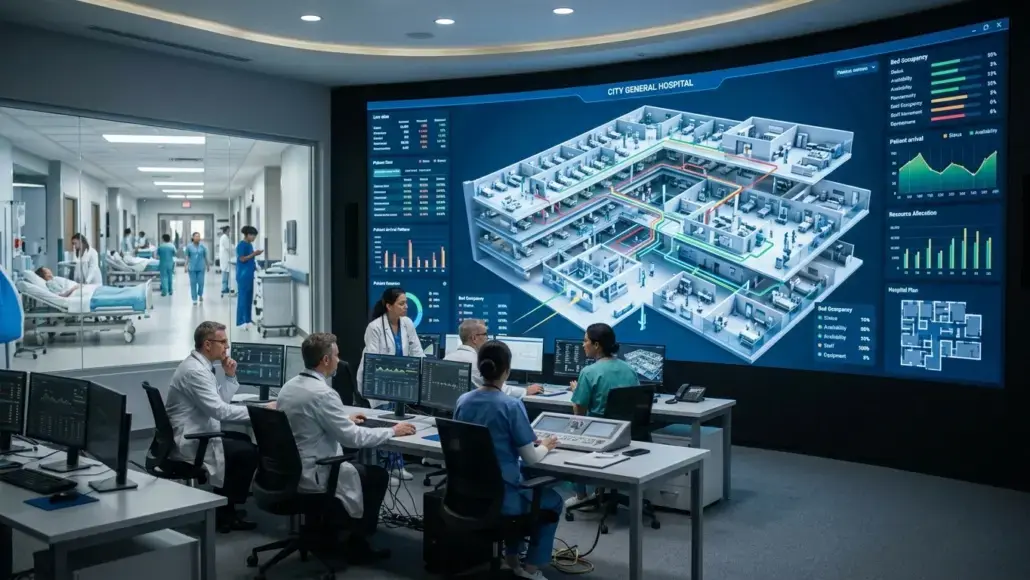
In the contemporary medical environment, the complexity of clinical operations has reached a level where traditional management methods are often insufficient. Hospitals are highly dynamic systems with thousands of moving parts from patient flow and staffing levels to equipment utilization and supply chain logistics. The introduction of healthcare digital twins optimizing clinical operations addresses this complexity by providing a real-time, three-dimensional view of the entire facility. These digital twins are fed by a constant stream of data from IoT sensors, EHR systems, and operational records, allowing them to mirror the exact state of the physical hospital at any given moment. This allows administrators to identify bottlenecks, such as a backup in the radiology department or a shortage of beds in the intensive care unit, and to test potential solutions virtually before applying them to the physical facility.
The value of hospital simulation technology is particularly evident during times of crisis or significant operational change. For instance, when a hospital is planning a major renovation or a move to a new facility, a digital twin can be used to simulate the impact on patient flow and staff movement. This ensures that the new layout is optimized for efficiency and that potential safety risks are identified and mitigated during the design phase. Similarly, during a public health emergency, administrators can use the digital twin to simulate different surge scenarios and to determine the most effective way to reallocate resources. This predictive capability is a vital component of modern clinical operations, providing a level of foresight that protects both the patient and the institution’s long-term sustainability. By building a “virtual sandbox” for hospital management, we are ensuring that the physical facility is as resilient and efficient as possible.
Predictive Healthcare Modeling and Patient-Specific Twins
While organizational digital twins focus on the facility, the concept of a patient-specific digital twin is revolutionizing the clinical side of medicine. A patient digital twin is a virtual model that incorporates an individual’s genomic data, medical history, lifestyle factors, and real-time physiological signals from wearable devices. This allows for predictive healthcare modeling on a highly personalized level. For example, a cardiologist could use a digital twin of a patient’s heart to simulate how they will respond to a specific medication or a surgical procedure. This “virtual trial” allows for the identification of the most effective and safest treatment plan without any risk to the actual patient. Healthcare digital twins optimizing clinical operations thus extend from the logistical backend to the very heart of the clinical decision-making process.
This level of personalization is particularly transformative in the management of chronic and complex diseases. For a patient with a condition like diabetes or chronic kidney disease, a digital twin can be used to predict how their physiological markers will change over time based on their diet, activity level, and treatment adherence. This allows for “just-in-time” interventions that can prevent acute episodes and slow the progression of the disease. By providing a longitudinal view of the patient’s health in a virtual space, clinicians can move away from “snapshot” medicine toward a more proactive and continuous model of care. This shift is a key driver of precision medicine, ensuring that every intervention is tailored to the unique biological and lifestyle profile of the individual. The digital twin is becoming a vital partner in the pursuit of long-term health and wellness, providing a roadmap for the patient’s clinical journey.
Optimizing Resource Planning and Workforce Management
One of the most pressing challenges in clinical operations is the effective management of human and material resources. Staffing shortages and equipment downtime can lead to significant delays and increased costs. Healthcare digital twins optimizing clinical operations are providing a new way to manage these resources through data-driven resource planning. By analyzing the flow of patients through the hospital, the digital twin can identify the exact times and locations where staffing needs are highest. It can then simulate different staffing models to determine the most effective way to deploy the available team, reducing burnout and ensuring that every patient receives the attention they need. This proactive management of the workforce is essential for maintaining the high standards of care required in a modern medical institution.
Furthermore, digital twins are being used to optimize the “human-equipment” interface. By tracking the location and utilization rates of mobile medical equipment such as infusion pumps, ventilators, and portable X-ray machines the digital twin can ensure that these critical tools are always in the right place at the right time. It can also predict when a particular machine is likely to fail, allowing for proactive maintenance that prevents intraoperative delays. This level of logistical precision is a hallmark of digital twin healthcare, where every bit of data is used to eliminate waste and improve safety. By creating a more predictable and efficient logistical environment, hospitals can reduce their operational overhead and reinvest those savings into direct patient care. The digital twin is not just a model; it is a powerful engine for organizational excellence and fiscal responsibility.
Integrating the Supply Chain and the Clinical Environment
The impact of a digital twin extends beyond the physical walls of the hospital into the global medical supply chain. By integrating supplier data with the hospital’s internal operational model, administrators can create a “resilience twin” that monitors the flow of essential supplies in real-time. If a disruption occurs in the supply of a critical medication or surgical component, the digital twin can automatically simulate the impact on the hospital’s upcoming schedule and suggest alternative sourcing options or clinical pathways. This level of integration is essential for healthcare digital twins optimizing clinical operations, as it ensures that the “logistical backbone” of the hospital is as robust as its clinical frontline. In a world of increasing global uncertainty, this organizational resilience is a primary driver of patient safety and stability.
Moreover, this integration allows for a more “circular” approach to medical resource management. By tracking the life cycle of every product used in the hospital from surgical trays to linens the digital twin can identify opportunities for waste reduction and recycling. This supports the move toward more sustainable healthcare systems, ensuring that clinical excellence and environmental stewardship go hand-in-hand. The digital twin provides the visibility needed to manage these complex, multi-layered systems with a high degree of sensitivity and care. It allows for a holistic view of the hospital’s impact on both the patient and the environment, ensuring that the institution remains a positive and healthy presence in the community. The future of clinical operations is one of total visibility and intelligent, sustainable orchestration, powered by the best that simulation technology has to offer.
Future Horizons: The Interconnected Digital Ecosystem
Looking toward the future, we are moving toward a state of “networked digital twins,” where multiple hospitals, clinics, and community health providers are connected in a unified virtual ecosystem. This would allow for the optimization of clinical operations across an entire regional health system, ensuring that patients are directed to the facility with the best resources and the shortest wait times for their specific needs. It would also facilitate large-scale clinical research, as the anonymized data from millions of virtual simulations could be used to identify the most effective treatments and operational models for diverse populations. Healthcare digital twins optimizing clinical operations is thus a foundational step toward a more intelligent and collaborative global health network, where the “lessons learned” in one virtual space can benefit patients everywhere.
Furthermore, the integration of generative AI with digital twins will likely lead to “autonomous twins” that can not only simulate but also suggest and implement operational improvements in real-time. For example, the system could automatically reconfigure the layout of an outpatient clinic to accommodate a sudden surge in demand or adjust the temperature and lighting in the OR to match the physiological needs of the patient on the table. This level of responsiveness is the ultimate goal of digital twin healthcare, moving the hospital from a static building toward a living, breathing entity that adapts to the needs of its people. As we continue to refine these tools, the line between the physical and virtual worlds will continue to blur, leading to a new era of “intelligent medicine” that is safer, more efficient, and more profoundly patient-centered than ever before. This is the future of clinical operations, and it is a future we are building one simulation at a time.
Conclusion: The Twin as a Foundation of Trust
The ongoing journey of healthcare digital twins optimizing clinical operations is a testament to the power of human ingenuity and the pursuit of operational and clinical excellence. We have moved from a time of manual coordination to an era of high-tech simulation. By prioritizing visibility, prediction, and holistic integration, healthcare organizations are ensuring that their operational processes are as sophisticated as the medical science they support. The digital twin is no longer just a model; it is a vital foundation for trust, providing the data needed to make every clinical and administrative decision with confidence. This partnership between the physical and virtual worlds is saving lives, reducing waste, and ensuring that the healthcare systems of the future are prepared for any challenge.
Ultimately, the success of the digital twin will be measured by its ability to fade into the background, providing a seamless and supportive environment where the right operational choices are made every time. This is the ultimate goal of all our technical and administrative efforts. By investing in the highest levels of simulation and professional standards, we are safeguarding the future of healthcare, ensuring that the healing process is supported by the best that modern science and technology have to offer. This is the promise of digital twins, and it is a promise we are fulfilling every day, for every patient and every provider. The virtual frontier is here, and it is a future we are building together, one data point and one simulation at a time. This is how we optimize the future of clinical care.