
















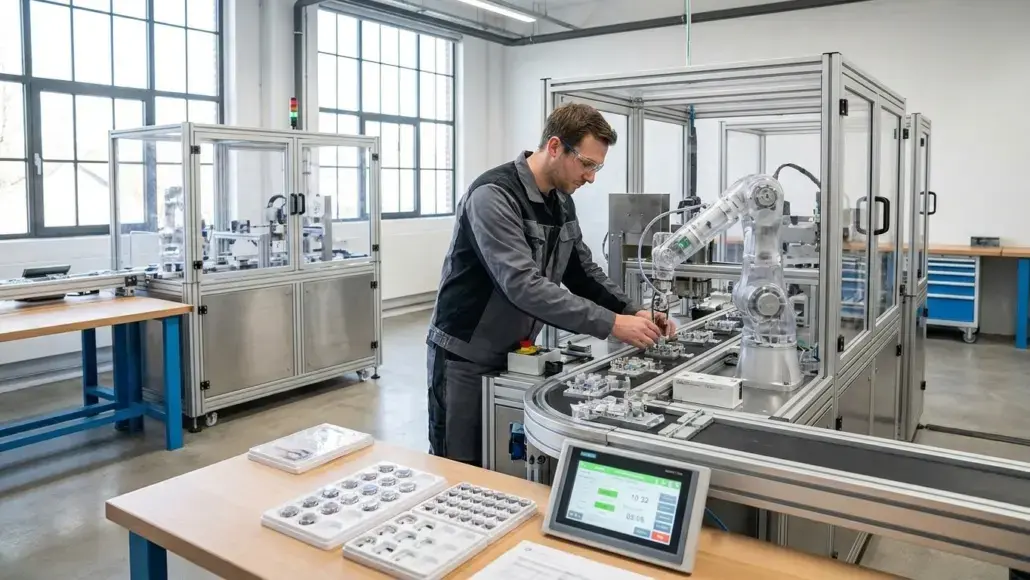

The traditional model of medical device manufacturing has long been characterized by massive, centralized factories located thousands of miles from the point of care. While this model has historically benefited from economies of scale, it is increasingly being challenged by the need for greater agility, personalization, and supply chain resilience. Enter the era of microfactories revolutionizing medical device production. These small-scale, highly automated, and modular manufacturing units are designed to be deployed locally, often within the hospital itself or in close geographic proximity to clinical centers. By leveraging advanced technologies such as 3D printing, robotics, and cloud-based design, microfactories are enabling a shift from mass production to “mass personalization,” allowing for the on-demand creation of medical devices tailored to the unique anatomy of an individual patient.
The transition to microfactories revolutionizing medical device production represents a significant departure from the “one-size-fits-all” approach that has dominated the industry for decades. In a centralized system, a manufacturer might produce millions of identical orthopedic implants, which are then shipped globally and stored in expensive inventories. However, every patient’s anatomy is different, and a standard implant may not always provide the optimal fit. Microfactories solve this problem by allowing clinicians to send patient-specific data such as a CT scan of a fractured bone directly to a localized manufacturing unit. Within hours, the microfactory can produce a custom implant that fits the patient’s bone structure perfectly, leading to better surgical outcomes, faster recovery times, and a reduced risk of complications.
The Technological Core of Localized Manufacturing
The feasibility of microfactories revolutionizing medical device production is built upon the pillars of Industry 4.0. At the heart of these units is additive manufacturing (3D printing), which allows for the creation of complex geometries that are impossible to achieve through traditional machining or molding. Whether it is a titanium hip replacement with a lattice structure that promotes bone ingrowth or a patient-specific surgical guide for a complex spinal procedure, 3D printing provides the flexibility needed for high-value, low-volume production. This capability is essential for localized manufacturing, where the goal is not to produce millions of items, but to produce the right item for the right patient at the right time.
Beyond 3D printing, microfactories revolutionizing medical device production integrate sophisticated robotics and automated quality control systems. Because these units are often operated by a smaller workforce or even autonomously, the reliance on smart manufacturing healthcare technology is paramount. High-resolution cameras and AI-driven inspection algorithms can monitor the manufacturing process in real-time, ensuring that every layer of a printed part meets the rigorous safety standards required for medical use. This level of automated validation is critical for maintaining the integrity of the medical device manufacturing process outside of a traditional factory setting. By digitizing the quality assurance pipeline, microfactories can achieve a level of precision and consistency that matches, and often exceeds, that of large-scale industrial facilities.
Strengthening the Global Medical Supply Chain
The COVID-19 pandemic exposed the profound vulnerabilities of the global medical supply chain, as hospitals struggled to secure essential items due to factory closures and logistics breakdowns. Microfactories revolutionizing medical device production offer a powerful solution to this problem by creating a decentralized network of manufacturing hubs. Instead of relying on a single factory in a distant country, a health system can have multiple microfactories spread across different regions. This decentralization ensures that if one part of the supply chain is disrupted, others can continue to function, providing a high degree of resilience for the healthcare infrastructure.
Localized manufacturing also has significant environmental benefits. By producing devices close to the point of use, microfactories drastically reduce the carbon footprint associated with long-distance shipping and air freight. Furthermore, because these units produce items on-demand, there is far less need for massive warehouses full of inventory that might expire or become obsolete before it is ever used. This reduction in waste aligns with the broader movement toward sustainable healthcare, making microfactories revolutionizing medical device production a key component of the “green” medical supply chain of the future. The ability to create what is needed, when it is needed, is the ultimate expression of efficiency in a world with finite resources.
Accelerating Innovation and Personalized Care
One of the most exciting aspects of microfactories revolutionizing medical device production is the acceleration of the innovation cycle. In the traditional model, bringing a new medical device to market is a slow and expensive process, often taking years of development and testing. Microfactories allow for rapid prototyping and iterative design, enabling researchers and clinicians to test new ideas and refine their designs in a fraction of the time. This “fast-track” to innovation is particularly beneficial for the development of niche medical devices, such as pediatric implants or tools for rare surgical procedures, which are often ignored by large manufacturers due to their small market size.
Personalized care is the ultimate goal of modern medicine, and microfactories are the tools that make it a reality. Beyond implants, these units can be used to produce personalized drug delivery systems, custom prosthetics, and even bio-printed tissues. The ability to “print” a prosthetic limb that is perfectly matched to a child’s growth pattern, or a medication patch that releases a specific dose of drugs tailored to a patient’s metabolism, is no longer science fiction. Microfactories revolutionizing medical device production are providing the infrastructure needed to scale these breakthroughs, moving them from the lab to the bedside. This democratized access to high-end medical technology has the potential to level the playing field, ensuring that the benefits of personalized medicine are available to patients regardless of their geographic location.
Navigating Regulatory and Quality Challenges
While the promise of microfactories revolutionizing medical device production is immense, their widespread adoption requires a new approach to regulation. Regulatory bodies like the FDA have traditionally focused on “factory-based” oversight, where the manufacturing process is validated in a single location. Localized manufacturing, however, shifts the production to many different sites. This requires a transition to “process-based” regulation, where the digital files, the equipment specifications, and the automated quality control systems are certified, rather than the physical location itself. Ensuring that a device produced in a microfactory in London is identical in quality to one produced in a microfactory in New York is a significant challenge that requires global collaboration on data standards and validation protocols.
Cybersecurity is another critical consideration for microfactories revolutionizing medical device production. As manufacturing becomes increasingly digital, the risk of “IP theft” or the malicious alteration of a device design becomes a real threat. Protecting the digital blueprint of a patient-specific implant as it is transmitted from the hospital to the microfactory is essential for patient safety. This requires the implementation of robust encryption, blockchain-based tracking, and secure cloud environments. By addressing these security and regulatory hurdles, the medical device industry can build the trust needed to fully embrace the decentralized manufacturing revolution.
Conclusion: The Dawn of Distributed Medical Manufacturing
The rise of microfactories revolutionizing medical device production marks the beginning of a new chapter in the history of medical technology. It is a shift from a world of rigid, centralized production to a future of agile, localized, and personalized manufacturing. By bringing the “factory” to the patient, we are not just improving the efficiency of the supply chain we are fundamentally changing the nature of the relationship between technology and care.
As we look forward, the impact of these mini-factories will only continue to grow. They will become integrated into the fabric of the hospital, working alongside clinicians to solve complex medical challenges in real-time. They will empower surgeons with better tools, provide patients with better outcomes, and create a more resilient and sustainable healthcare system for everyone. Microfactories are not just a new way to make things they are a new way to heal, ensuring that the next generation of medical innovation is as unique as the patients it serves. The revolution has begun, and the microfactory is at its center, building a healthier world one personalized device at a time.