
















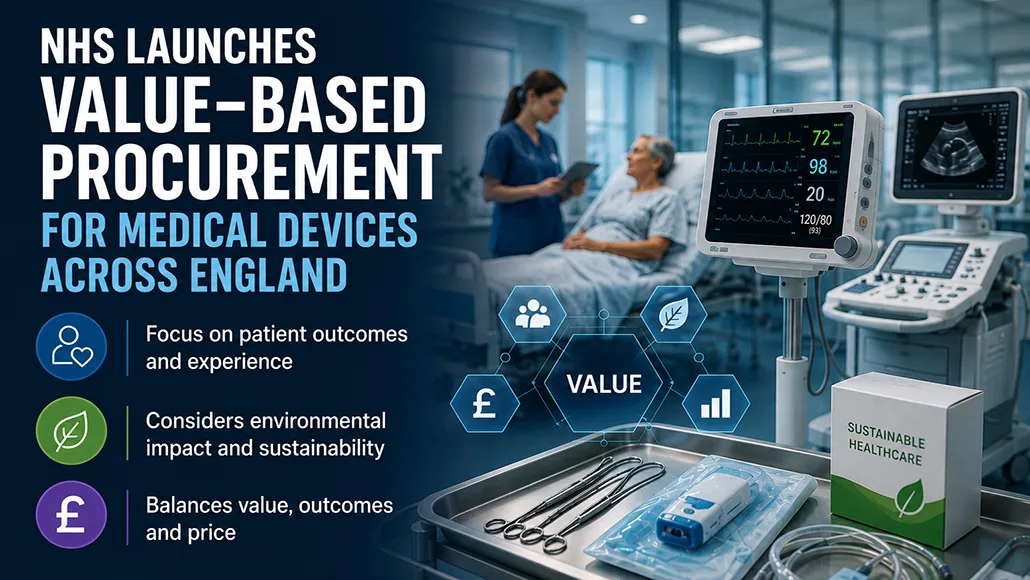

The NHS has introduced a new framework across England that changes the way healthcare technologies and medical devices are evaluated and purchased. Developed over a period of more than three years, the initiative is intended to ensure procurement decisions are based on a broader assessment of value rather than focusing primarily on initial purchase costs. Under the new approach, NHS organisations will be expected to consider factors including patient outcomes, patient experience, environmental impact and price when selecting technologies and devices. The introduction of value-based procurement for medical device purchasing is part of wider efforts to support innovation, improve efficiency and strengthen patient outcomes through a more comprehensive evaluation process.
The framework has received support from healthcare policy specialists and stakeholders within the medtech sector, who believe it could help NHS purchasing decisions better account for the long-term benefits and impact of healthcare technologies. Chris Whitehouse, Director of Health and MedTech Policy at Whitehouse Communications, which advises medical device suppliers, said: “For many years, procurement decisions across parts of the NHS have too often been driven primarily by upfront cost.” While the framework establishes a new direction for procurement practices, industry observers note that its success will depend on how effectively it is adopted across NHS organisations and integrated into existing decision-making processes.
Attention will also be required in areas such as procurement culture and stakeholder engagement to ensure the intended benefits are realised. Whitehouse emphasised that policy changes alone would not be enough to transform purchasing practices, stating: “Changing procurement frameworks on paper is relatively straightforward. Changing behaviours and cultures that have developed over many years is much harder,” he said. A central feature of the framework is the earlier involvement of clinicians in procurement discussions, recognising their insight into how technologies perform in real-world healthcare environments and how they influence patient care.
The framework further underlines the importance of patient experience as a measure of value. NHS organisations are encouraged to consider how technologies affect factors such as independence, dignity and quality of life when assessing procurement options. Through this outcomes-focused model, value-based procurement for Medical Device assessment aims to support more informed purchasing decisions while aligning procurement practices with broader healthcare objectives across the NHS.