













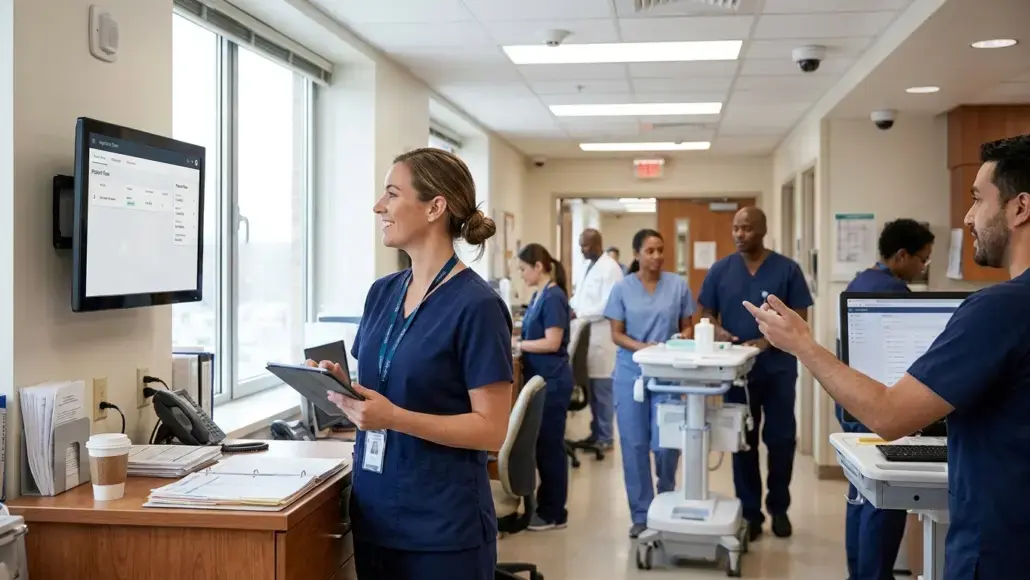

The modern healthcare professional is often described as being overburdened by “administrative friction,” a term that encompasses the hours spent each day on documentation, data entry, and manual coordination. However, the emergence of ambient intelligence elevating clinical workflows is offering a profound solution to this systemic challenge. Unlike traditional technology that requires active user interaction, ambient intelligence refers to a digital environment that is sensitive, adaptive, and responsive to the presence of people. By utilizing a network of sensors, microphones, and computer vision, these systems operate in the background of the clinical encounter, capturing data and automating tasks without requiring the clinician to ever touch a keyboard or a screen. This shift represents a transition from a computer-centric medical practice to a human-centric one, where technology serves as an invisible assistant rather than a primary distraction.
At its core, ambient intelligence elevating clinical workflows is about reclaiming the sacred space of the patient-provider relationship. When a doctor enters an examination room equipped with ambient AI, the system recognizes the participants and begins to securely record and interpret the conversation. Through natural language processing and clinical reasoning algorithms, the system can distinguish between casual rapport and pertinent medical information, automatically drafting a high-quality clinical note in the Electronic Health Record (EHR). This eliminates the need for the clinician to spend their evening “charting,” a practice that has been identified as a leading cause of burnout and professional dissatisfaction. By automating the documentation process, ambient intelligence ensures that the medical record is both more accurate and more comprehensive, reflecting the nuances of the patient’s story that might otherwise be lost.
The Technological Architecture of Ambient Clinical Environments
The realization of ambient intelligence elevating clinical workflows requires a sophisticated orchestration of hardware and software. Computer vision plays a critical role, allowing the system to observe clinical actions such as hand hygiene compliance, patient movement, or the administration of medication. These visual data points are combined with acoustic sensors that capture verbal orders and patient concerns. The challenge for developers is to ensure that these systems are both highly accurate and deeply respectful of patient privacy. This is achieved through edge computing, where data is processed locally within the hospital’s secure network rather than being sent to a third-party cloud. This architecture ensures that sensitive information is protected while providing the low-latency response times required for real-time clinical workflow automation.
Furthermore, the intelligence of these systems is grounded in vast medical ontologies and deep learning models. Ambient intelligence elevating clinical workflows is not just recording sounds; it is understanding the context of the medical encounter. For instance, if a physician mentions a specific dosage for a new medication, the system can cross-reference that information with the patient’s existing allergies and laboratory results, providing a gentle “nudge” or alert if a potential contraindication is detected. This preventative capability transforms the ambient environment into a proactive safety net, reducing the likelihood of medical errors and ensuring that the care delivered aligns with the latest evidence-based guidelines.
Reducing Clinician Burden through Intelligent Automation
The impact of ambient intelligence elevating clinical workflows on the daily life of a healthcare worker is transformative. Beyond documentation, these systems can automate the logistical coordination of the care team. In an inpatient setting, ambient sensors can detect when a patient is attempting to get out of bed without assistance, immediately alerting the nursing station to prevent a fall. Similarly, the system can track the location of specialized medical equipment, such as portable ultrasound machines or crash carts, ensuring that they are always where they are needed most. By handling these “micro-tasks,” ambient intelligence allows clinicians to operate at the top of their license, spending more time on complex diagnosis and compassionate care and less time on the mundane mechanics of hospital operations.
Smart healthcare environments also improve the efficiency of multidisciplinary team huddles and handoffs. By providing a real-time summary of the patient’s status derived from continuous ambient monitoring the system ensures that every member of the care team has the same up-to-date information. This reduces the need for repetitive questioning and ensures that clinical transitions are smooth and error-free. The cumulative effect of these improvements is a significant reduction in the cognitive load on healthcare providers, leading to a more sustainable and fulfilling professional environment. When clinicians feel supported by their environment, the quality of care they provide naturally increases, creating a positive feedback loop that benefits the entire healthcare ecosystem.
Enhancing Care Quality and Patient Satisfaction
For the patient, ambient intelligence elevating clinical workflows translates to a more attentive and personalized experience. Instead of looking at a computer screen during a consultation, the physician can maintain eye contact and engage in deep listening. This improvement in communication has been shown to increase patient trust and adherence to treatment plans. Patients also benefit from the continuous “watchful eye” of the ambient system, which can monitor vital signs and behavioral changes without the need for intrusive wearable devices or frequent interruptions by hospital staff. This creates a more restful and healing environment, which is particularly important in acute care settings where sleep deprivation can hinder recovery.
The data gathered through ambient intelligence elevating clinical workflows also provides a rich source of insights for long-term health management. By observing how a patient moves and interacts in their natural environment, clinicians can gain a better understanding of functional health that is not captured during a standard physical exam. For example, subtle changes in gait or vocal tone can be early indicators of neurological decline or deteriorating mental health. These “digital phenotypes” allow for earlier intervention and more precise adjustments to therapy, moving the healthcare system closer to the ideal of personalized and preventative medicine.
Ethical Considerations and the Future of Invisible Tech
As with any technology that involves continuous observation, ambient intelligence elevating clinical workflows raises important ethical questions regarding consent and data ownership. It is essential that patients and staff are fully informed about what data is being collected and how it will be used. Transparency is the foundation of trust, and healthcare organizations must implement robust governance frameworks to ensure that ambient technology is used ethically and equitably. There must also be clear boundaries to prevent “function creep,” where data collected for clinical improvement is used for punitive performance monitoring or unauthorized commercial purposes.
Looking ahead, the future of ambient intelligence elevating clinical workflows lies in the integration of multi-modal sensing and advanced reasoning. We are moving toward a state where the hospital room itself becomes a diagnostic tool. Smart surfaces will monitor skin temperature and hydration levels, while ambient air sensors will detect biomarkers in the breath. These innovations will further refine our ability to monitor health in a non-intrusive way, making the healthcare experience as seamless and natural as possible. As the technology matures, the “intelligence” will become so deeply embedded in the clinical workflow that we will cease to think of it as a separate tool, but rather as an inherent quality of the modern healing environment.
Conclusion: Rehumanizing Medicine through Ambient AI
The journey toward ambient intelligence elevating clinical workflows is a journey toward the rehumanization of medicine. By removing the digital barriers that have come between patients and providers, we are creating a healthcare system that is more compassionate, efficient, and safe. These invisible assistants are not replacing the human element of care; rather, they are amplifying it by handling the data-heavy tasks that humans were never meant to perform in the first place.
As we continue to refine these systems, the benefits for both clinicians and patients will become increasingly evident. We will see a reduction in medical errors, an improvement in professional satisfaction, and a more responsive and resilient healthcare infrastructure. Ambient intelligence is the final piece of the puzzle in the creation of the smart hospital, turning the physical space into an active participant in the healing process. In the end, the most successful technology is the one that disappears into the background, leaving only the human connection and the pursuit of health at the forefront of clinical practice.