
















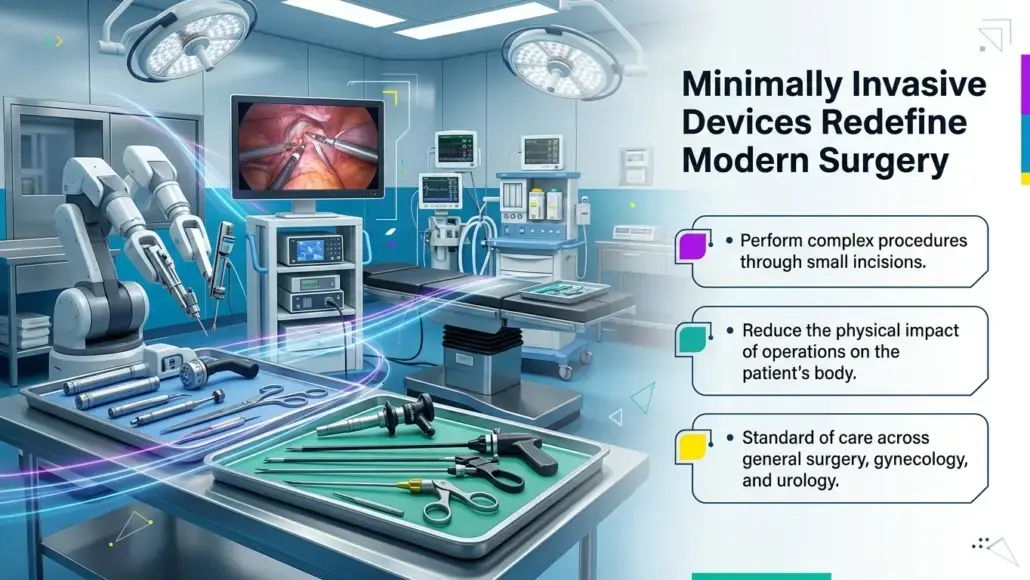

The trajectory of surgical intervention has moved steadily toward reducing the physical footprint of the operation on the patient body. This progression is largely driven by the development of sophisticated minimally invasive devices that allow clinicians to perform complex procedures through small incisions. These instruments have moved from being specialty specific tools to becoming the standard of care across general surgery, gynecology, and urology. The shift toward less invasive techniques is not merely a matter of patient comfort; it is a fundamental restructuring of surgical economics and clinical outcomes that hospitals must address to remain competitive.
As medical technology continues to advance, the distinction between traditional open surgery and advanced surgery has become increasingly pronounced. Modern surgical devices are now equipped with high definition visualization systems and articulable end effectors that provide a level of control that exceeds the natural capabilities of the human hand. This enhanced surgical precision allows for the careful dissection of delicate tissues and the precise placement of sutures in tight anatomical spaces. The result is a significant reduction in intraoperative blood loss and a lower risk of post-operative complications.
Technical Advancements and Operating Room Innovation
The integration of these tools into the daily workflow of clinical teams requires a thoughtful approach to operating room innovation. It is not enough to simply purchase the latest medtech; hospitals must invest in the training and infrastructure necessary to support these advanced platforms. This includes the implementation of specialized imaging suites and the redesign of the sterile field to accommodate the footprint of robotic and laparoscopic towers. When the physical environment is optimized for these healthcare devices, the efficiency of the entire surgical team is improved, leading to higher throughput and better resource utilization.
One of the primary advantages of utilising minimally invasive devices is the impact on recovery times. Patients who undergo laparoscopic or robotic assisted procedures typically experience less pain and a faster return to normal activities compared to those who have open surgery. For healthcare systems, this translates to shorter hospital stays and a reduction in the use of post-operative opioids. In an era where bed capacity is often at a premium, the ability to transition patients safely to an outpatient or home care setting is a significant operational benefit.
Clinical Outcomes and Patient Recovery Profiles
The evolution of surgical devices has also expanded the boundaries of what is considered operable. High risk patients who might not have survived the stress of a major open procedure are now candidates for intervention thanks to the reduced physiological impact of minimally invasive techniques. This expansion of the patient pool has significant implications for public health, particularly as the population ages and the prevalence of chronic conditions increases. Medtech manufacturers are responding to this need by developing even smaller and more specialized instruments designed for micro-surgical applications.
Beyond the immediate clinical benefits, the shift toward advanced surgery is reshaping the financial profile of surgical departments. While the initial capital investment in minimally invasive devices can be substantial, the long term savings associated with reduced complications and shorter recovery times justify the expense. Payors are recognizing the value of these procedures, as they lead to lower total costs of care per episode. Consequently, the selection of surgical equipment has become a strategic decision that involves input from clinical leads, financial officers, and administrative stakeholders.
Enhanced Visualization and Precision Standards
The role of visualization in the success of these procedures cannot be overstated. Modern laparoscopic cameras and digital imaging systems provide surgeons with a magnified, three dimensional view of the surgical site. This level of clarity is a cornerstone of surgical precision, allowing for the identification of small vessels and nerves that might be obscured in an open field. As imaging technology continues to improve, we see the integration of real-time diagnostics and fluorescence guided surgery, which further enhances the ability of the surgeon to distinguish between healthy and diseased tissue.
Operating room innovation is also being influenced by the rise of data analytics and machine learning. Some of the latest minimally invasive devices are capable of capturing detailed data during a procedure, which can be used for post-operative review and surgical training. This data-driven approach allows for the benchmarking of performance across different surgeons and departments, leading to the identification of best practices and the continuous improvement of clinical standards. The surgical suite is becoming a hub of digital information, where every movement and decision is recorded to optimize future outcomes.
Educational Shifts and Workforce Training
The transition to minimally invasive devices also has significant implications for surgical education. Residents and fellows must now master a different set of skills, focusing on hand-eye coordination with a digital screen and the manipulation of long-shafted instruments. Simulation technology has become an essential part of the training curriculum, allowing trainees to practice complex maneuvers in a risk-free environment before entering the operating room. This shift in pedagogy ensures that the next generation of surgeons is fully prepared to handle the complexities of advanced surgery.
Environmental sustainability is another area where the choice of medical technology is making an impact. While many specialized surgical instruments are single-use, there is a growing movement toward the development of high quality, reprocessable minimally invasive devices. This effort to reduce medical waste is aligned with the broader corporate social responsibility goals of many healthcare organizations. By choosing durable and efficient instruments, hospitals can minimize their environmental footprint without compromising on patient safety or clinical outcomes.
The continued refinement of these devices will likely involve the use of new materials and the incorporation of smarter sensors. We expect to see instruments that can provide real-time feedback on tissue tension and temperature, further reducing the risk of accidental injury. This constant improvement in surgical precision is what defines the modern era of medicine. By embracing these changes, the healthcare industry is setting a new standard for what is possible in the operating room, ensuring that surgery remains a safe and effective option for patients around the world.