










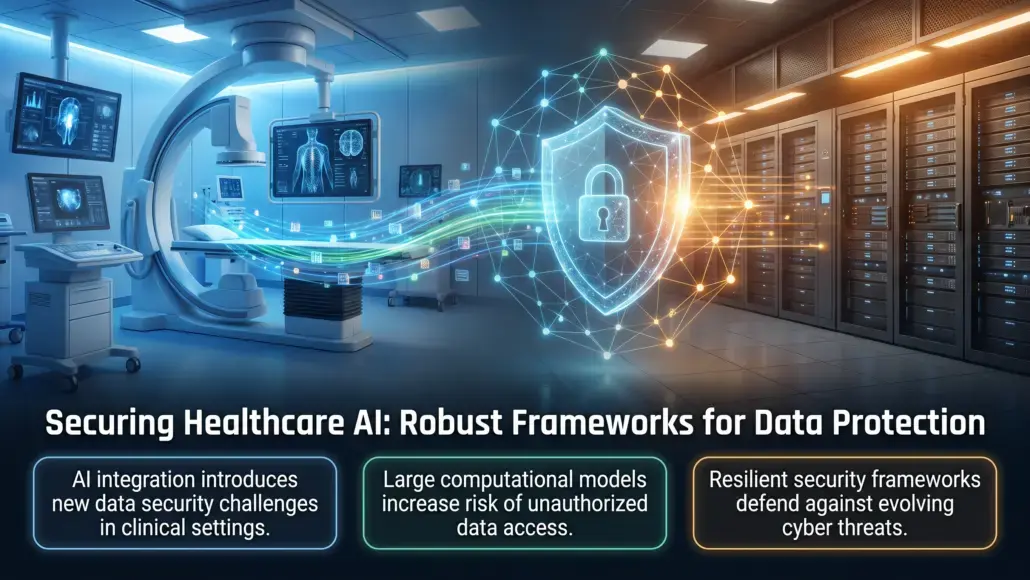

The integration of advanced analytical tools into clinical environments introduces new challenges for the protection of sensitive information. As medical institutions move toward large scale computational models, the amount of data being processed and shared increases significantly, creating new opportunities for unauthorized access or data breaches. By implementing healthcare data security frameworks supporting AI deployment, organizations can build a resilient defense against cyber threats while maintaining the flow of information needed for modern medicine. These frameworks provide the technical and organizational controls required to protect patient privacy, ensure data integrity, and meet stringent regulatory requirements.
Security in a medical context is not just about preventing data loss; it is about maintaining the trust of the community and the safety of the clinical environment. A security breach can have severe consequences, from the exposure of personal health information to the disruption of critical clinical workflows. As healthcare providers become more dependent on intelligent systems, the reliability and security of those systems become paramount. A comprehensive security strategy must address the entire data lifecycle, from ingestion and processing to analysis and disposal, ensuring that information is protected at every stage.
Zero Trust Architectures for Connected Medical Environments
Traditional security models often rely on a perimeter based approach, where trust is granted to anyone inside the network. However, in a modern healthcare setting with thousands of connected devices and diverse users, this approach is no longer sufficient. Zero Trust is a security philosophy that operates on the principle of never trust, always verify. Frameworks are increasingly incorporating Zero Trust architectures to manage the complexity of connected medical environments. This involves the continuous verification of every user, device, and application attempting to access the network, regardless of their location.
Implementing Zero Trust requires the use of micro segmentation, where the network is divided into small, isolated zones. This prevents a threat from moving laterally across the network if a single device or account is compromised. In a clinical setting, this might involve isolating patient monitoring devices from the general hospital network, ensuring that a breach in one area does not impact critical care systems. By limiting the attack surface, organizations can significantly reduce the risk of a large scale data breach.
Identity and access management (IAM) is another core component of a Zero Trust environment. It involves the use of multi factor authentication and least privilege access, ensuring that users only have access to the information they need to perform their specific roles. For instance, a clinician may have access to a patient’s medical records but not the underlying data used to train the analytical model. By strictly controlling access to sensitive information, healthcare providers can protect patient privacy and reduce the likelihood of internal threats.
Encryption and Anonymization in Large Scale Medical Data Processing
Protecting data in motion and at rest is a fundamental requirement for any healthcare organization. Encryption protocols ensure that even if information is intercepted, it cannot be read without the correct decryption key. Healthcare data security frameworks supporting AI deployment prioritize the use of strong encryption for all clinical information, from patient records to the outputs of intelligent models. This involves the use of end to end encryption for data in transit between devices and servers, as well as encryption for data stored in databases and cloud environments.
When data is used for research or model training, anonymization and de identification techniques are essential for protecting patient privacy. These techniques involve the removal or masking of personally identifiable information (PII) to ensure that the data cannot be linked back to a specific individual. Common methods include data masking, k-anonymity, and differential privacy. By ensuring that researchers and developers are working with anonymized data, organizations can advance medical science while maintaining the confidentiality of their patients.
The challenge of anonymization lies in the risk of re identification, where an individual’s identity is reconstructed by combining different datasets. An effective security framework must include tools for assessing and mitigating this risk, ensuring that the anonymization techniques used are sufficiently resilient. The focus on data privacy throughout the processing lifecycle is a key differentiator of a high performance healthcare security strategy. By building privacy into the design of their systems, organizations can ensure that their technical innovation does not come at the expense of patient trust.
Regulatory Alignment with Global Health Data Standards
Compliance with international and national regulations is a continuous requirement for healthcare providers. Laws such as HIPAA in the United States and GDPR in Europe establish strict standards for the protection of personal health information. Healthcare data security frameworks supporting AI deployment must be designed to align with these regulatory requirements, providing the necessary documentation and controls for auditing and reporting. This involves not only technical safeguards but also the implementation of policies and procedures that govern how data is managed across the enterprise.
Regulatory alignment also requires a clear understanding of data residency and sovereignty laws, which dictate where data can be stored and processed. As more organizations move toward cloud based solutions, managing these requirements becomes more complex. An effective security framework provides the tools needed to track and manage data location, ensuring that the organization remains in compliance with all relevant laws. This level of transparency is essential for building and maintaining the trust of both regulators and the public.
The impact of non compliance can be severe, ranging from heavy fines to legal action and a damaged reputation. Therefore, healthcare organizations must prioritize regulatory alignment as a core part of their security strategy. Regular audits and risk assessments are necessary to identify potential gaps in compliance and address them before they lead to a problem. By building a sustainable foundation for data protection, healthcare providers can ensure that they are prepared for the future of intelligent, data driven medicine.
Threat Detection and Response in Connected Clinical Systems
Maintaining the security of a large scale medical environment requires constant monitoring and a rapid response to potential threats. Healthcare data security frameworks supporting AI deployment incorporate advanced threat detection tools that use intelligent models to identify unusual patterns of activity. For example, a sudden increase in data transfers or a login attempt from an unusual location can trigger an automated alert. These tools allow security teams to identify and neutralize threats before they can cause significant damage.
Automated response protocols are another critical component of a modern security strategy. When a threat is detected, the system can automatically take action to contain it, such as isolating a compromised device or disabling a suspicious account. This rapid response is essential for minimizing the impact of a cyberattack, particularly in a high pressure clinical environment where downtime can have immediate consequences. By embedding intelligence into the detection and response process, healthcare organizations can create a more resilient and responsive security environment.
The long term stability of the security infrastructure depends on continuous improvement and adaptation. Cyber threats are constantly evolving, and security teams must stay ahead of new techniques and vulnerabilities. This involves regular training for staff, as well as the continuous update of software and security protocols. By fostering a culture of security awareness, organizations can encourage staff at all levels to be vigilant and report suspicious activity. The combination of high quality technology and a security conscious workforce is a powerful defense against modern cyber threats.
Balancing Data Accessibility with Patient Privacy Needs
One of the most significant challenges for healthcare administrators is balancing the need for data accessibility with the requirement for patient privacy. Clinicians need easy access to information to provide high quality care, but that information must be protected from unauthorized access. Healthcare data security frameworks supporting AI deployment address this challenge by providing a flexible and granular access control system. This allows organizations to define precise rules for who has access to information and under what conditions, ensuring that data is available when it is needed while remaining secure.
Improving accessibility also involves the use of secure exchange protocols that allow for the sharing of information between different facilities. As patients move through the healthcare system, their information must be available to every member of their care team. A secure interoperability framework ensures that this exchange is performed safely and in compliance with all relevant regulations. By creating a more connected and secure information environment, healthcare providers can improve the quality of care and optimize their operational efficiency.
The long term goal of a security framework is to create a sustainable and trustworthy foundation for the future of medicine. While the technical and regulatory challenges are significant, the potential benefits for patient care and operational efficiency are immense. By building a resilient and flexible security infrastructure, healthcare providers can ensure that they are prepared for the future of intelligent medicine. The focus on privacy and transparency will remain a central theme in health informatics for years to come, driving innovation and improving health outcomes for patients everywhere.