











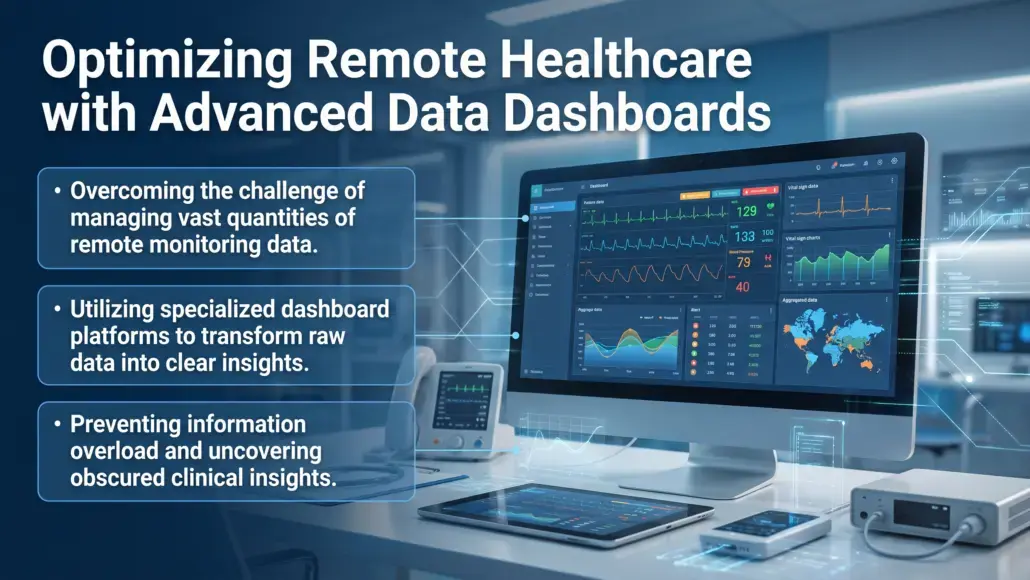

The rapid expansion of remote monitoring programs has created a significant challenge for healthcare providers: how to effectively manage the vast quantities of information being generated. Without the proper tools for analysis and visualization, the data can quickly become overwhelming, leading to information overload and potentially obscured clinical insights. The emergence of specialized dashboard platforms improving remote patient data visibility addresses this issue by transforming raw data into actionable intelligence. These systems aggregate information from various sources and present it in a clear, intuitive format, allowing clinicians to quickly identify trends, anomalies, and areas requiring immediate attention. This visibility is essential for maintaining the high standards of care expected in modern hospital environments.
For a hospital system, the value of these dashboards extends beyond simple data presentation. They serve as a centralized hub for all remote patient information, ensuring that every member of the care team has access to the same current data. This shared visibility is a critical component of interdisciplinary collaboration, where specialists from different departments must work together to manage complex patient needs. By providing a unified view of the patient’s status, these platforms reduce the likelihood of communication errors and ensure that clinical decisions are based on a comprehensive understanding of the situation. As the healthcare sector continues to prioritize value-based care and improved patient outcomes, the role of advanced visualization tools will only become more prominent.
Enhancing Clinical Decision Support with Real-Time Visualization
The primary goal of any clinical dashboard is to support better decision-making by providing the most relevant information at the right time. When clinicians are presented with a clear visualization of physiological trends, they can more easily identify patterns that might indicate a decline in health. For example, a dashboard might display a graph showing a patient’s blood pressure over the last thirty days, with clear indicators of when values exceeded a safe threshold. This level of detail allows the provider to see not just the current state of the patient but the trajectory of their health, which is vital for effective long-term management. The use of dashboard platforms improving remote patient data visibility ensures that these critical insights are not buried within a dense electronic health record.
In addition to physiological data, modern dashboards often incorporate clinical decision support tools that provide real-time recommendations based on validated guidelines. For instance, if a patient’s data indicates a high risk of a specific complication, the system can automatically suggest a series of diagnostic tests or clinical interventions. This proactive approach ensures that patients receive the most appropriate care as quickly as possible, reducing the risk of adverse events. By automating the identification of risk factors, these platforms allow clinicians to focus their time and expertise on the most complex aspects of patient care. The combination of high-quality data visualization and intelligent decision support creates a powerful tool for improving clinical safety and effectiveness.
Improving Interdisciplinary Collaboration Through Centralized Data Access
Modern healthcare is increasingly a team-based endeavor, requiring close coordination between physicians, nurses, pharmacists, and other specialists. This coordination is often hampered by the presence of data silos, where information is stored in separate systems that do not communicate with each other. Dashboard platforms improving remote patient data visibility address this by integrating information from various monitoring devices and electronic health record systems into a single, accessible view. This ensures that every specialist involved in a patient’s care is working with the same information, which is essential for developing a coherent and effective treatment plan.
The ability to share real-time data across departments also facilitates more effective multidisciplinary rounds and consultations. When all members of the team can see the same visualization of a patient’s progress, they can more easily identify potential issues and reach a consensus on the next steps in care. This collaborative approach reduces the need for repetitive testing and ensures that the patient’s care is as streamlined and efficient as possible. Additionally, the transparency provided by these platforms fosters a culture of accountability and continuous improvement within the clinical team. Every provider can see the impact of their interventions, allowing for a more responsive and iterative approach to patient management. The intelligent integration of data is what enables the highest level of interdisciplinary care.
Addressing Data Silos to Ensure Comprehensive Patient Overviews
One of the most persistent challenges in healthcare informatics is the fragmentation of patient data across multiple platforms. A patient might have their blood pressure monitored by one device, their glucose by another, and their clinical notes stored in a completely separate electronic health record. This fragmentation makes it difficult for clinicians to get a comprehensive view of the patient’s overall health. Dashboard platforms improving remote patient data visibility are designed to bridge these gaps, pulling data from disparate sources and presenting it as a unified narrative. This holistic overview is critical for managing patients with multiple chronic conditions, where the interaction between different physiological systems must be closely monitored.
By providing a single point of entry for all relevant data, these platforms reduce the time clinicians spend searching for information across different systems. This increase in efficiency allows for more time to be spent on direct patient care, which is a key priority for hospital administrators. Additionally, the ability to see all data in context allows for a more nuanced understanding of the patient’s condition. For example, a clinician might notice that a patient’s blood pressure spikes only when their glucose levels are also elevated, an insight that might be missed if the data were viewed in isolation. The focus on comprehensive data integration ensures that the clinical team has all the information they need to provide the best possible care.
Optimizing Administrative Oversight and Operational Reporting
Beyond their clinical applications, dashboard platforms provide valuable insights for hospital administrators and operational leaders. These systems can be used to track the performance of remote monitoring programs, providing data on metrics such as patient enrollment, adherence rates, and the frequency of clinical interventions. This high-level visibility allows for the identification of areas where program efficiency can be improved or where additional resources may be needed. For example, if data shows a high rate of non-adherence among a specific patient population, the facility can investigate the causes and develop targeted strategies to improve engagement.
Operational reporting is also simplified through the use of automated data aggregation. Instead of manually collecting information from various sources for monthly or quarterly reports, administrators can generate detailed summaries with a few clicks. This ensures that reporting is both accurate and timely, which is essential for maintaining compliance with regulatory requirements and demonstrating the value of remote care programs to stakeholders. The ability to track long-term trends in program performance allows for more strategic planning and resource allocation. By using data to drive operational decisions, healthcare organizations can ensure that their remote monitoring initiatives are both clinically effective and financially sustainable. The transition toward a more data-centric administrative model is a necessary step for the future of the healthcare sector.
Supporting Scalable Remote Care Through Integrated Health Informatics
As the demand for remote patient monitoring continues to grow, healthcare systems must find ways to scale their programs without significantly increasing the burden on their clinical staff. Dashboard platforms improving remote patient data visibility are essential for this scalability. By automating the analysis and visualization of data, these platforms allow a relatively small clinical team to monitor a large number of patients effectively. The use of automated alerts ensures that providers only need to intervene when a potential issue is identified, maximizing the impact of their time and expertise. This efficient use of resources is critical for expanding the reach of remote care to a broader patient population.
The integration of advanced health informatics also ensures that these programs can adapt to the evolving needs of the healthcare sector. As new monitoring technologies and diagnostic tools become available, they can be easily integrated into the existing dashboard framework. This modular approach ensures that the facility remains at the forefront of medical technology, providing the highest level of care to its patients. Additionally, the data generated by these systems can be used to inform future research and clinical guidelines, contributing to the broader knowledge base of the medical community. The commitment to a data-driven approach to remote care is what defines the most innovative healthcare organizations today. By investing in advanced visualization and analysis tools, providers can ensure that they are prepared for the challenges and opportunities of the future, delivering high-quality, efficient, and compassionate care to every patient who needs it.