

















Drug testing can feel confusing, particularly when different tests produce different results for the same substance. Urine, blood, hair, and saliva testing each examine biological samples in different ways, which means their detection periods and practical applications are not identical. Saliva drug testing, also known as oral fluid testing, has become increasingly common because samples can be collected quickly and with relatively little equipment. However, many people still have misconceptions about what these tests detect, how long substances remain detectable, and how reliable the results are.
Understanding the science behind oral fluid testing is more useful than relying on rumors or quick fixes. Detection depends on the substance involved, the testing method, individual factors, and the sensitivity of the test. While products marketed as a detox mouthwash for saliva tests may claim to influence test results, consumers should be cautious about assuming that such products can reliably eliminate evidence of drug use or override a properly administered laboratory test. A better starting point is understanding what an oral fluid test actually measures and what its results can and cannot tell you.
What a Saliva Drug Test Actually Measures
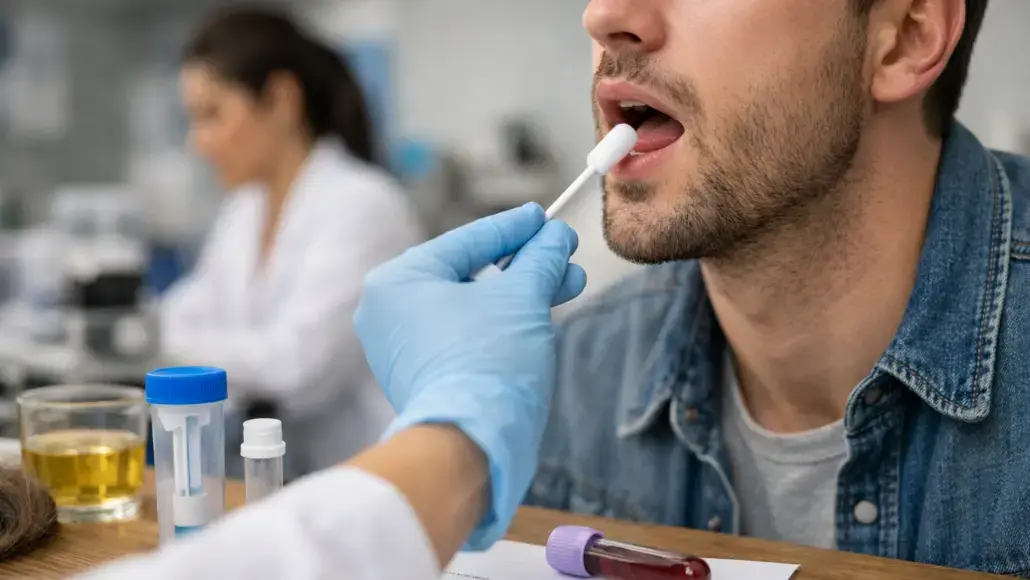
A saliva drug test does not simply determine whether someone has ever used a particular drug. Instead, it looks for specific drugs or their metabolites that are present in oral fluid at concentrations detectable by the testing method. During collection, a swab or collection device is placed inside the mouth, often along the cheek or beneath the tongue. The sample is then analyzed using a screening method and, when appropriate, a more specific confirmation method.
One reason oral fluid testing is attractive to employers, healthcare providers, and other organizations is the relatively straightforward collection process. Unlike urine testing, oral fluid collection generally does not require a person to provide a sample in a private bathroom. The collection can often be observed directly, reducing certain opportunities for sample substitution or contamination. Institutions involved in workplace drug testing therefore recognize oral fluid testing as one option among several available testing approaches.
The science is also important when interpreting a result. A positive screening result does not necessarily have the same evidentiary meaning as a confirmed laboratory result. Screening tests are designed to identify samples that may contain a target substance, while confirmatory testing uses more specific analytical techniques to determine whether the substance is actually present. This distinction is one reason reputable testing programs use established procedures and validated analytical methods.
How Long Drugs Can Be Detected in Saliva
The detection window for oral fluid testing is often shorter than the window associated with hair testing and may differ substantially from urine testing. However, there is no universal number of hours or days that applies to every substance or every person. Different drugs have different pharmacological characteristics, and the amount consumed, frequency of use, route of administration, metabolism, and characteristics of the testing method can all influence detectability.
Oral fluid generally reflects more recent exposure because substances can enter saliva directly from the bloodstream or, for some substances, through residual material in the mouth. This makes saliva testing particularly useful when a testing program is interested in relatively recent drug exposure rather than a long history of use. The precise detection period can nevertheless vary considerably, which is why broad claims such as “everything disappears from saliva within 24 hours” should not be treated as reliable scientific rules.
Collection conditions can also matter. The amount of saliva available, the collection procedure, the particular device used, and laboratory cutoff levels can influence whether a substance is detected. A person’s individual biology may also affect how a drug is absorbed, distributed, metabolized, and eliminated. Consequently, online charts showing a single guaranteed detection period should be viewed as general information rather than a prediction of an individual’s test result.
What Determines the Accuracy of a Saliva Test?
Accuracy is not simply a characteristic of the test kit itself. It depends on the entire testing process, from collection through analysis and interpretation. A properly designed test must be capable of identifying its target compounds at appropriate concentrations while limiting interference from unrelated substances. Laboratories and testing providers therefore rely on validated procedures, quality controls, and defined cutoff concentrations.
Two concepts are particularly important: sensitivity and specificity. Sensitivity concerns the ability of a test to identify samples containing the target substance, while specificity concerns the ability to distinguish the target from substances that may resemble it analytically. No biological test is perfect, and screening procedures can occasionally produce results that require further investigation. This is why confirmatory testing is an important part of many formal testing programs.
Collection and handling are equally significant. A poorly collected sample, insufficient oral fluid, improper storage, or procedural error can potentially affect a result. Professional testing programs use standardized collection and laboratory procedures to reduce these risks. For individuals concerned about a test result, understanding whether a result was a preliminary screen or a confirmed finding is often more informative than focusing solely on the word “positive” or “negative.”
Common Misconceptions About Saliva Drug Testing
One widespread misconception is that drinking large amounts of water can quickly remove drugs from saliva. Hydration is important for normal health, but drinking excessive water does not provide a scientifically dependable way to eliminate drugs from the body or guarantee a negative oral fluid test. Similarly, brushing teeth, using ordinary mouthwash, eating particular foods, or repeatedly rinsing the mouth should not be regarded as reliable methods for changing the underlying presence of a substance.
Another misconception is that saliva testing is inherently less accurate than urine testing. The two methods measure different biological materials and are useful for different purposes. Oral fluid testing can offer practical advantages when recent exposure is the primary concern, while urine testing generally provides a different and often longer detection window. Neither method should be described as universally “better” without considering the specific testing objective.
There is also confusion surrounding products marketed specifically around drug testing. A product described as a detox mouthwash for saliva test may be promoted as a way to cleanse or alter oral fluid before testing. Marketing claims, however, should not be confused with independently established evidence that a product can reliably defeat a properly conducted test. Attempting to manipulate a sample may also conflict with workplace, legal, athletic, or treatment-program requirements, depending on the circumstances.
Why Confirmation Testing Matters
When a screening test produces a non-negative result, confirmation can provide an important additional layer of analytical certainty. Confirmatory laboratory methods are generally designed to identify specific compounds using highly selective analytical techniques. This helps distinguish genuine findings from potential screening interference and reduces the chance that a preliminary result will be treated as conclusive when additional analysis is warranted.
This approach reflects a broader principle in laboratory medicine and toxicology: test results should be interpreted in context. A laboratory result is evidence about a biological sample, not necessarily a complete account of a person’s behavior or circumstances. The timing of exposure, medications, medical history, testing methodology, and applicable testing policies can all matter when interpreting results.
For formal workplace or legal testing, procedures can also be governed by specific rules. Depending on the setting, regulations may establish collection requirements, laboratory standards, cutoff concentrations, confirmation procedures, and processes for reviewing disputed results. Anyone dealing with a consequential test should therefore look at the applicable policy or regulatory framework rather than relying exclusively on generalized information found online.
Making Sense of a Saliva Test Result
If a saliva test produces an unexpected result, the most productive response is to find out exactly what type of test was performed. A rapid screening device and a laboratory-confirmed analysis are not necessarily equivalent. The report should identify the substance or category being tested, and the testing organization may be able to explain whether confirmation is available or required.
It is also useful to consider the timing and circumstances surrounding the test. Legitimate prescription medications, over-the-counter products, and other substances can sometimes complicate the interpretation of screening results. This does not mean that medication automatically causes a positive result, but it does illustrate why testing programs use defined analytical procedures and why relevant medication information may need to be disclosed through the appropriate process.
Most importantly, people should be skeptical of guarantees. Claims that a particular drink, food, rinse, supplement, or mouthwash can ensure a negative result oversimplify a process that depends on analytical chemistry, biology, collection procedures, and laboratory standards. Reliable information should explain those variables rather than promising certainty.
Conclusion: Understanding the Bigger Picture
Saliva drug testing has practical advantages because samples can be collected conveniently and can provide information about relatively recent exposure. Its usefulness comes from the underlying relationship between drugs in the bloodstream and substances present in oral fluid, combined with modern analytical methods. At the same time, no test should be interpreted without considering its limitations and the circumstances in which it was administered.
For anyone facing a drug test, understanding the process is far more valuable than depending on internet myths. Detection windows vary, screening results may require confirmation, and individual factors can affect detectability. Products marketed around drug-test preparation should be evaluated carefully, particularly when they make absolute promises that are not supported by reliable evidence.