









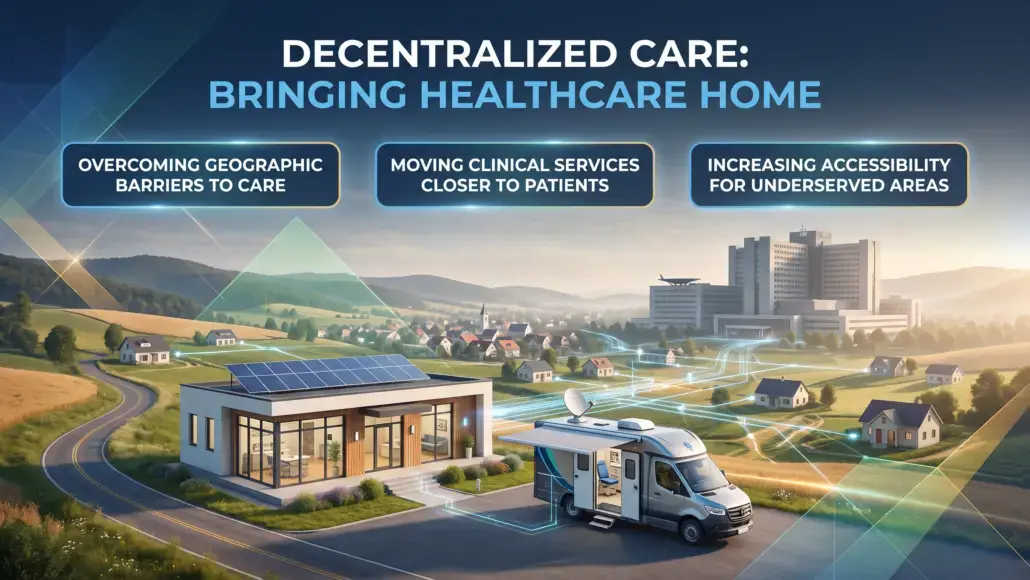

The traditional model of healthcare, centered around large, urban medical complexes, is increasingly being challenged by the need for more localized and accessible clinical services. For many individuals, particularly those living in rural or underserved areas, the physical distance to a hospital can be a significant barrier to receiving timely and effective care. This geographic disparity is one of the primary drivers behind the adoption of systems where clinical services are moved closer to the patient. The implementation of decentralized care technologies supporting healthcare accessibility represents a fundamental shift in the industry, focusing on health equity and the democratization of medical services. By utilizing digital platforms and portable diagnostic tools, healthcare providers can deliver high-quality care in community settings, homes, and even remote mobile clinics.
This shift toward decentralization is not just about geography; it is also about improving the overall patient experience and clinical outcomes. When care is delivered in a setting that is familiar and convenient for the patient, adherence to treatment plans often improves. Additionally, the ability to monitor and treat patients in their own environment allows for a more holistic understanding of their health, including the social and environmental factors that impact their well-being. For hospital systems, the decentralization of care provides a way to expand their reach and manage larger patient populations without the need for massive capital investment in new physical facilities. This model of care delivery is essential for building a more resilient and inclusive healthcare infrastructure that can meet the needs of all individuals, regardless of their location.
Bridging the Gap in Rural Healthcare Infrastructure
Rural communities often face a unique set of challenges when it comes to healthcare, including a shortage of specialists and long travel times to the nearest emergency department. These factors can lead to delayed diagnoses and poorer health outcomes compared to urban populations. Decentralized care technologies supporting healthcare accessibility are specifically designed to address these gaps by bringing advanced medical capabilities to the local level. For example, telemedicine platforms allow rural patients to consult with specialists in distant urban centers, reducing the need for long and often difficult journeys. This immediate access to expert advice can be life-saving in acute situations and is vital for managing complex chronic conditions.
Beyond consultations, the deployment of mobile diagnostic units and portable imaging systems allows for high-quality testing to be performed directly within the community. These tools provide the same level of precision as those found in large hospitals but in a format that can be easily transported. By providing these services locally, healthcare organizations can identify potential health issues earlier, allowing for more effective and less invasive interventions. The focus is on creating a network of care that is both comprehensive and highly accessible, ensuring that no patient is left behind due to their zip code. The integration of these technologies into rural healthcare workflows is a key priority for administrators looking to improve the quality and safety of their services.
Empowering Community-Based Care with Mobile Health Platforms
Community health workers and primary care providers are at the front lines of the healthcare system, often serving as the first point of contact for patients. Empowering these individuals with advanced digital tools is essential for the success of decentralized care. Mobile health platforms allow for the real-time collection and sharing of patient data, ensuring that every member of the care team has access to the most current information. This visibility is critical for coordinating care across different settings and for identifying patients who may require additional support. The use of decentralized care technologies supporting healthcare accessibility in community settings fosters a more proactive and integrated approach to health management.
These mobile platforms also facilitate better patient education and engagement. By providing patients with access to their own health information and providing personalized resources for self-management, these tools help individuals take a more active role in their own care. This is particularly important for managing chronic diseases like diabetes or hypertension, where daily lifestyle choices play a critical role in outcomes. The ability to track progress and receive feedback in real time provides patients with the motivation and support they need to maintain healthy behaviors. As the healthcare sector continues to move toward a more patient-centered model, the role of mobile technology in empowering community-based care will only become more prominent. The focus remains on building strong, data-driven partnerships between patients and their local providers.
Supporting Health Equity Through Diversified Delivery Models
Health equity is a core principle of modern healthcare, yet achieving it requires a multi-faceted approach that addresses the unique needs of different populations. Diversified delivery models, supported by decentralized technology, allow healthcare organizations to tailor their services to the specific cultural, social, and economic contexts of the communities they serve. For example, mobile clinics can be deployed to underserved urban neighborhoods, providing essential services like vaccinations, screenings, and prenatal care to individuals who may face barriers to accessing traditional clinics. This flexible approach ensures that the most vulnerable populations have access to the same high standard of care as everyone else.
The use of decentralized care technologies supporting healthcare accessibility also allows for the inclusion of social determinants of health into the clinical record. By collecting data on factors such as housing stability, food security, and transportation access, providers can develop more effective and compassionate care plans. This holistic view of the patient is essential for addressing the root causes of health disparities and for promoting long-term wellness. The commitment to health equity is what defines the most successful and forward-thinking healthcare organizations today. By utilizing technology to remove barriers and provide personalized support, these providers are building a more just and effective healthcare system for all. The focus on inclusivity and accessibility ensures that every diagnostic and therapeutic encounter is as impactful as possible.
Scaling the Hospital-at-Home Model for Complex Chronic Care
One of the most innovative applications of decentralized technology is the hospital-at-home model, where patients who would otherwise require hospitalization receive acute-level care in their own homes. This approach is made possible through a combination of remote monitoring, telemedicine, and mobile clinical teams. For patients with complex chronic conditions, the hospital-at-home model provides a safer and more comfortable alternative to a traditional hospital stay. It reduces the risk of hospital-acquired infections and delirium, which are particularly common among elderly patients. The implementation of decentralized care technologies supporting healthcare accessibility is the foundation upon which these programs are built, providing the necessary visibility and safety for acute care at home.
Scaling these programs requires a sophisticated logistical framework and a high degree of coordination between different providers. Advanced digital platforms are essential for managing this complexity, providing real-time tracking of patient status and the deployment of clinical resources. As more healthcare organizations adopt this model, the benefits are becoming increasingly clear: improved patient outcomes, higher patient satisfaction, and a significant reduction in the cost of care. For hospital systems, the ability to shift acute care to the home setting provides a way to manage bed capacity and focus their internal resources on the most critical procedures. The success of the hospital-at-home model demonstrates the power of decentralized technology to revolutionize even the most traditional aspects of clinical practice.
Enhancing Patient Engagement via Decentralized Digital Tools
The success of any decentralized care program ultimately depends on the engagement and participation of the patient. Decentralized digital tools, such as patient portals, wearable devices, and mobile apps, provide the necessary infrastructure for this engagement. These tools allow patients to communicate easily with their providers, schedule appointments, and access their health information from anywhere. By making healthcare more convenient and accessible, these technologies encourage patients to stay connected with their care team and to follow through with their treatment plans. The focus is on creating a clinical experience that is both high-tech and high-touch, combining the efficiency of digital tools with the compassion of personal care.
Additionally, the data generated by these decentralized tools provides valuable insights into patient behavior and preferences. Healthcare organizations can use this information to refine their services and develop more effective engagement strategies. For example, if data shows that patients are more likely to participate in remote consultations at a specific time of day, the facility can adjust its scheduling to accommodate these needs. This responsiveness is a key driver for patient satisfaction and loyalty. As the healthcare sector continues to evolve, the ability to provide a personalized, convenient, and accessible experience will be a major differentiator for providers. By embracing decentralized technology, healthcare organizations are demonstrating their commitment to a more patient-centered and equitable future, ensuring that every individual has the opportunity to achieve their best possible health. The path forward is clear: utilizing the power of information to bring care directly to the people who need it most, regardless of their circumstances.