










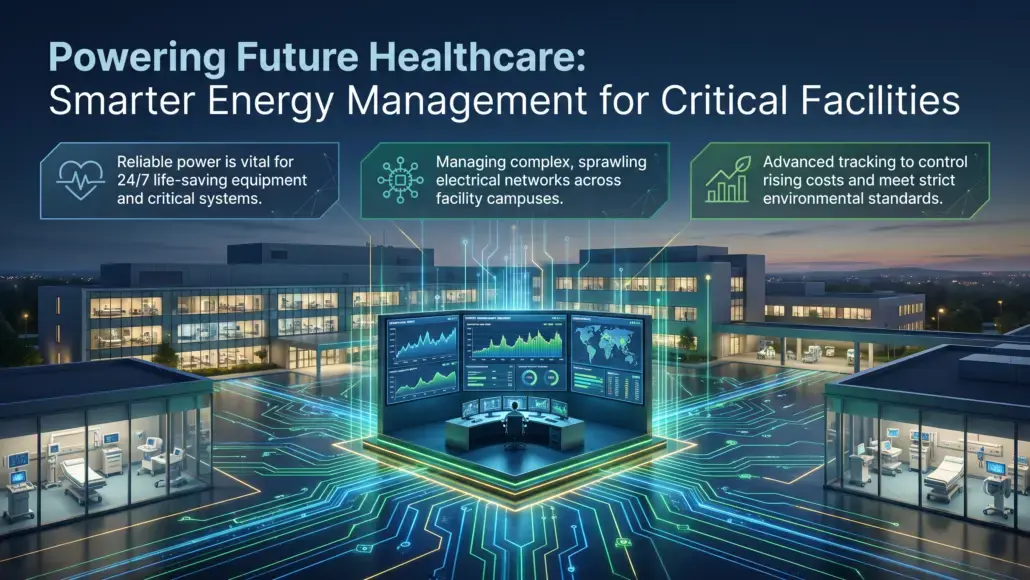
Healthcare facilities are among the most power intensive environments in the modern world, requiring a constant and reliable supply of electricity to support life saving equipment, lighting, and climate control systems. The complexity of these electrical networks is immense, with a vast array of critical and non critical loads distributed across sprawling campuses. As operational costs continue to rise and environmental regulations become more stringent, the ability to track and analyze energy consumption has become a priority for hospital administrators. The implementation of hospital energy monitoring systems provides the granular visibility needed to optimize facility operations, identify waste, and ensure the resilience of the electrical infrastructure. By moving beyond a simple monthly utility bill to a real time, data driven understanding of power usage, hospitals can make informed decisions that improve both fiscal performance and patient safety.
The role of monitoring in a healthcare setting extends far beyond simple cost reduction. It is a fundamental component of risk management and clinical reliability. In a hospital, a power failure or a drop in power quality can have immediate and devastating consequences for patients in intensive care units or operating theaters. Hospital energy monitoring allows facility managers to oversee the health of the entire electrical distribution system, identifying potential points of failure before they lead to an outage. This proactive approach to power management ensures that the hospital’s most critical services are always supported by a stable and efficient electrical supply. By integrating advanced sensors and analytics into the existing infrastructure, healthcare organizations can create a more transparent and responsive energy environment that supports the high stakes mission of modern medicine.
Real Time Visibility into Critical Load Consumption
The foundation of any effective energy management strategy is accurate data. In many older hospitals, energy usage is only measured at the main utility meter, providing little insight into how power is being consumed within individual departments or by specific pieces of equipment. Hospital energy monitoring changes this by installing sub meters at key points throughout the electrical network. This allows facility managers to see exactly how much power is being drawn by critical loads such as ventilators, surgical lights, and imaging systems. Having access to this real time data enables staff to identify unusual spikes in consumption that may indicate a malfunctioning piece of equipment or a process that is operating inefficiently. By addressing these issues promptly, the hospital can avoid unnecessary energy costs and prevent potential equipment failures that could disrupt patient care.
Real time visibility also supports more effective load management during periods of peak demand or during a transition to emergency power. When the hospital is operating on backup generators, knowing the exact requirements of every department is essential for ensuring that the most critical services remain powered. Hospital energy monitoring provides this information instantly, allowing facility managers to prioritize loads and manage the available capacity with confidence. This level of detail is also valuable for communicating with utility providers, as it allows the hospital to participate in demand response programs that offer financial incentives for reducing consumption during times of high grid stress. By becoming an active and informed participant in the energy market, a hospital can turn its infrastructure into a strategic asset that contributes to the institution’s overall financial health.
Data Analytics for Predictive Maintenance in Power Distribution
The sensors used in hospital energy monitoring systems do more than just count kilowatt hours; they provide a wealth of information about the quality and characteristics of the electrical supply. Variables such as voltage, current, frequency, and harmonic distortion are all tracked in real time, creating a digital profile of the hospital’s electrical health. Advanced data analytics can then be applied to this information to identify trends and patterns that suggest an impending equipment failure. For example, a gradual increase in the operating temperature of a transformer or a subtle change in the harmonic profile of a motor can be early warning signs of trouble. By identifying these issues before they lead to a breakdown, maintenance teams can perform repairs during scheduled downtime, avoiding the chaos and risk of an emergency outage.
This move toward predictive maintenance is a significant shift from the traditional reactive or schedule based approaches. It allows hospitals to optimize their maintenance budgets by focusing resources on the equipment that actually needs attention. Additionally, by extending the lifespan of expensive electrical components, predictive maintenance reduces the total cost of ownership for the hospital’s infrastructure. The integration of artificial intelligence and machine learning into hospital energy monitoring platforms will only increase the accuracy and value of these insights, allowing for even more sophisticated modeling of the electrical environment. This data driven approach to asset management ensures that the hospital’s power distribution network remains as reliable and efficient as possible, providing a stable foundation for the delivery of clinical services.
Benchmarking Energy Intensity in Specialized Medical Departments
Not all areas of a hospital are created equal when it comes to energy consumption. An imaging suite with several MRI and CT scanners will have a vastly different energy profile than a general ward or an administrative office. Hospital energy monitoring allows facility managers to benchmark the energy intensity of these different departments, providing a basis for comparison and improvement. By normalizing energy consumption against variables such as patient volume or square footage, administrators can identify outliers and investigate why certain areas are consuming more power than expected. This benchmarking process is essential for driving accountability and encouraging a culture of energy awareness throughout the organization. When department heads have access to data about their specific energy usage, they are more likely to support initiatives that reduce waste and improve efficiency.
These insights also inform long term strategic planning and budgeting. When a hospital is considering the purchase of new medical technology or the expansion of a clinical service, the energy data from similar existing operations can be used to project the future impact on the utility budget. This allows for a more accurate assessment of the total cost of care and ensures that the hospital’s infrastructure can support the new load without requiring expensive upgrades. Hospital energy monitoring thus becomes a vital tool for executive decision making, bridging the gap between clinical needs and facility capabilities. By understanding the unique energy requirements of each specialized department, healthcare organizations can optimize their operations to be both clinically effective and financially sustainable.
Mitigating Power Quality Issues in Diagnostic Imaging Suites
Diagnostic imaging equipment is among the most sensitive and expensive technology in a hospital, and it requires a high degree of power quality to function correctly. Issues such as voltage sags, swells, and transients can cause equipment to malfunction, leading to lost data, repeated scans, and potential damage to the hardware. Hospital energy monitoring systems that include power quality tracking are essential for protecting these assets. By constantly monitoring the electrical supply in imaging suites, facility managers can identify the source of power quality disturbances, whether they are originating from the utility grid or from other equipment within the hospital itself. Once the source is identified, appropriate mitigation strategies, such as the installation of uninterruptible power supplies (UPS) or harmonic filters, can be implemented to ensure a clean and stable supply.
The ability to document power quality events is also important for maintaining equipment warranties and resolving disputes with utility providers. If a costly piece of imaging equipment fails due to a power surge, having a detailed record of the event from the hospital energy monitoring system provides the evidence needed to support an insurance claim or a warranty repair. This level of oversight provides an additional layer of protection for the hospital’s capital investments. In the long term, maintaining high power quality also contributes to the overall efficiency of the electrical system, as it reduces the losses associated with heat and electromagnetic interference. By prioritizing the health of the electrical supply in its most sensitive areas, a hospital ensures that its diagnostic capabilities remain sharp and its facility operations remain smooth and uninterrupted.
The adoption of comprehensive energy monitoring represents a commitment to operational excellence and environmental responsibility. By turning the invisible flow of electricity into visible and actionable data, healthcare organizations can identify new opportunities for efficiency, safety, and resilience. This is not just about saving money on a utility bill; it is about building a smarter, more responsive hospital that is better equipped to handle the challenges of a complex and changing healthcare environment. As the industry continues to move toward more technology intensive models of care, the importance of hospital energy monitoring will only grow. The hospitals that succeed in this new era will be those that treat their energy infrastructure as a critical clinical asset, managing it with the same precision and care that they bring to every patient interaction. The transition to a data driven energy strategy ensures that the facility remains a reliable and sustainable platform for the delivery of high quality healthcare, both today and for the many years to come. The integration of these monitoring systems into the daily life of the hospital is a vital step toward a more efficient and resilient future for the entire healthcare sector.