












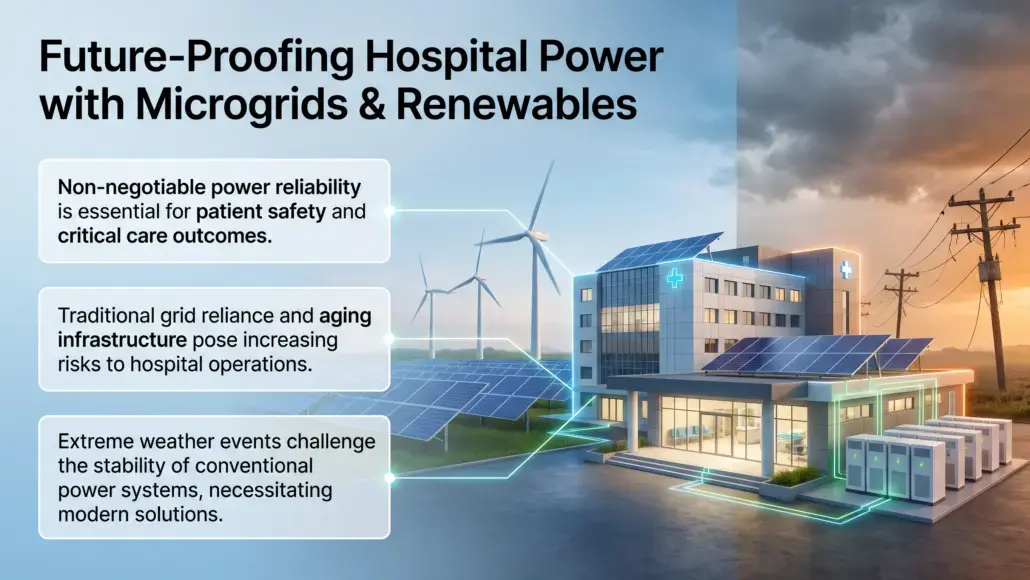
The reliability of the electrical supply is a non negotiable requirement for modern healthcare facilities, where the interruption of power can directly compromise patient safety and clinical outcomes. Hospitals have traditionally relied on the central utility grid for their primary power, backed by diesel generators for emergency situations. However, as the frequency of extreme weather events increases and the stability of traditional power grids is challenged by aging infrastructure, healthcare organizations are looking for more resilient and sustainable alternatives. The development of renewable energy microgrids represents a significant advancement in this area, providing hospitals with the ability to generate, store, and manage their own power independently of the main grid. These decentralized energy systems integrate renewable sources like solar and wind with advanced storage technologies, creating a secure and efficient power foundation for critical hospital infrastructure.
Beyond the immediate benefits of resilience, the transition toward decentralized power is also a core component of the broader movement for sustainable healthcare. Hospitals are significant contributors to carbon emissions due to their massive energy requirements, and the shift to renewable sources is essential for meeting environmental targets. Renewable energy microgrids allow facilities to significantly reduce their reliance on fossil fuels, both for daily operations and for emergency backup. By combining these systems with intelligent controls, hospitals can optimize their energy usage, lowering costs and improving their environmental profile. This forward thinking approach to power management ensures that the hospital remains a resilient pillar of the community, capable of providing high quality care even under the most challenging circumstances.
Decentralized Power Generation for Essential Hospital Loads
The core of a microgrid is its ability to generate power locally, close to the point of consumption. In a healthcare setting, this often involves the installation of large scale solar photovoltaic arrays on rooftops or parking structures, sometimes supplemented by other renewable sources like fuel cells or small scale wind turbines. These renewable energy microgrids provide a consistent source of clean power that can be used to meet the hospital’s base load, reducing the amount of energy that must be purchased from the utility. During periods of peak production, the excess power can be stored in batteries or used to offset high demand areas, such as the central cooling plant or diagnostic imaging suites. This decentralized approach to generation reduces the hospital’s vulnerability to large scale grid failures, providing a more reliable and secure energy environment.
The integration of these various generation sources is managed by sophisticated microgrid controllers that can automatically balance production and consumption. These systems are capable of switching between different energy sources in milliseconds, ensuring that the power supply to critical loads remains uninterrupted. For example, if a cloud passes over the solar array and production drops, the controller can instantly draw power from the battery storage or ramp up an on site fuel cell to compensate. This level of responsiveness is essential for protecting sensitive medical equipment and maintaining the stability of the electrical network. By treating the hospital as its own small scale utility, administrators can ensure that their facility has the power it needs to support its clinical mission, regardless of the condition of the external grid.
Enhancing Resilience Against Grid Instability and Outages
The most compelling reason for the adoption of renewable energy microgrids in the healthcare sector is the enhancement of resilience. Traditional backup systems, while essential, have limitations, particularly during prolonged outages where fuel supplies for diesel generators may be disrupted. Microgrids, by contrast, can operate indefinitely in an “islanded” mode, using local renewable generation and storage to keep critical systems running. This capability is vital for hospitals located in areas prone to hurricanes, wildfires, or other natural disasters that can sever utility lines for days or weeks at a time. By ensuring that life support systems, refrigeration for medications, and essential lighting remain functional, these systems provide a critical safety net for the community’s most vulnerable citizens.
In addition to protecting against total outages, microgrids also improve the quality of the power supply. They can act as a buffer against grid instability, filtering out voltage sags, surges, and frequency fluctuations that can damage medical equipment. The advanced inverters used in renewable energy microgrids are capable of providing precise voltage and frequency regulation, creating a more stable electrical environment than is often available from the main grid. This improved power quality extends the lifespan of expensive diagnostic tools and reduces the risk of equipment malfunction during critical procedures. For a modern hospital, this level of electrical stability is a vital component of clinical excellence and operational reliability, ensuring that the building itself actively supports the delivery of care.
Economic Feasibility of On-Site Storage for Critical Care
One of the most significant challenges in implementing renewable energy systems is the intermittent nature of sources like solar and wind. To overcome this, renewable energy microgrids rely on advanced battery energy storage systems (BESS). These storage units allow the hospital to capture excess renewable energy when it is abundant and release it when it is needed most, such as during the night or during periods of high demand. The cost of battery technology has decreased significantly in recent years, making on site storage an increasingly viable economic option for healthcare facilities. When combined with the savings from reduced utility bills and the potential revenue from participating in grid services, the return on investment for a microgrid can be quite attractive for a well managed hospital.
The economic argument for microgrids also includes the avoided costs of power outages. For a hospital, a loss of power can result in hundreds of thousands of dollars in lost revenue, wasted medications, and potential legal liabilities. By providing a reliable and independent source of power, renewable energy microgrids mitigate these financial risks, providing a level of business continuity that is difficult to achieve with traditional systems alone. Additionally, many governments and utilities offer grants and incentives for the installation of resilient and sustainable energy infrastructure, further improving the financial feasibility of these projects. As energy costs continue to rise and the value of resilience becomes more clear, the investment in a microgrid is increasingly seen as a prudent and necessary step for long term facility management.
Regulatory Compliance and Integration with Local Utility Networks
The implementation of renewable energy microgrids requires careful navigation of the regulatory environment and a strong partnership with the local utility provider. Interconnection agreements must be established to ensure that the microgrid can operate safely alongside the main grid, and that any power exported back to the utility meets strict technical standards. These agreements also define how the hospital will be compensated for the energy it provides to the grid during times of surplus. In many jurisdictions, the regulatory framework is evolving to encourage the development of microgrids, recognizing their value in improving overall grid stability and supporting community resilience. Hospital administrators and engineers must stay informed about these changes to ensure their projects remain compliant and maximize their potential benefits.
Compliance also extends to the internal operation of the microgrid. Safety protocols must be in place to protect maintenance workers and ensure that the system does not accidentally energize a downed utility line, a phenomenon known as “islanding” without proper controls. Modern renewable energy microgrids are equipped with advanced protection systems that prevent these risks, ensuring a safe and reliable interaction between the hospital and the broader energy network. By working closely with regulators and utilities from the early stages of a project, healthcare organizations can build a power system that is both a benefit to their own operations and a positive contributor to the regional energy environment. This collaborative approach is essential for the widespread adoption of microgrid technology and the creation of a more resilient and sustainable energy future for all.
The transition to decentralized power generation represents a fundamental shift in how we think about hospital infrastructure. It is a move toward greater independence, resilience, and environmental responsibility. By utilizing renewable energy microgrids, healthcare facilities can ensure that they are always ready to provide care, regardless of the challenges facing the traditional energy grid. This is not just a technical upgrade; it is a strategic investment in the future of healthcare. As the world continues to move toward a more sustainable and resilient energy model, the hospitals that lead the way in adopting microgrid technology will be the best prepared to meet the clinical and operational challenges of the 21st century. The integration of these systems into the fabric of the hospital campus ensures that the institution remains a beacon of safety and health for the community, powered by a clean and reliable energy source that reflects the highest values of the medical profession. The success of these projects will serve as a model for other sectors, demonstrating that it is possible to achieve both operational excellence and environmental stewardship through the intelligent application of advanced energy technology.