






1. Key trends in architectural/specification lighting and their influence on healthcare
One thing that has already become clear to me is that one of the biggest misconceptions about lighting is that it’s primarily about illumination. Modern lighting influences energy performance, wellbeing, productivity, sustainability, aesthetics and the overall experience of a space. It has become a strategic design discipline that contributes to wider project objectives.
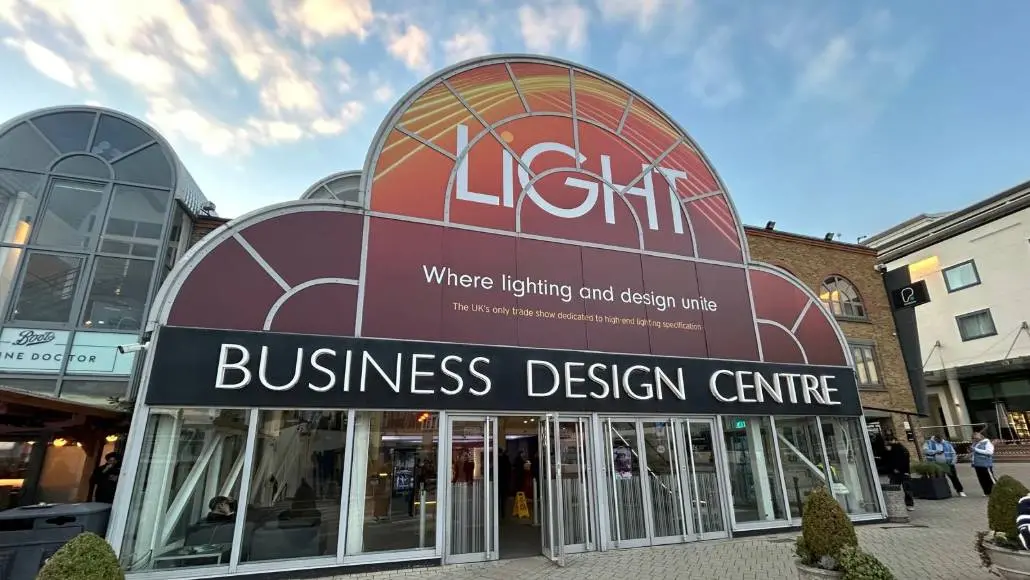
LiGHT aims to broaden that conversation by bringing together different stakeholders and demonstrating the value that thoughtful lighting design can deliver across the entire built environment.
2. Patient comfort and wellbeing
As research continues to demonstrate the impact of light on health, mood, productivity and circadian rhythms, expectations are changing. Occupants, employers, educators and healthcare providers increasingly understand that lighting can directly influence wellbeing and performance.
From the conversations I’ve been having across the industry, there’s a growing sense that human-centric principles are moving from being viewed as a specialist consideration to something that’s becoming part of mainstream lighting design. As the evidence base grows and technology becomes more accessible, that’s certainly the direction many people see the market heading.
As technology becomes more accessible and evidence continues to grow, we can expect these approaches to become standard practice across a wide range of sectors.
3. Balancing patient wellbeing, clinical requirements and staff productivity
Healthcare environments demonstrate why lighting needs to be considered as part of the wider design strategy rather than simply as illumination. Good specification needs to balance visual comfort and patient wellbeing with the very different clinical and practical requirements of each space, while also supporting staff working long hours in demanding environments. Flexibility and control are particularly important, allowing lighting to respond to different activities, users and times of day.
4. Human-centric/circadian lighting across healthcare spaces
As research continues to demonstrate the impact of light on health, mood, productivity and circadian rhythms, expectations are changing. Occupants, employers, educators and healthcare providers increasingly understand that lighting can directly influence wellbeing and performance.
Healthcare workers often spend long hours in demanding environments, so lighting needs to do more than simply illuminate a space. It should support visual comfort, help people stay focused during critical tasks and contribute to a working environment that feels comfortable throughout the day and night. At the same time, good lighting can help create a calmer, more reassuring experience for patients, highlighting the close connection between staff wellbeing and patient care.
5. Artificial lighting and natural daylight
Natural and artificial light should be considered together from the outset. From a specification perspective, that means selecting luminaires that provide the right quality, distribution and colour of light to complement changing daylight conditions, while also considering efficiency and visual comfort. Manufacturers are increasingly supporting this with more adaptable products, alongside controls and sensor technologies that allow artificial lighting to respond to available daylight and the changing needs of a space throughout the day.
6. Different lighting requirements across healthcare environments
Healthcare environments require very different lighting solutions depending on how each space is used. From a specification perspective, that means having access to a broad range of architectural and technical lighting products, with the right performance, optics, light quality and controls for each application. The challenge is to meet those individual requirements while maintaining a consistent approach to visual comfort, quality and design throughout the building. Manufacturers have an important role to play by developing flexible product families and technologies that give designers greater choice without compromising the overall design language.
7. Energy efficiency, LEDs, controls and sensors
I think the conversation needs to shift from upfront cost to long-term value.
Sustainability and commercial viability should not be viewed as competing priorities. High-quality, energy-efficient products often deliver significant operational savings, lower maintenance requirements and improved lifecycle performance.
Manufacturers also have an important role to play in designing products that support circularity, repairability and transparency without creating unnecessary complexity. Innovation is most successful when it delivers environmental benefits while also providing clear commercial advantages for clients and end users.
8. Smart buildings and connected lighting
Lighting is becoming one of the most valuable sources of data and connectivity within modern buildings. Intelligent lighting systems can support occupancy monitoring, energy management, environmental controls and user experience simultaneously.
As technologies such as digital twins and integrated building management systems continue to develop, lighting will play an increasingly central role in providing information and enabling responsive environments.
This evolution positions lighting as a strategic component of building performance rather than simply a utility. It’s an exciting shift that creates new opportunities for manufacturers, designers and building owners alike. We look forward to seeing what conversations develop both within and around the Technical zone at LiGHT 26, which we know will be intelligence and data-fuelled.
9. Lighting and wayfinding
In a healthcare setting, lighting has an important role in creating spaces that feel clear and easy to move through. It should be considered as part of the overall design. With the range of architectural lighting solutions now available, designers can use light to support wayfinding while still creating an environment that feels considered, comfortable and welcoming.
10. Supporting healthcare workers
As research continues to demonstrate the impact of light on health, mood, productivity and circadian rhythms, expectations are changing. Occupants, employers, educators and healthcare providers increasingly understand that lighting can directly influence wellbeing and performance.
11. Common specification mistakes
One of the biggest challenges is looking at lighting purely in terms of meeting the immediate requirements of a space. Good specification needs to take a much broader view, considering not only light quality and performance, but energy efficiency, controls, maintenance, flexibility and the long-term needs of the building. Bringing lighting into the design conversation early also gives architects, designers and manufacturers more opportunity to explore the right solutions rather than limiting those choices later in the project.
12. Collaboration between disciplines
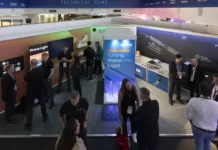
LiGHT has become a platform for dialogue as much as discovery. Our two day talks programme, expert panels and industry-led discussions are designed to give visitors insight into emerging trends, practical challenges and future opportunities. The products on display are important, but understanding the thinking behind them is equally valuable.
Our role is to create an environment where meaningful conversations happen between manufacturers, designers, architects, engineers and end users. Those discussions often become the catalyst for innovation.
13. AI, automation and the future role of lighting designers
AI has the potential to become a powerful tool throughout the design and specification process. We are already seeing technologies that can analyse building performance, optimise energy use, support lighting calculations and streamline project workflows.
Over the next five years, I believe AI will help professionals make faster, more informed decisions, while giving designers more time to focus on creativity and the human experience. However, technology should enhance expertise, not replace it.
Lighting design remains deeply connected to human perception, emotion and wellbeing. At LiGHT, we’re keen to facilitate discussions that explore both the opportunities and responsibilities associated with AI so the industry can adopt these technologies thoughtfully and effectively.
14. Innovations healthcare professionals should watch at LiGHT 26
One of the advantages of being part of Messe Frankfurt is the visibility we have across multiple international markets and industry sectors. We’re seeing strong momentum globally around connected lighting, AI-driven building management, circular product design and embedded sustainability throughout the supply chain.
There is also increasing convergence between lighting, smart building technologies and data-driven building performance. Lighting systems are becoming more intelligent, responsive and integrated into wider building ecosystems.
What I’m increasingly hearing from the industry is that the innovations gaining the most attention are those that successfully combine performance, sustainability and user experience. From where I sit today, those are the trends most likely to shape the UK and European markets in the years ahead.
15. Future of healthcare lighting
As I’ve spent more time speaking with manufacturers, designers and specifiers, the themes that come up repeatedly are connected technologies, sustainability-led innovation and the growing demand for healthier, higher-performing buildings. Those seem to be some of the biggest opportunities shaping the industry’s future.
At the same time, the industry faces challenges including economic uncertainty, supply chain pressures, evolving regulations and the pace of technological change itself. Manufacturers will need to remain agile while maintaining a clear focus on quality, transparency and long-term value.
Those organisations that successfully combine innovation with genuine customer understanding will be best positioned to thrive.
16. Messe Frankfurt UK acquisition
LiGHT has been one of the industry’s great success stories, and that’s a credit to the team that created it and the community that has supported it from day one. One of our priorities at Messe Frankfurt UK is to ensure we retain the qualities that made the event so successful in the first place: its strong focus on the specification community, its high-quality content programme, and the welcoming atmosphere that people genuinely value.
At the same time, becoming part of the Messe Frankfurt family opens up significant opportunities. We have access to a global network of industry contacts, market expertise and world-leading trade fair brands, which allows us to bring new perspectives, international connections and long-term investment to the event.
Rather than changing what LiGHT is, our ambition is to build on a strong foundation and support its continued growth as an essential meeting place for the lighting and design community.