















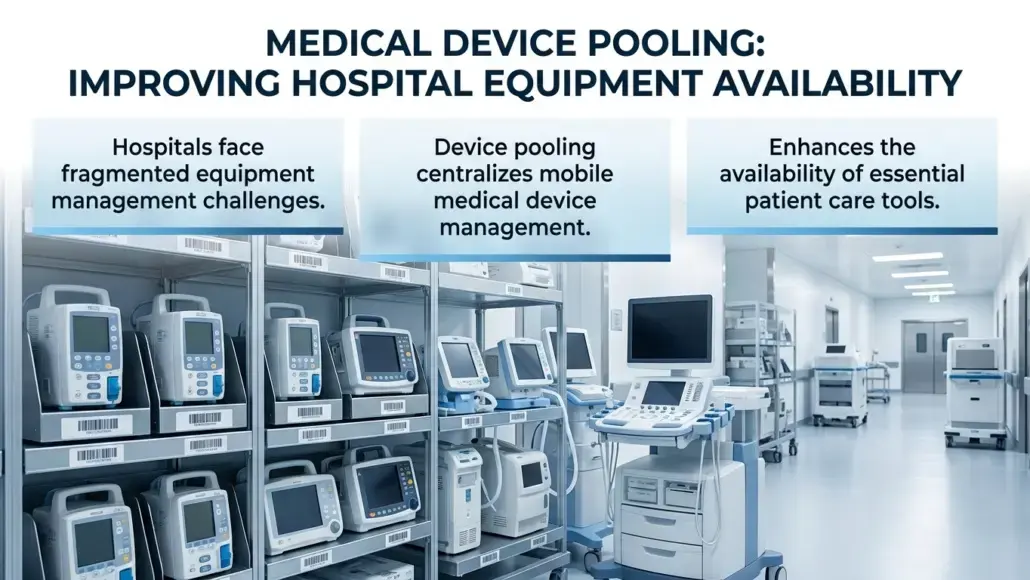

Modern healthcare facilities face an increasing challenge in managing high-value clinical assets while maintaining stringent budgets. The implementation of device pooling serves as a strategic solution to address the fragmentation often seen in large hospital systems where equipment is frequently siloed within specific departments. By centralizing the management and distribution of mobile medical devices, hospitals can significantly enhance the availability of essential tools for patient care. This approach involves creating a communal inventory of equipment such as infusion pumps, telemetry monitors, and pulse oximeters, which are then dispatched to clinical units based on real-time demand rather than fixed departmental allocations. The historical model of equipment ownership in hospitals relied on each department purchasing and maintaining its own fleet of devices. This led to significant inefficiencies, as one department might have a surplus of idle equipment while an adjacent unit faced critical shortages. Consequently, clinical staff often spent valuable time searching for available devices, which directly impacted patient safety and operational throughput. The transition toward device pooling eliminates these redundancies by treating medical equipment as a shared enterprise resource. This shift not only improves accessibility but also allows hospitals to reduce their overall inventory size without compromising the quality of care provided to patients.
Economic Benefits of Centralized Medical Asset Management
Financial sustainability in the healthcare sector requires a meticulous approach to capital utilization and maintenance costs. When hospitals adopt a centralized model for their mobile assets, they can achieve substantial savings by avoiding the purchase of unnecessary duplicate units. Traditional procurement strategies often result in over-provisioning to ensure that every department has its own safety buffer of equipment. However, when these buffers are consolidated through device pooling, the total number of units required to meet peak demand across the entire facility is lowered. This reduction in the total asset base translates into lower procurement costs and a significant decrease in the long-term expenses associated with preventative maintenance and software updates. Maintaining a smaller but more active fleet of devices allows biomedical engineering departments to focus their resources more effectively. Instead of managing thousands of scattered units, technicians can monitor a centralized pool, ensuring that every piece of equipment is properly calibrated and compliant with safety regulations. This streamlined maintenance process reduces the risk of using malfunctioning or outdated devices, thereby enhancing the overall safety profile of the institution. Additionally, centralized management provides better visibility into the utilization rates of specific equipment types, enabling hospital administrators to make informed decisions about future capital investments based on actual usage data rather than departmental requests. The fiscal impact extends to the reduction of lost or misplaced equipment, which is a common problem in decentralized hospital environments. When devices are assigned to a central pool and tracked using modern identification technologies, the likelihood of an asset disappearing into a storage closet or being inadvertently discarded is greatly reduced. Establishing equipment sharing protocols allows clinical teams to access critical devices without delays, ensuring that the financial investment in these technologies is fully realized through consistent utilization. By maximizing the productive life of each device, hospitals can defer large capital outlays and redirect those funds toward other critical areas of patient care or facility infrastructure.
Operational Barriers to Departmental Equipment Integration
While the benefits of sharing resources are clear, the implementation of such systems often encounters resistance due to ingrained departmental cultures. Clinical staff may feel a sense of ownership over the equipment purchased for their specific units, fearing that a centralized pool will result in a lack of availability during emergencies. Overcoming this psychological barrier requires a transparent and reliable distribution system that guarantees equipment will be delivered exactly when and where it is needed. Without a high level of trust in the central logistics team, departments may continue to hide or “hoard” equipment, which undermines the efficacy of the entire device pooling initiative. Technical challenges also play a significant role in the success of centralized asset management. Effective pooling requires a sophisticated tracking infrastructure, often involving Radio Frequency Identification (RFID) or Real-Time Location Systems (RTLS). These technologies provide hospital staff with the ability to see the exact location and status of every device in the building. However, the initial cost of installing such systems and the need for continuous data validation can be daunting for some facilities. Success depends on the integration of these tracking tools with the hospital’s electronic health records and clinical workflow software to ensure that the movement of equipment aligns with patient admissions and discharges. Staff training and communication are essential components of a successful transition to shared equipment models. Nurses and clinicians must be educated on how to request devices from the central pool and the importance of returning them to designated drop-off points after use. If the process is perceived as overly complex or time-consuming, compliance will drop, and the hospital will revert to its previous inefficient habits. Therefore, the central logistics department must prioritize user experience, making the request and return process as simple as possible. By providing clear evidence that the new system results in faster access to cleaner and better-maintained equipment, administrators can foster a culture of cooperation across different clinical specialties.
Enhancing Clinical Responsiveness Through Shared Inventory
The primary goal of any asset management strategy in a hospital is to improve patient outcomes by ensuring that clinicians have the tools they require at the bedside. Device pooling enhances clinical responsiveness by creating a buffer of ready-to-use equipment that can be deployed rapidly during patient surges or unexpected emergencies. In a decentralized system, a sudden increase in admissions in the emergency department might lead to a shortage of cardiac monitors, even if those same monitors are sitting unused in the surgical recovery unit. A centralized pool breaks down these barriers, allowing the hospital to reallocate resources to the areas of greatest need within minutes. This agility is particularly important in the context of critical care, where delays in obtaining equipment can have life-altering consequences. By maintaining a centralized inventory of high-acuity devices, hospitals can ensure that their most vulnerable patients receive immediate attention. The logistics team responsible for the pool can also prioritize the cleaning and sterilization of returned equipment, ensuring that every device sent back into the field meets the highest hygiene standards. This centralized decontamination process is often more thorough and consistent than departmental cleaning, which may be rushed during busy shifts. Consequently, the shared model contributes to a reduction in hospital-acquired infections and improves overall patient safety. Likewise, the use of a shared inventory allows for better management of equipment lifecycles and technological upgrades. When a new version of a medical device becomes available, the hospital can phase in the new units through the central pool rather than having to update every department individually. This ensures that all clinical staff have access to the latest technology at the same time, reducing the risk of clinical errors that can occur when staff are forced to work with multiple different versions of the same device. The consistency provided by a centralized fleet improves staff confidence and reduces the cognitive load on nurses, who no longer need to learn the idiosyncrasies of various equipment models scattered throughout the hospital.
Data-Driven Logistics for Hospital Supply Chain Resilience
In the modern healthcare environment, data is the foundation of operational excellence. The implementation of device pooling generates a wealth of information regarding how, when, and where equipment is used. By analyzing these data patterns, hospital leaders can identify trends in equipment demand and adjust their inventory levels accordingly. For instance, if data shows that the demand for infusion pumps consistently peaks on Tuesday mornings, the logistics team can proactively stage additional units in high-demand areas before the rush begins. This predictive approach to asset management minimizes wait times and ensures that clinical workflows remain uninterrupted. Utilization data also plays a crucial role in long-term strategic planning and budgeting. Hospitals can identify which types of equipment are underutilized and may not require future investment, as well as those that are constantly in high demand and should be prioritized for expansion. This level of insight is impossible to achieve in a decentralized system where equipment usage is not tracked at a granular level. By aligning procurement with actual clinical needs, hospitals can optimize their capital utilization and ensure that every dollar spent on technology contributes directly to improved patient care. The transparency provided by a centralized tracking system also simplifies the process of equipment recalls and safety alerts, as every affected unit can be located and removed from service instantly. Additionally, the resilience of the hospital supply chain is strengthened by the flexibility inherent in a shared resource model. During large-scale public health crises or natural disasters, the ability to mobilize equipment across the entire facility is a critical advantage. A centralized pool allows the hospital to transform non-traditional spaces into temporary clinical units with the necessary equipment support. This adaptability is essential for maintaining continuity of care in the face of external shocks. By treating medical devices as a fluid and dynamic asset class, hospitals can better withstand the pressures of fluctuating patient volumes and shifting clinical priorities, ensuring that their mission of providing high-quality care remains uncompromised.
Optimization of Asset Lifespan and Technical Performance
The longevity of medical equipment is directly influenced by how it is managed and maintained throughout its operational life. In a pooled environment, devices are subjected to a more standardized and rigorous maintenance schedule than they might receive in a departmental setting. Because the equipment returns to a central hub after use, it can be inspected for physical damage, battery health, and software performance before being reissued. This proactive approach to maintenance prevents minor issues from escalating into major equipment failures, which could result in clinical delays or expensive repairs. By extending the useful life of these assets, hospitals maximize their return on investment and reduce the frequency of costly replacement cycles. Standardization of the equipment fleet is another significant advantage of the device pooling model. When a hospital manages a centralized inventory, it is more likely to purchase identical units from a single manufacturer. This uniformity simplifies the training process for clinical staff, as they only need to master one type of interface and operational protocol for each device category. It also streamlines the procurement of consumables and spare parts, allowing the hospital to benefit from bulk purchasing discounts and reduced inventory complexity in the biomedical engineering shop. Consistency in equipment performance leads to more reliable clinical data and reduces the potential for user error, which is a major contributor to adverse patient events. Finally, the centralized management of medical devices facilitates better compliance with regulatory standards and accreditation requirements. Organizations like The Joint Commission require hospitals to maintain detailed records of equipment maintenance and calibration. In a decentralized system, gathering this documentation from dozens of different departments can be a logistical nightmare. A centralized pool provides a single point of accountability for all asset-related data, making it easier to demonstrate compliance during audits. By ensuring that every device in use is fully documented and meeting safety standards, hospitals protect themselves from legal liability and ensure a safe environment for both patients and staff. The transition to a pooled model represents a sophisticated evolution in hospital operations, moving away from fragmented ownership toward a unified, efficient, and patient-centered approach to technology management.