











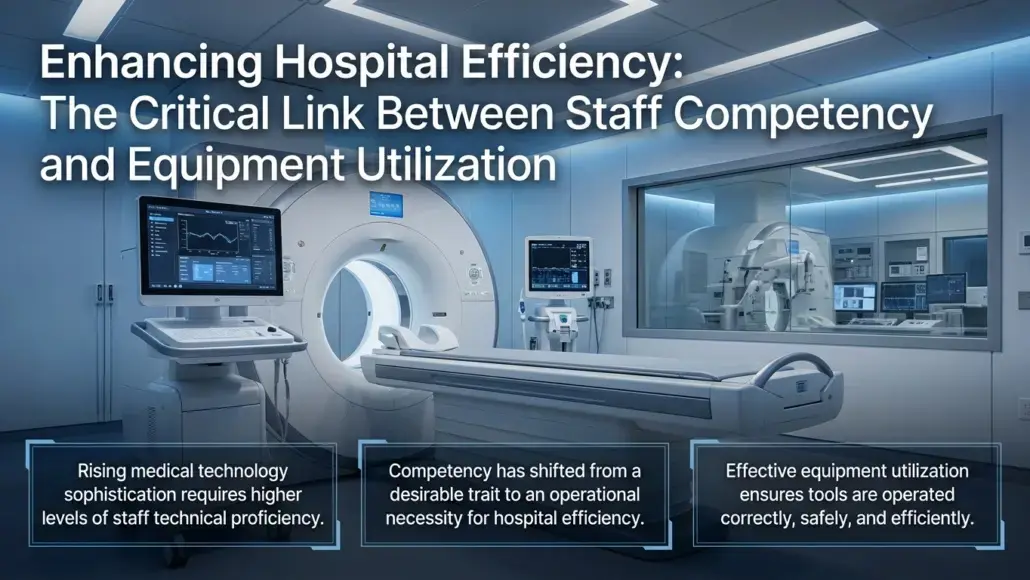

The efficiency of a modern hospital is inextricably linked to the technical proficiency of its frontline clinicians. As medical technology becomes increasingly sophisticated, the requirement for high levels of staff competency has moved from a desirable trait to an operational necessity. Effective utilization of medical equipment is not merely a matter of having the right tools available, but rather ensuring that those tools are operated correctly, safely, and efficiently. When clinicians possess a deep understanding of the devices they use, the hospital experiences fewer equipment failures, reduced downtime, and a significant improvement in the quality of diagnostic and therapeutic outcomes. In many healthcare environments, the focus of procurement is often on the specifications of the hardware itself, while the human element of technology integration is secondary. This imbalance can lead to a situation where expensive, high-acuity equipment is underutilized because staff are not fully confident in its advanced features. By prioritizing staff competency, hospital administrators can ensure that their capital investments yield the maximum possible benefit. This involves moving beyond basic orientation sessions toward a model of continuous professional development where technical skills are regularly assessed and refined in alignment with the latest clinical evidence and manufacturer guidelines.
Impact of Technical Proficiency on Clinical Resource Management
The relationship between the skill level of clinical personnel and the productivity of medical assets is direct and measurable. Clinicians who are proficient in the operation of complex devices can complete diagnostic tests and therapeutic interventions more rapidly, thereby increasing the throughput of patients. For example, a nurse who is fully competent in the setup and troubleshooting of an infusion pump or a telemetry monitor can spend less time managing the technology and more time providing direct patient care. This efficiency ripples through the entire department, reducing bottlenecks and ensuring that equipment is available for the next patient sooner. Technical proficiency also reduces the incidence of “no fault found” reports, which occur when equipment is sent for repair despite being fully functional. These reports are often the result of user error or a lack of understanding regarding the device’s operational parameters. When staff competency is high, clinicians can differentiate between a genuine mechanical failure and a simple settings issue that can be resolved at the bedside. This reduction in unnecessary service calls saves the biomedical engineering department significant time and resources, allowing them to focus on preventative maintenance rather than troubleshooting avoidable user-related problems. Beyond basic training, specialized processes such as MRI capacity scheduling illustrate how advanced operational knowledge contributes to diagnostic efficiency. When clinical teams understand the technical requirements of complex imaging, they can better prepare patients, resulting in fewer aborted scans and higher machine utilization. This synergy between staff knowledge and equipment scheduling ensures that the hospital’s most expensive diagnostic tools are not sitting idle due to preventable delays. Consequently, the institution can maintain higher volumes of high-quality imaging without the need for additional capital expenditure on new scanners.
Reducing Equipment Downtime through Standardized Training
Standardized training protocols are essential for maintaining a high baseline of competency across large, multi-disciplinary teams. In a typical hospital, clinicians may rotate through different units or work alongside colleagues from various backgrounds, making it critical that everyone follows the same operational standards. By implementing a uniform curriculum for medical device training, hospitals can minimize the variability in how equipment is used. This consistency is vital for patient safety, as it reduces the risk of errors that occur when staff are forced to improvise or rely on inconsistent instructions from their peers. Effective training programs should include both theoretical knowledge and hands-on simulation to ensure that staff are prepared for real-world clinical scenarios. Simulation allows clinicians to practice complex procedures in a low-stakes environment, building the muscle memory and confidence required to operate equipment under pressure. Regular competency assessments, such as annual skills check-offs, help to identify knowledge gaps and provide an opportunity for targeted remediation. This proactive approach to skill management ensures that the clinical workforce remains capable of utilizing the latest technological advancements as they are introduced into the facility. The impact of standardized training extends to the longevity of the equipment itself. Sensitive medical devices are prone to wear and tear when handled incorrectly, leading to frequent breakdowns and costly repairs. Clinicians who are trained in the proper cleaning, storage, and handling of these assets contribute to a longer equipment lifecycle. This stewardship of hospital resources is a key component of operational excellence, as it reduces the frequency of replacement cycles and ensures that the hospital’s technological infrastructure remains resilient and reliable over the long term.
Clinical Governance and the Optimization of Device Use
Clinical governance frameworks provide the structure necessary to oversee and improve the quality of care, including the management of medical technology. A comprehensive governance system ensures that staff competency is integrated into the hospital’s overall risk management strategy. By tracking metrics related to equipment utilization and user-related incidents, administrators can pinpoint specific areas where additional training or process improvements are needed. This data-driven approach allows the hospital to move away from reactive problem-solving toward a proactive model of continuous improvement in asset utilization. Governance also involves the establishment of clear accountability for equipment use within each clinical unit. When department heads and lead clinicians are responsible for the competency of their teams, there is a greater incentive to prioritize technical training. This local ownership of equipment utilization leads to more innovative solutions for managing daily workflows and ensuring that devices are used to their full potential. Additionally, governance structures facilitate the sharing of best practices between departments, allowing successful strategies for equipment management to be scaled across the entire organization. The integration of competency data into the hospital’s digital systems can further enhance the optimization of device use. For instance, some advanced medical devices now require a user to log in before operation, allowing the system to verify that the individual has completed the necessary training modules. This automated gatekeeping ensures that only qualified personnel are operating high-risk equipment, significantly reducing the potential for adverse events. Likewise, the data collected from these systems can be used to identify high-performing clinicians who can serve as “super-users” or mentors for their colleagues, fostering a culture of technical excellence within the clinical team.
Long-Term Financial Implications of Skill-Based Utilization
The financial health of a healthcare institution is closely tied to the efficiency of its clinical operations. While training programs require an initial investment of time and money, the long-term returns are substantial. By improving medical equipment utilization through staff competency, hospitals can achieve a higher return on investment for their capital assets. More efficient use of existing equipment reduces the pressure to purchase new units, allowing the hospital to extend the life of its current fleet while maintaining high standards of care. This optimization of the asset base is a critical component of fiscal sustainability in an environment of rising costs and shrinking reimbursements. Reduced maintenance costs also contribute to the positive financial impact of a highly skilled workforce. As previously noted, competent staff are less likely to cause accidental damage or request unnecessary service calls. These savings can be significant, especially for high-cost items like surgical robots or advanced imaging systems where a single repair can cost tens of thousands of dollars. Additionally, the improved diagnostic accuracy and therapeutic outcomes associated with expert equipment use lead to shorter lengths of stay and fewer readmissions, which further enhances the hospital’s financial performance under value-based care models. Investing in staff competency also has positive implications for employee retention and recruitment. Clinicians who feel supported in their professional development and confident in their technical skills are more likely to be satisfied with their jobs. This reduces the costs associated with staff turnover, such as recruitment fees and the use of expensive agency personnel. A reputation for technical excellence can also help a hospital to attract top-tier talent, creating a virtuous cycle where high competency attracts more skilled professionals, further improving the institution’s operational efficiency and clinical reputation.
Correlation Between User Proficiency and Patient Safety
At the heart of every clinical decision is the safety and well-being of the patient. The correlation between staff competency and patient safety is well-documented, with technical errors being a leading cause of adverse events in the hospital setting. When clinicians are proficient in the use of medical devices, they can more accurately interpret the data provided by these tools, leading to faster and more precise diagnoses. They are also less likely to be distracted by technology-related issues, allowing them to maintain their focus on the patient’s clinical status and response to treatment. Proficiency in troubleshooting and alarm management is another critical aspect of patient safety. Alarm fatigue, which occurs when clinicians are overwhelmed by the number of audible alerts from medical devices, is a significant risk factor in modern hospitals. Competent staff are better able to distinguish between clinically significant alarms and “nuisance” alarms caused by poor lead placement or incorrect settings. By effectively managing these alerts, clinicians can ensure that they respond promptly to genuine emergencies, thereby improving the chances of a successful patient outcome. Finally, the confidence that comes with high levels of staff competency fosters a more resilient clinical environment. In high-pressure situations, such as a cardiac arrest or a complex surgical procedure, the ability to operate equipment without hesitation is life-saving. A clinical team that is technically proficient can work more harmoniously, with each member focusing on their specific role rather than struggling with the tools of their trade. This collective competence is the foundation of a high-reliability organization, where the goal of zero harm is supported by a deep commitment to technical excellence and continuous learning. By prioritizing the development of their human capital, hospitals can ensure that their technological investments translate into the highest possible standard of patient care.