













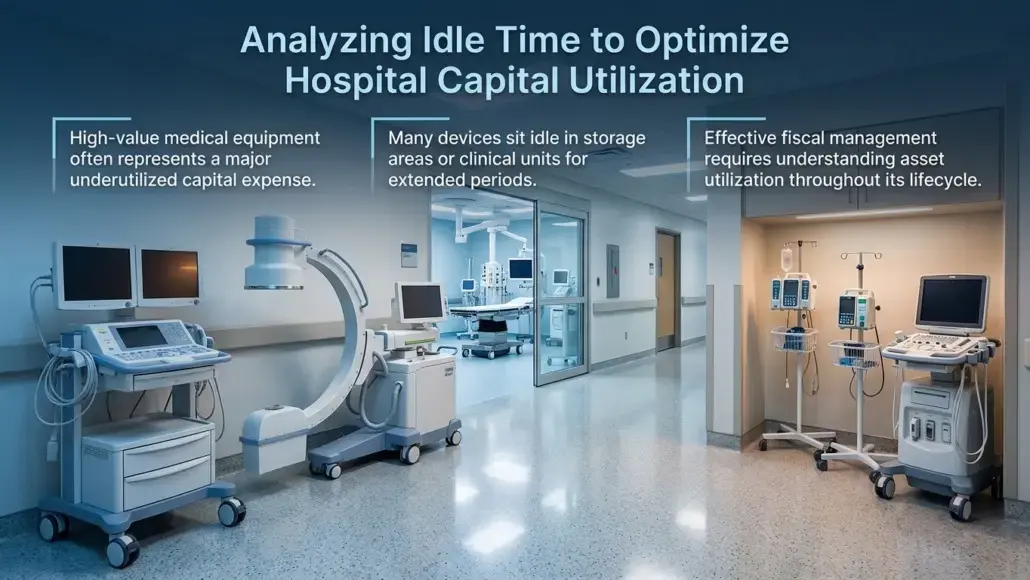

The fiscal management of a modern healthcare institution requires a sophisticated understanding of how capital assets are utilized throughout their operational lifecycle. High-value medical equipment, ranging from bedside monitors to advanced diagnostic scanners, represents a significant portion of a hospital’s capital expenditure. However, in many facilities, these assets are significantly underutilized, with a large percentage of devices sitting unused in storage areas or clinical units for extended periods. The implementation of idle-time analysis provides hospital leaders with the data-driven insights required to identify these inefficiencies and optimize the use of their existing asset base. By systematically measuring the time that equipment remains unproductive, hospitals can significantly improve their capital utilization and ensure that every dollar spent on technology contributes directly to patient care.
Improving capital utilization is not just an exercise in cost-cutting, but rather a strategic approach to enhancing the overall efficiency and resilience of the hospital. When equipment is underutilized, it represents “trapped” capital that could be better redirected toward other clinical priorities, such as staffing, facility upgrades, or the acquisition of new, high-demand technologies. The move toward a data-driven model of asset management allows hospitals to transition away from subjective, department-led procurement toward a more objective, evidence-based strategy. This shift is essential for maintaining financial sustainability in an environment characterized by rising costs and increasingly tight operating margins.
Quantifying Equipment Productivity through Data Analytics
The first step in any utilization initiative is the establishment of a baseline for equipment productivity. This involves the use of real-time location systems (RTLS) and device monitoring software to track exactly how often and for how long each piece of equipment is in use. By applying idle-time analysis to this data, hospitals can identify which types of devices are consistently active and which are frequently idle. For example, the analysis might reveal that while the hospital has a large fleet of infusion pumps, 30% of them have not been used in the past thirty days. This insight provides the foundation for more informed decisions regarding asset redistribution and future procurement.
Data analytics also allow for the identification of departmental variations in equipment usage. It is common to find that one unit has a surplus of idle devices while another faces frequent shortages of the same equipment. By visualizing these patterns, hospital administrators can facilitate the movement of assets between departments to better align availability with clinical demand. This cross-departmental optimization reduces the need for the hospital to purchase additional units to satisfy local shortages, thereby improving the return on investment for the existing inventory. The transparency provided by this analytical approach also helps to overcome the departmental silos that often hinder institutional progress.
However, data alone is insufficient, as clinical staff competency must be high enough to ensure that the equipment is used according to best practices when it is active. If staff are not fully proficient in the use of a device, they may avoid using it or use it inefficiently, leading to higher levels of idle time. Therefore, the results of an idle-time analysis should be used to inform not only procurement and logistics but also clinical training and professional development. By ensuring that the human and technological elements of the hospital are aligned, administrators can achieve a much higher level of operational excellence and patient safety.
Strategic Procurement and Capital Expenditure Reduction
One of the most significant benefits of conducting regular idle-time analysis is the impact on long-term capital planning. Traditionally, equipment procurement has been driven by departmental requests, which are often based on subjective perceptions of need rather than objective data. This can lead to a situation where a hospital continues to purchase new devices even though it already has a surplus of similar equipment that is simply being managed inefficiently. By providing a clear picture of actual equipment utilization, analytical tools allow the hospital to challenge these requests and ensure that new investments are only made when truly necessary.
The reduction in unnecessary capital expenditure has a direct and positive impact on the hospital’s balance sheet. Funds that were previously earmarked for redundant equipment can be redirected toward higher-value projects that have a greater impact on patient outcomes. For instance, the savings achieved from optimizing a fleet of mobile monitors could be used to fund the expansion of a high-demand service like oncology or cardiac care. This strategic reallocation of capital ensures that the hospital’s resources are always working to their full potential, supporting the institution’s long-term growth and mission.
Likewise, the ability to demonstrate high utilization rates is often a requirement for obtaining financing for large-scale projects or satisfying the requirements of regulatory and accreditation bodies. By showing that they are maximizing the utility of their existing assets through rigorous idle-time analysis, hospitals can build a stronger case for future investments. This data-driven approach to financial management builds confidence among stakeholders, including board members, investors, and donors, who want to ensure that their contributions are being managed effectively. The result is a more financially resilient and transparent institution that is better positioned to meet the challenges of a rapidly changing healthcare domain.
Operational Efficiency and the Reduction of Hidden Costs
Beyond the direct costs of procurement, underutilized equipment also carries significant “hidden” costs related to maintenance, storage, and management. Every piece of medical equipment, whether in use or idle, requires regular preventative maintenance, calibration, and safety checks to remain compliant with regulatory standards. When a hospital maintains a fleet that is larger than necessary, it incurs excessive maintenance costs that do not contribute to patient care. By identifying and removing underutilized assets, the hospital can reduce these ongoing expenses and allow the biomedical engineering department to focus their resources on active, high-priority equipment.
Storage space is another critical resource that is often wasted by idle equipment. In many hospitals, storage closets and equipment rooms are overflowing with devices that are rarely used, creating a cluttered and inefficient clinical environment. This clutter can make it difficult for staff to find the tools they actually need, leading to delays in care and increased frustration. Idle-time analysis allows for the identification of “ghost” assets that can be removed from clinical areas, freeing up valuable space for more productive uses. This improvement in the physical environment contributes to a more organized and professional atmosphere for both staff and patients.
Additionally, the administrative burden of managing a large, underutilized asset base should not be underestimated. Each device must be tracked, insured, and documented, requiring significant time and effort from the hospital’s logistics, finance, and legal teams. By streamlining the equipment fleet based on actual utilization data, the hospital can reduce this administrative overhead and improve the efficiency of its support services. The commitment to lean operational principles, supported by rigorous data analysis, is what allows the most successful hospitals to maintain high standards of care while managing their costs effectively. The transition to a more efficient, data-driven model of asset management is a vital component of institutional excellence.
Impact of Utilization on Patient Outcomes and Safety
While the financial benefits of improved capital utilization are clear, the ultimate goal of any hospital initiative is to improve the quality of patient care. Idle-time analysis contributes to this goal by ensuring that the most advanced and effective medical technologies are always available for use at the bedside. When equipment is managed efficiently, clinical staff no longer have to waste time searching for devices or working with outdated, poorly maintained units. This improved access to technology allows for more timely diagnoses and interventions, leading to better patient outcomes and higher levels of patient satisfaction.
The consistency provided by a well-managed equipment fleet also reduces the potential for clinical errors. When a hospital optimizes its inventory based on utilization data, it is more likely to standardize its equipment on a few high-performing models. This uniformity simplifies the training process for staff and reduces the risk of errors that occur when clinicians are forced to work with unfamiliar devices. Additionally, the reduction in clutter and the improved organization of clinical areas contribute to a safer and more focused environment for providing care. By prioritizing the efficient use of its technological assets, the hospital demonstrates its commitment to both operational excellence and patient safety.
Finally, the transparency provided by a data-driven approach to asset management builds trust between clinical and administrative teams. When decisions regarding equipment procurement and redistribution are based on objective data rather than departmental politics, clinicians are more likely to support the process. This collaboration is essential for creating a culture of continuous improvement, where every member of the hospital team is dedicated to finding new ways to improve efficiency and enhance care. By treating medical equipment as a shared, institutional resource that must be managed with precision, hospitals can ensure that their technological investments translate into the best possible care for every patient.
Technological Advancements and the Future of Asset Utilization
The future of equipment management in hospitals lies in the deeper integration of analytical tools with the Internet of Things (IoT) and artificial intelligence. Future generations of medical devices will be “self-aware,” capable of reporting their status, location, and utilization rates directly to a central management platform in real-time. This level of connectivity will allow for even more granular idle-time analysis, enabling the hospital to identify and address inefficiencies as they occur. For instance, the system could automatically alert the logistics team if a piece of equipment has been idle for a pre-determined period, allowing it to be redirected to a high-demand area immediately.
Artificial intelligence will also play a crucial role in predicting future equipment demand based on patient census data, clinical trends, and historical usage patterns. This predictive capability will allow hospitals to proactively stage equipment in anticipation of patient needs, further reducing delays and improving outcomes. By moving from a descriptive model of utilization to a predictive one, healthcare institutions can achieve a level of operational agility that was previously unimaginable. This technological evolution will ensure that the hospital’s capital assets are always aligned with the evolving needs of the patient population.
Ultimately, the commitment to maximizing the utility of every asset is a fundamental characteristic of a high-performance healthcare organization. By embracing the principles of data-driven management and continuous improvement, hospitals can ensure that they are providing the highest quality of care in the most efficient and sustainable way possible. The transition toward a more transparent, analytical approach to asset utilization is not just a fiscal necessity but a clinical imperative. In the increasingly complex world of modern medicine, the institutions that succeed will be those that master the art and science of managing their resources with precision and purpose.