













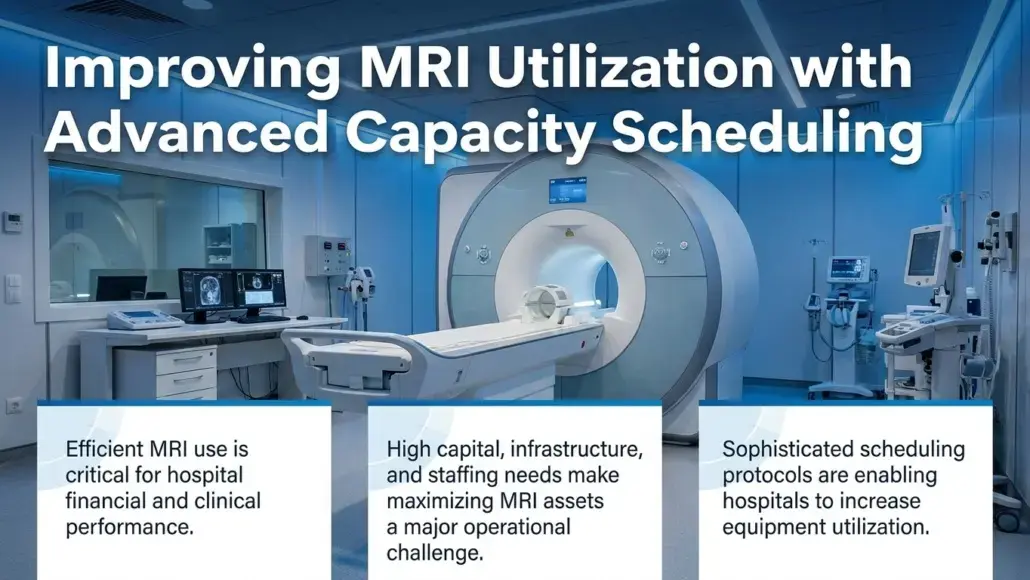

The management of high-value diagnostic assets such as Magnetic Resonance Imaging (MRI) scanners represents one of the most significant operational challenges in modern hospital systems. These machines require substantial capital investment, specialized infrastructure, and expert staffing, making their efficient use critical to the financial and clinical performance of the institution. The implementation of sophisticated capacity scheduling protocols allows hospitals to maximize the utilization of these assets, ensuring that patient wait times are minimized and diagnostic throughput is optimized. By moving beyond traditional appointment booking toward a dynamic, data-driven approach, healthcare facilities can significantly improve the productivity of their radiology departments.
Effective utilization of diagnostic equipment is not just a matter of filling every time slot, but rather ensuring that the entire workflow,from patient preparation to post-scan processing,is aligned with the scanner’s availability. When capacity scheduling is performed accurately, it accounts for the varying complexities of different scan types, patient mobility issues, and the need for specialized contrast agents. This holistic view of the imaging process prevents the formation of bottlenecks that can lead to expensive idle time for the scanner. Consequently, the hospital can serve a larger volume of patients without compromising the quality of the diagnostic images or the patient experience.
Algorithmic Optimization of Imaging Workflows
The transition from manual booking systems to algorithmic capacity scheduling has revolutionized how radiology departments manage their daily operations. Modern scheduling software uses historical data and predictive analytics to determine the optimal duration for each scan type, allowing for more precise booking of appointments. This reduces the likelihood of overbooking, which leads to staff burnout and patient dissatisfaction, as well as underbooking, which results in wasted machine time. By continuously refining these algorithms based on real-world performance, hospitals can achieve a level of operational efficiency that was previously impossible.
Algorithmic scheduling also allows for the integration of urgent and emergency scans without disrupting the entire day’s appointments. By reserving specific “buffer” slots based on historical emergency demand, the system can accommodate high-priority patients while maintaining the flow of elective procedures. This flexibility is essential for maintaining a high-reliability diagnostic service that meets the needs of both the inpatient and outpatient populations. Additionally, the data generated by these scheduling systems provides valuable insights into peak demand periods, enabling administrators to adjust staffing levels and scan hours to better match patient needs.
While imaging focuses on elective and scheduled care, ventilator allocation planning represents the critical care counterpart where resource mobility is paramount. Just as diagnostic centers must balance throughput with urgency, critical care units must ensure that life-saving technology is available exactly when needed. The integration of capacity scheduling with broader hospital resource management ensures that patients move efficiently through the diagnostic phase of their care, reducing overall length of stay and improving hospital capacity. By treating the MRI scanner as a high-demand node within a larger network, hospitals can optimize the entire patient journey.
Patient Preparation and the Reduction of Idle Time
One of the most common causes of underutilization in diagnostic imaging is the delay caused by inadequate patient preparation. If a patient is not properly screened for metallic implants, or if they have not followed the necessary fasting protocols, the scan cannot proceed, leading to a vacant time slot that is difficult to fill at short notice. Effective capacity scheduling must therefore include a comprehensive patient communication and screening component. By automating prep instructions and screening questionnaires, hospitals can ensure that patients arrive ready for their scans, thereby maximizing the active scanning time of the MRI machine.
The use of dedicated preparation areas and “swing” rooms can further enhance the efficiency of the scanning process. While one patient is undergoing their scan, the next patient is being prepared and screened in a separate area, allowing for a rapid changeover between procedures. This parallel processing minimizes the idle time of the scanner and increases the total number of scans that can be performed in a single shift. When integrated with a dynamic scheduling system, this approach allows the radiology team to adjust the workflow in real-time based on the progress of each scan, ensuring that the machine is always in use.
Additionally, the optimization of staffing levels is critical to the success of any scheduling initiative. The throughput of an MRI scanner is limited not only by the machine itself but also by the availability of technologists and radiologists. Capacity scheduling ensures that staff schedules are aligned with the periods of highest patient demand, reducing the risk of staff being overstretched during peak hours or underutilized during quiet periods. This alignment improves staff morale and reduces the potential for errors, contributing to a safer and more efficient diagnostic environment for both employees and patients.
Financial Sustainability through Asset Productivity
The financial implications of improved diagnostic equipment utilization are profound. MRI scanners are among the most expensive assets in a hospital’s inventory, with significant ongoing costs for electricity, cryogens, and maintenance. Maximizing the number of scans performed per machine allows the hospital to distribute these fixed costs over a larger patient volume, reducing the cost per scan. This improved fiscal performance is essential for maintaining the viability of radiology services in an era of increasing budgetary pressures. By achieving higher productivity from existing assets, hospitals can also defer the need for capital-intensive expansions.
Capacity scheduling also plays a vital role in revenue cycle management. By reducing wait times and improving patient throughput, hospitals can capture a larger share of the local imaging market and reduce the number of patients who seek care at competing facilities. A reputation for efficient and timely diagnostic services is a powerful marketing tool for any healthcare institution. Additionally, the data provided by advanced scheduling systems allows for more accurate financial forecasting and budgeting, as administrators can predict revenue based on projected scan volumes and reimbursement rates for different procedure types.
Likewise, the ability to demonstrate high utilization rates is often a requirement for obtaining regulatory approval for new equipment purchases or facility expansions. By showing that their existing scanners are operating at peak efficiency through effective capacity scheduling, hospitals can build a stronger case for future investments. This data-driven approach to capital planning ensures that resources are allocated to the areas of greatest clinical and financial need, preventing the waste associated with underutilized high-tech assets. The long-term result is a more resilient and sustainable diagnostic infrastructure that can meet the evolving needs of the community.
Enhancing Patient Experience through Timely Access
The impact of scheduling on the patient experience cannot be overstated. Long wait times for diagnostic imaging are a major source of anxiety for patients and can lead to delays in the initiation of treatment. By optimizing the use of MRI scanners, hospitals can provide faster access to essential diagnostic information, leading to quicker clinical decisions and improved patient outcomes. A streamlined scheduling process also reduces the time patients spend in the hospital on the day of their scan, improving overall satisfaction and reducing the burden on patient transportation and support services.
Transparency in the scheduling process is another key factor in patient satisfaction. Modern systems that allow patients to book and manage their appointments online provide a sense of control and convenience that is highly valued. Automated reminders and real-time updates regarding delays further enhance the patient experience by keeping them informed throughout the process. This patient-centered approach to capacity scheduling builds trust and loyalty, ensuring that the hospital remains the preferred provider for diagnostic services in the region. When technology and logistics work together, the result is a more compassionate and efficient healthcare experience.
Finally, the improvement of diagnostic throughput contributes to a more efficient overall healthcare system. Faster imaging leads to faster discharges and more timely surgical interventions, freeing up hospital beds and reducing the backlog in outpatient clinics. By treating the MRI scanner as a critical resource that must be managed with precision, hospitals can improve the flow of patients across all departments. This systemic view of operational efficiency is the hallmark of a high-performing healthcare institution, where every asset and every minute is dedicated to the mission of providing the best possible care to the community. Through the strategic application of capacity scheduling, the potential of diagnostic technology is fully realized, benefiting patients, clinicians, and the institution alike.
Technological Integration and Future Operational Standards
The future of diagnostic equipment utilization lies in the deeper integration of scheduling systems with other hospital digital platforms. For instance, linking the scheduling software with the electronic health record (EHR) allows for the automatic identification of patients who require urgent imaging based on their clinical status. This real-time prioritization ensures that the most critically ill patients are seen first, without the need for manual intervention by the radiology team. This level of automation reduces the risk of human error and ensures that the diagnostic process is as responsive as possible to clinical needs.
The adoption of artificial intelligence (AI) in capacity scheduling is another area of significant potential. AI can analyze vast amounts of historical data to identify subtle patterns in patient behavior, such as the likelihood of a no-show for specific appointment times. By proactively overbooking or contacting these patients, the hospital can maintain a high level of machine utilization even in the face of variable patient attendance. Likewise, AI can assist in the optimization of scan protocols, ensuring that each patient receives the most appropriate and efficient diagnostic procedure based on their specific clinical indications.
As healthcare continues to evolve, the ability to manage complex assets with precision will become an increasingly important differentiator for hospitals. Those institutions that master the art and science of capacity scheduling will be better positioned to manage the challenges of the modern healthcare domain. By focusing on the synergy between technology, data, and human expertise, hospitals can ensure that their diagnostic services remain at the forefront of clinical excellence. The commitment to maximizing the utility of every asset is not just an operational goal but a fundamental component of providing high-quality, sustainable care to every patient who enters the facility.