
















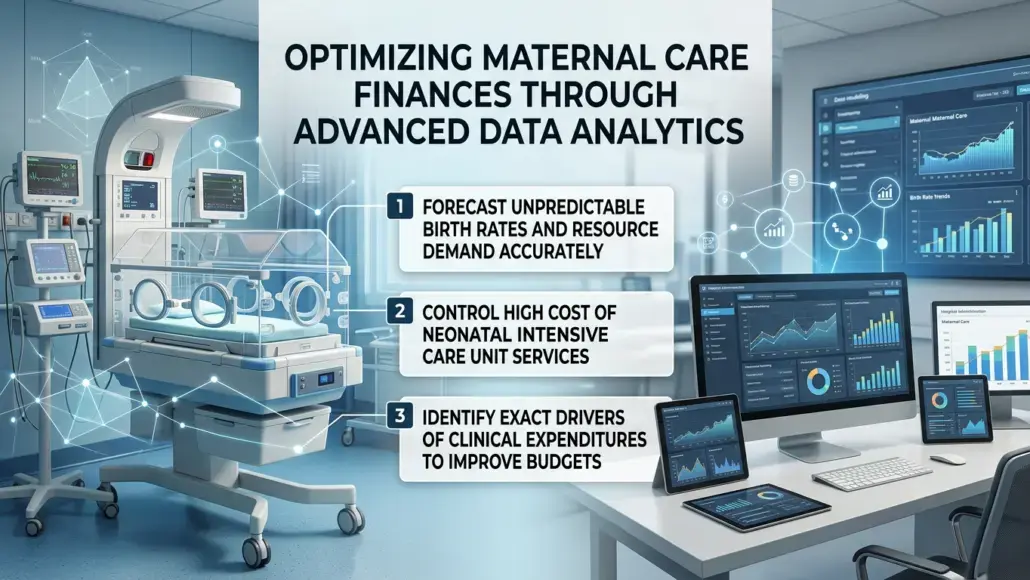

Hospital administration is increasingly turning toward sophisticated data modeling to manage the financial complexities associated with obstetric and neonatal services. The volatility of birth rates combined with the high cost of neonatal intensive care units necessitates a rigorous approach to budget management and resource forecasting. By implementing advanced maternal cost analytics, healthcare organizations can identify the precise drivers of clinical expenditures and optimize their financial strategies accordingly. This shift toward evidence-based financial management allows hospital leaders to balance the need for high-quality care with the necessity of maintaining institutional solvency. The ability to predict and manage these costs is essential for the long-term sustainability of the organization.
The financial management of maternity departments requires a granular understanding of the entire care cycle, from initial prenatal visits to postpartum follow-up. Each stage of this journey involves different sets of clinical resources, staff time, and administrative overhead. By utilizing specialized analytical tools, hospitals can map these costs with high precision and identify areas where efficiency can be improved without compromising patient safety. This level of financial visibility is critical for negotiating reimbursement rates with insurance providers and ensuring that the department remains a viable component of the hospital’s service portfolio. The resulting data insights provide a foundation for strategic decision-making that supports both clinical excellence and financial health.
Strategic Budgeting and Resource Allocation
Effective hospital resource planning begins with a comprehensive analysis of historical spending and projected patient volume. By applying maternal cost analytics to these datasets, administrators can develop more accurate budget forecasts and allocate resources to the areas of greatest need. This proactive approach to budgeting allows hospitals to prepare for fluctuations in patient demand and ensure that clinical teams have the tools they need to provide exceptional care. For example, data might reveal a growing need for specialized diagnostic equipment in the maternal-fetal medicine unit, prompting a reallocation of funds from less utilized departments. This level of agility is essential for maintaining a competitive edge in a dynamic healthcare market.
In addition, the integration of financial data with clinical outcomes allows hospital boards to evaluate the return on investment for specific medical interventions. By understanding the cost-effectiveness of different treatment protocols, healthcare providers can prioritize the adoption of practices that deliver the best results at the most sustainable price point. This focus on value-based care is a key driver of modern healthcare reform and is essential for reducing the overall burden of healthcare costs on society. The ability to demonstrate clinical value through rigorous data analysis is also vital for maintaining the hospital’s reputation and attracting both patients and top-tier medical talent.
Identifying Operational Efficiencies in Obstetric Care
Operational efficiency is a critical component of financial sustainability in the healthcare sector. By using maternal cost analytics to track the utilization of clinical space, equipment, and staff time, hospitals can identify bottlenecks that increase costs and reduce patient satisfaction. For instance, an analysis of operating room turnover times in the labor and delivery unit might reveal opportunities for clinical workflow redesign that could increase patient throughput and reduce administrative overhead. These incremental improvements, when applied across the entire department, can lead to significant cost savings and improved service delivery.
Data-driven insights also allow for better management of high-cost items, such as specialized pharmaceuticals and disposable medical supplies. By monitoring usage patterns and negotiating volume discounts with suppliers, hospitals can reduce their supply chain expenditures without impacting the quality of care. The ability to maintain optimal inventory levels ensures that critical supplies are always available when needed, while minimizing the capital tied up in excess stock. This level of operational precision is essential for managing the tight margins often associated with maternity services. The following operational factors are particularly sensitive to data-driven optimization:
- Staffing Models: Adjusting nurse-to-patient ratios based on real-time patient volume forecasts to ensure safe and efficient care.
- Bed Capacity Management: Optimizing the allocation of postpartum recovery suites and neonatal intensive care beds to maximize occupancy and reduce patient wait times.
- Supply Chain Procurement: Using historical usage data to negotiate better pricing for high-volume obstetric supplies and medications.
- Energy and Facility Maintenance: Identifying opportunities to reduce the environmental footprint and operational costs of specialized women’s health wings.
- Administrative Automation: Streamlining patient billing and insurance verification processes to reduce the administrative burden on clinical staff.
These measures contribute to a more efficient and cost-effective clinical environment that supports the long-term goals of the organization. By maintaining a focus on operational excellence, healthcare providers can ensure that their resources are used to their fullest potential.

Enhancing Financial Stability through Risk Management
Managing the financial risks associated with high-acuity maternity care is a primary concern for hospital leadership. Complications during pregnancy and childbirth can lead to significant unplanned expenses that strain the hospital’s financial resources. By utilizing predictive modeling and maternal cost analytics, administrators can estimate the likelihood of these events and develop contingency plans to mitigate their impact. This risk-based approach to financial management ensures that the hospital remains prepared for even the most challenging clinical scenarios.
Risk management also involves the regular auditing of clinical documentation and billing practices to ensure that the hospital is receiving full and accurate reimbursement for the services provided. By identifying and correcting coding errors, healthcare organizations can improve their revenue cycle management and increase their overall profitability. Additionally, the ability to demonstrate a commitment to safety and quality through data analysis can lead to lower insurance premiums for the hospital. These financial benefits contribute to the overall stability of the institution and allow for continued investment in women’s care infrastructure and other critical assets.
Long-Term Planning and Service Line Development
The insights gained from cost analytics are essential for informing the long-term development of the hospital’s service lines. By understanding the financial performance of different specialties within women’s health, administrators can make informed decisions about where to expand or consolidate services. For example, data might indicate that a specific sub-specialty, such as urogynecology, has a high potential for growth and financial return, prompting the hospital to invest in additional staff and facilities for that unit. This strategic approach to growth ensures that the hospital’s investments are aligned with the needs of the community and the institution’s financial goals.
Long-term planning also involves the evaluation of community health trends and demographic shifts that might impact future service demand. By analyzing data on local birth rates and health risk factors, hospital leadership can anticipate changes in patient volume and adapt their resource planning accordingly. This forward-thinking perspective is critical for ensuring that the hospital remains a central pillar of the community’s health infrastructure. The ability to adapt to changing market conditions is a hallmark of a resilient and successful healthcare organization.
Integrating Cost Data with Patient Outcomes
The ultimate goal of using financial analytics in healthcare is to support the delivery of high-quality patient care. By integrating cost data with clinical outcome metrics, hospitals can create a holistic view of institutional performance that prioritizes both fiscal responsibility and medical excellence. This integrated approach allows for the identification of “best practices” that deliver superior results at a lower cost, providing a model for continuous improvement across the entire organization. The ability to quantify the relationship between resource allocation and patient health is essential for building a truly value-based healthcare system.
Additionally, sharing these insights with clinical teams can foster a culture of financial awareness and accountability. When physicians and nurses understand the financial impact of their clinical decisions, they are more likely to engage in efforts to improve efficiency and reduce waste. This collaborative approach to financial management ensures that everyone in the organization is working toward the same goals. By fostering a shared commitment to excellence and efficiency, healthcare providers can build a sustainable model for the future of women’s health.
Ultimately, the adoption of maternal cost analytics represents a fundamental shift in how hospitals approach financial management. It is about moving beyond simple bookkeeping to a sophisticated, data-driven strategy that supports the hospital’s core mission of providing exceptional care to the community. When administrators have the tools they need to understand and manage their costs, they can create a more stable and resilient organization that is better positioned to meet the challenges of the modern healthcare environment. This dedication to financial and clinical excellence is the foundation of a world-class healthcare institution and a critical driver of long-term success.
The application of predictive analytics to patient scheduling also offers significant opportunities for cost reduction. By anticipating periods of high clinical activity, hospital administrators can adjust staffing levels and supply orders in advance, reducing the need for expensive last-minute adjustments. This level of foresight is particularly valuable in the context of emergency obstetric care, where rapid response is essential for patient safety. By aligning resource availability with projected demand, healthcare organizations can achieve a more stable and efficient operational environment. This proactive approach to management ensures that the hospital can continue to deliver high-quality care even during times of peak volume.
In addition, the use of automated financial reporting tools allows hospital boards to monitor performance in real-time. These systems provide instant visibility into key financial indicators, such as revenue per case and supply chain expenditures, enabling administrators to make informed decisions quickly. The ability to track financial performance with such precision is essential for identifying and addressing issues before they impact the organization’s bottom line. By maintaining a focus on both clinical and financial data, healthcare providers can build a truly sustainable and resilient organization that serves the needs of the community for years to come. This commitment to transparency and excellence is the hallmark of a leading healthcare institution.