
















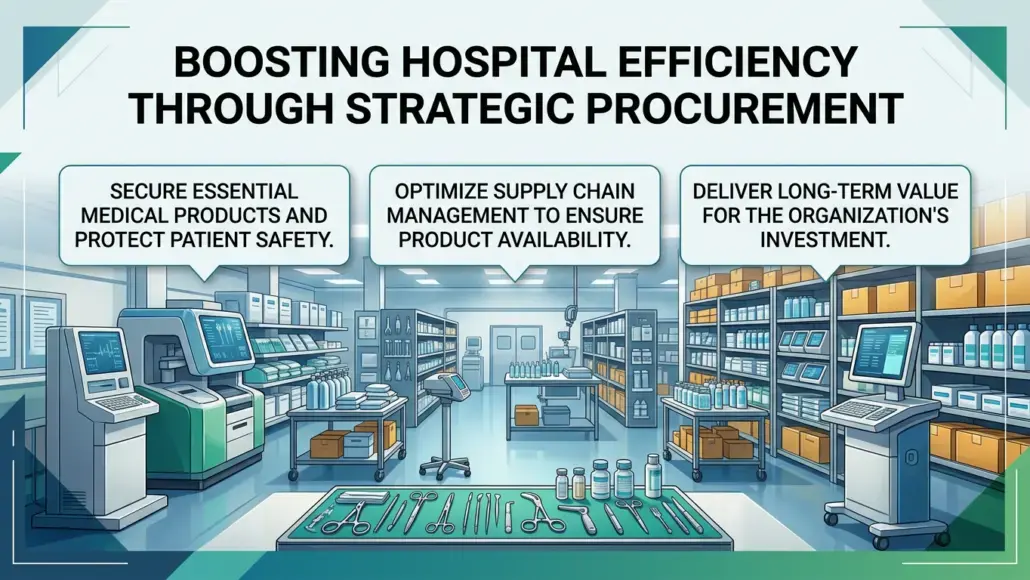

The healthcare sector is uniquely sensitive to fluctuations in the supply chain, where the availability and quality of medical products can directly impact patient safety and clinical outcomes. Strategic procurement is the systematic process of managing an organisation’s external spending to ensure that it receives the best possible value for its investment. This goes far beyond simple transactional purchasing: it involves the development of long term relationships with suppliers, the use of data-driven market analysis, and the continuous evaluation of vendor performance. By adopting a more strategic approach to sourcing, hospitals can significantly reduce their operating expenditure while maintaining the high standards of care required in a clinical environment.
A critical first step in strategic procurement is the centralisation of the purchasing function. Many hospitals still suffer from fragmented buying patterns where different departments negotiate their own contracts with various vendors. This lack of coordination leads to missed opportunities for volume discounts and creates an administrative burden for the finance team. By consolidating spending through a centralised procurement office, healthcare organisations can leverage their total volume to negotiate better pricing and more favourable terms. This level of oversight also allows for a more consistent evaluation of product quality and supplier reliability, which is essential for ensuring clinical excellence.
Total cost of ownership (TCO) is a fundamental concept in strategic procurement. When evaluating a new product or service, procurement professionals must look beyond the initial purchase price to consider all associated costs, including shipping, storage, clinical training, and eventual disposal. For example, a lower-cost medical device might require more expensive consumables or have a shorter lifespan than a premium alternative, leading to higher costs over the long term. By conducting a thorough TCO analysis, hospitals can make more informed decisions that support their overall financial goals and ensure that they are getting the best value for their money.
Vendor Management and Supplier Relationship Optimisation
Building strong relationships with key suppliers is a cornerstone of strategic procurement. Instead of viewing vendors as simple providers of goods, hospitals should aim to develop partnerships that drive innovation and continuous improvement. This involves open communication about future needs, collaborative problem-solving, and the joint development of new products or services. When suppliers have a clear understanding of the hospital’s goals, they are better positioned to provide solutions that meet those needs and contribute to the organisation’s overall success. These partnerships can also lead to more flexible contract terms and a more resilient supply chain that is better able to weather external shocks.
Supplier performance management is another critical component of the procurement lifecycle. Hospitals must have a structured process for evaluating vendors based on specific metrics such as delivery timelines, product quality, and responsiveness to issues. Regular performance reviews provide an opportunity to identify areas for improvement and to hold suppliers accountable for meeting their contractual obligations. Effective strategic procurement requires a commitment to transparency and a willingness to switch vendors if performance consistently falls below established standards. By maintaining a competitive vendor environment, hospitals can ensure that they are always receiving the best possible service and value.
The use of group purchasing organisations (GPOs) is a common strategy for hospitals looking to increase their bargaining power. By pooling their volume with other healthcare institutions, hospitals can access significantly lower prices than they could achieve on their own. However, strategic procurement also involves the careful evaluation of GPO contracts to ensure that they are truly in the best interest of the organisation. In some cases, a hospital may be able to negotiate a better deal directly with a vendor, especially for high-volume items or specialised medical equipment. Balancing the benefits of GPO participation with the need for independent negotiation is a key skill for modern procurement leaders.

Supply Chain Digitalisation and Inventory Visibility
The integration of digital technology into the procurement process is transforming how hospitals manage their supply chains. Automated procurement systems allow for the electronic submission of purchase orders and the receipt of invoices, reducing the time and errors associated with manual data entry. This digitalisation is a cornerstone of modern strategic procurement, providing a more scalable and reliable way to manage the thousands of transactions that occur within a busy hospital every month. Furthermore, by integrating these systems with the hospital’s electronic health records, administrators can gain real-time visibility into the relationship between supply usage and clinical outcomes.
Inventory management technology, such as radio-frequency identification (RFID) and advanced barcoding, provides granular visibility into stock levels and expiration dates. This visibility is essential for strategic procurement as it prevents the over-ordering of supplies and reduces the volume of medical products that must be discarded due to shelf-life expiration. A more agile and transparent supply chain also allows the hospital to respond more effectively to sudden fluctuations in demand, such as those seen during a public health crisis. By maintaining optimal stock levels, healthcare organisations can reduce their carrying costs and free up capital for other clinical priorities.
- Implementation of cloud-based e-procurement platforms to streamline the requisition and approval process.
- Utilisation of predictive analytics to forecast future supply needs based on scheduled surgical volumes and historical data.
- Development of a centralised warehouse model to improve inventory control and reduce the space required for storage on clinical wards.
- Establishment of a value analysis committee to evaluate new products for both clinical efficacy and total cost of ownership.
The reduction of clinical waste is also a major focus of strategic procurement. This includes everything from the proper segregation of hazardous waste to the reprocessing of certain single-use medical devices where permitted by regulation. Engaging frontline clinical staff in these initiatives is crucial, as they are best positioned to identify waste at the point of care. Successful procurement programs often include education and incentives for departments that meet their waste reduction targets, fostering a culture of accountability and resourcefulness across the entire workforce.
Value Analysis and Clinical Integration in Procurement
Effective strategic procurement requires a high degree of collaboration between the procurement team and clinical leadership. Clinical value analysis (CVA) is a structured process for evaluating new products and services to ensure that they provide the best possible balance of clinical efficacy and financial value. This involves the review of clinical evidence, the conduction of product trials, and the evaluation of the impact on existing workflows. By involving physicians and nurses in the decision-making process, hospitals can ensure that the products they purchase are truly meeting the needs of their patients and staff.
Standardising medical supplies across the organisation is another key goal of strategic procurement. When different departments use different brands of similar products, it creates unnecessary complexity in the supply chain and increases the volume of inventory that must be managed. By standardising on a single brand or model for certain items, hospitals can negotiate better pricing and reduce the time spent on clinical training. However, this process must be handled with care to ensure that clinical quality is not compromised. A successful value analysis committee will weigh the financial benefits of standardisation against the specific clinical needs of different medical specialties.
The role of the procurement professional in healthcare is shifting from a back-office administrative function to a strategic partner in clinical excellence. By providing clinicians with data on the cost and performance of different products, procurement teams can help to drive more informed decision-making at the point of care. This alignment of financial and clinical goals is the foundation of a successful strategic procurement program, ensuring that the organisation is always focused on delivering the highest possible value to its patients. This commitment to value is what defines the most successful healthcare organisations in the modern era.
Long Term Resilience and Ethical Sourcing Standards
As healthcare systems become increasingly globalised, the importance of ethical and sustainable sourcing is growing. Strategic procurement involves the evaluation of suppliers based on their environmental and social impact, ensuring that the products used in the hospital are produced in a responsible manner. This might include everything from reducing the carbon footprint of the supply chain to ensuring that fair labour practices are followed by vendors. By adopting these standards, hospitals can not only improve their reputation but also contribute to a more sustainable and equitable healthcare system for everyone.
Resilience is another critical focus for long term procurement planning. The COVID-19 pandemic highlighted the vulnerabilities of the global healthcare supply chain, leading many hospitals to re-evaluate their sourcing strategies. Strategic procurement now often includes the diversification of the supplier base and the development of domestic sourcing options for critical medical supplies. By reducing reliance on a single vendor or geographic region, hospitals can better protect themselves from future disruptions and ensure the continuous availability of essential products for their patients. This focus on long term stability is essential for maintaining the financial and operational health of any healthcare organisation.
Additionally, many institutions are finding that healthcare workforce planning controlling hospital labour costs is an essential companion to procurement strategies, as it allows for a more holistic approach to managing the major components of operating expenditure. The journey toward procurement excellence is ongoing, requiring a commitment to continuous improvement and a willingness to adapt to new challenges. By maintaining a focus on strategic procurement, healthcare leaders can ensure that their organisations remain fiscally sound and capable of providing the highest level of care for generations to come. This commitment to value and integrity is what will ultimately ensure the survival and success of the hospital in an increasingly complex and challenging environment.
Finally, the continuous evolution of healthcare technology will provide new opportunities for improving the procurement process. From the use of artificial intelligence for market analysis to the adoption of blockchain for secure supply chain tracking, the future of strategic procurement is bright. By staying at the forefront of these developments, hospitals can continue to improve their financial performance and provide a better experience for their patients and staff. The future of healthcare supply chain management is digital, data-driven, and ethical, and those organisations that embrace this reality today will be the leaders of tomorrow. This focus on innovation and excellence is what will drive the healthcare industry forward in the coming decade.