












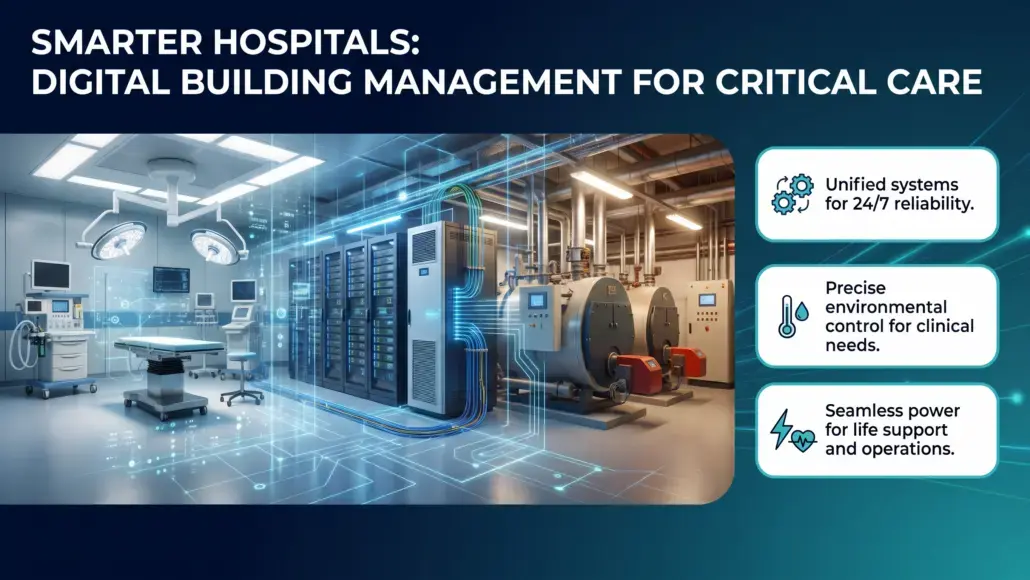
The operation of a modern hospital is an exercise in managing extreme complexity, where the physical environment must support a wide range of critical clinical activities around the clock. From the precise temperature and humidity controls required in operating theaters to the reliable power distribution for life support systems, every aspect of the building’s infrastructure must perform flawlessly. Traditionally, these various systems operated in silos, with separate controls for heating, ventilation, lighting, and security. However, the emergence of digital building management has revolutionized this approach, allowing for the integration of disparate systems into a unified, intelligent platform. This centralized oversight is essential for improving infrastructure efficiency, reducing operational costs, and enhancing the overall quality of care provided to patients. By providing facility managers with real-time visibility and control over their entire estate, these digital systems enable a more proactive and data-driven approach to hospital management.
The shift toward integrated facility management is driven by the need for greater resilience and sustainability in the healthcare sector. Hospitals are among the most energy-intensive buildings in any community, and the costs associated with maintaining their infrastructure are a significant portion of the annual operating budget. Digital building management addresses these challenges by optimizing the performance of mechanical and electrical systems, ensuring that they operate only when and where they are needed. This not only saves energy but also reduces the wear and tear on expensive capital equipment, extending the lifespan of the hospital’s most critical assets. As hospitals continue to expand and modernize, the ability to manage these complex environments through a single, intuitive interface becomes a competitive advantage, allowing clinical staff to focus on patient outcomes while the building itself handles the technical intricacies of the environment.
Centralized Control Systems for Healthcare Facility Integration
The primary benefit of digital building management is the ability to centralize the control of various building systems into a single dashboard. In a traditional hospital setting, adjusting the climate in a specific wing or investigating a security alert might involve several different software platforms or physical checks. With an integrated digital system, all of this information is brought together in a way that is easy to interpret and act upon. This centralized approach allows for a more coordinated response to environmental changes. For example, if a patient room becomes vacant, the system can automatically adjust the lighting and HVAC settings to a standby mode, saving energy without any manual intervention. This level of automation is critical in a busy hospital environment where staff are often stretched thin and cannot be expected to manage the building’s technical settings manually.
Integration also extends beyond basic environmental controls to include specialized healthcare systems such as medical gas monitoring, nurse call systems, and pneumatic tubes. By bringing these systems under the umbrella of digital building management, facility managers can gain a holistic view of the hospital’s operational health. Any anomalies, such as a drop in medical gas pressure or a failure in the vertical transport system, are immediately flagged on the central console. This rapid notification allows maintenance teams to address issues before they impact patient care, enhancing the overall safety and reliability of the clinical environment. The synergy created by this integration helps to break down the silos between clinical and facility operations, creating a more cohesive and efficient institution that is better equipped to handle the demands of modern medicine.
Data Driven Decision Making in Hospital Infrastructure Planning
One of the most powerful aspects of digital building management is the vast amount of data it generates. Every sensor and controller in the network provides a constant stream of information about the building’s performance, from energy consumption patterns to equipment run times. This data is a goldmine for facility managers and hospital executives, providing the evidence needed to make informed decisions about infrastructure investment and operational strategies. By analyzing historical trends, managers can identify areas where efficiency can be improved, such as identifying underperforming chillers or pinpointing wings with unusually high energy intensity. This data-driven approach replaces guesswork with empirical evidence, ensuring that capital is directed toward the projects that will provide the greatest return on investment and the most significant improvements in patient safety.
Additionally, the data collected by digital building management systems is essential for long-term infrastructure planning. As hospitals plan for future expansions or renovations, the insights gained from current building performance can inform the design of new spaces. Engineers can see exactly how the building responds to different weather conditions and occupancy levels, allowing them to size mechanical systems more accurately and select the most efficient technologies. This feedback loop between operations and design ensures that each new addition to the hospital campus is more efficient and resilient than the last. In an era where healthcare organizations must do more with less, the ability to utilize data for strategic planning is a vital tool for ensuring the long-term viability of the institution’s physical assets.
Improving Life Safety Systems via Smart Automation
Life safety is the highest priority in any healthcare facility, and digital building management plays a crucial role in enhancing these critical protections. Fire alarms, smoke control systems, and emergency lighting must all function perfectly in the event of a crisis. By integrating these systems into a smart building platform, hospitals can automate their response to emergencies in a way that is both faster and more reliable than manual processes. For instance, if a smoke detector is triggered in a specific zone, the building management system can automatically adjust the HVAC dampers to prevent the spread of smoke, activate emergency lighting along the evacuation route, and provide the security team with live video feeds from the affected area. This coordinated response saves valuable seconds and helps to ensure the safety of patients who may be immobile or otherwise vulnerable.
Automation also helps to simplify the rigorous testing and compliance requirements for life safety systems. Hospitals are subject to strict regulations that require regular verification of fire dampers, emergency generators, and other safety equipment. Digital building management systems can automate these tests and generate detailed compliance reports, reducing the administrative burden on facility staff and ensuring that all systems are always ready for an inspection. This level of oversight provides peace of mind to hospital administrators and clinical staff alike, knowing that the building’s most critical safety features are being monitored and maintained with the highest degree of precision. The integration of life safety into the broader building management framework ensures that these essential protections are never treated as an afterthought but are instead a fundamental part of the building’s intelligent infrastructure.
Facility Lifecycle Management and Asset Tracking Excellence
The physical assets of a hospital, from the HVAC plant to the medical equipment used at the bedside, represent a massive capital investment. Managing the lifecycle of these assets is essential for maintaining infrastructure efficiency and controlling long-term costs. Digital building management facilitates this process by providing a centralized database of all building components, including their installation date, maintenance history, and current performance status. By tracking the real-time condition of these assets, facility managers can move away from rigid, schedule-based maintenance toward a more effective condition-based approach. This means that equipment is serviced only when it actually needs it, reducing unnecessary labor and preventing premature failures that could disrupt clinical operations.
In addition to mechanical assets, digital building management can be integrated with real-time location systems (RTLS) to track mobile medical equipment and even personnel. This capability improves operational efficiency by reducing the time staff spend searching for wheelchairs, infusion pumps, or other vital tools. When these systems are combined, the building itself becomes an active participant in the clinical workflow, ensuring that the right equipment is in the right place at the right time. This level of asset tracking excellence not only saves time but also reduces the need for hospitals to over-purchase equipment to compensate for poor visibility. By optimizing the use of both fixed and mobile assets, healthcare organizations can achieve a more lean and efficient operation that maximizes the value of every dollar spent on infrastructure and equipment.
The implementation of digital building management is a defining characteristic of the modern, high-performance hospital. By integrating the various mechanical, electrical, and clinical systems into a unified platform, healthcare organizations can achieve levels of efficiency and safety that were previously out of reach. This digital transformation is not just about adopting new technology; it is about fundamentally changing the way we think about hospital infrastructure. It is about creating a building that is responsive, intelligent, and capable of supporting the highest standards of patient care. As the healthcare environment continues to evolve, the ability to manage complexity through digital means will be essential for any institution that aims to be a leader in clinical excellence and environmental stewardship. The building of the future is not just a structure of steel and glass; it is a sophisticated digital ecosystem that works tirelessly to protect the health of the community it serves. The ongoing evolution of these systems will continue to provide new ways for hospitals to optimize their operations, ensuring that they remain resilient and sustainable pillars of the healthcare system for generations to come.