











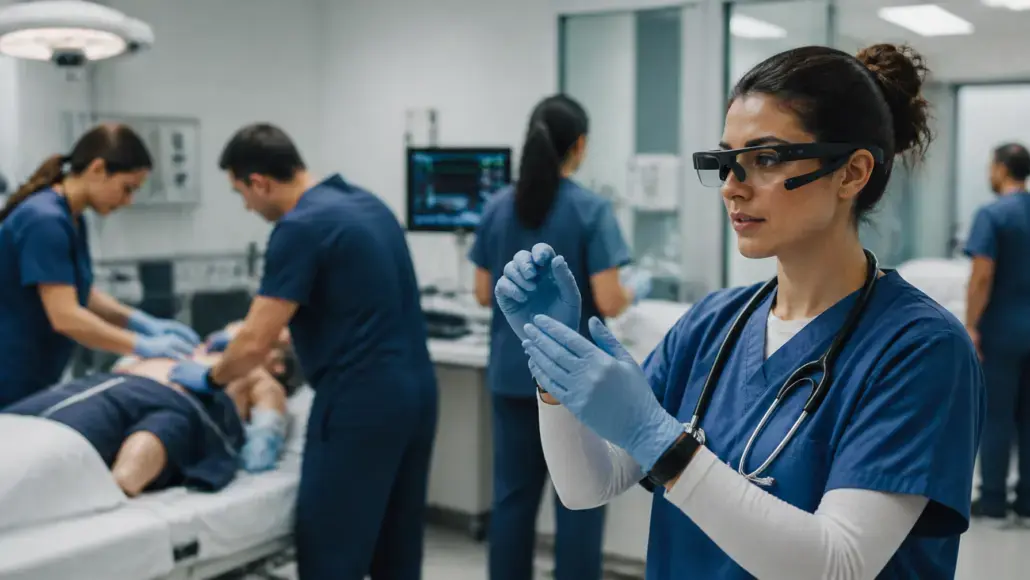

Think about how often you check a screen in a single day. Between phones, smartwatches, and fitness trackers, connected tech is baked into almost everything we do and medicine is no different. These tools are changing how we keep tabs on our own health, how we look up symptoms or care tips, and how doctors and nurses actually get through their shifts.
Lately, a lot of that momentum is moving toward hands-free tech. Instead of digging a phone out of a pocket or walking over to a computer, people can just use their voice or a quick glance at a wearable, like a smartwatch or AI glasses with a camera to get things done. On paper, that sounds like a small perk. In practice, it makes a huge difference when your hands are full, you’re moving fast, or you simply can’t stop what you’re doing.
In a hospital or clinic, that kind of convenience matters. When medical staff don’t have to stop and type or tap a screen, it opens up better ways to train students, keep teams talking to each other, and pull up patient details right when they’re needed most.
Why Hands-Free Technology Makes Sense in Healthcare
Ask anyone who works in healthcare, and they’ll tell you no two shifts ever go the exact same way. Doctors and nurses are constantly on their feet, jumping from one patient room to the next while juggling consults, medical gear, and charts. When you’re moving that fast, stopping to dig a phone out of your pocket or log into a workstation just isn’t realistic.
That’s where hands-free tech really shines. Voice-controlled tools let medical staff look up information or knock out quick digital tasks without having to break their stride or reach for another device. Wearables can also put key details right in front of them, especially while they’re transitioning from one task to the next.
Of course, no gadget is going to solve every problem in a packed hospital or clinic. Still, having a hands-free option takes some of the hassle out of routine tasks, gives staff a little time back in their day, and cuts down on the constant stop-and-start interruptions that slow everything down.
It’s also interesting to see how wearable technology is expanding beyond everyday fitness tracking. Gadgets that used to just count your steps or check your pulse are now taking on real medical work. That shift shows up clearly in how fast the wearable medical technology market is growing. Connected devices are giving both patients and doctors much better ways to keep tabs on health every day.
Could Wearable Cameras Change Medical Training?
Medical students learn a ton just by watching experienced doctors and nurses at work. The catch is that live procedures move fast, and it’s tough to see every detail when a crowd of students is trying to look over someone’s shoulder.
Wearable cameras fix that by letting students watch from the exact angle of the person doing the work. If a step happens too quickly, they can simply pause, rewind, and check the small hand movements they missed. In the right setting, a specialist can even stream their view to a colleague miles away to talk through a case in real time.
Of course, bringing cameras into medicine requires strict boundaries. Whenever patients are involved, hitting records comes with major rules around privacy and consent. These devices won’t fit every medical setting, so using them responsibly means putting patient trust and hospital policies first.
Smart Eyewear Is Taking Wearable Technology Further
For a long time, wearable technology was mostly associated with fitness trackers and smartwatches. Now, things are starting to look a little different. More manufacturers are finding ways to bring useful technology into everyday items, and glasses are one of the latest examples.
Today’s camera-enabled eyewear does a lot more than just help you see. With built-in cameras, open-ear audio, and voice controls, you can snap photos, record videos, or listen to music without ever reaching for your phone. That’s super useful when you’re traveling, out on a trail, or just trying to catch a quick moment without breaking your focus.
Products like glasses with a camera show how seamlessly this kind of tech can blend into things we already wear every day. Instead of juggling another bulky gadget, you get smart features built right into a familiar accessory.
Everyday gadgets aren’t built to replace medical gear, but the surge in people wearing them highlights a much bigger change in tech. People lean toward intuitive tools that fit naturally into their daily lives and that same desire for frictionless, hands-free assistance is driving new ideas in healthcare. In fact, these designs are already sparking fresh approaches to medical training, clinical communication, and patient accessibility.
Privacy and Security Cannot Be Overlooked
As wearables get smarter, we’ve got to be real about the sheer volume of data they’re pulling in and sharing. That goes double for healthcare, where a single accidental recording can blow the lid off sensitive patient info, private chats, or confidential clinic areas before anyone even realizes what happened.
That means hospitals and clinics need to be intentional about how these devices are brought onto the floor. Staff should know the exact rules around when recording is okay, when patient consent is non-negotiable, and how any captured files are securely stored. Putting clear ground rules in place from the start ensures that helpful tech stays helpful, without creating avoidable privacy headaches.
Security is the other major catch. Because these devices run on apps, Wi-Fi, and the cloud, a weak link anywhere puts the whole system at risk. Healthcare teams have to stick to strict medical cybersecurity standards to catch weak spots early and keep patient data locked down.
Ultimately, flashy features don’t mean much on their own. In high-stakes settings, a tool only earns its keep when it works reliably, makes sense to use, and keeps people safe.
A More Connected Future
Healthcare is one of the biggest winners as wearable tech evolves. Some of these tools will eventually become everyday gear in hospitals, while others will simply make routine tasks a little smoother.
Hands-free devices and wearable technology are just two examples of how we’re changing the way we look up and share information. For doctors and nurses, the real test isn’t how impressive a gadget looks on paper, it’s whether it actually helps them get through a long, demanding shift.
In the end, good technology doesn’t have to be complicated to matter. Usually, the best tools are the ones that quietly make a tough job easier without getting in the way.