












The traditional medical model has long been reactive, often intervening only after a patient presents with physical symptoms of a disease. This delay frequently means that treatment begins when a condition is already advanced, reducing the probability of a full recovery and increasing the complexity of care. However, the rise of precision diagnostics accelerating early detection is fundamentally altering this timeline. We are entering an era of “interceptive medicine,” where clinicians can identify the biological precursors of disease at the molecular level, allowing for treatments that are not only more effective but also significantly less invasive.
This shift is driven by a convergence of high-throughput genomic sequencing, sophisticated biomarkers, and the application of artificial intelligence to clinical data. By moving the point of diagnosis from the manifestation of symptoms to the detection of molecular anomalies, precision diagnostics is providing a window of opportunity that was previously closed. This is particularly transformative for conditions like cancer, neurodegenerative disorders, and cardiovascular diseases, where early intervention is the primary determinant of long-term survival.
Molecular Diagnostics and the Power of Genomic Screening
At the heart of precision diagnostics accelerating early detection is the ability to read and interpret the human genome with unprecedented speed and accuracy. Genomic testing has moved from the research lab to the clinical front lines, allowing doctors to identify genetic predispositions and early-stage mutations before a tumor even forms. Techniques such as liquid biopsy which detects circulating tumor DNA (ctDNA) in a simple blood draw are revolutionizing oncology by providing a non-invasive way to monitor for the earliest signs of malignancy.
These molecular diagnostics are not just identifying the presence of a disease, but also its specific “signature.” Every patient’s biological profile is unique, and early disease detection now involves understanding how a specific pathology interacts with an individual’s genetic makeup. This granularity allows for the development of highly personalized screening protocols, ensuring that individuals at high risk receive more intensive monitoring while avoiding unnecessary procedures for those at lower risk. The result is a more efficient healthcare system that prioritizes the most vulnerable while maintaining the highest standards of safety.
AI Medical Imaging: Enhancing the Radiologist’s Vision
While molecular testing identifies the “what,” advanced imaging identifies the “where.” Precision diagnostics accelerating early detection is being significantly boosted by the integration of AI medical imaging tools. Modern radiology platforms, enhanced by deep learning algorithms, can now detect micro-calcifications or subtle tissue changes that are virtually invisible to the human eye. These AI systems act as a constant, tireless second set of eyes, reducing the rate of false negatives and ensuring that no anomaly goes unnoticed.
The power of AI in imaging lies in its ability to perform quantitative analysis. Instead of just “looking” at a scan, these systems can measure tissue density, blood flow patterns, and metabolic activity with mathematical precision. In the case of lung cancer or breast cancer screening, this allows for the differentiation between benign nodules and early-stage malignancies with a level of confidence that was previously unattainable. By providing these high-fidelity insights at the very start of the diagnostic journey, AI-enabled imaging is shortening the time from screening to treatment, a metric that is vital for improving patient outcomes.
Clinical Laboratory Innovation and High-Accuracy Systems
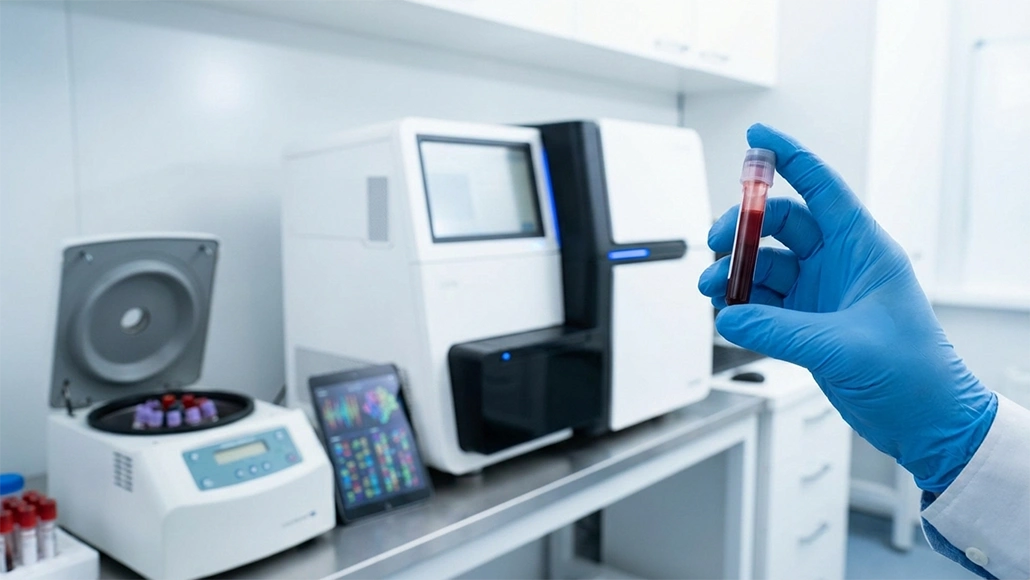
The backbone of this diagnostic revolution is the clinical laboratory. Laboratory innovation is transforming the traditional “test and report” cycle into a dynamic process of data synthesis. High-accuracy laboratory systems are now capable of multi-omics analysis, combining data from genomics, proteomics, and metabolomics to create a comprehensive picture of a patient’s health. This holistic view is essential for early disease detection, as it allows clinicians to see how different biological systems are interacting in real-time.
Automation is also playing a critical role in increasing the speed and reliability of these tests. Modern diagnostic hubs can process thousands of complex samples with minimal human intervention, reducing the risk of contamination and error. This scalability is vital for population-level screening programs, such as those for hereditary cancers or rare metabolic disorders. By lowering the cost and increasing the accessibility of advanced molecular diagnostics, these innovative laboratory systems are ensuring that the benefits of precision medicine are available to a broader segment of the population.
The Economic and Operational Impact of Early Interception
Beyond the clear clinical benefits, precision diagnostics accelerating early detection also offers significant economic advantages. Treating a late-stage disease is exponentially more expensive than managing an early-stage condition. By shifting the focus toward prevention and early intervention, healthcare systems can reduce the need for long-term hospitalizations, intensive surgeries, and expensive chronic care management. The investment in diagnostic technology today pays for itself through the reduction in future healthcare liabilities.
Operationally, early detection allows for better resource allocation. When diseases are caught early, treatments are often more straightforward and can frequently be managed in outpatient settings. This reduces the burden on acute care facilities and ensures that hospital beds are available for those with the most urgent needs. Furthermore, the data generated by precision diagnostics provides institutional leaders with a clearer understanding of the health needs of their patient population, allowing for more strategic long-term planning.
The Ethical Imperative: Privacy and Data Ownership
As we rely more heavily on genomic and molecular data, the issue of data privacy becomes a central concern. Precision diagnostics accelerating early detection involves the collection of the most intimate information a human can possess: their genetic code. Protecting this data from unauthorized access or misuse is an absolute ethical necessity. Healthcare providers and diagnostic companies must implement the most robust cybersecurity measures and adhere to strict ethical guidelines regarding data ownership and consent.
Patients must be the primary owners of their genetic information, and they must have a clear understanding of how their data is being used. Transparent communication about the risks and benefits of genomic screening is essential for maintaining the trust that is the foundation of the doctor-patient relationship. When handled with integrity, the data generated by precision diagnostics is a powerful tool for good, but it must be managed with a deep respect for individual privacy and autonomy.
A Future Defined by Personalized Wellness
The ultimate goal of precision diagnostics accelerating early detection is to create a future where disease is caught before it can cause harm. We are moving toward a model of “personalized wellness,” where health is managed through continuous, intelligent monitoring. As diagnostic tools become even more portable and integrated into our daily lives, the distinction between a “check-up” and daily living will continue to blur.
Through the continued synergy of molecular science, artificial intelligence, and clinical expertise, we are building a healthcare system that is truly predictive and preventative. The journey toward total early interception is a commitment to a world where a diagnosis is no longer a cause for fear, but a call to proactive and effective action. Precision diagnostics is not just changing how we find disease; it is changing the very nature of what it means to be a patient in the modern era.