










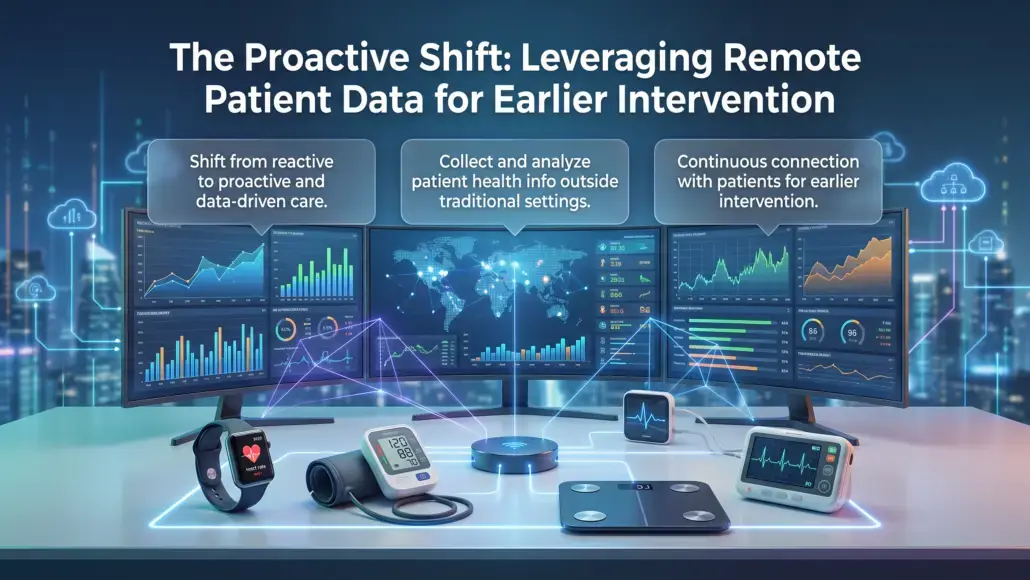

The delivery of healthcare is undergoing a significant transition from a reactive model to one that is increasingly proactive and data-driven. At the heart of this shift is the ability to collect and analyze patient health information outside the traditional confines of the hospital or clinic. The implementation of systems that utilize remote patient data supporting earlier clinical intervention allows healthcare providers to maintain a continuous connection with their patients, regardless of their physical location. This approach is particularly effective in managing chronic conditions, where subtle changes in physiological parameters can often signal the onset of a more serious clinical event. By identifying these changes early, clinicians can adjust treatment plans or initiate interventions before the patient requires hospitalization.
The technology behind these monitoring systems has advanced rapidly, allowing for the tracking of a wide range of metrics, including heart rate, blood pressure, glucose levels, and oxygen saturation. These data points are transmitted in real time to a centralized platform where they can be reviewed by the clinical team. The objective is not merely to collect data but to use it as a foundation for more timely and effective care. For hospital systems, the benefits of this proactive approach are clear: reduced emergency department visits, lower readmission rates, and improved overall patient outcomes. As the healthcare sector continues to grapple with rising costs and an aging population, the importance of remote monitoring as a tool for clinical efficiency cannot be overstated.
Proactive Health Management Through Continuous Monitoring
Traditional healthcare models rely heavily on periodic office visits, which provide only a snapshot of a patient’s health at a single point in time. This approach often misses the fluctuations that occur in daily life, which can be critical for managing complex chronic diseases. By adopting remote patient data supporting earlier clinical intervention, providers can move toward a model of continuous health management. This allows for the detection of trends that might not be apparent during an annual physical or a follow-up appointment. For example, a gradual increase in resting heart rate or a slight but consistent rise in blood pressure can be flagged by the monitoring software, prompting a clinical review.
This continuous stream of data provides a much more comprehensive view of the patient’s physiological state. It allows clinicians to see how daily activities, diet, and medication adherence impact the patient’s health in real time. This information is invaluable for personalizing treatment plans and ensuring that interventions are tailored to the specific needs of the individual. Additionally, the ability to monitor patients in their own environment reduces the stress and inconvenience associated with frequent hospital visits, which can often lead to better patient engagement and adherence to care protocols. The result is a more collaborative and effective approach to health management that prioritizes long-term wellness.
Reducing Hospital Readmissions with Real-Time Physiological Tracking
Hospital readmissions are a significant challenge for healthcare systems, both in terms of patient outcomes and financial costs. Many readmissions are preventable if the signs of clinical deterioration are identified and addressed early. The use of remote patient data supporting earlier clinical intervention is a key strategy for reducing these rates, particularly for patients recovering from surgery or those with high-risk conditions such as congestive heart failure. By monitoring patients closely during the critical post-discharge period, clinicians can identify potential complications before they become emergencies. This allows for interventions such as medication adjustments or home health visits, which can often prevent the need for a return to the hospital.
The physiological tracking provided by these systems is highly sensitive, often detecting changes that the patient themselves might not yet feel. For instance, a small increase in weight can indicate fluid retention in a heart failure patient, a classic early warning sign of an impending exacerbation. By addressing this immediately, the clinical team can prevent the patient from entering a state of acute distress. This proactive management not only improves the safety and comfort of the patient but also ensures that hospital resources are reserved for those with the most acute needs. The data-driven nature of this approach provides a clear and objective basis for clinical decision-making, reducing the reliance on subjective patient reporting.
Enhancing Chronic Disease Care via Predictive Data Analytics
The integration of predictive analytics with remote monitoring data represents the next frontier in chronic disease management. By analyzing large data sets of physiological information, machine learning algorithms can identify patterns that are associated with specific clinical outcomes. This allows for a more sophisticated approach to risk stratification, where clinicians can focus their attention on the patients who are most likely to experience a decline in health. The use of remote patient data supporting earlier clinical intervention in conjunction with these analytical tools ensures that resources are allocated where they will have the greatest impact.
Predictive models can also help to identify the specific factors that contribute to a patient’s risk. For example, the software might identify that a particular combination of environmental factors and physiological readings is a strong predictor of an asthma attack for a specific patient. Armed with this information, the clinician can work with the patient to develop a targeted prevention strategy, such as adjusting medication during certain seasons or avoiding specific triggers. This level of personalized care is only possible when there is a continuous and detailed stream of data to inform the analysis. The transition toward predictive, data-driven care is a fundamental component of the modern healthcare sector’s evolution.
Optimizing Clinical Workflows with Automated Patient Alerts
For remote monitoring to be effective, the clinical team must be able to manage the large volume of data generated by these systems without becoming overwhelmed. This is where automated alert systems play a critical role. The software can be configured to flag only the data points that fall outside of a predefined normal range for a specific patient. This ensures that clinicians are notified only when a potential issue requires their attention, allowing them to focus their time and expertise on the most relevant tasks. The optimization of clinical workflows through automation is essential for making remote monitoring a scalable and sustainable practice.
These alert systems can also be integrated with existing clinical documentation tools, ensuring that all relevant information is captured within the patient’s electronic health record. This provides a clear audit trail of the monitoring process and the subsequent clinical interventions, which is important for both patient safety and regulatory compliance. Additionally, the ability to prioritize alerts based on the severity of the clinical finding ensures that the most urgent cases are addressed first. This hierarchical approach to data management ensures that the clinical team remains responsive and effective, even as the number of monitored patients grows. The intelligent use of automation is what allows healthcare providers to provide high-quality care to a larger population.
Strengthening the Patient-Provider Relationship Through Data Visibility
One of the often-overlooked benefits of remote monitoring is the impact it has on the relationship between the patient and their provider. When patients have access to their own health data, they often feel more empowered and engaged in their care. The visibility provided by these systems allows for more meaningful conversations during clinical consultations, as both the patient and the provider are looking at the same objective information. This shared understanding facilitates better communication and can lead to more collaborative decision-making. The use of remote patient data supporting earlier clinical intervention fosters a sense of partnership that is essential for successful long-term health management.
In addition, the knowledge that they are being monitored can provide patients with a significant sense of security. They know that if their health takes a turn for the worse, their clinical team will be notified and will reach out to help. This peace of mind is particularly valuable for patients with complex or unpredictable conditions. For the provider, the ability to see the impact of their interventions in real time is highly rewarding and allows for a more responsive and effective style of practice. As the healthcare sector continues to move toward a more patient-centered model, the role of data visibility in strengthening the therapeutic bond will only become more important. The focus remains on utilizing technology to enhance, rather than replace, the human element of healthcare. This commitment to both clinical excellence and compassionate care is what defines the most successful healthcare organizations today. By embracing the power of data, providers can ensure that they are delivering the best possible care to every patient, every day.