













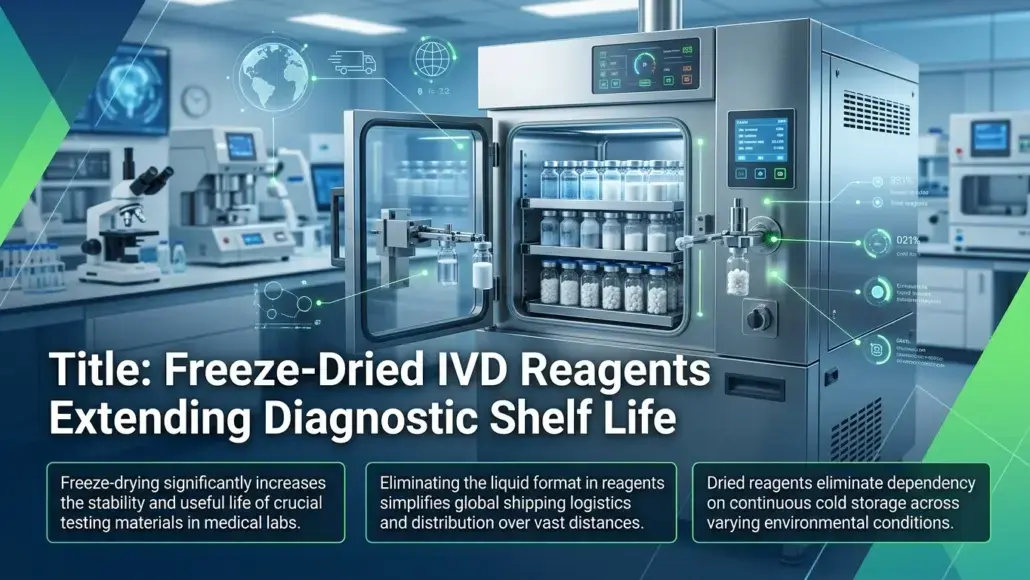
The stability of testing materials is a fundamental requirement for the reliable operation of any medical laboratory. In a globalized healthcare system, where diagnostic components must often travel vast distances and withstand varying environmental conditions, the traditional liquid format of reagents presents significant logistical challenges. To address these issues, the industry has turned toward a sophisticated preservation process that involves the removal of water from a frozen product. The transition toward utilizing freeze-dried IVD reagents is a key factor in extending diagnostic shelf life, providing a stable and resilient solution for modern diagnostic testing. By ensuring that reagents remain active for longer periods without the need for cold-chain storage, this technology simplifies supply chain logistics and improves the accessibility of healthcare services.
Lyophilization is more than just a convenience; it is a vital tool for ensuring the consistency and the accuracy of diagnostic results. When reagents are maintained in a dry state, the risk of chemical degradation and microbial contamination is significantly reduced. Freeze-dried IVD reagents allow for the storage of testing materials at room temperature, which is a major advantage for laboratories in remote or underserved areas with limited infrastructure. This move toward a more durable and accessible approach to diagnostics is a hallmark of the modern healthcare sector, where the focus is on improving the efficiency and the responsiveness of patient care across the globe.
Reagent Stability and Shelf Life Standards
The primary benefit of utilizing lyophilized reagents is the significant extension of their operational life. Traditional liquid reagents often have a shelf life of only a few months and must be kept under strict temperature control to maintain their potency. In contrast, freeze-dried IVD reagents can remain stable for two years or more, providing a much greater level of flexibility for inventory management. For the laboratory director, this means being able to purchase larger batches of testing materials and for reducing the frequency of orders. This predictability is a critical factor in maintaining a consistent level of service and for managing the total cost of diagnostic testing.
Furthermore, the stability of the dry product ensures that the diagnostic results are comparable throughout the entire life of the reagent batch. Liquid reagents can suffer from subtle changes in concentration and activity as they age, which can lead to shifts in the laboratory’s baseline results. The use of freeze-dried IVD reagents minimizes these variables, providing a more robust and reliable foundation for clinical decisions. The move toward a more standardized and high-quality approach to diagnostic testing is a defining characteristic of the modern healthcare industry, and the role of lyophilization in supporting this transition is indisputable. The focus remains on achieving the best possible results for the patients who depend on these tests.
Supply Chain Logistics and Resource Efficiency Innovation
The transition toward a dry reagent format has profound implications for the efficiency of the healthcare supply chain. Liquid reagents are heavy and require specialized refrigerated transport and storage, which adds significant cost and complexity to the logistics process. Freeze-dried IVD reagents are lightweight and can be shipped using standard methods, significantly reducing the carbon footprint and the operational expense of distribution. This improvement in resource efficiency is essential for the sustainability of the global health system, particularly as the demand for diagnostic services continues to rise.
Furthermore, the reduction in cold-chain requirements improves the resilience of the healthcare system in the face of disasters or infrastructure failures. If a laboratory loses power, the liquid reagents are often ruined, leading to significant financial loss and a disruption in service. Freeze-dried IVD reagents provide a more robust and dependable inventory that can withstand these challenges. The move toward a more resilient and flexible approach to diagnostic management is a defining characteristic of the modern healthcare sector, and the role of lyophilization in supporting this transition is essential. The focus remains on creating a reliable and accessible diagnostic platform that can be used with confidence in every setting.
Quality Assurance and Technical Precision in Lyophilization
The production of high-quality dry reagents requires a rigorous adherence to international standards for safety and performance. Regulatory compliance is a fundamental requirement for both manufacturers and healthcare providers, as the integrity of the diagnostic test depends on the consistency of the lyophilization process. Manufacturers must provide extensive data to demonstrate that their freeze-dried IVD reagents are easily reconstituted and that they maintain their sensitivity and specificity after the drying process. This involves a comprehensive program of quality control, including the verification of the residual moisture content and the final activity of every batch.
Furthermore, the technical precision of the lyophilization equipment is a critical factor in the success of the process. The freezing and drying cycles must be carefully controlled to prevent damage to the delicate biological components of the reagents. Manufacturers utilize advanced monitoring and control systems to ensure that the temperature and the pressure are managed with extreme accuracy throughout the process. The move toward a more integrated and professionalized manufacturing environment is a defining characteristic of the modern healthcare industry, and the role of high-quality lyophilization in supporting this transition is essential. The focus remains on creating a reliable and effective diagnostic product that can meet the most demanding clinical requirements.
Future Directions in Diagnostic Preservation Innovation
The continued evolution of the diagnostic market will likely lead to an even greater emphasis on the use of advanced preservation techniques for complex assays and point-of-care devices. We are seeing the development of “unit-dose” formats, where the dry reagents are integrated directly into a testing cartridge or a strip. The role of freeze-dried IVD reagents in supporting this evolution is essential, as they provide the platform for these sophisticated and functional designs. This move toward more integrated and user-friendly diagnostics represents the next frontier in laboratory and field care.
In the coming years, the integration of new stabilization agents and innovative packaging will further enhance the value of lyophilized products. We may see the development of reagents that can withstand even more extreme temperatures or that can be reconstituted with a wider range of fluids. The ability to manage complex medical diagnostics with the same ease as a simple home test is a major goal for both researchers and healthcare providers. The ongoing commitment to technical innovation and data-driven care is what will define the leaders of the industry in the decades to come.
The transition toward a more durable and data-driven approach to diagnostic testing is a defining characteristic of the modern healthcare industry. By prioritizing the use of freeze-dried IVD reagents, healthcare providers can achieve levels of efficiency and accessibility that were once considered unattainable. The benefits of this approach extend beyond the laboratory, contributing to a more responsive and resilient health system that is better equipped to handle the challenges of a global population. The commitment to technical excellence and reagent stability is what will define the success of these programs in the decades to come.
As the industry moves forward, the focus will remain on the refinement of preservation properties and the continued improvement of clinical outcomes. The ability to handle the increasing complexity of new testing modalities and supply chain requirements will remain a key challenge for laboratory professionals and logistics managers alike. The ongoing evolution of freeze-dried IVD reagents is a testament to the power of technical innovation in the service of human health, ensuring that the next generation of diagnostic testing is both stable and accessible to every patient who needs it.