











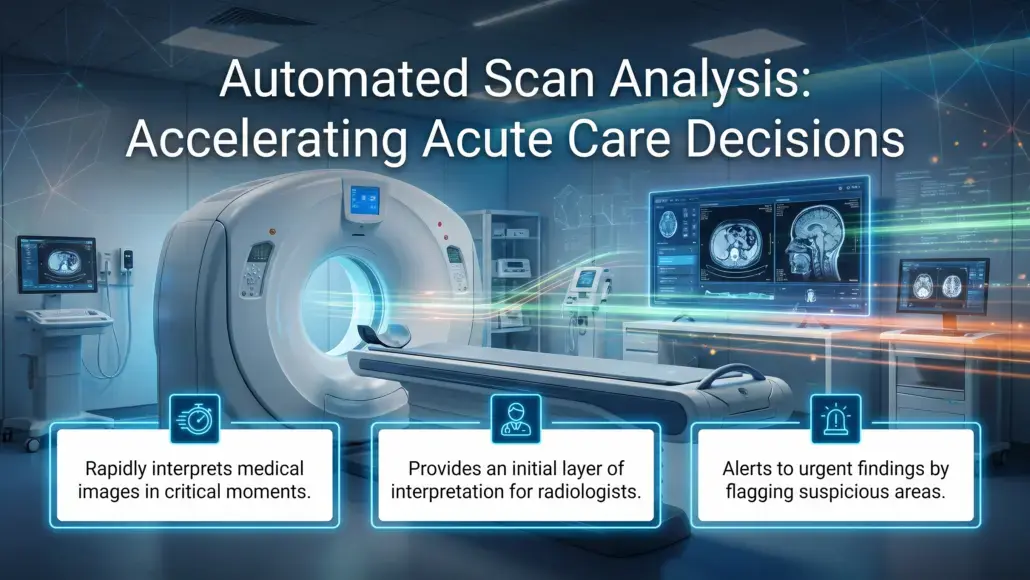

The introduction of advanced algorithms into the imaging suite is fundamentally changing how hospitals handle acute emergencies. In departments where every minute influences the clinical outcome, such as stroke or trauma centers, the ability to rapidly interpret medical images is a critical requirement. Automated scan analysis has emerged as a vital tool in this process, providing an initial layer of interpretation that can alert radiologists to urgent findings. By flagging suspicious areas in CT or MRI scans before a human reviewer even opens the file, these systems ensure that the most critical cases are prioritized in the diagnostic queue. This triage capability is essential for managing the increasing volume of imaging studies that modern hospitals are required to process on a daily basis.
The implementation of these automated systems does not replace the expertise of the radiologist; instead, it enhances their ability to function within a high-pressure environment. Traditional manual review processes are inherently susceptible to fatigue and cognitive bias, especially during long shifts. Automated scan analysis provides a consistent and objective baseline that supports the clinician’s final judgment. For hospital management, this means a more reliable diagnostic pipeline and a reduction in the variability of care. The technology acts as a second set of eyes, identifying subtle anomalies that might be overlooked in the initial rush of an emergency admission. This collaborative approach between human and machine is the new standard for excellence in acute care diagnostics.
Enhancing Diagnostic Precision for Neurological Emergencies
One of the most impactful applications of automated imaging tools is in the detection and management of neurological events. In the case of an ischemic stroke, the prompt identification of a large vessel occlusion is necessary to initiate life-saving interventions like thrombectomy. Automated scan analysis tools are specifically designed to recognize the vascular patterns associated with these occlusions, often delivering a preliminary report within seconds of the scan being completed. This rapid feedback loop allows the clinical team to activate the intervention suite and prepare the patient for surgery much faster than was previously possible. The reduction in time-to-treatment directly correlates with better functional outcomes and a lower risk of long-term disability for the patient.
These systems are also increasingly capable of performing complex volumetric measurements that would be time-consuming for a human to calculate manually. For example, in the assessment of intracranial hemorrhage, the ability to quickly determine the exact volume of a bleed is crucial for deciding between surgical and conservative management. The automated scan analysis can provide these metrics with a high degree of accuracy, ensuring that the neurosurgical team has the best possible data to inform their decisions. This level of quantitative detail adds a new dimension to acute care diagnostics, moving beyond simple qualitative assessments to a more data-driven approach to patient management. As the algorithms continue to refine their detection capabilities, the scope of their application in neurology will only expand.
Operational Efficiency and Hospital Throughput Improvements
The benefits of automated imaging analysis extend beyond the immediate clinical impact to the broader operational efficiency of the hospital. When the time required for image interpretation is reduced, the entire patient journey through the emergency department is accelerated. Faster diagnoses lead to quicker decisions regarding admission, discharge, or transfer to specialized care units. This improved throughput is vital for maintaining the flow of patients and preventing the overcrowding that often plagues urban trauma centers. By utilizing automated scan analysis, hospitals can make better use of their imaging assets and reduce the physical and mental strain on their clinical staff.
Furthermore, the data generated by these automated systems can be used to track and optimize hospital performance. Administrators can analyze the time intervals between scan completion and the delivery of automated alerts, identifying bottlenecks in the diagnostic workflow. This information is invaluable for continuous quality improvement initiatives and for justifying investments in further technological upgrades. The ability to demonstrate faster and more accurate diagnostic capabilities also enhances the hospital’s reputation in the community and its standing with regulatory bodies. In an environment where clinical outcomes and operational metrics are increasingly scrutinized, the adoption of automated scan analysis is a strategic necessity for any forward-thinking healthcare organization.
Integrating AI with Multi-Disciplinary Care Teams
The successful deployment of automated imaging tools requires a coordinated effort across multiple clinical and technical disciplines. It is not enough to simply install the software; the system must be deeply integrated into the existing hospital information technology infrastructure. This means ensuring that the automated alerts are delivered directly to the mobile devices of the relevant clinicians, from the attending radiologist to the stroke coordinator. The goal is to create a seamless information flow that breaks down the communication barriers between departments. When everyone involved in a patient’s care has immediate access to the same high-quality diagnostic data, the quality of the collaborative response is significantly enhanced.
This integration also involves the development of clear protocols for how the automated results should be used. Clinicians must be trained to understand the strengths and limitations of the automated scan analysis, ensuring that it is used as a supportive tool rather than a final authority. Hospital leaders must foster a culture of technical literacy, where the staff feels comfortable interacting with AI-driven systems. By involving clinicians in the selection and implementation process, organizations can ensure that the technology addresses real-world pain points and is embraced by the users. The end result is a more cohesive and responsive care team that is empowered by the latest diagnostic innovations to provide the best possible care to their patients.
Scalability and the Future of Automated Diagnostics
As the technology matures, the potential for scaling these automated systems across entire healthcare networks becomes increasingly viable. A hub-and-spoke model, where a central hospital provides automated analysis services to smaller regional facilities, can significantly improve the standard of care in underserved areas. Patients at remote sites can receive the same level of diagnostic scrutiny as those at major academic medical centers, thanks to the ability to transmit and analyze images in real-time. This democratization of high-end diagnostic capability is one of the most significant promises of automated scan analysis. It allows for a more equitable distribution of healthcare resources and ensures that geography is no longer a barrier to receiving life-saving care.
Looking to the future, we can expect to see automated systems that not only detect acute issues but also predict potential complications before they manifest. By analyzing longitudinal imaging data and combining it with other clinical indicators, these systems will provide a proactive view of patient health. The hospital of the future will be defined by its ability to synthesize vast amounts of data into actionable insights, with automated scan analysis serving as a primary source of information. The journey toward this data-driven future is already underway, and the hospitals that lead the way in adopting these technologies will be the ones that set the standard for patient safety and clinical excellence in the years to come.