













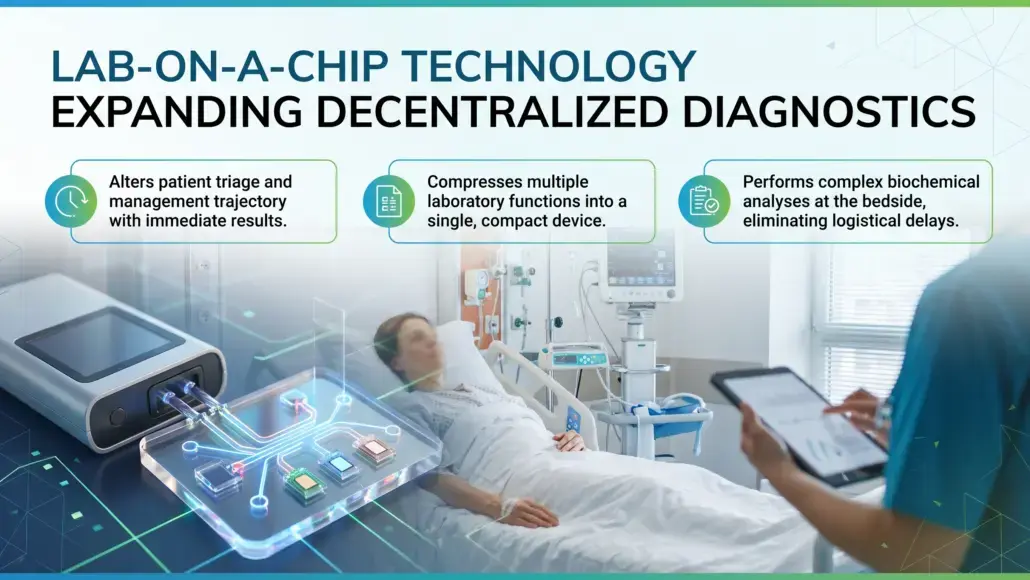

The integration of microfluidic systems within the clinical environment is fundamentally altering the trajectory of patient triage and management. At the heart of this transition is the lab-on-a-chip technology, which compresses multiple laboratory functions into a single, compact device. This miniaturization allows for complex biochemical analyses to be performed at the bedside, eliminating the logistical delays associated with transporting samples to a central laboratory. For hospital administrators, this represents a significant opportunity to reduce the burden on centralized facilities while simultaneously increasing the speed of clinical decision-making. The ability to obtain high-precision results within minutes rather than hours is essential for managing acute conditions and improving overall patient throughput.
Traditional diagnostic workflows often involve a series of manual steps, from sample collection and labeling to transportation and processing. Each of these steps introduces potential points of failure and adds to the total turnaround time. By utilizing lab-on-a-chip solutions, hospitals can bypass many of these obstacles. These devices are designed to handle small sample volumes, such as a single drop of blood, which is less invasive for the patient and reduces the requirements for sample storage. The automation inherent in these chips also minimizes the risk of human error during the testing process, ensuring that the results are both reliable and reproducible. This shift toward decentralized diagnostics is not just about convenience; it is a strategic move toward a more responsive and patient-centric healthcare model.
Microfluidic Innovation and Clinical Resource Optimization
The widespread adoption of decentralized diagnostic tools is directly linked to the need for better resource allocation within the hospital. When diagnostic testing is performed at the point of care, clinicians can make immediate adjustments to treatment plans. This is particularly valuable in settings like the intensive care unit or the emergency department, where the patient’s status can change rapidly. The lab-on-a-chip acts as a force multiplier for the clinical staff, providing them with actionable data without the need for constant communication with the central lab. This autonomy allows specialized lab personnel to focus on more complex, high-volume testing that requires heavy instrumentation, thereby optimizing the utility of the entire diagnostic infrastructure.
Furthermore, the implementation of these devices can lead to significant cost savings. While the initial investment in point-of-care platforms may be substantial, the long-term reductions in hospital stay duration and improved patient outcomes offer a compelling return on investment. By identifying infections or cardiac markers faster, clinicians can initiate appropriate therapies sooner, potentially preventing complications that would require more intensive and expensive interventions. The scalability of lab-on-a-chip technology also means that it can be deployed in a variety of settings, from urban hospitals to rural clinics, ensuring that high-quality diagnostics are accessible regardless of the location. This flexibility is a key driver in the ongoing effort to decentralize healthcare services and bring them closer to the patient.
Enhancing Diagnostic Accuracy with Advanced Biosensors
One of the most critical aspects of modern diagnostic platforms is the ability to detect biomarkers with high sensitivity and specificity. The lab-on-a-chip achieves this through the integration of advanced biosensors that can identify specific proteins, nucleic acids, or small molecules even at very low concentrations. The controlled environment within the microfluidic channels allows for precise manipulation of the sample, which enhances the interaction between the analyte and the sensor. This level of precision was previously only possible in highly controlled laboratory settings. Now, it is being delivered in portable formats that can be used by non-specialized clinical staff, further democratizing access to sophisticated diagnostic tools.
The design of these chips often incorporates multiple sensing elements, allowing for multiplexed testing. This means that a single sample can be screened for several different conditions simultaneously, such as a panel of respiratory viruses or a set of cardiac enzymes. The ability to perform multiplexed assays on a lab-on-a-chip significantly increases the efficiency of the diagnostic process and provides a more comprehensive picture of the patient’s health. As sensor technology continues to evolve, we can expect to see even greater capabilities, including the integration of electronic readouts that can transmit data directly to the hospital’s electronic health record system. This connectivity ensures that the results are immediately available to the entire care team, facilitating a coordinated and informed response to the patient’s needs.
Operational Challenges and Integration Strategies
While the benefits of decentralized diagnostics are clear, the integration of lab-on-a-chip technology into existing hospital workflows is not without its challenges. One of the primary concerns for hospital management is ensuring data integrity and quality control. Unlike centralized labs, which operate under strict regulatory oversight and standardized protocols, point-of-care testing can be more fragmented. To address this, organizations must implement comprehensive training programs and robust digital tracking systems. Every test performed on a lab-on-a-chip must be automatically logged and verified to maintain the same standards of quality that are expected from a central laboratory. This requires a strong partnership between clinical departments, IT teams, and diagnostic manufacturers.
Another consideration is the procurement and supply chain management of the consumable chips themselves. As these devices become a standard part of clinical care, hospitals must ensure a steady supply to avoid disruptions in service. The cost per test must also be balanced against the overall clinical benefit. In many cases, the reduction in downstream costs—such as shorter hospital stays and fewer unnecessary treatments—justifies the expense of the individual chips. However, careful financial analysis is required to determine the most effective deployment strategy for each specific clinical application. By taking a proactive approach to these operational hurdles, hospital leaders can ensure that the transition to decentralized diagnostics is both successful and sustainable.
The Future Landscape of Distributed Hospital Care
Looking ahead, the role of decentralized diagnostics will only continue to grow as healthcare moves toward more personalized and proactive models. The development of even more sophisticated lab-on-a-chip devices will enable the monitoring of chronic diseases in real-time, potentially even in the patient’s home. This extension of the hospital’s diagnostic reach allows for early intervention and better management of long-term health conditions. The data generated by these devices will also feed into larger population health databases, providing insights into disease prevalence and treatment efficacy at a scale that was previously unimaginable. This is the ultimate goal of the connected healthcare ecosystem: to provide the right care at the right time, informed by precise and timely diagnostic data.
For the hospital of the future, the integration of these technologies is not an option but a necessity. The pressure to improve patient outcomes while controlling costs is constant, and decentralized diagnostics offer a viable path forward. By investing in lab-on-a-chip technology, healthcare organizations are not just upgrading their diagnostic equipment; they are reimagining the way care is delivered. They are moving away from a model of reactive, centralized testing and toward a model of continuous, distributed clinical awareness. This transition will require new ways of thinking about hospital operations, clinical roles, and the relationship between the patient and the healthcare provider. The technology is already here; the task now is to utilize it to its full potential for the benefit of all patients.