

















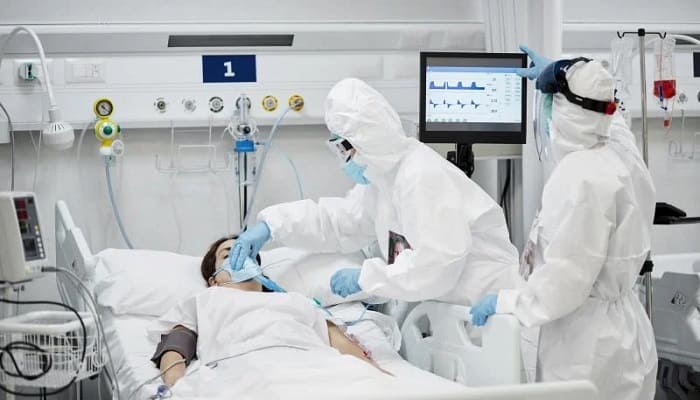

A recent study that was conducted by the Society for Healthcare Epidemiology of America and published in the journal Infection Control & Hospital Epidemiology suggests that family members of patients who have been discharged from hospitals may be at an increased risk of contracting antibiotic-resistant infections, which are commonly referred to as superbugs. Despite the fact that the patient may not have been diagnosed with the illness in question, this danger continues to exist, which suggests that hospitals may be participating in the dissemination of germs that are resistant to treatment in the community.
During the time when newly hospitalized patients were identified with the superbug known as methicillin-resistant Staphylococcus aureus infection (MRSA), the danger to families who were living with them was much higher. Even in the absence of a diagnosis of MRSA, the danger to family members increases in proportion to the length of time that the relative is hospitalized.
Aaron Miller, PhD, who is the primary researcher on the study and a research assistant professor of infectious diseases in internal medicine at the University of Iowa, said that patients may get colonized with MRSA during their stay in the hospital and that they can also transmit MRSA to members of their household after their hospitalization. As a result, it seems that hospitals play a role in the dissemination of MRSA into the community by releasing patients who are carriers of the bacteria but do not exhibit any symptoms.
In the event that there are no signs or symptoms of infection, Miller suggests that hospitals improve their infection control measures, which should include testing for MRSA colonization, particularly at the time of release. He said that MRSA colonization and infections might be followed among hospital patients and their home contacts in order to detect and limit transmission in a more efficient manner.
SHEA President Thomas Talbot, M.D., who is also the head hospital epidemiologist at Vanderbilt University Medical center, said that this significant research exemplifies the danger of the spread of resistant infections associated with healthcare and underlines the fundamental necessity of core infection practices. Also, the study highlights the importance of core infection practices. In the course of the study, Talbot did not participate. In order to stop the spread of germs that are resistant to antibiotics in healthcare settings, it is essential to practice proper hand hygiene, clean the environment, and implement routine treatments to limit the amount of Staphylococcal colonization.
Comprehension of the MRSA
Infections caused by MRSA are referred to as “superbugs” due to the fact that they do not react to conventional antibiotics, which makes it challenging to treat them. The most common way for methicillin-resistant Staphylococcus aureus (MRSA) to spread is via skin-to-skin contact, although it may also be found in communities outside of hospitals. MRSA is most often found in persons who have been in hospitals or other healthcare settings, such as nursing homes. If the bacterium seeps beneath the skin, it may cause severe swelling, and if it spreads to other areas of the body, such as the blood or the lungs, it can be fatal. However, the majority of individuals who have MRSA do not have any symptoms with the infection.
A vast database of insurance claims was used by the researchers in order to get an understanding of the transmission of MRSA after a member of a household had been admitted to the hospital. The database had 158 million participants who had two or more family members on the same plan.
There were 4,724 instances of MRSA that may have been transferred to a family member from a relative who had just been hospitalized and received a diagnosis of MRSA, according to the findings of the research, which examined 424,512 cases of MRSA among 343,524 persons who were insured. In addition, they discovered 8,064 possible transmissions of MRSA after the hospitalization of a family member who did not have an MRSA infection while they were recovering.
Miller said that it is essential to avoid placing an excessive amount of emphasis on the possibility of a prolonged hospital stay. Despite the fact that we have identified a significant risk factor for transmission in the household and the community, the absolute risk continues to be relatively low.
When compared to participants who did not have a family member who had been hospitalized or exposed to MRSA in the preceding thirty days, those who were exposed to a family member who had recently been hospitalized with MRSA had a greater likelihood of contracting an MRSA infection by more than seventy-one times, which is equivalent to a seven hundred percent increase.
The presence of a family member in the home who was hospitalized but did not have MRSA results in a 44% increase in the likelihood of a relative contracting MRSA within the month after release from the hospital.
There is a one-to-one correlation between the length of time a family member spends in the hospital and the probability that another member of their home would get MRSA. An increase of 34% in the likelihood of a relative contracting MRSA was seen in cases where the patient had been hospitalized for one to three days in the preceding month. This was in comparison to those who had no recent hospitalizations in their home. When a member of the family was hospitalized for a period of four to ten days, the likelihood of a relative contracting MRSA infection was 49% greater. Furthermore, when the hospitalization lasted for more than ten days, the likelihood of a relative living in the same home contracting an infection increased by seventy to eighty percent.
There were a number of additional characteristics that were related with MRSA infections among members of the household. These associations included the presence of young children in the family, the total number of other diseases, and the use of antibiotics in the past.
Reference: “Hospitalizations among family members increase the risk of MRSA infection in a household” by Aaron C. Miller, Alan T. Arakkal, Daniel K. Sewell, Alberto M. Segre, Bijaya Adhikari, Philip M. Polgreen and For The CDC MInD-Healthcare Group, 7 August 2024, Infection Control & Hospital Epidemiology.