











Close
Digital Health & Ai Innovation summit 2026
Medical Taiwan 2026

New 4-D software program for lung cancer

Note* - All images used are for editorial and illustrative purposes only and may not originate from the original news provider or associated company.

Subscribe

- Never miss a story with notifications

- Gain full access to our premium content

- Browse free from any location or device.

Media Packs

Expand Your Reach With Our Customized Solutions Empowering Your Campaigns To Maximize Your Reach & Drive Real Results!

– Access the Media PackNow

– Book a Conference Call

Leave Message for Us to Get Back

Related stories

Biotech Innovation Strengthening Clinical Pipelines

The discovery and development of next-generation therapies are being propelled by a fundamental leap in our understanding of molecular biology and cellular mechanics. By bridging the gap between laboratory research and clinical application, the life sciences sector is creating a robust stream of precision treatments that offer new hope for previously intractable conditions.

Regulatory Trends Shaping Medical Technology

The path from innovation to clinical implementation is governed by an increasingly complex and dynamic set of global standards. As digital health and artificial intelligence become integral to patient care, the frameworks that ensure safety and efficacy are evolving to address the unique challenges of software-based medical solutions and interconnected hardware.

Healthcare Supply Chains Driving Efficiency

The intricate network responsible for delivering life-saving medications and surgical instruments is undergoing a fundamental digital overhaul. By prioritizing transparency and resilience, medical institutions are moving away from reactive procurement toward a proactive logistical model that ensures essential resources are always available at the point of care.
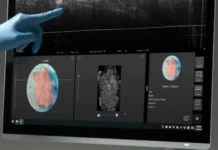
A new 4-dimensional software program promises to improve the treatment oflung cancer by allowing doctors to take the movement of breathing into account when administering radiotherapy, researchers announced today at the 2nd European Lung Cancer Conference in Geneva, Switzerland.

Some lung tumors shift their position as patients inhale and exhale. The amount of movement depends on where they are in the lung. For example, lesions in the lower lobes may move up to 4 cm.

This movement poses a challenge for doctors treating the cancer with radiotherapy. If they use too small an irradiation field, the tumor can move so far that it is missed by the treatment. To avoid this, standard radiotherapy uses large radiation fields to take into account the respiratory movements, but in doing so can damage large areas of healthy lung tissue.

A newer approach, called ‘breathing-adapted radiotherapy’ (BART) allows doctors to reduce the amount of radiation delivered, and improve the chance of hitting the tumor, by timing delivery to a particular moment of the respiratory cycle.

"One of the main problems with BART is how to choose the optimal respiratory phase in which to treat the patient," explains Dr Nicolas Peguret from H-pitau Universitaires de Gen-ve.

"This phase is basically unknown and may be in deep inspiration, in expiration or even in a third respiratory phase somewhere between. It may vary from one patient to another because of the variation in tumor localization and in movements of the tumor and of other nearby organs."

Dr Peguret and colleagues have developed software which allows doctors to determine a moment during the respiratory cycle with an optimal tumor position forradiotherapy. "By applying this software together with BART, it may be possible not only to reduce the radiation fields but also to adapt the radiation volume taking into account the varying positions of the tumor and the organs at risk."

The technique involves two steps: first, for each patient, a 4-dimensional computed tomography (4D CT) scan is performed, recording a set of CT slices for each of 10 respiratory phases. This technique is already well known in the medical world, particularly in the field of cardiology.

Second, the new software helps the radiation oncologist to determine if there is a respiratory phase that is most convenient for radiotherapy, based on criteria that have been established by a panel of oncologists.

"The software doesn’t require any special equipment and doesn’t cause any additional cost," Dr Peguret said. "However, it is important to have a 4D CT available to be able to acquire synchronized image sets, as well as a system that allows synchronization of the thoracic movements during radiotherapy."

"The software will never replace the radiation oncologist," he added. "It simply provides the doctor with information about the movement of the tumor. Depending on the oncologist’s clinical objectives, he or she will choose the optimal phase forradiotherapy in an individual patient. In this way, our software transforms the information provided by 4D CT into a real benefit for the patient."

At the conference, Dr Peguret will report that the system may help to increase the dose to the target. "Local control and overall survival depend on the radiation dose that can be delivered to the tumor with a relative sparing of the organs at risk," he said.

"To our knowledge, there is no other similar software on the market. 4D CT and the techniques of BART are still underutilized in oncology. This work might allow its dispersion to other centers with the ultimate aim of improving the survival of the patients."

Latest stories

Related stories

Biotech Innovation Strengthening Clinical Pipelines

The discovery and development of next-generation therapies are being propelled by a fundamental leap in our understanding of molecular biology and cellular mechanics. By bridging the gap between laboratory research and clinical application, the life sciences sector is creating a robust stream of precision treatments that offer new hope for previously intractable conditions.

Regulatory Trends Shaping Medical Technology

The path from innovation to clinical implementation is governed by an increasingly complex and dynamic set of global standards. As digital health and artificial intelligence become integral to patient care, the frameworks that ensure safety and efficacy are evolving to address the unique challenges of software-based medical solutions and interconnected hardware.

Healthcare Supply Chains Driving Efficiency

The intricate network responsible for delivering life-saving medications and surgical instruments is undergoing a fundamental digital overhaul. By prioritizing transparency and resilience, medical institutions are moving away from reactive procurement toward a proactive logistical model that ensures essential resources are always available at the point of care.

Digital Health Systems Enhancing Patient Outcomes

The modern healthcare experience is no longer confined within the physical walls of a clinic or hospital. Through the deployment of sophisticated digital infrastructures, patient care is becoming a continuous, integrated journey that follows the individual into their daily life. This shift toward a technology-enabled ecosystem is dismantling traditional barriers to access and information, creating a more responsive and patient-centric model of wellness.

Subscribe

- Never miss a story with notifications

- Gain full access to our premium content

- Browse free from any location or device.

Media Packs

Expand Your Reach With Our Customized Solutions Empowering Your Campaigns To Maximize Your Reach & Drive Real Results!

– Access the Media Pack Now

– Book a Conference Call

Leave Message for Us to Get Back

Translate »