














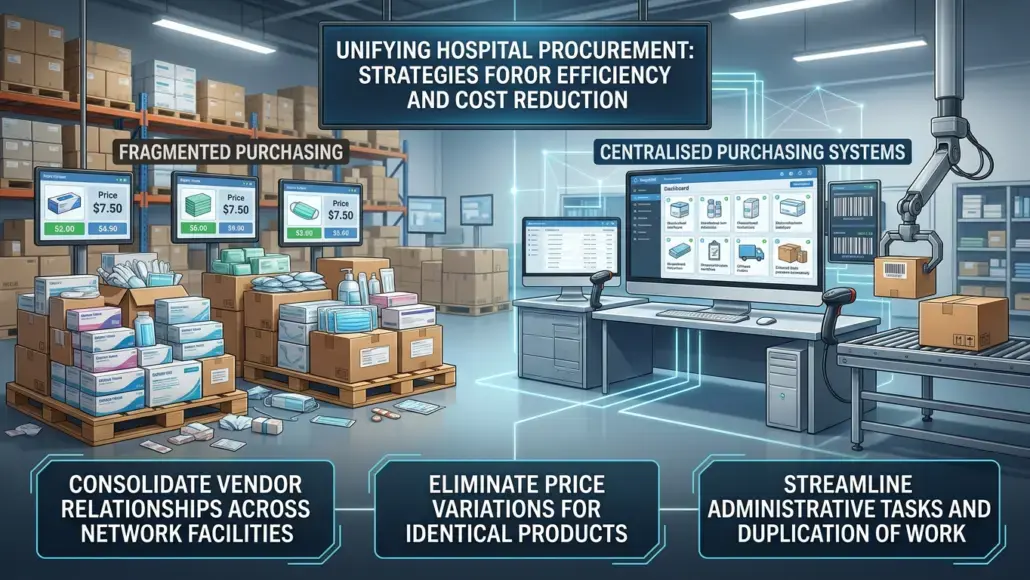

The consolidation of hospital networks into large, multi-site health systems has created a pressing need for more unified and efficient procurement operations. Many organisations currently operate with fragmented purchasing systems, where individual facilities maintain their own vendor relationships and procurement protocols. This lack of coordination often leads to significant price variations for the same products and inefficient duplication of administrative tasks. To address these issues, healthcare leaders are increasingly deploying centralised purchasing systems that consolidate procurement activities into a single, integrated platform. This unification allows health systems to leverage their collective volume and achieve significant economies of scale. The result is a more resilient and cost-effective operation that can support a diverse range of clinical services.
Centralisation provides a structured framework for managing the entire procurement lifecycle, from initial requisition to final payment. By standardising the workflows across all facilities, hospitals can reduce the complexity of their internal operations and improve the speed of their purchasing cycles. Specifically, these systems allow for the implementation of uniform approval processes, ensuring that all expenditures are aligned with the strategic goals of the organisation. This level of control is essential for managing large-scale budgets and ensuring that financial resources are allocated to the areas of greatest clinical need. Additionally, a centralised approach simplifies the management of national contracts and ensures that all facilities are receiving the negotiated benefits and discounts. This unified front also improves the hospital position in negotiations with major manufacturers and distributors.
Beyond simple cost savings, the unification of procurement operations allows for better resource allocation and workforce management. By centralising administrative tasks, health systems can reduce the need for redundant procurement staff at every facility, allowing for a more specialized and efficient central team. This team can develop deeper expertise in specific product categories and market sectors, leading to more informed and strategic sourcing decisions. Furthermore, centralisation facilitates the adoption of best practices across the entire organisation, ensuring a high level of consistency and quality in all procurement activities. The transition to a unified model is a vital step toward creating a truly integrated healthcare delivery network that can meet the challenges of the future.
Data Standardisation and Spend Visibility
One of the most significant advantages of centralised procurement is the ability to achieve a comprehensive view of the organisation expenditures. Fragmented systems often result in inconsistent data, making it difficult for procurement leaders to accurately track spending patterns across different facilities and product categories. Centralised purchasing systems address this challenge by enforcing strict data standardisation protocols for all items and vendors. This ensures that every transaction is recorded in a consistent format, allowing for deep and accurate spend analysis. With this visibility, healthcare administrators can identify opportunities for cost savings and process improvements that were previously hidden by data silos. The ability to track every dollar spent provides the evidence needed to drive strategic change.

Furthermore, the data generated by these systems provides a powerful tool for negotiating more favourable terms with suppliers. When procurement officers can present a unified and accurate picture of their total requirements, they are in a much stronger position to secure volume discounts and improved service levels. The use of real-time data also allows for more precise inventory management, reducing the financial burden of excess stock and the risk of clinical shortages. By utilizing advanced reporting tools, hospitals can monitor contract compliance and supplier performance with greater precision. The following benefits are typically realized through the implementation of these unified systems:
- Elimination of duplicate vendor accounts and inconsistent product pricing across multiple facilities.
- Enhanced visibility into off-contract spending and opportunities for vendor consolidation.
- Improved accuracy in financial forecasting and long-term capital equipment planning.
- Streamlined communication and data sharing between procurement staff and clinical departments.
- Reduction in the manual labour required for invoice processing, reconciliation, and auditing.
- Greater precision in tracking the total cost of ownership for high-value medical technologies.
- Enhanced ability to analyze consumption patterns and identify areas of clinical variation.
The integration of these analytical tools also supports the development of more sophisticated sourcing strategies. By identifying which facilities are most efficient in their use of supplies, procurement leaders can share best practices and drive improvement across the entire health system. The transparency provided by centralised data also builds trust with clinical staff, as they can see that procurement decisions are based on objective evidence and market reality. This data-driven culture is essential for achieving long-term operational success in a competitive healthcare market. Ultimately, the power of visibility is the power to make better decisions for the organisation and its patients.
Change Management and Stakeholder Engagement
The transition to a centralised procurement model requires a significant commitment to change management and stakeholder engagement. Individual hospitals within a system may have long-standing relationships with local vendors and established clinical preferences that they are reluctant to give up. Consequently, healthcare leaders must communicate the benefits of centralisation clearly and involve staff from across the organisation in the planning and implementation process. By fostering a culture of collaboration, hospitals can ensure that the new purchasing systems are designed to meet the practical needs of those providing direct patient care. This inclusive approach reduces resistance to change and ensures that the benefits of centralisation are fully realised. The success of the project depends as much on the people as it does on the technology.
Effective training and support are also critical for the successful adoption of centralised systems. Staff members must be proficient in using the new tools and understand the updated protocols for requisitioning and receiving supplies. Procurement teams should provide ongoing guidance and resources to help facilities navigate the transition smoothly. Notably, the integration of value-based contracting models can further enhance the impact of centralised systems by aligning procurement activities with clinical outcomes. When clinicians see that centralisation leads to better access to high-quality products and improved patient safety, they are more likely to support the initiative. This alignment between clinical and administrative goals is essential for the long-term success of the healthcare organisation.
Moreover, the engagement process should include the establishment of clinical advisory groups to provide input on product selection and standardisation. These groups ensure that the needs of the frontline staff are represented in the centralised decision-making process. By involving surgeons, nurses, and technicians, the procurement department can build a more resilient and clinically aligned supply chain. This collaborative approach also helps to identify potential issues early and allows for more effective troubleshooting during the implementation phase. Ultimately, the goal is to create a system that everyone feels ownership of and that delivers measurable value to the entire healthcare community.
Strategic Alignment with Health System Goals
Ultimately, the implementation of centralised purchasing systems is about more than just operational efficiency; it is about aligning the procurement function with the broader strategic goals of the health system. In an environment of increasing financial pressure and regulatory complexity, hospitals must ensure that every dollar spent is contributing to the delivery of high-quality care. A centralised approach provides the governance and transparency needed to achieve this alignment. By integrating procurement with other core functions, such as finance, clinical engineering, and quality management, hospitals can create a more cohesive and responsive organisation. This strategic focus ensures that the supply chain is a driver of clinical excellence rather than a purely administrative function.
Furthermore, a centralised procurement function can more effectively support the health system mission-driven goals, such as sustainability and community impact. By consolidating purchasing volume, the organisation can influence suppliers to adopt more environmentally friendly practices and support local businesses. This broader perspective on value ensures that the hospital procurement activities are generating benefits beyond just the bottom line. The ability to track and report on these impacts is essential for building a positive institutional reputation and for meeting the expectations of modern patients and regulators. By aligning procurement with the values of the organisation, healthcare leaders can drive more meaningful and sustainable change.
As the healthcare sector continues to consolidate and evolve, the importance of sophisticated and unified procurement strategies will only grow. Health systems that invest in the right technologies and expertise will be better positioned to meet the challenges of the future while maintaining their commitment to patient excellence. By building resilient and transparent supply networks, hospitals can ensure they remain capable of delivering essential medical services to their communities. The commitment to centralisation and standardisation represents a vital step toward a more sustainable and patient-centered healthcare system. Through these efforts, healthcare providers can focus on their primary mission of improving health outcomes while maintaining the highest standards of operational integrity and fiscal responsibility.
Scalability and Multi-Regional Procurement
For health systems that span multiple regions or even countries, centralised purchasing systems provide the scalability needed to manage diverse and complex operations. A unified platform allows for the coordination of procurement activities across different time zones and regulatory environments, ensuring a consistent approach to quality and compliance. By utilizing cloud-based technologies, procurement leaders can monitor the performance of all facilities from a central hub, identifying and addressing issues in real time. This global perspective is essential for managing the risks associated with international supply chains and for identifying opportunities for cross-regional collaboration and resource sharing. The ability to scale procurement operations efficiently is a critical capability for growing healthcare organisations.
Moreover, a scalable centralised system allows for the rapid integration of new facilities during mergers and acquisitions. By quickly bringing a new hospital into the unified procurement network, health systems can realize immediate cost savings and operational improvements. This accelerated integration process is a key driver of value in the consolidation of the healthcare market. The flexibility to adapt to different facility sizes and clinical profiles ensures that the centralised model remains relevant and effective as the organisation evolves. By building a scalable and resilient procurement infrastructure, healthcare leaders can ensure their institutions are well-positioned for long-term growth and success. The future of healthcare is integrated, and centralised procurement is the engine that drives this transformation.
Ultimately, the journey toward a centralised and standardised procurement model is a continuous one. It requires a clear vision, a collaborative spirit, and a steadfast commitment to excellence in every aspect of hospital management. Through the implementation of advanced purchasing systems, healthcare organisations can ensure they are not only surviving but thriving in an increasingly challenging global landscape. This strategic focus on efficiency and value is what will allow hospitals to continue delivering high-quality, patient-centered care for years to come. The transformation of procurement is not just an administrative task; it is a clinical and financial imperative for the modern healthcare sector.