









Close
Digital Health & Ai Innovation summit 2026
Medical Taiwan 2026

UK Healthcare Leaders Say Mental Health Services Overloaded

The government has been told that current issues in mental healthcare cannot be addressed by mental health services alone, and that officials must present a fresh vision for the future.

Healthcare executives believe that the publication of a belated 10-year cross-government plan for mental health should be the main focus of this. In fact, a recent report from the NHS Confederation and Centre for Mental Health lays out the essential components of a new vision for mental health.

This research urges action in the areas of workforce, funding, and service delivery in novel ways, including providing more freely accessible services to the general publicโ€”all of which would aid in facilitating quicker treatment access. Leaders in the mental health field are adamant that without these novel strategies, services will keep getting worse.

The number of people needing NHS mental health services has increased by 16%, with a 30% increase among those under the age of 18.

This increase in demand is affecting the NHS as a whole, and recent statistics revealed that nearly four times as many individuals are queuing for more than 12 hours in A&E compared to two years ago before they can obtain mental healthcare. While this is going on, each month more than 16,000 people and 20,000 kids who should be receiving community NHS mental health services are unable to get the aid they require.

Mental health leaders are now very concerned about the real and present threat that the services they oversee are under unsustainable pressure, said chief executive of the NHS Confederation, Matthew Taylor.ย  The government must act more quickly because demand for mental health support is outpacing supply and increasing quickly.

Since many people are only now asking for assistance, the provision of proper care is quickly becoming unsustainable due to the increase in demand and the current levels of worker capacity and investment. This is already happening under their watch; it’s not something that might occur in some distant futuristic world.

There is no denying the fact that demand for mental health services is rising very rapidly, and that they are seeing a direct effect not just on mental health agencies and their staff but across the NHS and care system as a whole, chief executive of Nottinghamshire Healthcare NHS Foundation Trust, Ifti Majid, said in her conclusion.

They are currently experiencing a national catastrophe, and for this to be appropriately addressed, the government’s attention must be refocused along with more funding; NHS mental health organisations cannot be left to handle this on their own.


Vodacom teams up with the Northern Cape Dept of Health to launch smart healthcare services

Vodacom has launched a cutting-edge patient engagement solution which includes a computer-aided emergency services dispatch system, a first for South Africaโ€™s public healthcare sector.

Together with the Northern Cape Department of Health, and under the leadership of the acting head of the provincial health department, Riaan Strydom, Vodacom has created an end-to-end technology solution to make the provinceโ€™s healthcare services more accessible.

The launch, which took place in the Northern Cape, at the Provincial Health Offices highlights how public-private partnerships can spearhead innovation and ultimately save peopleโ€™s lives.

โ€œSince 2019, Vodacom and the Northern Cape Department of Health have been hard at work to make the provinceโ€™s healthcare services more accessible, and to raise the standard of public healthcare. Using technology as an enabler, our patient engagement solution is the first of its kind in the South African public healthcare sector, and I believe it will be a game-changer for not only the Northern Cape but for the whole country,โ€ says Evah Mthimunye, Managing Executive for Vodacom Central Region.

Acting Head of the Northern Cape Health Department, Riaan Strydom says: โ€œAs the Northern Cape Health Department, we continue to value the philosophy of partnerships, because only if we work in unison – as one body with a common goal, will these goals be achievable.โ€

The idea for the end-to-end technology solution, which includes a smartphone app and intelligent EMS dispatching functionality, was initially pronounced by the Provincial government in 2019.

Vodacom took up the challenge, and along with input from the Department of Health, created an end-to-end technology solution to not only make ambulances more accessible but streamline patient engagement and the delivery of all healthcare services.

The solution includes SmartPatient, a smartphone app for patients needing provincial, municipal, or community-based healthcare where they can log a medical assistance request on their phone, as well as SmartDispatch, a computer-aided emergency services dispatch system enabling users to make an emergency service request via SMS, USSD, e-mail, phone, and SmartPatient app.

With Northern Cape nurses caring for up to 40 patients each (global standards mandate it should be five to eight in a general ward), and Robert Mangaliso Sobukwe Hospital โ€“ the provinceโ€™s only tertiary hospital โ€“ having experienced everything from severe water interruptions to broken lifts, technology is key to cutting manual processes, tracking efficiencies, and improving service delivery.

โ€œVodacom is proud to be part of this ground-breaking public-private partnership underpinned by innovation. Itโ€™s another example of how we are forging ahead with our purpose to connect for a better future. Furthermore, we believe in technology thatโ€™s accessible to the underserved and inclusive to the marginalised, and our patient engagement solution is just that,โ€ concludes Mthimunye.

PatientPoint Launches the PatientPoint Foundation to Drive Health Empowerment for All

PatientPointย  announced the launch of the PatientPoint Foundation, an innovative 501(c)(3) public charity with the goal of driving health empowerment for all through the intersection of relevant health education, cutting-edge technology and human relationships. The Foundationโ€”catalyzed and inspired by PatientPoint’s mantra and 35-year legacy of making every doctor-patient engagement betterยฎโ€”seeks to reach people in high-priority communities most impacted by health disparities and change the dynamics to ultimately make EVERY community health engagement better.

The PatientPoint Foundation will leverage a community-based strategy to address preventable disease and suffering for those challenged by strong negative social determinants of health. Cardiovascular disease, diabetes and mental health will receive special focus. To accomplish its goal, the Foundation will bring relevant health education and interactive technology into non-traditional community settings as well as traditional clinical settings designed to further empower people to build health literacy and healthy behaviors.

“The PatientPoint Foundation represents a bold new approach to achieving health equity by bringing industry-leading health education and technology into communities that need it at meaningful scale,” said Board Chairย Mike Collette. “In doing so, the Foundation leans into the vision of PatientPoint to make theย everyย in ‘making every doctor-patient engagement better’ true forย allย people,” said Collette, also Founder and CEO of PatientPoint.

The Foundation’s unique and integrated approach will provide a new model to empower people and impact lives by:

  • Leveraging the voice of the community
  • Breaking down barriers as they relate to health
  • Connecting high-priority communities to proven technology and health education
  • Empowering people to increase health engagement and healthy behaviors
  • Utilizing best-in-class data analytics and outcome analyses

Foundation programming will begin in lead communities inย Cincinnatiย andย Columbus, Ohio, with the long-term goal of national expansion.

“Through a powerful combination of proximity, relationship, trust and highly scalable technology, our innovative model confronts health disparities at their root cause at the community level,” said PatientPoint Foundation CEOย Denyse Ferguson. “Partnering with trusted community members to enhance the health journeys of all peopleโ€”coupled with a rigorous approach to analyzing effectiveness and outcomesโ€”will allow us to deliver unprecedented results.”

The PatientPoint Foundation’s fund development strategy will include corporate giving, sponsorships and grants as well as individual and private donations. The Foundation’s Board of Directors includes executives from Fortune 500 companies such as Cintas and Procter & Gamble.

The PatientPoint Foundation approach to achieving health equity is a paradigm shift and serves as a call to action for funders and corporations to support innovative, outcomes-based approaches,” says PatientPoint Foundation Board Member and Procter & Gamble Global Beauty Care Chief Information Officerย Damon Frost. As a CIO, I’m energized about the promise of leveraging technology and digital to reach people in high-need communities to galvanize movement and better health for all.

Carenet Health Acquires Stericycle Communication Solutions

Community Health Systems Announces Definitive Agreements to Sell Three Virginia Hospitals

Carenet Health, a leading provider of 24/7 and on-demand patient engagement solutions, today announced it has acquired Stericycle Communication Solutions, an industry leader in patient engagement technology and solutions and a service of Stericycle, Inc. (Nasdaq: SRCL), as part of its strategic vision to create a cohesive patient experience and provide better healthcare for all.

The acquisition strengthens Carenetโ€™s robust capabilities in the payer, healthcare services, and clinical arenas by adding provider-centric technology services including online scheduling platforms, automated messaging solutions, and additional inbound and outbound call center services. The combined entity provides 1 in 3 Americans access to Carenet offerings and works with 14 of the top 20 health systems in the U.S., among 1,000 other leading healthcare companies.

โ€œAt this critical moment in healthcare, where health systems are working hard to get patients back in the door for needed procedures, weโ€™re pleased to be able to provide 24/7 modernized and elevated technology tools with the overall goals of better access, better experiences, better outcomes, and better profitability,โ€ said John Erwin, Carenet chief executive officer. โ€œCarenet is now the industryโ€™s most experienced and comprehensive healthcare consumer engagement company, delivering dynamic integrated solutions that support the ongoing shift to value-based care.โ€

In addition to Carenetโ€™s Intelligent Engagementโ„ข clinical and telehealth services, Carenetโ€™s offerings now include:

  • Best-in-class Intelligent Scheduling solution, built on the InQuickerโ„ข scheduling platform, that enables patients to convert at the moment of intent
  • Broadest and deepest EHR/EMR integrated solution in the marketplace
  • Award-winning SaaS digital and automation platforms with natural language processing and multi-language capabilities
  • Partnerships with leading health-tech innovators, including leading search platforms
  • Fully API-enabled enterprise platform

Carenetโ€™s Matt Dickson, formerly senior vice president at Stericycle Communication Solutions, said the deal is a great fit for both companies.

โ€œThe acquisition creates an enhanced and powerful end-to-end clinical solution for payers, providers, and healthcare partners that eliminates costly handoffs and multi-vendor management headaches,โ€ Dickson said. โ€œAdditionally, our hospital and health system customers will continue to receive the top-notch service they expect while also benefiting from Carenetโ€™s deep clinical expertise and resources. The strategic marriage of tech-enabled communications and expert human capital is a recipe for success during this time of worker shortages, delayed care, and heightened interest in non-traditional venues of healthcare.โ€

Carenetโ€™s enhanced portfolio brings together a human touch to patient engagement and innovative technology solutions to deliver meaningful improvements to patient experience and health outcomes while strengthening provider, payer, and healthcare partner successes.

โ€œWeโ€™re excited to build on our more than 30 years of expertise by exponentially improving our ability to modernize and optimize the delivery of the healthcare consumer experience across the entire patient engagement journey,โ€ said Mick Mazour, Carenet president. โ€œItโ€™s an essential moment in time for healthcare, and weโ€™re well-positioned to answer the industryโ€™s call for better healthcare for all.โ€

Siemens Healthineers, Atrium Health Enter Multi-Year Value Partnership to Improve Health Care Capabilities, Access and Equity

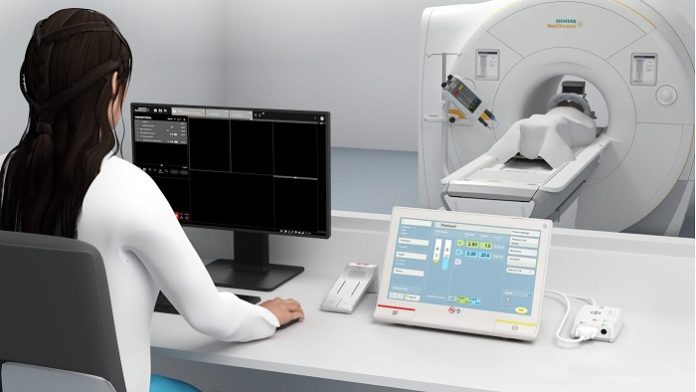
Siemens Healthineers and Atrium Health, a leading nonprofit health provider known for its top-ranked pediatric, cancer and heart care programs, have announced a multi-year Value Partnership ย agreement. This strategic agreement will focus on driving access to care in Atrium Healthโ€™s service region across the southeastern U.S., improving health equity and enhancing economic mobility. Atrium Health will purchase more than $140 million in Siemens Healthineers devices and equipment, including advanced imaging technology, radiation oncology and precision endovascular robotics.

Utilizing Siemens Healthineers technology, Atrium Health will work to improve health care in rural and underserved areas. It will do so by strategically strengthening economic mobility, health equity and access and focusing on environmental sustainability in the region.

โ€œThis partnership between Atrium Health and Siemens Healthineers will create tremendous value for our communities and the health care field,โ€ said Eugene A. Woods, president and CEO of Atrium Health. โ€œTogether, we will reshape the future of health care, invent new technologies and grow the next generation of talented clinicians โ€“ all with a laser-like focus on equity and inclusive growth.โ€

Through unique services and approaches within the Value Partnership, Siemens Healthineers will help Atrium Health meet its strategic goals, increase efficiency and work toward improving health in communities in North Carolina, South Carolina, Georgia and Alabama โ€“ and beyond. Through Siemens Healthineers, Atrium Health will continue to modernize its healthcare infrastructure to serve patients, use technologies like artificial intelligence to improve outcomes and quality, reduce costs in health care across the enterprise, as well as jointly develop education and workforce solutions to help encourage and enhance careers in health care.

โ€œSiemens Healthineers is proud to continue its strong partnership with Atrium Health imaging service engineering teams to improve the quality of health care,โ€ said Dave Pacitti, president and head of the Americas, Siemens Healthineers. โ€œNot only will this agreement nurture the development of the next-generation workforce in health care, but it will also serve as a foundation for future innovations.โ€

โ€œAs an academic learning health system, Atrium Health is at the forefront of research and innovation that can improve the health of our population,โ€ said Dr. Rasu Shrestha, enterprise executive vice president and chief strategy and transformation officer for Atrium Health. โ€œThis agreement with Siemens Healthineers will help Atrium Health push the boundaries of innovations in clinical care, research and community impact, and also help us equip the new bed towers being built at our flagship hospitals in Charlotte and Winston-Salem, North Carolina with leading-edge technologies. This foundation will allow Atrium Health to lay the groundwork for our soon-to-be constructed projects such as Wake Forest University School of Medicine Charlotte and the adjacent โ€˜The Pearlโ€˜ innovation district.โ€

Through the Value Partnership model, hospitals can optimize business processes, expand capabilities and drive innovation. These innovative agreements rely on the entire Siemens Healthineers portfolio to create added value beyond equipment.

MediView and GE Healthcare to Bring Augmented Reality Solutions to Medical Imaging for the Interventional Space

MediView and GE Healthcare to Bring Augmented Reality Solutions to Medical Imaging for the Interventional Space

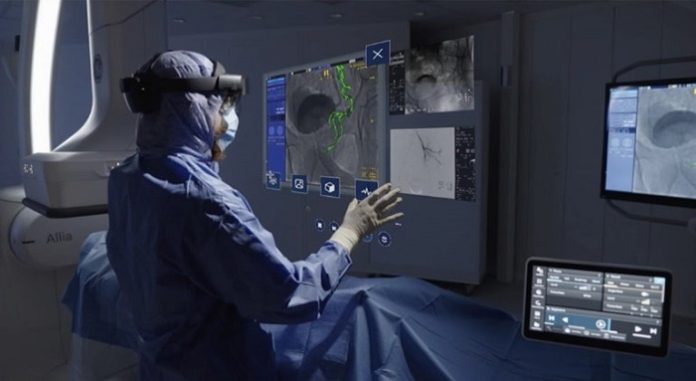
GE Healthcare, a leading global medical technology, pharmaceutical diagnostics and digital solutions innovator, and MediView XR, Inc.,ย a leading clinical augmented reality med-tech company, announced today their collaboration to integrate medical imaging into mixed reality solutions through the development of the OmnifyXRTMย Interventional Suite System.MediViewโ€™s current technology platform leverages spatial computing and mixed reality, united with medical imaging in combining augmented reality visualization, seamless remote collaboration and evidence-based clinical insights.

โ€œWe are thrilled to advance our strategic collaboration with GE Healthcare by co-developing and creating the interventional suite of the future – one that is designed to improve ergonomics, with natural interactions for optimized workflow and facilitates care team collaboration. The physician is empowered to simultaneously interface with virtual monitors, holographic 3D anatomy, and remotely collaborate with colleagues around the world,โ€ said Mina Fahim, President and CEO of MediView. Utilizing GE Healthcareโ€™s exceptional imaging and MediViewโ€™s expertise in real-time augmented reality visualization and navigation, weโ€™re proud to together launch one of the largest deployments of augmented reality in healthcare to-date and grow clinical adoption of innovative extended reality solutions.โ€

The collaboration between the two organizations brings together MediViewโ€™s expertise in 3D augmented reality medical visualization, surgical navigation, telecollaboration capabilities and procedural data insights to enhance and simplify clinical decision making along with GE Healthcareโ€™s superb interventional imaging technologies, digital infrastructure, data analytics, and clinical decision support capabilities.

โ€œAugmented reality in imaging is key to improved visualization of anatomy and enhanced user experience. Our collaboration with MediView demonstrates our commitment to advancing the delivery of precision care by expanding the capabilities of our own imaging guided systems through an open architecture and the integration of promising and complementary technologies, like OmnifyXR Interventional Suite, into clinical workflow. Together, we can help clinicians use image guidance technologies to their full potential in order to help in the delivery of high-quality patient care,โ€ said Arnaud Marie โ€“ General Manager for Global Interventional at GE Healthcare.

There is a growing focus on streamlining and optimizing clinical workflows and enhancing ergonomics among clinicians utilizing medical imaging. The OmnifyXR solution provides a heads-up, augmented reality display of interventional x-ray imaging systems using Microsoftโ€™s latest HoloLens technology. The solution integrates multiple holographic displays of live imaging to help improve ergonomics regardless of working position and features 3D volume for improved anatomy visualization to help clinicians better assess complex anatomies and inform clinical decision making. The solution also features remote collaboration, enabling clinicians to partner from a distance, train, proctor and facilitate collaborative care.

GE Healthcare and MediView will co-market the solution and will explore opportunities for joint go-to-market efforts, with an initial market launch in the US and global expansion planned for the future.

GE Healthcare Highlights Transformative Precision Innovations and Collaborations that Help Drive the Future of Health

The worlds first RIM's medical platform is being created in Poland

Ahead of its planned spinoff from GE the first week of January 2023, GE Healthcare reveals over 40 solutions that aim to improve patient outcomes and increase healthcare efficiency at the Radiological Society of North Americaโ€™s (RSNA) 2022 Annual Meeting.

Drawing on more than 100 years of history as a trusted medical technology innovator1, GE Healthcare is closely connected with healthcare systems globally. Knowing the industry is under immense pressure, the company is proud to introduce its latest innovations to help solve for the biggest challenges in healthcare today โ€“ including rising cost pressures, increasing staff shortages, mounting expectations to deliver outcomes, and more โ€“ while also aiming to improve healthcare in the future.

โ€œWith an unparalleled combination of technology solutions and clinical understanding, we have a unique ability to help solve industry challenges by delivering clinical and operational insights through integrated data, analytics and devices,โ€ said Peter Arduini, CEO of GE HealthCare. โ€œA new era is coming for GE Healthcare and with it, we hope to help healthcare transform as a whole by advancing precision diagnostics, improving capacity and efficiency, and increasing patient access.โ€

Connecting healthcare for better patient outcomes

GE Healthcare aims to erase segmented care and fill in the gaps in healthcare systemsโ€™ workflows to increase access and improve outcomes for patients across the care continuum – all while achieving greater connectivity, resilience, and agility to enhance the clinician experience.

GE Healthcare delivers connected care across care pathways with leading imaging, digital and patient monitoring capabilities that help improve patient care throughout each individualโ€™s journey.

To help clinicians deliver care thatโ€™s more personal and precise, while also enabling greater healthcare system efficiencies, GE Healthcare offers several game-changing solutions:

  • SIGNA Experience: A platform of four inventive components, which are SIGNA One – a new anticipatory user interface with virtually no learning curve, AIR Recon DL, AIR Coils and automated workflow solutions, that leverage AI and deep learning to enhance workflow productivity, drive clinical efficiency and bring automation and simplification, to ensure the smoothest scanning experience in magnetic resonance (MR) imaging.
  • SIGNA Victor: The newest 1.5T 60cm system designed to address todayโ€™s most pressing and unprecedented industry challenges such as sharp increase in MR examinations driven by the stalled pandemic demand, surging power and commodity costs, and labor shortage and staff burnout. With SIGNA Experience being integrated for the first time in this 1.5T segment, the system offers all the benefits of the platform, in addition to efficient helium and power consumption that can support higher patient throughput and lower costs which leads to faster ROI.
  • Revolution Apex platform with Effortless Workflow: An industry first2 Computed Tomography (CT) platform with built-in scalability for onsite CT detector upgrades โ€“ all without replacing the gantry3. Offering uncompromised clinical capabilities, the new Revolution Apex platform offers the worldโ€™s fastest gantry speed3,4 and helps radiology departments stay ahead of the technology curve with a modular design that offers a seamless path to continuous hardware and software scalability and upgradability that can extend the lives of CT systems into the future3 . This platform โ€“ along with select other GE Healthcare CT systems โ€“ are complete with Effortless Workflow, which utilizes AI technologies to automate nearly every step in existing workflows โ€“ from pre-scan to post-scan.
  • CT Motion: A GE Healthcare branded multi-dose syringeless injector that delivers iodinated contrast media for Computed Tomography (CT) imaging procedures, reduces procedure setup time and increases patient throughput while helping to optimize patient dosing and reduce wasted contrast media.
  • Intelligent workload management solution for PACS: Provided through Quantum Imaging & Therapeutic Associatesโ€™ Helix Radiology Performance Suite, which operates on predictive analytics, the intelligent workload management solution can help to optimize radiologistsโ€™ workflow across an entire enterprise to improve radiologistโ€™s productivity and reduce burnout.
  • Imaging 360 for Operations: An ecosystem of applications designed for core imaging operations functions such as protocoling, staffing, analytics, and scheduling.
  • Quality Care Suite 2.0: A collection of AI algorithms that enable the delivery of high quality, radiologist-ready images for every patient โ€“ including pediatric patients, a first for GE Healthcare X-ray AI.
  • Definium 656: The latest generation of the overhead tube suspension (OTS) system features the highest levels of motorization, automation, assistive intelligence and advanced applications with the fastest movement and highest weight capacity in GE Healthcareโ€™s fixed X-ray portfolio.
  • LOGIQ Fortis: An all-in-one, high-performing ultrasound solution that can easily be scaled to fit the specific needs of every clinician. Sound Architecture combines XDclearโ„ข transducers, cSoundโ„ข Imageformer and new, advanced Speckle Reduction Imaging (SRI) technology to increase processing power that delivers enhanced data throughput, ultimately providing exceptional image quality, clarity and clinical confidence across a wide range of clinical applications.
  • Vivid E95 Ultra Edition: A premium 4D cardiovascular ultrasound system, designed to provide uncompromised image quality, advanced visualization capabilities, and easy measurements, while helping reduce tedious tasks and inter-observer variability. It also features the worldโ€™s first mini 4D TEE probe, suitable for a broad range of paediatric interventional cardiology procedures, and potentially helping eliminate the need for general anaesthesia in adult patients.

Strategic collaborations in precision oncology

As an open-architecture, multi-dimensional ecosystem, GE Healthcare helps connect teams, multimodal data, and decisions at every step โ€“ from discovery to diagnosis to treatment and monitoring โ€“ with intelligently efficient innovations designed to help clinicians deliver precise, personalized care.

In concert with collaborators in adjacent fields who are well-versed in their disciplines, GE Healthcare is proud to work together with some of healthcareโ€™s leading innovators across care pathways, including oncology.

Some of GE Healthcareโ€™s recent collaborations in cancer care include:

  • Accuray, to expand access to personalized medicine, bringing together precision diagnostic tools that enable earlier diagnosis with innovative delivery capabilities to provide patient-adapted treatments.
  • Elekta, to provide healthcare providers a comprehensive offering across imaging and treatment for cancer patients requiring radiation therapy.
  • Optellum, to help advance early detection, precision diagnosis and the treatment of lung cancer.
  • RaySearch, to improve radiation oncology treatment planning.
  • SOPHiA Genetics, to advance cancer care with the goal of better targeting and matching treatments to each patientโ€™s genomic profile and cancer type.
  • Tribun Health, to focus on making digital pathology images and results an integrated part of the imaging patient record, while also helping to foster collaboration among pathologists and clinicians through availability of data in a consolidated location.

Ushering in a new era of healthcare with innovative diagnostics

Looking towards the future, GE Healthcare is uniquely positioned to advance precision care through theranostics.

Where most medical therapies are designed with the โ€˜averageโ€™ patient in mind, theranostics brings together diagnostics and therapeutics to provide a more targeted and personalized treatment than ever before5. Clinicians and patients are especially seeing success with theranostics in prostate cancer โ€“ a highly manageable disease, but one that is difficult to treat when diagnosed at a late stage, claiming more than 1.4 million lives annually6 .

To advance this growing field and help clinicians improve patient outcomes, GE Healthcare is proud to be the only partner with solutions covering the breadth of steps required from discovery to diagnosis to treatment.

โ€œAs the only partner with solutions spanning from pharmaceutical diagnostics, cyclotrons, chemistry synthesis, PET/CT, PET/MR, SPECT/CT, and advanced oncology and digital solutions, we cover the breadth of steps from discovery to diagnosis to treatment,โ€ said Jamie McCoy, General Manager, Theranostics and Radiotherapeutics, GE Healthcare. โ€œUltimately, we hope that by advancing the integration of diagnostics and therapeutics, we can help usher in a new era in healthcare that enables clinicians to provide more targeted and personalized therapies for improved patient outcomes than ever before.โ€

This includes several standout products to enable greater adoption of theranostics in practice:

  • A new Solid Target Platform for GE Healthcareโ€™s PETtrace cyclotron โ€“ in combination with its FASTlab 2 New Edition platform โ€“ can produce 100x the amount of Gallium for radioisotope production compared to a common generator for increased theranostics capabilities and access in prostate cancer patient care7.
  • Omni Legend is an all-new, all-digital PET/CT platform that enables clinicians to image short life tracers and reach new levels of sensitivity and detectability for clear images and greater clinical information across more oncology, cardiology, and neurology procedure types than ever before. Using GE Healthcareโ€™s proven deep learning expertise for image acquisition and reconstruction, the system boasts the highest sensitivity per cm in the market5 and images Gallium-68 for diagnosis, staging, or restaging of disease.
  • StarGuide, GE Healthcareโ€™s dynamic 3D SPECT/CT system, delivers new digital focus detector technology that efficiently enables treatment monitoring โ€“ including Lutetium-177 for prostate cancer โ€“ and offers Xeleris V with AI solutions such as Q.Thera AI8 for dose personalization.

Viz.ai and Cercare Medical Partner to Support Neurovascular Clinical Decision Making

Draft For Clinical Studies of Digital Health Technologies

Viz.ai, the leader in AI-powered disease detection and intelligent care coordination, announced a partnership with Cercare Medical, which delivers next-level medical imaging with CT and MRI. The partnership will incorporate Cercare Perfusion, a fully-automated, simple-to-use, patient-specific perfusion software, into the Viz.ai platform.

โ€œWe are thrilled to join forces with another revolutionary technology company like Cercare,โ€ said Steve Sweeny, vice president of business development and strategy at Viz.ai. โ€œThis partnership is another example of our continued commitment to work with leading, like-minded, innovative companies to enable quick access to important patient data and ultimately improve clinical impact with our Viz platform.โ€

Viz is broadening its imaging features and functionality to best serve institutions that perform MR imaging in the patient workflow. The infusion of Cercare Perfusion technology into the Viz.ai platform enhances the companyโ€™s flagship AI-powered neurovascular portfolio as well as the platformโ€™s capabilities.

Brain perfusion scans measure blood flow in the brain and are used to provide critically needed information on the extent of tissue damage due, for instance, to acute ischemic stroke.1 Quickly mapping brain perfusion deficits is pivotal to minimize tissue damage in acute stroke management, and Cercare further enriches the workflow with layers of AI to produce volumetric measures, which directly impact clinical decision-making.2

โ€œViz.ai and Cercare Medical share the commitment to support clinical decision-making to enable the best possible patient care,โ€ said Kim Beuschau Mouridsen, CEO of Cercare Medical. โ€œWe are pleased to enter into this global partnership to increase access to the latest perfusion technology, which is designed to easily integrate into existing workflows to provide healthcare professionals with deep, fast, and reliable patient insights.โ€

Cercare uniquely provides maps illustrating oxygen availability, in addition to blood flow and volume. This allows more detailed assessment of tissue pathology and therefore optimized patient management for a variety of conditions, such as dementia and neoplasia.

Olympus Launches New Gynecologic Power Morcellator for Its Contained Tissue Extraction System

Olympus to Support Endoscopic AI Diagnosis Education for Doctors in India and to Launch AI Diagnostic Support Application

Olympus, a global technology leader in designing and delivering innovative solutions for medical and surgical procedures, announced today the market launch of the moresolutionโ„ข Power Morcellator, which is manufactured by TROKAMED GmbHย  and is available in the U.S. through a distribution agreement with Olympus America, Inc. The moresolution Morcellator is designed for advanced gynecologic procedures with large, calcified tissue specimens.

Current FDA Guidance on power morcellator labeling requires that all power morcellators marketed in the U.S. be used with a compatible, FDA-cleared containment device.1 The Olympus Contained Tissue Extraction System comprises the PneumoLinerโ„ข, a first-of-its-kind containment device, and the moresolution Morcellator, which together provide select patients a laparoscopic surgical option as an alternative to open hysterectomy or open myomectomy for tissue removal.

Contained tissue extraction is not indicated for use withย women who have a known or suspected malignancy. The FDA advises that power morcellation should not be used for removal of uterine tissue containing suspected fibroids in patients who are post-menopausal or over 50 years of age or who are candidates for en bloc tissue removal vaginally or via a mini-laparotomy incision.

Features and benefits of the moresolution Morcellator include:

  • ย ย ย  Ability to cut dense or calcified fibroids
  • ย ย ย  Efficient cutting may help save time in the operating room
  • ย ย ย  Lightweight handpiece designed to reduce surgeon fatigue
  • ย ย ย  Safety features include the option to keep the device in ‘Cut’ or ‘No Cut’ mode
  • ย ย ย  Autoclaveable and reusable components may support efforts for cost reduction

“We are excited to offer a new power morcellation solution for minimally invasive gynecological procedures,” said Richard Reynolds, President of the Medical System Group at Olympus America, Inc. “Olympus supports the safe use of power morcellators with a contained extraction system according to FDA guidance. This device reflects a response to our customers’ requests for more power and control during the procedure.ย  This particular device works very well on very dense, calcified tissue, which is difficult to cut with other devices.”

Gynecological societies stand behind the FDA guidance on the safe use of power morcellation. The American Congress of Obstetricians and Gynecologists (ACOG) points out that hysterectomy or myomectomy performed by open surgery is associated with increased morbidity when compared with minimally invasive approaches such as laparoscopy.2ย  The American Association of Gynecologic Laparoscopists (AAGL) supports continued use of morcellation given appropriate patient selection and surgical technique to minimize established risks and optimize benefits of the procedure based on current evidence.

Due To Single, Linked Foundation, Digital Trials Are Shaping

Clinical trials have expanded from 2,119 in 2000 to over 409,000 in 2022 (and counting). Not only has the number of trials increased, but so has the volume of data.

Phase III clinical trials generate 3.6 million data points on average, which is three times as much data as late-stage trials did ten years ago. Because the data is frequently collected in various formats, it is challenging for sites, sponsors, and contract research organisations (CROs) to handle and comprehend the influx of data.

According to Jason Methia, vice president of Vault Clinical Operations Strategy at Veeva Systems, many clinical business operations are more time-consuming today than they were five to ten years ago, which is mostly due to growing intricacy and information overload. The tremendous proliferation of technology, though it’s all unconnected, has resulted from the quick adoption of decentralised testing.

87% of trial sponsors and CROs swiftly implemented decentralised trials during the pandemic1. Despite advancements in the transition to more digital working practises, the fragmented technology environment has brought forth new difficulties for collaboration, speed, and quality of study.

To seamlessly integrate trial sites, enhance data quality, and accelerate development, it is essential to leave this scattered landscape and bring clinical technology under one umbrella.

The need for clinical trials to undergo digital transformation

Because of the current lack of interoperability, barriers are formed, which compromise data integrity and delay trial execution.

Methia asserts that many research partners must disclose the bulk of the patient data, operational data, and paperwork that a pharmaceutical business handles. One needs extensive and precise data to track the trial’s progress and make choices based on a comprehensive understanding of the study, the author writes.

An integrated platform offers a single user interface for controlling the complete clinical trial procedure. Organizations can reduce risks and conduct trials more quickly and efficiently by adopting uniform protocols for tracking and managing data and documentation from sponsors, CROs, and investigators. 95% of sponsors and CROs that have embraced decentralised trials are also developing a single digital platform to serve sites and patients and enhance data exchange and collaboration since it enables this integrated strategy2.

Functional silos are eliminated by combining applications like eTMF, CTMS, study start-up, and site payments, according to Methia. To get a complete view of what’s occurring in the trial from an operational and compliance standpoint, one needs a single source of truth.

Better data facilitates better decision-making

To meet user needs, data must be manually entered into several systems, then manually entered again into different file formats, which leads to an increase in inconsistencies and errors and, eventually, a loss of trust in the data.

According to senior director of clinical strategy at Veeva Systems,ย  Chris McSpiritt, normalising the data takes time, it affects productivity, and it causes operations to grind to a standstill.

The delay makes it difficult for sponsors and CROs to access the real-time data they require to make informed choices. Full transparency across all clinical trial processes is provided through a unified clinical operational model, enabling improved oversight and the highest calibre of trial execution.

According to McSpiritt, having correct, current data enables choices to be made sooner in the study, which may have significant effects on patient safety, risk and issue reduction, and the overall operational timeframe. He continues that visibility helps us make the proper choice more quickly.

Optimising the execution of digital trials

An industry-wide transition is taking place more towards a digital trial environment that links participants, sites, sponsors, and CROs to promote efficient execution and data exchange among stakeholders3.

A phase II decentralised clinical trial that saved one to three months of time was associated with a net benefit that was up to five times greater than the cost of the technologies required to conduct the trial; in phase III studies, the cost benefit was up to 14 times greater than the initial outlay.

Clinical trials will be more patient-centric and expedite access to medical therapies as the industry moves closer to achieving this objective. By optimising research execution and streamlining collaboration and sharing of information for quicker, higher-quality studies, a unified clinical operational model boosts productivity.

Methia agrees, saying it’s the platform for wider growth and allows the industry to overcome some of the largest obstacles impeding digital transformation. It enables stakeholders to adjust to the ever-increasing quantity of clinical trials and data points. The efficiency and interoperability necessary to support digital trials are driven by an operating model for clinical trials on a single platform.

Translate ยป