Close
Digital Health & Ai Innovation summit 2026
Medical Taiwan 2026

The BRAIN Foundation Advances Life Sciences Research and BioPharma for Autism

The BRAIN Foundation announced Synchrony 2022, the first and only international symposium on translational research in autism, bringing together academia, biotech, pharmaceutical companies, and venture partners from around the world with the mission to improve the health and quality of life for people with autism. Synchrony 2022 will run for three days, Dec. 2-4, in Pleasanton. To register, please visit https://synchronysymposium.com.

Global leaders in academia and industry are expected to attend Synchrony 2022.

“Synchrony is the must-attend forum to connect with the bleeding-edge of autism innovation and the innovators,” said Ashok Srinivasan, Ph.D., chief scientific officer at Autism Impact Fund.

“The BRAIN Foundation’s annual Synchrony symposium is a much anticipated event for the ASD community. In a short period of time since its inception, Synchrony has become the premier research conference for biomedical innovations for both academic and industry-related ASD researchers,” said John Slattery, co-founder and CEO, BioROSA Technologies.

“I am excited to be attending The BRAIN Foundation’s Synchrony 2022 symposium. It is a great event that is becoming one of the better meetings to discuss and learn more about the development of treatments for individuals with ASD,” said Kevin Sanders, global development lead of autism, product development neuroscience, F. Hoffmann-La Roche.

Symposium News Highlights:

  • $1 million in grants to be awarded to researchers at Stanford, UC Davis, Massachusetts General Hospital, Notre Dame, Oklahoma, Wisconsin, Yale and more.
  • Equity investment in JelikaLite and a partnership with PaxMedica to support pioneering startups developing novel treatments through the FDA regulatory process.
  • For the first time, Synchrony will be offering continuing medical education (CME) credits for physicians, researchers and clinicians at nearly half of its 30 sessions.

Autism is the fastest growing developmental disability today, with 1 in 44 children diagnosed in the U.S. leading to spending of $461 billion in care-related services by 2025. There are only two FDA-approved treatments, neither of which alleviate the core disabling symptoms of autism.

“The health and quality of life for people with autism and neurodevelopmental disorders is greatly impacted by many co-occurring conditions such as epilepsy, sleep disorders, anxiety, depression, apraxia, sensory sensitivities, as well as communication and executive functioning related disabilities,” explained Sarika Agrawal, co-founder and board member. “As a 501(c)(3), The BRAIN Foundation is catalyzing research that will lead to the development of FDA-approved treatments for such disabling symptoms associated with autism.”

Featuring: $1M in Research Grants

The BRAIN Foundation catalyzes research and entrepreneurship through academia grants and highly selective investments in promising startups through venture philanthropy.

To date, The BRAIN Foundation has awarded more than $2.5 million in research grants through its public and donor network and corporate partners. Studies have spanned topics as diverse as gastrointestinal disorders, metabolic/mitochondrial dysfunction, microbial therapies for addressing core autism symptoms, neuromodulation therapies, understanding the immune dysfunction in autism, and many others.

This year, The BRAIN Foundation will award $1 million in grants to nine research investigators at Massachusetts General Hospital, Saint Peter’s Healthcare Systems, Stanford University, Star Institute, The University of Oklahoma Health Sciences Center, University of California at Davis Mind Institute, University of Notre Dame, University of Wisconsin-Madison, and Yale University School of Medicine.

The BRAIN Foundation also solicits research abstracts from researchers new to the field and awards “Most Innovative” and “Most Impactful” presentation honors in this session.

Featuring: Equity Investments and Partnerships With Industry Startupsย 

The BRAIN Foundation will announce its equity investment and partnerships with pioneering startups such as JelikaLite and PaxMedica.

JelikaLite will be unveiling new findings from their open label study of a wearable transcranial photobiomodulation device (tPBM) to treat symptoms of autism. JelikaLite is a medical technology company with focus on pediatric neurological health using non-invasive novel therapies. The startup received seed funding for its work via a special purpose vehicle (SPV) created by The BRAIN Foundation in partnership with Bioverge, a venture capital firm specializing in emerging healthcare startups.

Featuring: CME Credits for Physicians, Researchers, Cliniciansย 

For the first time, Synchrony 2022 will be offering CME credits for physicians, researchers and clinicians attending select sessions at the symposium in accordance with the requirements and policies of the Accreditation Council for Continuing Medical Education (ACCME) through the joint providership of CME Consultants and The BRAIN Foundation.

“I have attended Synchrony for the past three years and moderated several roundtables and panels,” said Dr. Vijay Tiwari, M.D. FACP, senior partner and physician at The Permanente Medical Group Inc. “If you are a physician who cares for patients with ASD or neurodevelopmental disorders, this conference is a place to learn, earn CME credits, and contribute to the conversation about medical care.”

A sampling of the sessions offering CME credits include:

  • Mitochondrial Research by Richard Frye, MD, Ph.D. (Phoenix Children’s Hospital)
  • Transcranial Photobiomodulation in Autism by T. Atilla Ceranoglu, MD (Shriners Hospital for Children)
  • Zonulin Pathway for Personalized Treatment of Autism by Alessio Fasano, MD (Massachusetts General Hospital for Children)
  • Gastrointestinal Symptoms, Cognition and Behavior Upon Treatment of ASD by Stephen Walker, Ph.D. (Wake Forest School of Medicine) and Arthur Krigsman, MD (private practice)
  • Biomarkers of Innate Immune Memory in Autism by Harumi Jyonouchi, MD (Saint Peter’s University Hospital)
  • Roundtables on Neuroinflammation, Seizures in ASD
  • Additional talks and working group meetings

NMPA Regulatory Approval Process for Medical Devices in China

NMPA

Introduction

China is one of the most populous countries and has the worldโ€™s largest medical devices markets. As per a 2018 statistical report, by 2030, China is expected to hold more than 25% share of the global medical device industry at over US$200 billion, which is second to the USA with an expectation of US$300 billion. Chinaโ€™s medical devices market growth rate is driven by a growing customer base in terms of population and health centres, expanding health insurance schemes, the rising prevalence of diseases and disorders, and the rapidly growing geriatric population. Thus, China offers a wealth of opportunities for medical devices companies. However, like all other nations, China has stringent Regulatory requirements and a competitive environment. The medical device manufacturers willing to access the China market must have a clear-cut understanding of the local regulations and technical standards. This article will provide insights on Chinaโ€™s Regulatory approval process for medical devices and the varied premarket or product registration procedures for imported and local domestic products.

Classification of Medical Devices

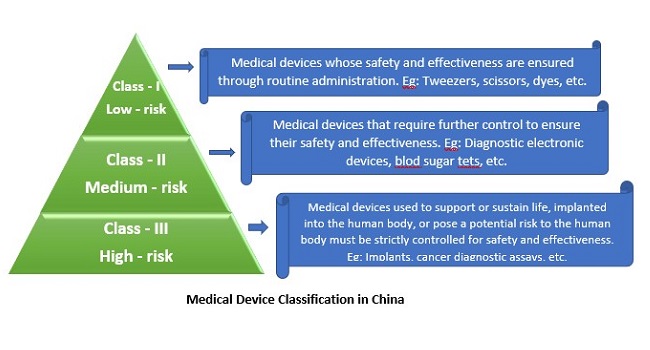
Depending upon a medical deviceโ€™s potential risk to patients, the NMPA categorizes medical devices into three (03) classes. As per the degree of risk (from low to high), medical devices are divided into Class I (low-risk), Class II (medium-risk), and Class III (high-risk) in due order. A medical deviceโ€™s degree of risk is determined comprehensively according to the intended purpose, the pattern of use, structural characteristics, and whether the device is body contacting or not.
Registration of Medical Devices

  • Earlier, China’s medical device registration term was only four (04) years. Currently, it is five (05) years.
  • To renew a deviceโ€™s registration, a renewal application must be submitted six (06) months before the expiration date.
  • Overseas medical device manufacturers must provide device samples to the NMPA for testing and meet China testing standard. A test protocol describing the deviceโ€™s test methodology, parameters, and standards used to prove the deviceโ€™s safety and performance must be documented. This document is called Product Technical Requirement (PTR).
  • Class II and Class III devices require registration. The Class I devices do not require registration but are required to file the device according to the file list. To register Class II and III devices, manufacturers must send the appropriate documents like CE mark, 510(k) letter, ISO 13485 certification, and approved premarket approval application to the NMPA, along with supportive clinical data. All the device information, including labelling and packaging, must be translated into Chinese.
  • Foreign manufacturers must hire China-based registration agent/legal agent to register their devices in China. The agentโ€™s responsibilities include:

– providing technical services and maintenance support for the device, if required

– assisting in device recalls, if required

– overseeing the registration and clinical trial process and make sure all the documents are meet China registration requirements

– providing support to the manufacturer if any adverse events occur due to the device Malfunction if required

  • Manufacturers must provide the name, address, and contact number of their designated agents in the registration application.

Documentation and Approval

The NMPA requires comprehensive documentation, and all the documents must be submitted in the original language, if applicable and as well as in Chinese. The documents required for new registration and registration extension are mentioned below.

Documents for new registration:

  • Regulatory Information include Application form, Product List, associated documents, conformity statement and ect
  • Products Description, Applicable scope and contraindications, Product registration history
  • Certification documents like EC, EC DoC, and ISO 13485
  • Authorization for a legal representative
  • The Commitment of an agent and business license of an agent
  • List of basic requirements for safety and effectiveness of a medical device
  • Clinical evaluation document
  • Risk analysis material of products
  • Product technical requirement
  • Research Information
  • NMPA test report
  • User manual and label sample
  • Conformity declaration and other documents according to the latest regulation or tendency, e.g., cyber security documents
  • Quality management system documents etc

Documents for registration extension:

  • Application form
  • Certification documents like authorization for a legal representative
  • The commitment of an agent and business license of an agent
  • Declaration on no change of product, copy of original registration license (and change approval license), and attachment
  • Conformity declaration
  • copies of the original medical device registration certificate and its attachments, and copies of previous medical device change registration (filing) documents and their attachments
  • other documents according to the latest regulation or tendency

The new electronic registration system makes it possible to initially register for electronic Regulated Product Submission (eRPS) and be assigned access. While uploading approval documents, manufacturers can use the eRPS to track the documentsโ€™ approval status, re-submit the documents or submit answers to the questions raised by the Authority. Electronic submissions can be made for:

  • The initial registration/approval of medical devices (including IVD devices)
  • Changes to an existing registration of domestic Class III medical devices and foreign Class II and III medical devices
  • Applications for clinical investigations for foreign Class III medical devices
  • Changes to a medical deviceโ€™s Instructions for Use (IFU)
  • Extension of medical device licenses
  • Applications for approval of innovative medical devices
  • Changing, correcting, and deregistering licenses for medical devices

Clinical Evaluation ย ย ย ย ย ย ย ย ย ย ย ย ย ย ย ย ย ย ย 

China has stringent clinical trial requirements for medical devices. Clinical evaluation is a process in which the applicant validates whether the devices under registration can meet their intended use and indications based on the information from clinical literature, clinical trials, and clinical experience data. The latest amendment of the regulation have allowed foreign manufacturers to get the clinical trials done in their home country only on the condition to follow all the norms specified in the regulation. Clinical trials are not required for Class I medical devices but are mandatory for Class II and III devices. However, clinical trials may be exempted in one of the following circumstances:

  • When the safety and effectiveness of the device can be proved through non-clinical evaluation
  • When a medical deviceโ€™s safety and effectiveness can be demonstrated through the analysis and assessment based on the data obtained from clinical trials or application of a medical device of the same variety
  • When the functional mechanism of the device is definite, the production process is well-established, the design is finalized, the marketed medical device of the same variety has been in clinical use for years with no record of serious adverse events, and its conventional purposes of use are not changed

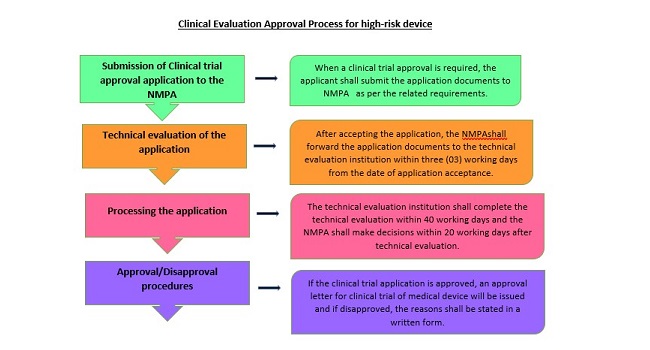
NMPA updates the medical device exemption catalog containing the list of class II and III medical device that are exempted from clinical trials. According to the requirements of the Good Clinical Practice (GCP) for medical devices, the clinical trial of medical devices shall be conducted within a qualified clinical trial institution. The production of samples used for clinical trials shall meet the relevant requirements of a Quality Management System (QMS) for medical devices and shall be filed with the NMPA of the province, autonomous region or municipality directly under the central government where the clinical trial sponsor is located. The local NMPA department that accepts the clinical trial filing shall inform the local NMPA department and the competent health department at the same level of the location of the clinical trial institution of the filing. If the clinical trial of class III medical devices has a high risk to human body, it shall be approved by NMPA under the State Council
Pre-and-Post market Requirements

Instead of focusing on only pre-and-post market requirements, the NMPA emphasizes the administration through the deviceโ€™s lifecycle. The NMPA is taking effective measures to monitor the deviceโ€™s performance after being placed on the market, like an adverse event monitoring system, annual periodic risk evaluation report, recalls, and frequent random quality inspections. Therefore, the legal manufacturer is responsible for the safety and effectiveness of the device during its entire lifecycle. The manufacturers are required to establish a QMS and ensure its effective operation and implementation of post-market surveillance and risk control plan, active adverse event monitoring and re-evaluation, establishment and implementation of the product tracing and recalling system.

NMPAโ€™s take on Digital Health

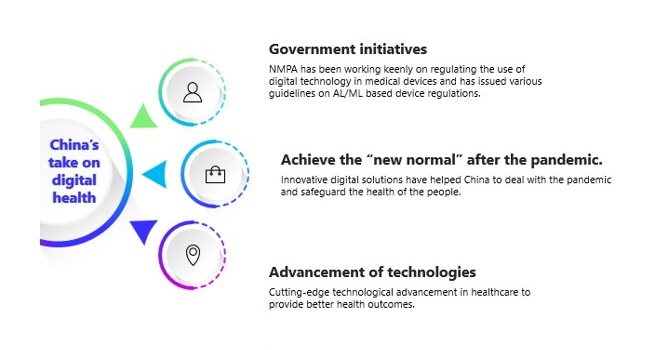
Covid-19 pandemic has fast-forwarded the spread and penetration of digital health technologies with China being in the forefront of this revolution. The adaption of digital health technologies of medical device sector in China is taking place rapidly with considerable changes happening in the regulatory landscape. The government initiatives, advancement of technologies and urge to achieve the โ€œnew normalโ€ after the pandemic are driving these swift changes.
Government initiatives for domestic manufacturers

Chinaโ€™s current contribution in the global device market share is about 20% and is attributed to the aging population, affordability, increased incidence of chronic diseases and lifestyle disorders that offers great opportunities for medical device manufacturers. To strengthen the domestic production of devices, the Chinese government has taken initiatives like setting up medical device industrial zones, rent reductions, settlement bonus or product registration bonus to help domestic manufacturers upscale their business. The Chinese government encourages hospitals to procure domestically produced devices. At present, majority of the domestic manufacturers are small-mid scale businesses manufacturing low value consumables and they dominate the mid-low-end device market. China is still largely dependent on imports for high-end devices. The governmentโ€™s โ€œMade in China 2025โ€ policy will strengthen the domestic manufacturing of high-end devices in China in coming years.

China device market post Covid 19

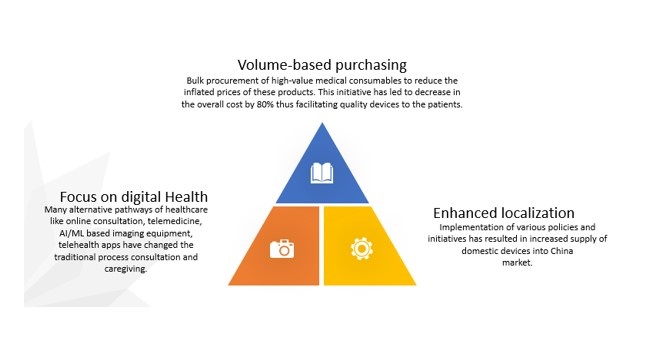
In the view of Covid-19, the Chinese government has taken some steep steps to bring the China medical device industry back to its pace. The government has now enabled three policies for the MedTech market that will ensure its smooth functioning:
China MedTech industry for foreign manufacturers

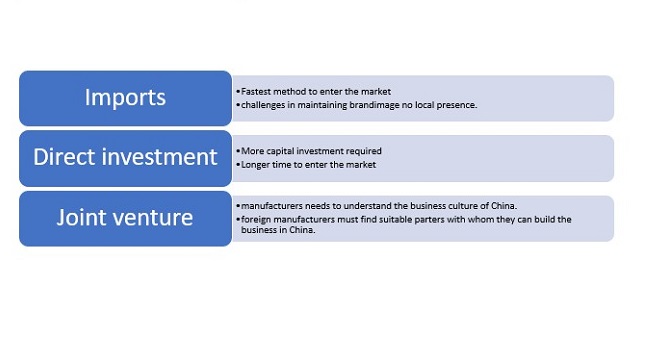
China is still greatly dependent on foreign manufacturers for high value devices. The foreign manufacturer to enter China market by three possible ways:
Future trends

With the increasing aging population, lifestyle changes, increased disposable income, China medical device market holds an important place in the global device industry. The stringent regulations ensure that safe and effective devices are available for use. The right regulatory strategy helps the device manufacturers to overcome the challenges and seize the market potential. Adoption of digital health is already in the forefront in China and will disrupt and dominate the global MedTech industry. In the coming years foreign manufacturers will have vast opportunities to enter the Chinese MedTech market owing to the regulatory and governmental reforms. With right entry approach they can capture a stake in this ever-growing market.

Conclusion

Chinaโ€™s medical device market is growing rapidly with accelerating technological transformation in medical devices, overall rising demand for healthcare reforms, increasing aging population, rising prevalence of chronic diseases, and heightened public health awareness. Simultaneously, the NMPA has laid down stringent regulations to ensure safe and effective medical devices are accessible. Therefore, medical device manufacturers willing to enter or expand their presence in China should consider and adopt the industry-specific regulations for a compliant market entry.


InterSystems Recognised as a Leader by Independent Research Firm in Translytical Data Platforms Evaluation

InterSystems, a creative data technology provider dedicated to helping customers solve the most critical scalability, interoperability and speed problems, today announced that Forrester has recognised theย InterSystems IRISยฎ data platform as a leader in The Forrester Waveโ„ข: Translytical Data Platforms, Q4 2022.

Forrester defines translytical data platforms as โ€œnext-generation data platforms that are built on a single database engine to support multiple data types and data models. They are designed to support transactional, operational and analytical workloads without sacrificing data integrity, performance and analytics scale.โ€

InterSystems considers real-time functionality critical for translytical platforms and a key component of smart data fabrics. This approach delivers insights to line of business users based on data and analytics in real time, equipping organisations to manage disruptions more quickly and identify new opportunities in an uncertain and ever-more competitive environment.

For its evaluation, Forrester rated vendors based on criteria across three categories: current offering, strategy and market presence. InterSystems received the highest possible score in these criteria: modelling/tools; extensibility (extending the platformโ€™s functionality); scalability; product vision (aligning with current and future needs of customers); execution roadmap; company performance, and number of engineers.

InterSystems IRISยฎ data platform enables organisations to rapidly develop, deploy and execute data-intensive analytic applications. By making it easier to build high-performance, machine learning-enabled applications that connect data and application silos, InterSystems IRIS simplifies architectures and powers the mission-critical applications todayโ€™s organisations need to solve difficult business problems quickly.

โ€œWe know businesses need faster time-to-insight to improve decision-making in a more competitive and volatile world,โ€ said Scott Gnau, Vice President, Data Platforms at InterSystems. โ€œInterSystems provides customers with new perspectives that come only from deep analysis of all theirย connectedย data.โ€

Through the creation of smart data fabric architectures, InterSystems IRIS enables organisations to make more intelligent decisions and achieve far better outcomes. Currently, a global investment bank with more than $1 trillion under management is using InterSystems IRIS to power its real-time multi-asset trading platform, improving reliability, scalability and cost effectiveness compared with its previous implementation. Thanks to InterSystems IRIS, the bank is also seeing a tenfold increase in performance, a 75% reduction in operating costs, and up to five times increased throughput.

InterSystems IRIS includes capabilities such asย InterSystems IRIS Adaptive Analytics for enabling business user self service,ย IntegratedMLย for citizen data science, and extreme performance for executing real-time analytics within programmatic workflows. Deployed across the globe, InterSystems IRIS is available on multiple public cloud marketplaces, including Amazon Web Services, Microsoft Azure and Google Cloud Platform.

To download The Forrester Waveโ„ข: Translytical Data Platforms, Q4 2022, clickย InterSystems.com/Wave.

Safecor Health Introduces SafecorLogics

Safecor Health announced SafecorLogics, a new program for health systems to reduce drug spend, build system-wide supply chain solutions and improve value-based care. SafecorLogics allows a health system to consolidate order volume across numerous hospitals and store packaged product in Safecor Healthโ€™s warehouses. Combined with Safecor Healthโ€™s drug spend analysis, SafecorLogics drives standardization and significant reduction in drug and packaging costs across multi-site and multi-state facilities.

โ€œEmpowering hospitals with services to help pharmacists gain more control, savings, efficiency and support has always been core to fulfilling Safecor Healthโ€™s mission of creating a better everyday life for health care professionals,โ€ said Steve Fischbach, CEO. โ€œWith SafecorLogics, hospitals now have the capability to achieve that at a system-level. They can warehouse and supply multiple locations from our platform, all driven by analyzing a systemโ€™s drug purchasing data.โ€

In addition to significant reductions in drug spend, one of the biggest benefits health systems can capture with SafecorLogics is reduced labor costs and improved employee satisfaction, a crucial benefit during an all-time-high in pharmacy technician staffing shortages.

โ€œStaffing shortages are nothing new to the pharmacy industry, but the demands on pharmacy staff since COVID-19 are more daunting than ever before,โ€ said Mark Leney, R.Ph., Senior Vice President of Sales & Marketing. โ€œSafecorLogics helps alleviate the strain felt by staffing shortages and allows health systems to reallocate resources and maximize operational efficiency across all of their hospitals.โ€

Backed by more than 40 years of expertise, SafecorLogics is the newest addition to a long line of products and services offered by Safecor Health, including unit-dose repackaging services for individual hospitals, a portfolio of commercial unit-dose products, and contract packaging services.

Aptamer Group announces new deals to support novel therapies and improved assays

Aptamer Group plc, the developer of novel Optimerยฎ binders to enable innovation in the life sciences industry, announces a selection of new contract wins where Optimer technology is being explored by partners to offer new strategies for therapeutics and potentially offer improved assay sensitivity and selectivity over antibodies.

Optimer binders are oligonucleotide-based affinity ligands generated through the in vitro Optimer platform, which can be used as antibody alternatives. They offer benefits of ethical compliance with no use of animals in discovery, development of manufacture, the ability to pursue new targets via 3 parallel discovery processes optimised for target type (small molecules, proteins and cells), and the screening against end-use application conditions and cross-reactive targets into the discovery process for improved binder performance.

โ€œToday I am pleased to report a selection of our new contract wins which have the potential for future downstream royalties and milestone payments.โ€ Commented Dr Arron Tolley, Chief Executive Officer of Aptamer Group.

โ€œFollowing the successful development and proof-of-concept of an Optimer to correct oncogenic splicing errors in Chronic Myelomonocytic Leukaemia (CMML) we have entered the second phase of our collaboration with Cancer Research UK to develop the delivery vehicle portion of the bispecific therapeutic Optimer binder for the treatment of CMML and other myeloid malignancies. This second Optimer binder will enable targeted delivery of the therapeutic molecule for improved efficacy.

โ€œWeโ€™ve also signed a new therapeutic deal to develop Optimers to block the activity of naturally occurring antibodies within the body for use as a potential therapy to prevent transplant rejection. The Optimer binders we generate may then support the development of a companion diagnostic panel, in addition to therapeutic use.

โ€œOur Aptamer Solutions business has also seen significant progress since our full year results, with numerous new projects underway. Since the publication of the Groupโ€™s full year results, we have signed deals with a number of companies related to the development of Optimer solutions for assays where antibodies are not meeting their specificity and selectivity requirements.

โ€œWe are working with a biomarker services company to develop Optimer binders to support multiplex biomarker assays for mass spectrometry analysis. The Optimer-based assays will deliver increased sensitivity in identifying and analysing neurodegenerative disease biomarkers to improve clinical trial outcomes in drug development.

โ€œFinally, weโ€™ve also signed a deal with Novavax, a vaccine developer for respiratory diseases, who require Optimers to improve the selectivity and enable multiplex analysis of their QC assays.

Medtronicโ€™s Next-Gen Evolutโ„ข FX TAVR System Shows Significant Improvement in Commissure Alignment in Real World Setting

Medtronicโ€™s newest generation self-expanding, transcatheter aortic valve replacement (TAVR) system, Evolutโ„ข FX, significantly improved commissure alignment during TAVR procedures compared to earlier generation Evolut systems. A late breaker presentation at PCR London Valves 2022 summarized the early limited market release experience with the Evolut FX system in 168 patients from six US centers. Additionally, these data were compared to 378 Evolut PRO+ patients from a single center.

Commissure alignment during TAVR procedures is a key factor for easier future coronary access, improved coronary blood flow and valve hemodynamic performance, and may facilitate redo-TAVR in the future. The next-generation Evolut FX system is refined with key enhancements including gold markers built into the frame to facilitate visualization of implant depth and valve commissure location during TAVR procedures. The system also employs a redesigned delivery system for greater trackability and flexibility during valve deployment.

โ€œIn this early experience the Evolut FX system provided several enhancements over the PRO+ system not only because of its easier trackability, but more importantly achieving a more symmetric deployment on release and improved commissural alignment with reduced coronary overlap. These features resulting in better procedural predictability and consistency in TAVR may be critical in low risk patients and broaden the adoption of TAVR to a wider populationโ€ said Gilbert Tang, MD, MSc, MBA., Surgical Director of the Structural Heart Program at Mount Sinai Health System, Professor in the Department of Cardiovascular Surgery at the Icahn School of Medicine at Mount Sinai and Principal Investigator. โ€œBy looking closely at data across multiple centers, weโ€™re able to demonstrate the procedural improvements of the FX system over its predecessors.โ€

In the multicenter retrospective analysis of 168 patients across six U.S. centers (89% treated for symptomatic, severe native aortic stenosis and 11% for prosthetic valve degeneration), commissural alignment was achieved in 95.8% of Evolut FX cases. The 30-day rates of death and stroke were 1.2% and 1.8%, respectively. Preliminary data of the Evolut FX system also showed low rates of mild (13.2%) and no moderate or severe paravalvular leak (PVL) 30 days after the procedure, with excellent hemodynamic performance similar to earlier generation CoreValve and Evolut devices.

In addition to improved commissural alignment with the Evolut FX system, the findings demonstrated reduced device recapture rates and more symmetric implant depths upon release, making the TAVR procedure with the FX platform simpler and more predictable than earlier generation systems in this early experience.

โ€œThis is an exciting milestone in the treatment of aortic stenosis,โ€ said Jeffrey Popma, M.D., vice president and chief medical officer for the Structural Heart & Aortic business, which is part of the Cardiovascular Portfolio at Medtronic. โ€œThese continued innovations will provide physicians with the key enhancements needed to improve precision and clinical experience. The preliminary real-world results from the Evolut FX system deliver on our goal to further enhance our TAVR platform to improve physician experience and optimize outcomes for patients.โ€

Aortic stenosis is a heart condition that occurs when the aortic valve narrows, preventing it from properly opening and closing, and causing the heart to work harder to pump blood to the rest of the body. This increased pressure within the heart causes the heart to weaken and function poorly. Severe aortic stenosis is a life-threatening condition that affects 3.4% of elderly people worldwide. As many as 50% of aortic stenosis patients with severe symptoms may die within one year without appropriate treatment.

What Will The Future of Healthcare System Be Like In 2023?

The word unusual may be the best way to sum up the past few years. The COVID-19 pandemic had a number of highly visible and severe effects. The burden placed on healthcare personnel has been extreme, and many have quit their jobs. Telephonic and video care are increasingly popular. Healthcare labour expenses have increased as a result of other, less evident effects, such as staff shortages and wage demands. Payers will be forced to search for alternative ways to cut costs, such as provider pay and pharmacy coverage, as a result of the need that they fund for COVID-related services. Healthcare expenditures seem to be transferring to consumers with greater speed.

As people look ahead to 2023 and consider what they can do to get ready, let us examine some of the most important ways in which the healthcare environment is changing for providers.

Drop in Independent Practices

Less small and independent medical practises are probably one of the effects of these shifts. Medical practises that are controlled by a non-physician institution, such as a hospital or business, are referred to as non-physician owned practises. Since the profits for private practises continue to decline, doctors own fewer practises while non-physician companies hold more. The healthcare system is still moving away from monetary value units and toward value-based treatment. Non-physician owned practises run the risk of isolating the persons who provide the services from the rewards of greater care quality and results at reduced costs. This may result in worse worker morale and a continued exodus from the badly needed direct care positions.

Healthcare at Home

The focus on home-based care is likely to have another effect. Big healthcare is placing a bet on the significance of home care, as evidenced by the recent multibillion-dollar acquisitions of home-based care businesses by Fortune 10 healthcare firms. Physicians supervising in-person care providers and using video seem like possible options because it is difficult to imagine paying a doctor to devote more than half of the day driving to see patients. How these tendencies develop will be heavily influenced by whether physicians enjoy spending their days in front of screens or managing extenders rather than seeing patients directly.

Encouraging Compatibility

Governmental organisations continue to promote access to healthcare data and compatibility on the technological front. These efforts are admirable in terms of their spirit and goal. By having a better understanding of their diseases, patients can better manage their own healthcare. Regardless of where the patient has gotten treatment, they want healthcare professionals to have a more complete picture of the patient. However, the already overburdened healthcare professionals will unavoidably bear a large portion of the load of meeting the new requirements. For instance, a provider may face fines of up to $1 million per incident if they engage in data blocking, which prevents patients from accessing their own health information.

Medical Staff Contentment

One trend that would be worthwhile to see in 2023, as per Auren Weinberg, MD, MBA, is a focus on healthcare staff satisfaction, the Quadruple Aim’s most commonly overlooked component. The Triple Aim (which initially comprised the objectives of promoting patient experience, enhancing public health, and lowering costs) was expanded to become the Quadruple Aim to include the objective of enhancing healthcare staff happiness.

While receiving a discount at the neighbourhood pizzeria for being a healthcare hero is good, neither a nurse nor a doctor will feel inspired to advocate behavioural change in an untreated diabetic. Making decisions for the team as a manager or administrator is quite alluring. However, for healthcare to truly develop, those working in the field must be heard, listened to, appreciated, and given the opportunity to influence key choices. If not, exceptional healthcare providers will continue to leave the field, making it even more difficult to find them.

Supporting Provider Practices of the Present for a Better Future

At Veradigm, they think it’s important to meet the demands of today’s healthcare provider practises so they can thrive in the future. In order to support the development of independent medical practises, they work with their clients to help them adopt technologies and services. They are aware that clinics need an adaptable and extensible revenue cycle and practise management systems if they are to succeed financially.

Through more effective and efficient workflows, the Veradigm Network’s robust and user-friendly array of interconnected solutions helps practises improve their financial results and reduce their administrative burden.

40% More People Signed Up For ACA In 2022 Than Last Year

The number of new participants who have subscribed for health insurance on HealthCare.gov is up nearly 40% compared to the same period last year, according to the White House. Four out of five people are eligible for coverage for $10 or less, according to U.S. Department of Health and Human Services Secretary Xavier Becerra, who termed it a solid start.

The national uninsured rate, which HHS claimed had fallen to an all-time low this year, goes hand in hand with the enrolment figures.

The administration has made gaining access to health insurance and bringing down medical expenses a priority. The Affordable Care Act’s open enrolment period started on November 1. The deadline to sign up for coverage or make changes for coverage that begins on January 1, 2023, is December 15.

Xavier Becerra recently praised the advantages of the August-passed Inflation Reduction Act in removing more people from the uninsured list and putting them on coverage under the Affordable Care Act. A day before open enrolment, HHS marked the ACA’s ten-year anniversary.

The United States has an 8% uninsured rate, which, while still high, is at an all-time low. Since 2020, there has been a 53% increase in Latino enrolment and a 49% increase in black enrolment. The extension of tax subsidies under the Inflation Reduction Act has kept expenses for consumers down.

According to HHS, 13 million Americans will stand to save an aggregate of $800 annually on their health insurance. After subsidies, four out of every five users will be able to select a plan for $10 or less. A record-breaking 14.5 million individuals, including over six million new enrollees, signed up for healthcare coverage through the marketplaces last year. 92% of participants will have three or more insurance company options to choose from when looking for coverage for plan year 2023, according to CMS.

Additionally, fresh standardised plan alternatives with the same deductibles, cost-sharing for specific benefits, and out-of-pocket maximums as existing standardised plan options in the same health plan category will be accessible in 2023. Many of these pre-deductible services are included in the majority of these standard plan options, including primary care, preferred brand and generic medications, emergency treatment, specialist visits, outpatient mental health and substance use appointments, as well as speech, occupational, and physical therapy.

An administrative rule that will assist approximately one million Americans who are granted employer insurance in either obtaining coverage or seeing their insurance become cheaper through the marketplace was completed earlier in November.

As Upcoding Gets Publicity, HHS Looks At MA Risk Adjustment

Despite complaints about its delay, HHS officials claimed at HLTH that the department is considering ways to stop the Medicare Advantage program’s rampant fraud, which is costing the government billions of dollars annually.

According to HHS Secretary Xavier Becerra, HHS is considering public input on how to enhance MA, including methods for reducing fraud and abuse, and intends to develop rules based on the available data. This might require altering the formulas for risk adjustment. According to some, the industry is upcoding services in order to receive higher Medicare reimbursements. Many people have investigated this, according to Becerra. They are gathering public feedback from people and cleaning up those remarks to look at that. But it’s one of those things where they want to keep the Medicare programme from getting worse.

In Massachusetts, the government gives commercial insurers set fees to oversee member care. These rates rise as patients’ illnesses worsen. Due to the upcoding process, which encourages payers to categorise patients at higher acuity levels, MA spending has skyrocketed despite the fact that the programme was initially created to reduce government spending while enhancing the quality of Medicaid programs.

In response to the overbilling, the CMS might lower insurers’ rates, but it hasn’t done so and instead raised MA payments by 5% for 2023. Additionally, a regulation proposed by the Trump administration that would enable the CMS to apply penalties for overbilling to all of a plan’s consumers has not yet been approved.

According to Becerra, the HHS is still working on the issue of how regulators determine patient risk and, consequently, the degree of reimbursement for providers. They will make sure the risk adjustment formulae take into account the real care being supplied and pay for that treatment, not for care that wasn’t provided that costs more, Becerra added.

The MA program’s top insurers, including UnitedHealth, Humana, Elevance, and Kaiser Permanente, have been sued for false coding. Payers have, however, kept expanding their MA offers and investing in growing their programme rolls. Estimates of how much the government is spending on the extra diagnoses differ. In 2020, according to estimates from the Congressional advisory group MedPAC and another piece of study, there were overpayments totaling $12 billion.

The deception has added to growing concerns about Medicare’s long-term viability as America’s population gets older at a faster rate. Researchers and lawmakers have identified MA reforms as one important area to cut wasteful spending, and members of the House and Senate have called for tighter control of the programme due to concerns about, among other things, the adequacy of coverage provided.

Amid concerns over deceptive marketing tactics used to promote the plans, Senate Democratsย called for increased consumer protections in Massachusetts.

The CMS released its request for data on ways to enhance MA in August 2022.

There were over 3,900 responses to the CMS. Meena Seshamani, Medicare lead at the CMS, stated recently at HLTH that they had a very strong reaction, not only to that inquiry for information but also to the interactions that have transpired after that.

Despite the program’s shortcomings, HHS officials reaffirmed their support for MA as a whole, particularly given how rapidly it is expanding. Most Medicare-eligible seniors are anticipated to reside in Massachusetts by 2023. Becerra added that they will see where they end up. But they have to make sure that the taxpayers aren’t being overcharged for the service that they received,

Medicare Advantage Audits Uncover Millions In Overbilling

According to Kaiser Health News, federal audits published last week revealed rampant overcharging and other mistakes in payouts to Medicare Advantage health plans for the elderly, with some plans overcharging the government by an average of more than $1,000 per patient annually.

Although the actual losses to taxpayers are probably much higher, the government’s audits, which looked at billings from 2011 through 2013 and are the most current assessments to be finished, found roughly $12 million in net overpayments for the services of 18,090 patients tested. Major insurance firms are principally in charge of running Medicare Advantage, a rapidly expanding alternative to basic Medicare.

In order to recover an estimated $650 million, officials at the Centers for Medicare and Medicaid Services have stated that they intend to extrapolate the payment mistake rates from those samples across the whole membership of each plan. But it hasn’t happened even after over ten years. CMS delayed announcing a definitive extrapolation rule until February, even though it was scheduled to do so on November 1.

The only audits that CMS has finished in the past ten years, during which Medicare Advantage has experienced a rapid expansion, are the 90 audits. According to KHN, the government spent $427 billion on the plans over that time, with enrolment exceeding 28 million in 2022.

According to government statistics, 71 of the 90 audits found net overpayments, which on average exceeded $1,000 per patient in 23 audits. In 10 out of 11 audits, Humana, one of the biggest Medicare Advantage sponsors, had overpayments that were greater than the $1,000 average.

The other plans received insufficient average CMS payments, ranging from $8 to $773 for each patient.

When a patient’s records don’t show that they had the sickness that the government paid the health plan to treat or when medical reviewers determine that the ailment is not as serious as claimed, auditors raise the red flag. Throughout the course of the three years, 20% of the medical illnesses reviewed experienced this on average; the research notes that rates of unexplained disorders were higher in some plans.

The majority of the audited plans belonged to the high-coding intensity group, as described by CMS. In order to get more money for patients they claimed were sicker than normal, they were among the most aggressive. A risk score methodology that the government uses to determine how much to pay health plans is meant to result in higher charges for sicker individuals and lower prices for healthier ones. But frequently, the medical information provided by the health plans fell short of substantiating such assertions. According to KHN, unsupported conditions included everything from diabetes to congestive heart disease.

According to CMS statistics, Touchstone Health HMO, a New York health plan whose agreement was cancelled by mutual consent in 2015, was responsible for the majority of the average overpayments to health plans, which varied from a low of $10 to a high of $5,888 per patient.

When the rates are extrapolated, the majority of the inspected health plans had 10,000 subscribers or more, which significantly increases the overpayment amount. Total overpayments to the plans were $22.5 million, but these were balanced by underpayments of $10.5 million. An annual sample of 30 contracts out of all 1,000 Medicare Advantage contracts in the country is examined by auditors. 26 of the 90 contract audits conducted over the course of the three years were on UnitedHealthcare and Humana, the two largest Medicare Advantage insurers. While seven other audits of UnitedHealthcare plans discovered underpayments by the government, eight of them found overpayments.

Despite being decades old, the 90 audits’ findings are consistent with more current government studies and whistle-blower lawsuits that claim Medicare Advantage plans systematically manipulate patient risk estimates to overpay the government by billions of dollars.

According to a Brookings Institution investigation, UnitedHealthcare, Humana, Aetna, Kaiser Permanente, and Anthem (now Elevance), five of the nation’s largest insurers, are reportedly padding their bottom lines by misrepresenting earnings as expenses. According to the research, insurers can get away with this since the standards for the medical loss ratio (MLR) do not apply to profits made through affiliated enterprises. The survey showed that spending on associated businesses can occasionally exceed 70%.

The top five businesses are involved in similar industries, including post-acute services, hospitals, medical practises, and pharmaceutical benefit managers. The research stated that in each instance, the pricing paid to the MA plan can have a considerable impact on where revenues and costs appear. This opens up the possibility of shifting earnings outside the scope of the rules.

The MA payment structure gives plans various opportunities to make money, with payments to MA plans expected to total $350 billion in 2021.

According to the paper, “the conclusion is that associated firms create a chance for pricing methods within the parent company umbrella that can shelter profits from the conditions of MLR laws for the health plans serving the majority of MA beneficiaries. It is still unclear to what extent parent corporations participate in such activities.

Translate ยป