






Close
Digital Health & Ai Innovation summit 2026
Medical Taiwan 2026

A Complete Guide On How To Become A Life Coach

A Complete Guide On How To Become A Life Coach

Do you ever wonder why there are so many books out there in the world? It is pretty fascinating to think how many pieces of information we try to convey to each other. The dependency on this information storing and sharing can be best seen in multiple examples. For example, the burning of the library in Alexandria was one of the most devastating events in history. There were scripts for the first steam engine there, imagine where we would be without such a setback.

Not only are such scientific scripts important for us, but equally important are great life works of many people. We can never bring ourselves to absorb that much information that lies in this great world. That is all the more reason why we sometimes need guidance from a person that knows more than us. This is where life coaches come to shine and help out people when they need it most.

Certification

Learning how to be a life coach is one thing but using that knowledge is another thing. In order to get to use your skills and abilities as a life coach, you need people who will hire you. It is recommended that you become a certified life coach according to experts over at WeTrainLifeCoaches so that you can prove your knowledge to your employers and clients. There are many schools out there that will help you become a certified life coach.

It is always recommended no matter the profession to learn a thing or two in advance of your job. Education is what gives you a better insight into what to expect from a certain profession, and life coaching education is no different. Getting certified will help you avoid many mistakes that beginners make. You will get a much better glimpse of what working with people as a life coach will really look like.

Being introspective

In order to become a life coach, you first need to learn how to life coach yourself. Of course, there are many people out there that are able to help other people but can not do the same themselves. This is quite unfortunate because such people bring many goods to the world yet very few goods for themselves. In order to strive as a life coach, you will need to learn how to help yourself because being a coach is different than just giving advice.

A coach is someone who proves their successful techniques through their own success. This is why it is very important to be certain that the techniques you use work on yourself. Through introspection, you are much better off at helping people who are in the same or similar situations as you are. With good introspection, you will develop a great subset of skills when it comes to deducing a problem someone has.

Everyone is different

Once you do figure out your inner ins and outs, you must understand that it is not the same for everyone else. Just because you managed to do something successfully in one set of circumstances does not mean it will be the same in other circumstances. That is why you need to know who your target clients are, the people who can relate to you. You can help people that have different problems but do not expect that the same techniques will work.

Talking with other people

Before becoming a good life coach you need to see many different life experiences. In order to see what this world has to offer, you need to talk with other people and see their perspectives. This is the key thing for life coaching because your goal is to work with other people.

When talking with other people, it is very important to ask questions about their own perspectives. You need to be open to hearing these stories and not limit yourself to your own perspective. You can also hear different stories from books, but direct conversation is much better.

The profession of being a life coach gets ridiculed often, unfortunately. This is because many people do not realize what this job is, both life coaches and other people. Being a life coach is having someone to guide you through life in times of great uncertainty. Think Alexander the Great and his relationship with Aristotle, did he not coach him in the toughest of times?

Aristotle was some sort of a life coach to Alexander the Great and look what he managed to do. We as people are dependent on each other and the information that we share. It is very important to find this sort of figure in your life when you are in doubt about this very uncertain world.


Traumatic Brain Injury Settlements: 7 Things You Should Know

Traumatic Brain Injury Settlements: 7 Things You Should Know

Traumatic brain injuries (TBI) are a type of head injury that can range in severity from a mild concussion to a life-threatening injury. TBI can be caused by a fall, a car accident, or a sports-related injury. The process of settling a TBI claim can be complex, and there are 7 key things you should know about it.

1. Can You Sue?

Not every traumatic brain injury can give you cause to sue, but in some cases, you may be able to file a lawsuit. It will also depend on the state laws you’re in. That said, the baseline for getting a mild traumatic brain injury settlement in California is pretty much the same as it would be in any other state – there needs to be negligence on someone’s part. Whether that’s the nurse, the doctor, the hospital, or whoever else may have been negligent in your injury will depend on the specific case. Negligence means that there are other things that could’ve been done, but the medical professional didn’t do it, even though they had the responsibility to do so.

2. Acting Early Is Important

One of the most important things to remember about traumatic brain injury settlements is that you need to act fast. As with any other medical injury, you will heal over time, and that will make it harder to prove the extent of your injuries and the consequences you suffered due to a doctor acting negligently while treating you. This can be especially important in the case of a mild TBI – commonly known as a concussion because oftentimes this sort of injury is almost invisible from the outside which makes it harder to prove it in court. Second, as time goes on, you may forget key details about your accident or what happened to you while you were recovering. This can make it difficult to prove negligence later on if your case goes to court.

3. Expert Testimony

Simply saying you didn’t get adequate treatment isn’t enough. You need to prove that the doctor treating you didn’t act according to standards and that they failed to take the steps they reasonably should’ve known are needed in order to treat a TBI. This is where expert testimony comes in. You’ll need an expert witness – usually, a doctor who specializes in brain injuries – to testify on your behalf that the defendant’s negligence resulted in your injury. This takes the case out of the hands of laypeople and puts it in the realm of medical professionals, which can be helpful in swaying a jury.

4. Direct Cause

After proving that the doctor or another medical staff member was negligent, you then need to show that their negligence directly contributed to your injury. This can be difficult to do, but not impossible. There are a few ways to do this. As already mentioned, the key here is to have an expert witness testifying on your behalf. They will be able to say that, given the circumstances, it was reasonable to believe that the defendant’s negligence resulted in your injury. You can also use medical records to show a timeline of events and how your injury progressed. This can help to demonstrate that the defendant’s negligence was a direct cause of your injury.

5. The Settlement Process

The actual settlement process can take quite some time, and it often doesn’t happen until after the case has gone to court. This is because the defendant’s legal team will often try to delay things as much as possible in the hopes that you’ll give up and go away. You need to make a claim as soon as possible after the injury has occurred, and you need to be prepared for a long battle. Reaching a settlement outside of court is always easier if you’re willing to take it to trial – and that threat seems much more realistic if you have proper legal representation.

6. Damages

When it comes to damages, you can usually expect to receive compensation for your medical costs, both current and future, as well as any income you’ve lost due to the injury. You may also be able to recover damages for things like pain and suffering, emotional distress, and loss of consortium (if you’re married).ย  Gathering evidence and building a case can be difficult, but if you’re successful, you could receive a large settlement that will help you get back on your feet. Remember to keep all receipts and records of any expenses related to your injury, as you’ll need them to make your case.

7. The Statute of Limitations

Finally, it’s important to be aware of the statute of limitations in your state. This is the amount of time you have to file a lawsuit after an injury has occurred. In most states, this is around two years, but it can vary depending on the circumstances of your case. While two years is often enough time to make a medical malpractice claim, it’s always better to make the claim as soon as possible. It’s also important to note that the injured person isn’t the only one that can do this. A spouse or a close family member can do so in their name when the injuries make it impossible for the injured person to do so themselves.

If you’ve been injured in an accident and think you may have a case, it’s important to seek legal representation right away. The process of filing a lawsuit and reaching a settlement can be complicated, but with the help of a good lawyer, you can get the money you need to move on with your life.

What are the Most Common Hospital Negligence Claims?

What are the Most Common Hospital Negligence Claims?

The NHS has been suffered renewed scrutiny in recent months, with the revelation that it spends more than ยฃ4 billion annually in legal fees to settle outstanding negligence claims. There are many reasons for the increased bill, from complications brought on by the coronavirus pandemic to high-profile cases with an unusually high pay-out. Medical negligence is an unfortunate by-product of a stretched healthcare service, though it can be experienced in both public and private systems. But which are the most kinds of negligence claim?

Misdiagnosis

One of the most frequent causes for medical negligence claims comes in the form of misdiagnosis. A doctor or professional may misinterpret symptoms or the results of testing, and give an inaccurate diagnosis or even miss a diagnosis entirely. The effects of misdiagnosis can be catastrophic, as the underlying condition goes effectively untreated. In the worst-case scenarios, quality of life can be irrevocably affected, as can patient prognoses.

Surgical Errors

Surgical errors are another common area in which hospital negligence claims are made. With millions of surgical admissions each year, for a wide variety of conditions and procedures, surgical negligence is an incredibly wide field. Surgical negligence can encompass failures in duty of care pre-operation, errors in anaesthesia, or mistakes made by surgeons during an operation. Despite the breadth and volume of procedures, surgical negligence is only common by virtue of high-profile successful claims, which amount to some of the largest individual compensation pay-outs.

GP Errors

GP negligence is the kind of negligence that the average citizen is most likely to experience, given that GPs are their most common point of contact in healthcare. GPs can make errors in a number of ways, but negligence claims against them tend to be as a result of errors in prescription โ€“ that is, the over-prescription of medication, or the mis-prescription of medicines inappropriate for a condition or patient situation. A patient might be prescribed a drug that interacts poorly with an pre-existing prescription, resulting in undue and unnecessary discomfort, and sometimes long-lasting conditions.

Maternity

Maternity is the single largest field for clinical negligence claims, amounting to 70% of the cost of harm paid out by NHS Resolution in the 2019-20 period. Not only are there numerous ways a pregnancy and birth can go wrong, but those suffering negligence during delivery are more likely to register a claim. Some key areas that negligence claims cover include injuries to new-borns caused by poor handling โ€“ where deformation of the head can result in facial nerve damage, or oxygen starvation during delivery can result in Hypoxic Ischemic Encephalopathy (HIE).

Manatt, NYU Collaborate in Launching First-of-Kind Program for Next-Gen Healthcare Leaders

Manatt, Phelps & Phillips, LLP, a multidisciplinary, integrated professional services firm, announced its collaboration with NYU School of Law and NYU Robert F. Wagner Graduate School of Public Service to support the Universityโ€™s recently established MS in Health Law and Strategy (MS HLS) program. The Firmโ€™s work with NYU includes supporting the development of the programโ€™s curriculum and Manattโ€™s delivery of a three-credit course titled Health Law and Regulation.

The MS HLS program is a 30-credit, one-year program for professionals with eight or more years of health-related experience (legal training is not required). Its goal is to equip emerging leaders with the interdisciplinary lens and critical skills needed to thrive in the highly regulated and innovative healthcare landscape by providing them with the ability to analyze, navigate, and lead organizations through industry transformation. It is the only graduate degree program for professionals that integrates and leverages the expertise, resources, and professional networks of a leading law school and a leading school of public service.

โ€œManattโ€™s industry-leading, integrated legal and consulting approach makes us a natural partner to support this exciting new program with the prestigious NYU, which will provide real-world perspectives across almost all corners of the industry,โ€ said Donna L. Wilson, CEO and Managing Partner at Manatt. โ€œWeโ€™re thrilled to collaborate with NYU to prepare the next generation of healthcare leaders as they navigate and innovate the critical imperatives that are driving our healthcare system and advancing health equity.โ€

โ€œWith its deep roster of leading professionals in healthcare, Manatt brings invaluable expertise to the field, and we are very pleased to be collaborating with them in our MS HLS program,โ€ said NYU Law Dean Trevor Morrison.

โ€œNYU is collaborating with Manatt to combine the rigor of top academic institutions with the strategic mindset of a leading professional firm in the health sector,โ€ said NYU Law Professor of Practice Charles Klippel, co-faculty director of the MS HLS program. โ€œThis combination of legal excellence, public policy acumen, and business savvy will prepare leaders to thrive in the rapidly evolving health industry of the future.โ€

โ€œAs a graduate school of public service with programs in health policy and management, NYU Wagner is pleased to partner with Manatt and NYU Law to prepare students to make a positive and lasting impact in the healthcare sector,โ€ said Sherry Glied, Dean and Professor of Public Service, NYU Wagner.

As part of the broader MS HLS program, Manatt will be offering the 16-week Health Law and Regulation course that will explore the legal and associated operational and ethical issues healthcare professionals encounter in the U.S. healthcare system. This class will be led each week by various Manatt Health lawyers and consultants who hail from all corners of the industryโ€”including the public and private sectorsโ€”as well as professionals from former hospital CEOs to the former deputy administrator at the Centers for Medicare & Medicaid Services and director of the Center for Medicaid and CHIP Services. Students will analyze and explore industry-defining topics by engaging in interactive discussions and informative research. Students will also explore how healthcare regulation may help or hinder three major health policy goals: increasing access to, reducing the cost of, and improving quality in healthcare.

โ€œHealthcare today is like a Rubikโ€™s Cubeโ€”its aspects seemingly impossible to align,โ€ said Manatt Health Leader Bill Bernstein. โ€œTo imagine a future that isnโ€™t bound by conflicting financial incentives and regulatory schemes, tomorrowโ€™s leaders must not only study the past but master the strategy, law, policy and technology that will enable them to innovate a different path.โ€

As a first look at some of the key topics that will be covered in the groundbreaking MS HLS program, Manatt, NYU School of Law, and NYU Robert F. Wagner Graduate School of Public Service will host a webinar titled โ€œLevers of Change: Remapping the Health Care Landscapeโ€ on Wednesday, March 9, 2022. During this session, a panel of thought leadersโ€”many of whom will lead Health Law and Regulation course discussionsโ€”will review how the Biden administration is working to reimagine our healthcare system and look ahead at how new policies, programs and priorities could impact healthcare stakeholders.

Bayer launches KSA’s first digital platform for pulmonary hypertension management

Bayer has announced the launch of Saudi Arabiaโ€™s first digital hub for the management of pulmonary hypertension (PH), built to address gaps in diagnosis and treatment caused by the COVID-19 pandemic. The announcement was made at the SAPH 15th annual conference.

Representing a collaboration between Bayer and the Saudi Association for Pulmonary Hypertension (SAPH), the AAN digital hub seeks to enhance PH treatment by facilitating virtual referrals and knowledge exchange between experts, physicians, and patients.

Pulmonary hypertension (PH) is a severe, progressive, and life-threatening disorder of the lungs and heart in which the blood pressure in the pulmonary arteries is above normal often leading to heart failure and death. Patients develop high blood pressure in the arteries of the lungs, which causes breathlessness, fatigue and hinders their ability to work and carry out everyday activities, such as walking short distances or climbing stairs. PH can affect people of all ages, including children, though its prevalence can increase up to 10% in individuals aged more than 65 years[1].

Commenting on the significance of this launch Hussein El Hakim, Managing Director & Commercial Area Head Pharmaceuticals Division for Bayer in Saudi Arabia, said, “At Bayer, our sole purpose is to improve the lives of people and we believe that the digital transformation in healthcare affords us the opportunity to do just that for PH patients in the Kingdom. By having a centralized hub for awareness, consultation, and referral, we can not only improve the day-to-day management of PH but increase prevention through early diagnosis and frequent checks among patients. We look forward to continuing our support for healthcare innovation in the Kingdom of Saudi Arabia as it comes closer to fulfilling Vision 2030.โ€

Dr Abdullah Aldalaan, President, SAPH said, โ€œWith the management of the COVID-19 pandemic taking precedence, pulmonologists have been challenged in reaching PH patients and delivering the diagnostic and treatment capabilities they need. This called for a digital-first solution that can adapt to todayโ€™s needs while aligning with the National Health Transformation Program. With the countryโ€™s first digital hub for PH treatment, we seek to remotely address these challenges, close the gap between patients and practitioners, and enhance PH management as a whole in Saudi Arabia.โ€

Following a meeting of experts to discuss the future of PH treatment in the Kingdom, Bayer worked closely with SAPH to develop the countryโ€™s first digital solution that offers two dedicated interfaces for patients and healthcare professionals. The AAN Digital Hub will give patients access to virtual clinics with dedicated experts and nurses as well as a repository of knowledge to strengthen disease awareness. Medical staff, in turn, will have easier access to expert referrals, a detailed registry of PH patients in KSA, and an easy-to-use platform to manage individual cases.

The AAN Digital Hub, which will be downloadable for free on iOS and Android, was officially launched at the 15th Annual Conference of the Saudi Association for Pulmonary Hypertension (SAPH), where it was introduced to healthcare professionals in attendance. To protect patient privacy, healthcare professionals will create individual accounts for their patients using unique IDs that will be required to access the app. Patients will be able to access the platform during the appโ€™s next phase which is slated for April to May 2022.

About Bayer
Bayer is a global enterprise with core competencies in the life science fields of health care and nutrition. Its products and services are designed to help people and planet thrive by supporting efforts to master the major challenges presented by a growing and aging global population. Bayer is committed to drive sustainable development and generate a positive impact with its businesses. At the same time, the Group aims to increase its earning power and create value through innovation and growth. The Bayer brand stands for trust, reliability and quality throughout the world. In fiscal 2020, the Group employed around 100,000 people and had sales of 41.4 billion euros. R&D expenses before special items amounted to 4.9 billion euros.

WellSky to Acquire TapCloud to Bolster Patient Engagement Technology That Improves the Patient Experience and Lowers Costs

WellSky to Acquire TapCloud to Bolster Patient Engagement Technology That Improves the Patient Experience and Lowers Costs

WellSky, a global health and community care technology company, announced that it intends to acquire TapCloud, a virtual patient engagement technology company that helps patients, caregivers, and clinicians communicate crucial information in real-time to achieve better health outcomes.

Frequent communication between patients, clinicians, and payers is critical to providing quality care and delivering on value-based care. TapCloudโ€™s interoperable, AI-driven platform provides real-time, patient-generated insights, enabling providers to deploy care interventions aimed at reducing preventable hospital readmissions and emergency care.

โ€œWellSky is connecting every part of health and community care, and TapCloud represents a significant addition to our suite of solutions. By adding these robust capabilities, WellSky will further extend our position as the leading technology and analytics partner across the continuum,โ€ said Bill Miller, CEO of WellSky. โ€œTogether, WellSky and TapCloud will enable providers to make evidence-based decisions, powered by actionable analytics. With this new level of patient visibility, our clients can achieve better outcomes, lower costs, and ultimately, succeed in value-based care.โ€

Using TapCloudโ€™s EHR-agnostic patented technology, patients can share their symptoms and other pertinent data with providers using virtual visit technology, secure messaging, and remote symptom screening protocols. The combination of TapCloudโ€™s user-friendly technology and WellSkyโ€™s deep experience in predictive analytics opens new possibilities for providers and payers as they seek to increase collaboration and better coordinate care.

โ€œTapCloud has worked tirelessly to close the communication gap between patients and providers through the use of data and technology. With WellSky, we gain access to a larger network and increased investment, which will broaden our reach and allow even more patients and families to be active participants in their care journeys,โ€ said Phil Traylor, CEO of TapCloud. โ€œTogether, we are well-positioned to expand the ways we can help our clients be successful, no matter which EHR platform they use. Iโ€™m excited to see how we will innovate together.โ€

WellSky will integrate TapCloudโ€™s platform into its healthcare technology solutions that more than 5 million caregivers use each day. Over time, WellSky will?expand its extensive clinical dataset to include TapCloudโ€™s patient-generated data, enabling the?development of?new models that allow providers, payers, and other risk-bearing entities to?better?predict patient risk factors and deploy interventions.

The transaction is subject to customary closing conditions and is expected to close shortly.

PayGround Expands into Digital Health Markets

Verizon Business launches BlueJeans Telehealth for better connected health

PayGround, a fintech company, can now serve as a payment API (application programming interface) to enable secure ecommerce across a wide range of healthcare-related businesses. These secure transactions are empowered by the company’s iFrame.

PayGround’s iFrame technology allows any healthcare provider to seamlessly present their patients’ outstanding balances and collect payments using PayGround. The iFrame can be embedded directly into the provider’s workflow and delivers a robust solution in processing credit card and ACH transactions without compromising security and user experience.

Safe and secure payment integration in the complex healthcare segment has been difficult to achieve, but substantial growth in the digital health market in the last three years has led to new solutions as investors discover the value of healthtech. In fact, the first half of 2020 saw a record $5.4 billion in venture funding as well as advances in virtual care delivery like telehealth and remote monitoring.

With a partner like PayGround who understands these complexities and relationships, payments can easily be integrated back into the billing system via the iFrame solution while protecting patient health and identifiable information.

“PayGround can now serve the ever-growing digital health space,” says PayGround Director of Product Stephanie Hanson. “We’ve seen throughout the COVID-19 pandemic, healthcare delivery has moved considerably virtual. Telehealth, wearable health tech, personalized medicine and mobile health are here to stay โ€” and all need a healthcare-specific payment partner.”

Integrating PayGround with an EHR/PM system enables providers’ offices to accept payment at the point of care and immediately and automatically post the payment to the patient’s account โ€” a process that is typically a manual one.

In addition, patients can pay through the PayGround website or mobile app. Because payments are automatically posted and tracked at the encounter level, medical providers save staff time โ€” up to three full days per month โ€” that was previously spent manually managing and posting payments.

Connecting to PayGround offers easy access to a robust payment solution that can be embedded within a company’s platform with minimal effort. PayGround can accelerate an organization’s time to market with the partners it currently supports, and potentially expand its offerings with billing solutions it’s not yet integrated with.

We know for PayGround to become the digital wallet for healthcare, our solution must be omnichannel to reach consumers at scale,” says PayGround CEO Drew Mercer. “That’s why we’re excited to bring the power of PayGround’s platform beyond the ambulatory and acute provider markets, to now be the embedded payment solution for any organization delivering patient care.”

About PayGround
PayGround is a financial marketplace โ€” allowing providers to collect all patient payments in one platform, while enabling patients and their dependents to manage bills from across all providers in one place. PayGround removes the financial complexities of the provider/patient relationship by leveraging modernized tools โ€” allowing everyone to focus on more important things. Welcome to PayGround, healthcare’s first digital wallet.


Kurin, Inc. Announces Launch of Its Proprietary Push-button Needle System

Kurin, Inc. Announces Launch of Its Proprietary Push-button Needle System

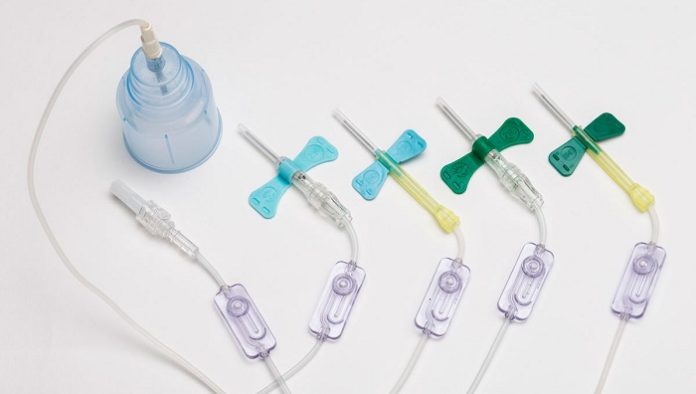
Kurin, Inc., the inventor and manufacturer of the Kurinยฎ blood culture collection sets announced that they have commenced the commercial launch of their push-button needle, to be used as part of Kurin blood culture sets. The Advance Safety Needle System was tested in 2021 and is now being sold into accounts using Kurin.

โ€œWe are proud to commercialize the Advance Safety Needle, as there has been market demand for alternatives and improvements in this space,โ€ said Bob Rogers, CEO of Kurin, Inc. โ€œWe are pleased with our field trials performed over the past several months. In addition to the positive feedback that we received, our testing shows improved performance characteristics compared to traditional, retraction-oriented products. The development of the Advance Needle is an important milestone for Kurin, providing us a more reliable supply of product, better cost control, the opportunity to offer improved benefits over current needles, and creates new strategic opportunities in which we are already engaged.โ€

Kurinโ€™s revolutionary approach to the contaminated blood culture problem is an elegantly simple, intuitive design that requires no additional user steps. Kurin passively sidelines potential contaminants during blood culture collection. Kurin is a simply better and more sustainable approach over conventional mechanical diversion. Contaminated blood cultures are a significant problem, as roughly one-third of the positive results are wrong, exposing these patients to unnecessary antibiotics, extending hospital stays and impacting larger community health issues, such as antimicrobial resistance and the life-threatening C. diff. infection.

About Kurin, Inc.

Kurin, Inc., a certified Minority Business Enterprise (MBE), is focused on the design, development, manufacture, marketing, and sale of products that help healthcare providers reduce contaminated blood cultures. Kurin, manufactured in San Diego, CA, has received FDA 510(k) market clearance.

Noninvasix Receives FDA Breakthrough Device Designation for Non-Invasive Monitoring Technology for Sepsis

Noninvasix Receives FDA Breakthrough Device Designation for Non-Invasive Monitoring Technology for Sepsis

Noninvasix announced that its LIVOx Central Venous Oxygenation Monitor has received Breakthrough Device Designation from the U.S. FDA for non-invasive, real-time, continuous or spot monitoring of central venous oxygen saturation (ScvO2) in adults at risk of septic shock.

In the U.S., 1.7 million adults are affected by sepsis annually, resulting in nearly 270,000 deaths.1 Global tissue hypoxia (abnormally low oxygen) is an important indicator of septic shock, and its prompt recognition allows immediate therapeutic interventions and can reduce severe adverse outcomes, such as multisystem organ failure and death.

โ€œThe Breakthrough Device Designation validates the companyโ€™s focus to monitor patients with sepsis by measuring central venous oxygenation non-invasively, addressing a serious unmet need in healthcare,โ€ said David J. Giarracco, Noninvasix CEO. โ€œMeasuring ScvO2 non-invasively will open new paths to more efficient and earlier diagnosis of septic shock, enabling better patient care and reducing healthcare costs. This milestone marks the beginning of future developments, enhancements, and evidence to expand the use and clinical impact of our technology into other indications and settings. We are dedicated to making a difference in a major issue in healthcare.โ€

Noninvasix will be the first company to non-invasively monitor sepsis by detecting the key indicator of septic shock as early as possible so it can be treated to reduce complications and save lives. The LIVOx Central Venous Oxygenation Monitor can provide for a more effective diagnosis of this life-threatening condition.

โ€œSepsis continues to be a serious condition, affecting millions of people worldwide, and ranks as the third leading cause of death in the U.S. We need new ways to prevent, detect and treat it to save lives and reduce suffering,โ€ said Dr. Donald Prough, Rebecca Terry White Distinguished Professor and Chairman of the Department of Anesthesia at the University of Texas Medical Branch.

Currently, there are no non-invasive approaches that can quickly provide ScvO2 information. The available methods for diagnosing low ScvO2 and monitoring treatment are either 1) non-invasive but do not directly measure ScvO2, and lack sensitivity and/or specificity for diagnosis of shock (such as blood pressure measurement, laboratory tests and ultrasound) or 2) accurate at measuring ScvO2 but invasive, prone to potential complications and time-consuming (placement of a central venous catheter directly into the patientโ€™s blood stream, either for intermittent blood sampling or continuous oximetry).

The patented Noninvasix optoacoustic platform consists of a disposable patient interface, reusable probe, data display and hardware. The probe can be worn on the patientโ€™s chest to continuously monitor venous oxygen saturation levels in real time. The monitor can be used to target specific blood vessels based on the desired metric.

Urgent Unmet Global Need
โ€œWe are moving quickly to realize the potential of Noninvasix to facilitate the early diagnosis of sepsis progressing to septic shock,โ€ said Tom Luby, Ph.D., Director of Texas Medical Center Innovation Venture Fund. โ€œThe Breakthrough Device Designation brings us a step closer to providing clinicians with a new technology that will rapidly and accurately diagnose their critically ill patients and tailor treatments to improve outcomes and even save lives.โ€

Globally, sepsis is estimated to affect close to 50 million people, including adults and children, and leading to 11 million total deaths.4 Hospital-acquired sepsis affects approximately 30% of intensive care patients globally,2 leading to longer hospital stays and mortality rates exceeding 40%.3 When sepsis is accompanied by low blood pressure, it is called septic shock and carries the highest risk of death and complications.5 To learn more about sepsis, visit Sepsis Alliance at https://www.sepsis.org.

Force Therapeutics and Xealth Partner to Drive Remote Care Management

Biofourmis Selected by Vanderbilt University Medical Center for CAR T-Cell Therapy Study Utilizing Tech-Enabled Remote Patient Monitoring

Force Therapeutics, the leading patient engagement platform, and Xealth, the leader in enabling digital health at scale, announced aย partnership that will make it easy for clinicians to prescribe and monitor remote care management from within their existing workflows. The Force platform delivers provider-prescribed digital education and video content for patients recovering from injury or surgery at home. The partnership integrates the Force platform with a provider’s electronic health record (EHR) system, enabling care teams to view clinically relevant metrics within the patient’s chart and make more informed decisions for their recovery.

“In this digital age, care teams need greater visibility into their patients’ behavior outside the health system,” saidย Mike McSherry, CEO and co-founder of Xealth.ย “We’re proud to partner with Force Therapeutics to make it easier forย clinicians to incorporate digital resources into treatment plans,ย viewย patient activity in between appointments, and determine whether they are progressing as expected. The seamless integration of our two platforms is already helping to reduce variations in care, address emergent concerns, and improve patient outcomes.”

The integration optimizes physicians’ workflow, as they can now monitor patients’ postoperative data and remote behavior directly from the EHR. The integrated platforms can use event-based triggers, such as the moment a patient is scheduled for surgery, to automatically prescribe the Force platform without the need for physician intervention. From within the patient’s chart, care teams can track patient data such as reported daily pain, medication usage, activity levels, platform engagement, patient-reported outcomes, and physical therapy record. In the near future, clinicians can also monitor patients’ progression toward their recovery goals, which is one of the primary indicators of patient satisfaction.

By bringing digital health into provider workflows, the partnership helps clinicians practice effective care management at scale. Xealth enables doctors and patients to easily access digital apps, devices, and services that are relevant, timely, and targeted, helping hospitals and health systems tighten patient connections.ย Currently, Xealth is compatible with all Epic and Cerner EHR systems, which together comprise 56% of the total EHR market share. As much ofย the development and implementation work are handled by Xealth, the platform requires minimal IT resources to maintain.

“This partnership gives clinicians the immediate insights they need into their patients’ daily behavior,” said Bronwyn Spira, founder and CEO of Force Therapeutics. “Providers can monitor patients’ usage of the Force platform within the EHR, which will help them track care plan compliance and identify at-risk patients who need additional education or follow-up care, without having to log into multiple digital tools.”

The Force Therapeutics platform uses AI algorithms, provider-driven protocols, and the cumulative intelligence of more than 400,000 completed patient treatments to create clinically validated, personalized care plans based on the patient’s demographic profile, social determinants of health, and individual responses to each episode of care. The care management platform functions as a digital extension of the patient’s care team, adjusting educational content and care plan steps in real time to reflect the patient’s activity level, reported pain, range of motion and other factors.

About Force Therapeutics
Force Therapeuticsย is the leading patient engagement platform and research network designed to help clinicians intelligently extend their reach. A provider-prescribed digital care management platform, Force delivers customized education and virtual physical therapy throughout an episode of care, helping clients reduce readmissions, decrease costs, and improve the patient experience. More than 70 leading healthcare centersโ€”including Geisinger, Scripps Health, Dartmouth-Hitchcock, and Vanderbilt University Medical Centerโ€”use the Force platform to improve quality and realize better patient outcomes. Theย Force Research Network provides healthcare organizations with years of clinically validated data from orthopedics, bariatrics, cardiac care, obstetrics, and non-operative musculoskeletal care episodes to enable evidence-based care redesign.

About Xealth
Xealth scales digital health programs, enabling clinicians to integrate, prescribe and monitor digital health tools for patients to drive engagement and utilization. Through the secure Xealth platform, clinicians can find and order the right digital health tools and programs for patients directly from the EHR workflow, send these digital health orders to the patient’s email or patient portal, and then monitor activity. Xealth spun out of Providence St. Joseph Health (PSJH) in 2017, and investors include Advocate Aurora Enterprises, Atrium Health, Cleveland Clinic, MemorialCare Innovation Fund, Cerner, McKesson Ventures, Novartis, Philips, and ResMed as well as Providence Ventures, UPMC and the Froedtert and Medical College of Wisconsin Health Network. For more information, visitย www.xealth.comย or follow us onย LinkedInย andย Twitter.

Translate ยป