







Close
Digital Health & Ai Innovation summit 2026
LiGHT26

Chemical Suppliers: Supply Chains, Storage and Delivery Capabilities

Chemical Suppliers Supply Chain and Delivery

Chemical suppliers play a critical role in supporting industries ranging from manufacturing and mining to agriculture, water treatment, healthcare, and construction. Behind every reliable supply of chemicals is a complex system of sourcing, storage, compliance, and logistics designed to ensure products arrive safely, on time, and in specification. Understanding how chemical suppliers manage their supply chains, storage facilities, and delivery capabilities helps businesses choose partners they can rely on long term.

The role of chemical suppliers in modern industries

Chemical suppliers act as the link between chemical manufacturers and end users. They source raw and formulated chemicals, manage inventory, ensure regulatory compliance, and coordinate delivery to customers with varying requirements.

For many businesses, chemicals are essential inputs that directly affect production quality, safety, and efficiency. Delays, contamination, or supply disruptions can have serious operational and financial consequences. This makes the reliability of chemical suppliers a key consideration when selecting a partner.

Chemical supply chains explained

Chemical supply chains are more complex than those of many other products. They often involve multiple stages, including manufacturing, importation, bulk transport, storage, blending or repackaging, and final distribution.

Chemical suppliers must manage relationships with manufacturers, freight providers, ports, and regulatory bodies. International supply chains may involve shipping hazardous materials across borders, requiring extensive documentation and compliance with global transport regulations.

Local supply chains also require careful coordination. Demand forecasting, inventory management, and contingency planning are essential to ensure continuity of supply, particularly for critical or high-volume chemicals.

Strong supply chain management allows chemical suppliers to minimise delays, manage price volatility, and respond quickly to customer needs.

Storage facilities and safety standards

Storage is one of the most important aspects of chemical supply. Different chemicals have specific storage requirements based on their physical and chemical properties. Temperature sensitivity, reactivity, flammability, and toxicity all influence how products must be stored.

Professional chemical suppliers operate specialised storage facilities designed to meet strict safety and environmental standards. These facilities may include:

  • Bunded areas to contain spills and leaks
  • Segregated storage zones for incompatible chemicals
  • Temperature-controlled storage for sensitive products
  • Ventilation systems to manage fumes and vapours
  • Fire suppression and emergency response systems

Compliance with local and national regulations is non-negotiable. Regular inspections, safety audits, and staff training ensure storage practices protect workers, customers, and the environment.

Proper storage also preserves product integrity. Chemicals that degrade due to poor storage can lead to inconsistent results, safety risks, or wasted stock.

Inventory management and availability

Effective inventory management is a key capability of reliable chemical suppliers. Maintaining the right stock levels ensures customers receive products when needed without excessive delays.

This involves balancing demand forecasting with storage capacity and shelf life considerations. Some chemicals have limited storage life, requiring careful rotation and monitoring.

Advanced inventory systems allow suppliers to track batches, manage expiry dates, and provide traceability. This is particularly important for regulated industries where documentation and product history are essential.

Suppliers with strong inventory systems are better positioned to handle fluctuations in demand and unexpected supply disruptions.

Delivery capabilities and logistics

Delivery is where supply chain and storage capabilities come together. Chemical delivery requires specialised vehicles, trained drivers, and strict adherence to transport regulations.

Chemical suppliers may offer a range of delivery options, including:

  • Bulk deliveries for high-volume industrial users
  • Packaged goods delivery for smaller quantities
  • Scheduled deliveries for regular supply contracts
  • Urgent or emergency deliveries where available

Vehicles used for chemical transport are often purpose-built, with safety features such as spill containment, placarding, and secure load systems. Drivers must be trained in handling hazardous materials and emergency procedures.

Reliable delivery capabilities reduce downtime for customers and support consistent operations, particularly for industries that rely on just-in-time supply.

Compliance and documentation

Regulatory compliance underpins every aspect of chemical supply. Chemical suppliers must comply with workplace safety laws, environmental regulations, transport codes, and product labelling standards.

Accurate documentation is essential. Safety Data Sheets, transport documentation, and compliance certificates must be current and readily available. This documentation supports safe handling, storage, and use of chemicals at the customerโ€™s site.

Suppliers that invest in compliance systems and knowledgeable staff reduce risk for their customers and simplify procurement processes.

Customisation and value-added services

Many chemical suppliers go beyond basic supply by offering value-added services. These may include custom blending, repackaging, technical support, and supply chain consulting.

Custom solutions allow customers to receive chemicals tailored to their specific processes, improving efficiency and consistency. Technical support helps customers use products correctly and safely, reducing waste and risk.

These services demonstrate a supplierโ€™s capability and commitment to long-term partnerships rather than transactional supply.

Choosing the right chemical supplier

When evaluating chemical suppliers, businesses should look beyond price alone. Supply chain resilience, storage standards, delivery reliability, and compliance capabilities all affect overall value.

A strong supplier provides transparency, consistent communication, and dependable service. They understand the customerโ€™s industry and adapt to changing requirements.

Reliability through capability

Chemical suppliers are more than distributors. They are logistics experts, compliance specialists, and critical partners in industrial operations. Robust supply chains, safe storage facilities, and reliable delivery capabilities form the foundation of dependable chemical supply.

By understanding how chemical suppliers manage these elements, businesses can make informed decisions and build partnerships that support safety, efficiency, and long-term success.


AHA Wins a Temporary Block on the 340B Rebate Model Program

340B Rebate Model

A federal judge in Maine has gone on to temporarily block the Department of Health and Human Services from executing a pilot project for a 340B rebate model.

On December 29, 2025, Judge Lance Walker went on to rule in favor of the American Hospital Association as well as other provider plaintiffs when it comes to granting a preliminary injunction.

HHS has been barred from executingย the rebate program pending a further order,ย said Walker.

On the same day that the court went on to rule in favor of the hospitals, Robert F. Kennedy Jr., theย HHS Secretary,ย appealed the decision to the United States Court of Appeals. The next day, on December 30, 2025, Walker denied the motion in order to stay the preliminary injunction pending the appeal.

Also, December 30, 2025, pharmaceutical companies such as Pharmacyclics, AstraZeneca Pharmaceuticals,ย AbbVie LP, Boehringer Ingelheim Pharmaceuticals, and Novo Nordisk, along with the Pharmaceutical Research and Manufacturers of America, went ahead and appealed to the Court of Appeals for the First Circuit on a decision from the federal court in Maine in order to deny them the intervenor status.

Apparently, the 340B rebate pilot should have gone into effect on January 1, 2026.

The American Hospital Association, along with other groups, went ahead and sued to prevent implementation of a model that, according to them, would harm the safety net providers.

The model would alter the hospital reimbursement for drugs in the 340B program from being upfront payments to back-end rebates.

Defendants say that a stay is indeed required so as to prevent any sort of disruption of industry preparation in order to execute a pair of major programs that have taken effect on January 1, 2026. Walker confirmed.

Interestingly, the judge went on to rule in favor of the American Hospital Association as well as other plaintiffs since HHS did not meet the minimum benchmarks set by the Administrative Procedure Act of the government before commencingย a new program or policy.

Walker added that those minimal needs are simply that agency action should be reasonable as well as reasonably explained, as the ruling said.ย  The government had to offer a reasoned explanation for its action.

There are competing directives when it comes toย officer price concessions as per both 340B and the Drug Price Negotiation Program fromย the Inflation Reduction Act.
as per the court.

The Health Resources and Services Administration planned to begin a hastily assembled 340B Rebate Model Pilot Program on January 1, 2026, so as to deduplicate such kinds of price concessions, the ruling said.

This has gone on to involve a rather threadbare administrative record, which likely fails to consider as well as reasonably explain the effectย of a rebate model when it comes to 340B hospitals, which depend on the upfront price concessions to go ahead and stretch few resources as much as possible in order to serve the rural and poor communities, Walker remarked. The APA is likely in need of more from defendants.

How Healthcare Systems Are Integrating Preventive Wellness Metrics Into EMR Platforms

preventive wellness metrics in EMR integration

Why Biological Age and HRV Data Are Becoming Standard Clinical Markers in Value-Based Care

Healthcare IT systems are expanding beyond traditional clinical data. While Electronic Medical Records (EMR) have historically focused on diagnoses, medications, lab results, and procedure codes, forward-thinking health systems are now integrating preventive wellness metricsโ€”biological age markers, heart rate variability, continuous glucose monitoring, and lifestyle dataโ€”into their clinical workflows.

This shift reflects healthcare’s transformation from fee-for-service to value-based care models. When reimbursement depends on keeping patients healthy rather than treating them after they’re sick, preventive health data becomes clinically essential, not just wellness industry marketing.

For healthcare IT professionals, this creates both opportunity and complexity: integrating diverse data streams from wearables, wellness apps, and patient-generated health data (PGHD) into EMR systems while maintaining interoperability, security, and clinical utility.

Here’s how hospitals and health systems are implementing preventive wellness metrics into their health information infrastructureโ€”and what it means for the future of healthcare technology.

The Value-Based Care Driver

Traditional fee-for-service models incentivized treating illness. Value-based care modelsโ€”where providers assume financial risk for patient populationsโ€”incentivize preventing illness. This fundamental shift makes preventive health data clinically valuable.

The Economics: Under capitated payment models or Accountable Care Organizations (ACOs), providers profit by keeping patients healthy. A patient developing type 2 diabetes costs the system tens of thousands annually in treatment. Preventing that diabetes through early intervention saves money while improving outcomes.

This requires identifying at-risk patients before disease manifestsโ€”which is exactly what preventive wellness metrics enable.

Biological Aging Markers as Clinical Risk Stratification

Biological ageโ€”how old someone’s body actually is versus their chronological ageโ€”predicts disease risk, mortality, and healthcare utilization more accurately than chronological age alone.

Clinical Applications:

Healthcare systems are using biological aging assessments to stratify patients for preventive interventions:

High-Risk Identification: Patients whose biological age significantly exceeds chronological age (e.g., biologically 55 but chronologically 45) receive intensive preventive careโ€”nutrition counseling, exercise programs, stress management, and frequent monitoring.

Resource Allocation: Limited preventive care resources get directed to patients most likely to benefit, optimizing ROI on population health programs.

Outcome Prediction: Biological age markers help predict which patients are likely to develop chronic conditions, enabling proactive intervention rather than reactive treatment.

Tools like the Pace of Aging Calculator provide standardized assessment frameworks that clinical teams can implement systematically across patient populations. Rather than subjective clinical judgment about who needs preventive intervention, quantifiable biological aging metrics create objective risk stratification.

EMR Integration Challenges:

Integrating biological aging data into EMR systems requires:

  • Standardized Data Fields: Creating EMR fields for biological age metrics, aging pace scores, and related biomarkers
  • Clinical Decision Support: Alerting providers when patients show accelerated aging markers requiring intervention
  • Longitudinal Tracking: Monitoring biological aging trends over time to assess intervention effectiveness
  • Interoperability: Ensuring aging metrics captured in wellness apps or patient portals flow into clinical EMR systems

Heart Rate Variability: From Fitness Metric to Clinical Vital Sign

Heart Rate Variability (HRV)โ€”the variation in time intervals between heartbeatsโ€”has evolved from fitness enthusiast metric to legitimate clinical marker with predictive value for cardiovascular events, mortality risk, and autonomic nervous system health.

Clinical Significance:

Low HRV indicates poor autonomic nervous system flexibility and predicts:

  • Increased cardiovascular disease risk
  • Higher all-cause mortality
  • Greater likelihood of sudden cardiac events
  • Poor stress resilience and recovery capacity
  • Elevated inflammation

High HRV indicates healthy autonomic function and better stress resilience.

Healthcare System Implementation:

Progressive health systems are incorporating HRV monitoring into clinical care:

Cardiac Rehabilitation Programs: Tracking HRV improvements as patients recover from cardiac events, using it as objective measure of autonomic nervous system recovery.

Chronic Disease Management: Monitoring HRV in diabetic patients, where autonomic dysfunction is common complication affecting 50%+ of patients.

Mental Health Integration: Using HRV as objective biomarker of stress, anxiety, and depression treatment effectiveness.

Preventive Cardiology: Identifying patients with low HRV for intensive cardiovascular risk reduction before events occur.

The HRV Score Interpreter provides standardized interpretation frameworks that clinical teams can use to assess patient HRV data consistently. When patients measure HRV via wearables (Apple Watch, Whoop, Oura Ring), this data can flow into EMR systems with proper interpretation guidance for clinicians.

EMR Integration Requirements:

  • Wearable Device Integration: API connections between consumer wearables and clinical EMR systems
  • Data Validation: Ensuring consumer-grade HRV measurements meet clinical accuracy standards
  • Reference Range Databases: Age and sex-adjusted HRV norms for clinical interpretation
  • Trend Analysis Tools: Identifying clinically significant HRV changes over time

Remote Patient Monitoring and Wellness Data

The expansion of Remote Patient Monitoring (RPM) reimbursement under Medicare and private payers has accelerated integration of patient-generated wellness data into clinical systems.

RPM Economics: Medicare reimburses providers for monitoring patients’ physiological data remotelyโ€”initially blood pressure, glucose, and weight, but increasingly expanding to include activity levels, sleep quality, and stress metrics.

Technology Requirements:

Healthcare IT systems implementing RPM must handle:

Data Volume: Continuous streams of data from multiple devices per patient across thousands of patients Data Quality: Filtering noise and artifacts from consumer devices to identify clinically relevant changes Alert Management: Creating intelligent alerts that notify providers of concerning trends without overwhelming them with false positives Regulatory Compliance: Meeting HIPAA security requirements, FDA medical device regulations where applicable, and state telehealth laws

Population Health Management Dashboards

Health systems are building population health dashboards incorporating wellness metrics alongside traditional clinical data:

Dashboard Components:

  • Risk Stratification Views: Patients categorized by biological aging pace, HRV, metabolic health, and other preventive metrics
  • Intervention Tracking: Monitoring which patients enrolled in wellness programs, their engagement levels, and outcome improvements
  • ROI Analytics: Calculating cost savings from prevented hospitalizations, delayed chronic disease onset, and reduced medication needs
  • Care Gap Identification: Finding patients who should receive preventive screenings or interventions based on risk profiles

These dashboards require integrating data from EMR systems, wellness platforms, wearable devices, patient portals, and claims dataโ€”significant health information exchange (HIE) challenges.

Interoperability Standards for Wellness Data

The lack of standardized formats for wellness data creates integration headaches for healthcare IT professionals.

Current Challenges:

  • Apple Health, Google Fit, Fitbit, and other platforms use proprietary data formats
  • No universal standard for biological aging metrics
  • HRV measurements vary by device and algorithm
  • Sleep, activity, and stress data lack standardized clinical definitions

Emerging Solutions:

FHIR (Fast Healthcare Interoperability Resources): HL7’s FHIR standard is being extended to include wellness and patient-generated data, creating common formats for exchange.

Apple Health Records: Apple’s health records feature uses FHIR to integrate clinical data with wellness metrics on patient devices.

CommonWell and Carequality: Health information networks expanding to include wellness data alongside traditional clinical records.

Privacy and Security Considerations

Integrating wellness data into clinical systems raises privacy challenges:

Consumer vs. Clinical Data: Wellness data collected by consumer apps has weaker privacy protections than HIPAA-covered health information. Once integrated into EMR systems, it gains HIPAA protection but creates liability if systems aren’t properly secured.

Patient Consent: Clear consent processes required for integrating consumer wellness data into clinical records.

Data Ownership: Patients expect control over wellness data they generate, requiring consent management systems within EMR platforms.

The Bottom Line

Healthcare IT infrastructure is expanding beyond traditional clinical data to incorporate preventive wellness metrics that predict disease risk and enable early intervention. Biological aging markers, HRV, continuous glucose monitoring, sleep quality, and activity levels are becoming standard components of comprehensive patient records.

For healthcare IT professionals, this creates opportunities to build systems supporting value-based care while presenting integration challenges around interoperability, data quality, and privacy protection.

The healthcare systems investing now in infrastructure that seamlessly integrates wellness data into clinical workflows position themselves to succeed in value-based payment models where keeping patients healthy is more profitable than treating them after they’re sick.

Preventive health data isn’t supplementary to clinical careโ€”it’s becoming foundational to how advanced health systems deliver medicine in 2026 and beyond.

Maimonides Health Merger with NYC Health + Hospitals Soon

NYC Health Hospitals

Maimonides Health, which isย Brooklyn, New York-based, is going ahead andย merging along with the public health system of New York, NYC Health + Hospitals, the organizations confirmed on December 29, 2025.

Apparently, the merger is pending final legal as well as regulatory approval; however, it is anticipatedย to get finalized by April 2026, city officials cited.

The partnership has the support of $2.2 billion over the next five years from New York State in order to protect safety net healthcare within Brooklyn, the officials said.

Notably, Maimonides Health is a Brooklyn healthcare system having three hospitals and overย 80 community-based sites. Through partnering with the city, Maimonides is going to be reimbursed at a much higher rate by Medicaid, hence bolstering its financial health and position, theย health system executives went on to say in a press release.

The merger also enables Maimonides to embrace a new Epic electronic health record – EHR platform. Health system executives went on to say that the move to Epic is going to help enhance care coordination along with the ability of the organization to collect revenue. Maimonides patients are going to be able to get access to their health records online and also have an option to contact their care team digitally by way of the portal.

According toย Eric Adams,ย New York City Mayor, throughย bringing two storied health care systems together in one umbrella, they will make sureย that Brooklynites, as well as allย New Yorkers, can continue to get the high-quality care that they actually deserve. It is worth noting that NYC Health + Hospitals is actually the envy of cities everywhere, and New Yorkers actually trust the care they get at its 11 hospitals as well as many other patient care sites.

This sort of effort preserves and also strengthens the care in his home borough of Brooklyn and is indeed going to be great for the thousands of patients who make use of Maimonides every day added Adams.

Mitchell Katz, M.D.,ย President and CEO ofย NYC Health + Hospitals, said that thisย is indeed quite an exciting opportunity for NYC Health + Hospitals along with Maimonides, two institutions having their own respected history as well as traditions and both committed to offering high-quality care for all the New Yorkers. Katz added that all theirย 11 hospitals have their own identity and culture, and Maimonides is going to retain its distinctย character along with its commitment to all the communities it goes on to serve. As they move forward, they are going to work with its incredible, dedicated clinicians as well as staff in order to make sure of a smooth transition for everyone, specifically its patients.

Interestingly, Gov. Kathy Hochul went on to announce the $2.2 billion grant on October 16, 2025. The Health Care Safety Net Transformation Program motivates building partnerships with safety-net institutions through offering strategic capital as well as operating support, besides the required regulatory agility, in order to improve the resilience as well as sustainability of safety-net hospitals and to also expand the access to high-quality care.

Joining NYC Health + Hospitals is going to enable Maimonides to keep offering the necessary specialty care, as perย Ken Gibbs,ย Maimonides Health President and CEO. He adds that they are grateful to have a partner who goes on to share their commitment to working along with communities in order toย meet their requirements, and that they are grateful to Mayor Adams, Governor Hochul, and Dr. Katz for offering them this very distinct opportunity to go ahead and broaden theirย access to care throughout Brooklyn.

It is worth noting that NYC Health + Hospitals is the largest municipal healthcare system in the country that serves over a million New Yorkers per year across more than 70 patient care locations throughout the five boroughs of the city. The health system’s network, when it comes to outpatient, neighborhood-based primary as well asย specialty care centers, goes on to anchor care coordination along with the trauma centers, nursing homes along withย post-acute care centers, home care agency, and MetroPlus health plan of the system. NYC Health + Hospitals apparently employs over 46,000 people.

NYC Health + Hospitals went on to note that the organization, under the leadership of Katz since September 2017, had gone through many changes in order to enhance its finances, including consolidating its EHRs throughoutย the system, which helps with better care coordination along with data collection, and also went on to expand its team of financial counselors, who enable the patients to enroll in health insurance if they are eligible, said the health system executives.

Notably, in fiscal 2025, theย direct patient care revenue ofย NYC Health + Hospitals went on to surpass $5.7 billion, which was an increase of over $2.5 billion from fiscal 2019. The healthcare system now has its patients within primary care, with 459,000 in fiscal 2025, which was an increase of almost 43,000 patients from fiscal 2018.

Nada to Capture Clinical Notes from Medical Conversations

Clinical Notes from Medical Conversations

PureHealth has commenced the pilot phase of Nada, which is an AI-powered service that goes on toย function as a secure digital assistant, supporting physicians through capturing, clinical notes from medical conversations, and that too in real time.

The pilot has been deployed across certain selected PureHealth healthcare facilities as part of the efforts made by the group to elevate patient experience and also better the documentation as well as understanding of the clinical information by way of deployment of advanced AI technologies in a framework that goes on to prioritize the patient privacy, data security, and compliance with relevant regulatory benchmarks in the emirate.

It is well to be noted that theย pilot phase of Nada has beenย developed especiallyย for usageย within the gamut of clinical consultations. It helps physicians to entirely focus on the needs of the patients, in sync with a human-centered model of care that responds to even the most nuanced needs. At the same time, capturing clinical notes from medical conversations through AI goes on to decrease the requirement for manual notetaking as well asย documentation at the time of consultations, while at the same time making sure that medical records continue to be precise and comprehensive as well as clinically dependable.

The Group Chief Executive Officer of PureHealth, Shaista Asif, said that listeningย is indeed the foundation of great healthcare. With Nada, they are indeed strengthening human connection at the very heart of care through offering the clinicians freedom to actuallyย engage along with their patients. This is not just about technology replacing human interaction, but it is more about enabling it. Through introducing Nada all across their local as well as global hospitals, they are elevating the patient experience at scale and also reinforcing their commitment when it comes to delivering care, which by all means is attentive, precise, and also deeply human.

Apparently, the pilot phase of Nada goes on to follow a very rigorous and multi-phase evaluation along with a testing process thatโ€™s conducted throughout theย hospital network of SEHA in the UAE, which spans high-volume primary care settings along with specialist services as well as intricateย tertiary hospital scenarios.

The pilot phase is going to help the physicians as well as healthcare providers who use Nada to decrease the time spent when it comes to clinical documentation by over 50%, reclaiming an average of more than two hours for every clinician per day in terms of direct patient care. The technology showcased high levels of precision when it came to capturing complex medical terminology along with local dialects, hence supporting much more accurate clinical documentation as well as enhancing the quality as well as continuity of patient records.

When we talk of patients, the advantages are both tangible and immediate. Consultations go ahead and become much more personal and also less transactional, with doctors maintaining eye contact, listening more closely, and also engagingย more meaningfully. Patients actually experience much clearer communication, fewer repeated explanations, and also greater confidence that their issues and symptoms, as well as care plans, areย reflected precisely all throughย their healthcare journey.

Through integrating ambient AI, which listens only within clinical consultation and also structures medical information instantly, PureHealth is indeed moving beyond the traditional digitization towards a point of a new era of cognitive healthcare, wherein technology goes on to function quietly in the background in order to support people and not replace them.

Notably, the name Nada goes on to carry a special resonance in Arabic, which isย associated with gentle presence and attentiveness as well asย calm clarity. When we talk of the healthcare context, it goes on to reflect the principle of being completely heard, a value that sits at the heart of the approach made by PureHealth to care that’s patient-centered, demonstrating how advanced artificial intelligence can actually responsibly go ahead and be embedded within clinical practice to upgrade the patient experience, strengthen the overall healthcare systems, and also deliver certain meaningful and long-term impacts when it comes to communities.

Advanced UV Adhesives for Medical Device Assembly Introduced

Advanced UV Adhesives for Medical Device Assembly

Hoenle Adhesives is going ahead and bringing to the foreย a range of advanced UV adhesives forย medical device assembly.

These advanced UV adhesives forย medical device assembly are known to be ECHA compliant as per the present REACH regulation and are certified as TPO/CMR-free and also decrease chemical risks within the environment and also the workplace. Appropriate for assembly when it comes to cannulas, catheters,ย breathing circuits,ย reservoirs, blood collection sets,ย heat exchangers,ย as well as diagnostic devices, the new adhesives go on to pass the biocompatibility test protocols of ISO 10993.

When it comes to the assembly of medical wearables, the medical-grade UV adhesives fromย Hoenle Adhesivesย are CMR-free and also formulated sans theย IBOA. IBOA-free adhesives can very well decrease the health risks when it comes to device manufacturers and also the end user.

When in case of developing medical adhesives along with TPO/CMR-free compositions, Hoenle Adhesives went on to expect that the compromises pertaining to selectย adhesive properties may very well have to be made, since CMR-free raw materials are pretty limited. But, post extensive lab testing, the company went on to find out that most of the newly developed adhesives showcased equal or even higher bond strength along with resiliency as compared to original products. For instance, the new Vitralit E-7041 T from theย companyย has an elevated needle bonder and is also TPO/CMR-free along with IBOA-free. As compared toย the original Vitralit 7041 T adhesive, Vitralit E-7041-T went on to produce 100% greater bond strength when it comes to PP/stainless steel bonds and also 9% better bond strength within the PC/PC bonds.

Through pairing these adhesives along with Hoenle UV/LED curing systems, utmost curing when it comes toย a medical deviceย assembly process is indeed possible. The broad portfolio of the company goes on to include –

  • LED Spot Systems that areย Compact
  • High-intensity flood as well asย focused beam arrays.
  • UV chambers along with conveyors.

In order to maintain a controlled UV curing process, Hoenle offersย UV measurement instruments, that have in them high-tech meters as well as sensors. This equipment can go ahead and accurately measure light intensity along with dosage.

Notably, with the anticipationย of EU-guided alterations, Hoenle has gone on to overthrow the present medical portfolio. In addition to conforming to the regulations, the company has also compiled an increased blacklist of undesirable materials, making use of its customersโ€™ experience as well as feedback. The updated portfolio by Hoenle goes on to provideย TPO-free and IBOA-free as well as overall CMR-free products that are all based on high-rolling, long-running, and also well-established adhesives having proven quality within the market across numerous medical-related applications.

Pediatrician Dr. Christina Propst on Effective Strategies for Anticipatory Guidance and Injury Prevention

Pediatric Anticipatory Guidance Injury Prevention Strategies

Anticipatory guidance plays a central role in pediatric care by helping families prepare for their childโ€™s next developmental stage. It focuses on promoting health, preventing injuries, and supporting behavioral development through timely, practical advice.

Pediatricians such as Dr. Christina Propst use this approach during well-child visits to address emerging needs before they become concerns. A pediatrician might discuss feeding routines during infancy, sleep transitions in toddlers, or emotional changes in preteens. This proactive communication equips caregivers with the knowledge and confidence to support their childโ€™s growth and respond appropriately to everyday challenges.

Communicating with Families Across Development Stages

Effective communication with families is essential in pediatrics, especially as children grow and their needs change. Guidance must be tailored to each developmental stage, whether it involves discussing safe sleep habits with new parents or helping teenagers navigate peer pressure and independence.

A parent of a preschooler may need help managing tantrums, while a caregiver of a school-age child might seek advice on balancing screen time and homework. Pediatricians can build trust by actively listening and offering practical, culturally sensitive suggestions that reflect the familyโ€™s values and circumstances. In some cases, using visuals or analogies makes complex topics more understandable.

When guidance is consistent and collaborative, families are more likely to embrace healthy routines. Over time, this ongoing dialogue strengthens the relationship between provider and caregiver, creating a reliable foundation for lifelong wellness.

Preventing Common Injuries

Unintended injuries remain one of the biggest threats to children worldwide. From falls in toddlers to motor vehicle accidents in teens, many incidents are preventable with the right guidance and awareness. Pediatricians play an important role in identifying risks early and educating families before harm occurs. Injury prevention is a key element of anticipatory care that evolves with the childโ€™s age.

During routine visits, clinicians can assess the home environment, ask about supervision habits, and offer safety recommendations tailored to the childโ€™s developmental stage. A toddler learning to climb furniture may necessitateย  furniture-wall anchors, while a preteen riding a bike might benefit from reminders about helmet use and traffic rules. Addressing seasonal risksโ€”such as drowning in summer or slipping hazards in winterโ€”adds another layer of protection.

Safety Measures by Age Group

Infants require constant careย  and new parents benefit from education concerning safe sleep positioning and feeding practices, whereas toddler parents benefit from reminders about hot surfaces, stair gates, and water safety. As children grow into school-aged years, their activities expand, introducing new considerations like outdoor play safety and responsible technology use. With independence comes the need for more structured supervision and clear household rules.

Adolescents often face more complex risks involving peer influence, substance experimentation, and internet exposure. Conversations around seat belt use, safe driving, and setting boundaries become increasingly relevant. Pediatricians can help families navigate these challenges with honest, age-appropriate discussions that emphasize trust and personal responsibility. Encouraging teens to participate in the conversation can also foster autonomy and accountability.

By aligning safety advice with a childโ€™s developmental stage, caregivers are better equipped to create conditions that support health while still allowing independence. These efforts can significantly reduce preventable injuries and foster long-term habits that extend into adulthood.

Partnering with Parents and Caregivers

A strong partnership between healthcare providers and caregivers lays the groundwork for effective pediatric care. When parents feel respected and heard, they are more likely to engage in meaningful dialogue and follow through with recommendations. Encouraging open communication helps build mutual trust, which is essential for addressing sensitive topics like discipline or emotional well-being.

Knowing a familyโ€™s cultural background, beliefs, and daily routines allows clinicians to offer guidance that truly fits their lifestyle. A parent working night shifts might need alternative sleep training suggestions, while a grandparent caregiver may benefit from updated safety information. Customizing advice in this way leads to better outcomes and stronger connections.

Applying Guidance in Pediatrics

Integrating anticipatory guidance into everyday clinical practice doesnโ€™t require long lecturesโ€”brief, focused conversations during checkups can be highly effective. A well-timed reminder about sunscreen use during a summer visit or reinforcing handwashing habits during the cold season can leave a lasting impression. These small moments add up, shaping a childโ€™s daily behaviors and health choices.

Digital tools and checklists help streamline these discussions, ensuring no critical topics are missed. By revisiting key messages during multiple visits, pediatricians reinforce learning and adapt their advice as children grow and family circumstances evolve. Over time, these touchpoints build a consistent, preventive care framework that supports both health and development.

Spinoff from 3M Health Care Acquires Acera Surgical

Spinoff from 3M Health Care

Solventum went ahead and shared on December 23, 2025, that it has accomplished its acquisition of Acera Surgical.

It is worth noting that in November, the spinoff from 3M Health Careย announced an agreement to go ahead and buy Acera Surgical, which is a developer of soft tissue repair treatments,ย for almost $900 million. The deal goes on to include a $725 million cash payment, in addition to $125 million in terms of contingent cash payments that are based upon future milestones.

Acera Surgical is involved in developing innovative synthetic alternatives when it comes to soft tissue repair by way of using a platform based on proprietary electrospinning technology. The Restrata products of the company treat hard-to-heal, pretty intricate wounds within acute care settings. It at present goes on to offer Restrata in the U.S.

Solventum said that the innovation engine and commercial footprint of Acera indeed sync with its leadership within advanced wound care. It looks to make use of its relationships and go-to-market capacities in order to speed up the adoption of Restrata products within the acute care market. Solventum – spinoff from 3M Health Careย also hopes to go ahead and generate synergies by way of leveraging its own international footprint.

The company anticipates making use ofย its specialized wound care sales force as well as leadership when it comes to negative pressure wound therapy in order to support Restrata.

Solventum anticipates Acera to go ahead and generate almost $90 million in sales in 2025. It indeed expects a slightly dilutive effect on a letter’s earnings per share – EPS in 2026 and then an accretive one in 2027. The company also looks to use cash on hand in order to finance the deal, which it anticipates to close in the first half of 2026.

Theย CEO of Solventum,ย Bryan Hanson, remarked that announcingย and completing their first strategic acquisition is indeed a majorย milestone and the successful completion of yet another commitment that is made as part of their three-phased transition plan. The addition of innovative synthetic tissue matrix technology from Acera goes on to complement their present advanced wound care portfolio, thereby elevating the solutions their specialized commercial team can offer to clinicians as well as decision makers when it comes to acute care settings. He added that they are excited to go ahead and welcome the Acera team to the Solventum family and also look forward to their work together in order to speed up the growth and also create major value for patients along with clinicians and, of course, shareholders.

Fulgent Eyeing Bako, StrataDx for its Lab Services Business

Fulgent Eyeing Bako, StrataDx

Fulgent Genetics has inkedย a definitive agreement so as to buy specificย assets of Bako Diagnostics and to also acquire StrataDx, both US-based laboratories, for a combined purchase price of almost $55.5 mn making its lab services business to thrive further.

The closure of the acquisitions is expected to take placeย in the first half of 2026, contingent on customary closing conditions as well as regulatory clearances.

Notably, the total purchase price is going to be paid from cash on hand of Fulgent.

The addition of Bako as well as StrataDx is expected to bolster theย lab services business of Fulgentย with the inclusion of certain new products as well as services, broadening its national client base and also sales team, and growing its team of pathologists.

Interestingly, Bako provides a comprehensive testing menu that includes molecular genetic testing,ย anatomic pathology,ย and peripheral neuropathy immunohistochemical testing.

StrataDx goes on to offer dermatopathology testing services and is also Clinical Laboratory Improvement Amendments – CLIA-certified as well as licensed by the State of Massachusetts.

It is worth noting that Fulgent is said to have invested in AI and digital pathology, such as the launch of the Eziopath image management system.

The adoption of such technologies is anticipated to elevate the capacity, the turnaround times, and also the quality of services at both Bako and StrataDx.

The acquisition is also going to add to the test portfolio of Fulgent, polymerase chain reaction – PCR tests of Bako that are designed for cost-effectiveness as well as fast turnaround.

Through combining the testing offerings and national sales team of Bako and StrataDx, Fulgent looks forward to providing a much wider range of diagnostic services throughout the US.

The addition of the salesforce of Bako will almost double the size of the pathology sales team of Fulgent.

Apparently, the client network of Bako is going to give Fulgent access to more patients at important points within the healthcare system. It is well to be noted that Piper Sandler & Co. went on to serve as the exclusive financial advisor of Fulgent, whereas Mintz Levin, Cohn, Ferris, and Glovsky, as well as Popeo, offered legal counsel.

In addition to this, EV Health Partners was the exclusive financial advisor to the Consonance Capital Partners, Bako as well as StrataDx, and Latham & Watkins went on to serve as the legal counsel.

The chairman and CEO of Fulgent, Mingย Hsieh,ย said that with the addition of Bako and StrataDx, they will be able to widen their capabilities in the pathology testing market and also further make utmost use of their investments in AI in order to improve efficiency as well as quality, which is sure toย drive continued momentum in their laboratory services business.

Healthcare ERP Solutions: Comprehensive Guide for Medical Institutions

Healthcare ERP solutions guide for medical institutions

Do you want to develop a healthcare ERP solution and integrate it to your operations, but have no idea about it? Or are you looking for the key components of healthcare ERP solutions? Or do you want to know why these solutions are so important and what are their benefits? No need to worry. We have prepared a detailed blog that answers your questions. Letโ€™s explore.

What is ERP?

ERP stands for Enterprise Resource Planning, which is a type of software solution that helps businesses in managing their daily business operations including human resources, accounting, risk management, procurement, compliance management, reporting, supply chain management and more.

Every business needs a custom and reliable ERP system to manage their operations and simplify it. A powerful ERP system makes it easier for organizations to plan, budget, and forecast cash flows. It also provides organizationsโ€™ performance reports.

What is Healthcare ERP?

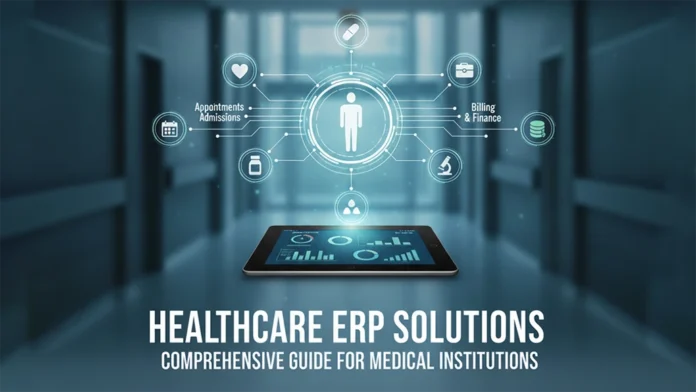
We already know what ERP is, and when you integrate it into healthcare operations, it becomes healthcare ERP. It manages everything in the healthcare operations from doctors, patients, medical supplies, pharmacy, medical inventory, patient relationship, billing, payments, and staff management, revenue cycle, supply chain and so much more.

It automates various manual and repetitive tasks, boosting efficiency, and improving overall productivity of healthcare organizations. It ensures coherence between the different departments of the healthcare organizations improving overall business workflow. For a custom ERP that enhances your workflow, you should hire healthcare developers.

Importance of Healthcare ERP Solutions

Healthcare is an industry where everyone has to be on their toes from doctors and staff to the entire computational workflow, to ensure effective patient treatment without any delays, and this makes ERP solutions important for the healthcare industry. Letโ€™s take a look at some points that show the importance of Healthcare ERP solutions.

Centralized Data Management

Centralized data management is one of the most crucial aspects of healthcare ERP solutions. It helps healthcare professionals quickly access patient details from the database which leads to faster diagnostics and treatment and fewer medical errors. This centralized data management eliminates manual data entry and repetitive paperwork.

Improved Operational Efficiency

Every healthcare organization wants to operate at its full efficiency, and healthcare ERP solutions make it possible. We already know that healthcare ERP systems offer centralized data management, but thatโ€™s not all, they also automate routine tasks, utilize resources optimally, and streamline department coordination.

Efficient Staff Management

Staff management is a complex task for any organization, but the complexity rises when itโ€™s a healthcare organization. Such organizations have multiple departments that work in multiple shifts which make staff management really challenging. Healthcare ERP solutions centralize employee records, automate attendance tracking, and create balanced duty rosters to avoid staff shortages.

Enhanced Patient Care

Improving patient care is the sole goal of healthcare organizations and ERP solutions just boost this. Everything we read by far plays a crucial role in providing enhanced patient care. Healthcare ERP solutions integrate administrative, clinical and financial data into a centralized database giving healthcare professionals complete and accurate patientsโ€™ information all the time.

Key Components of Healthcare ERP Solutions

What makes Healthcare ERP solutions so important? Its key components. These key components play crucial roles throughout the workflow improving efficiency of all the operations boosting productivity. Letโ€™s take a look at the key components of ERP solutions for healthcare.

Core Operational Modules

Core operational modules are among the most important components of healthcare ERP solutions. It includes patient management, financial management, and human resources. This component ensures proper registration, scheduling and tracking of patients and their history. It also manages accounting, billing, revenue cycle, payroll, benefits, employee data and more.

Healthcare-Specific Modules

Now comes another core component of healthcare ERP solutions which is none other than healthcare-specific modules. It includes clinical management, appointment scheduling, reporting and analytics and more. It ensures proper management of electronic health records, clinical workflows, real-time dashboards, tracking maintenance and medical device usage.

Compliance and Security

The next component in the line is compliance and security, this one should not be avoided at any cost when you are developing and integrating healthcare ERP solutions. With effective compliance and security you can encrypt data, ensure adherence to various regulations like HIPAA, and manage access controls.

Benefits of Healthcare ERP Solutions

Healthcare ERP solutions offer benefits that affect the entire healthcare operation of organizations helping them provide better patient care and personalized treatment. These benefits positively affect both healthcare professionals and patients. Letโ€™s take a look at the benefits of healthcare ERP solutions.

Data Visibility and Analytics

Data visibility and analytics is one the best benefits that healthcare ERP solutions offer. It integrates data from various sources into one platform forming a centralized database allowing everyone in the organization to work on the same database.

Streamlined Operations

When you develop and integrate ERP systems into your healthcare organizations the first benefit you experience is streamlined operations. And we all know that streamlining operations is a necessity for healthcare organizations to provide personalized treatment and enhance patient care.

Improved Financial Management

The cashflow in the healthcare organization is constant and relies on four Cs which includes cash, cost, capital, and control. Finance is dictated by state and federal regulations. When you integrate ERP systems into your operations, it handles budgeting, planning, billing and invoicing, forecasting, claims and expense management that saves a lot of time and reduces errors to minimum.

Challenges of Healthcare ERP Solutions

We read about the importance, key components that make healthcare ERP solutions important and the benefits they offer. However, as we already know nothing is perfect, which means healthcare ERP solutions also have some drawbacks which you as an organization need to overcome. You can hire healthcare developers for your ERP solutions to ensure seamless development and integrations. Letโ€™s take some key challenges that you have to face.

  • Complex Integration – This is one of the biggest challenges that a healthcare organization faces, especially when your organization is operating on existing legacy systems.
  • High Costs – Healthcare ERP systems offer significant reduction in cost in the long run, and what makes it a challenge is high development and integration costs. From software, and hardware to training and ongoing maintenance costs are high.
  • Data Security and Compliance – Things just get complex and become a challenge, whenever the word security and compliance comes. Inefficient security will lead to vulnerable data which will invite more and more cyber attacks. Here you need to protect sensitive data about patients and organizations by meeting HIPAA and other security regulations.
  • Data Migration: Healthcare organizations have a huge amount of data which needs to be properly managed and that is a challenge in legacy systems. But you know what is a bigger challenge? Migrating the entire data from legacy systems to new ERPs without misplacing any data or causing any error.

Conclusion

In the end we can say, ERP solutions are one of the best things ever happened to the healthcare industry along with AI. It does have some challenges that we need to overcome, but it also has a lot of components and benefits that makes it a go-to choice for healthcare organizations. These components streamline the healthcare workflow ensuring it remains seamless and enhances patient care. As we will progress the healthcare ERP solutions will improve and ultimately become a core and inseparable part of healthcare workflows.

Translate ยป